Flooring in Denton TX: Best Options, Costs, and How to Choose the Right Installer
Shopping for flooring in Denton, Texas can feel simple at first—until you start weighing durability, water resistance, comfort, and how a floor will actually live with kids, pets, and North Texas weather swings. This guide breaks down the most popular flooring types in Denton, what really affects pricing (beyond “cost per square foot”), realistic timelines, and a practical installer checklist so you can move from browsing to a confident, well-planned project.
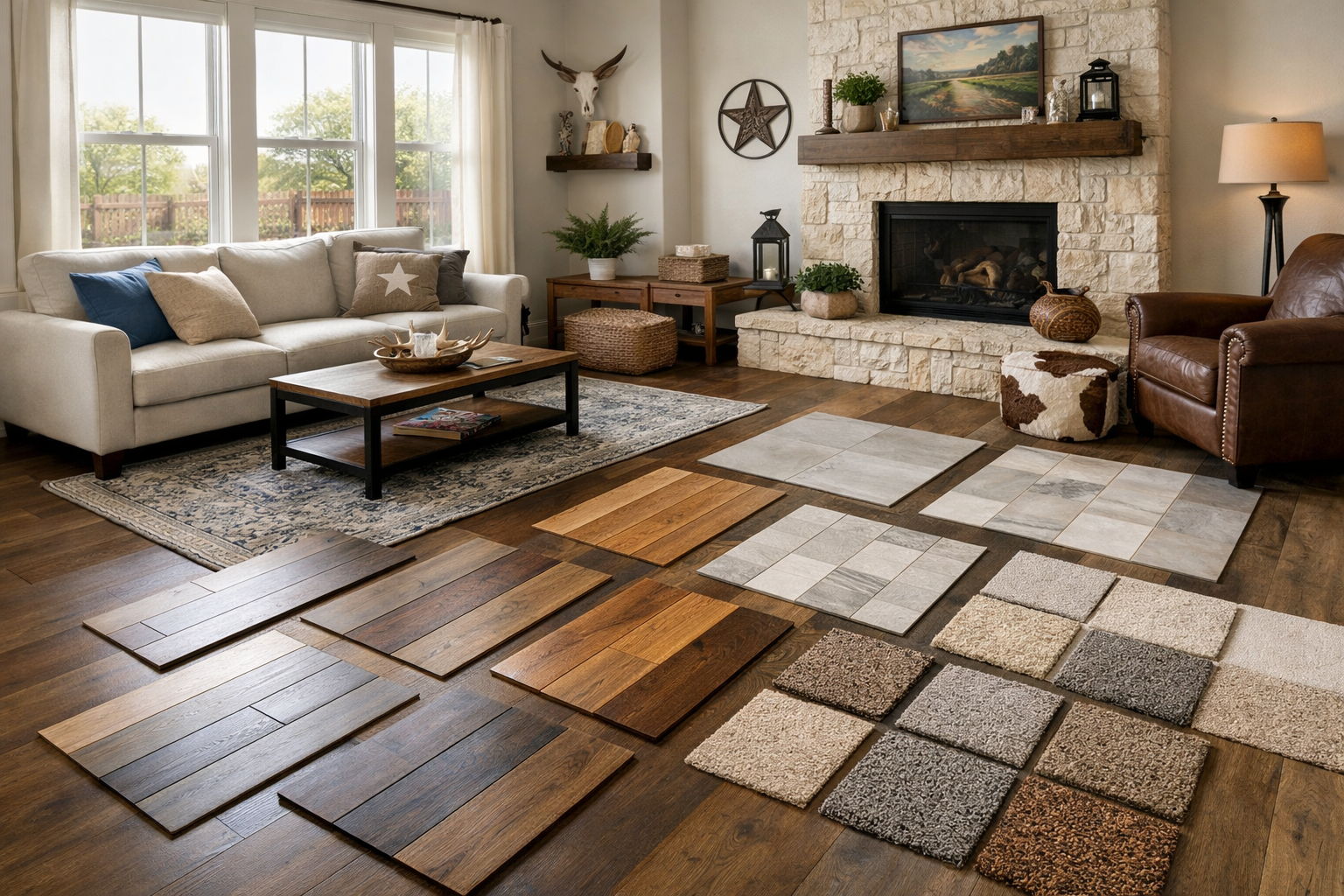
Why Denton Homeowners Upgrade Flooring (and What to Consider First)
Flooring is one of the most “felt” upgrades in a home. You see it in every room, you walk on it every day, and it influences everything from cleaning routines to how quiet a second story feels. In Denton, many upgrades happen for a few predictable reasons: older carpet that’s stained or matted, scratched wood in high-traffic areas, dated tile, or a patchwork of materials from past remodels.
Before you fall in love with a color or plank width, step back and define what the floor needs to do for your household. The right choice is usually the one that matches your lifestyle, not the one that looks best in a showroom photo.
Start with lifestyle and traffic patterns
- Pets: If you have dogs, consider scratch resistance, traction, and how easily a floor cleans after muddy paw prints.
- Kids: Think about impact resistance (dropped toys), wipeable surfaces, and whether you want softer landings in bedrooms.
- Entertaining: High-traffic pathways from entry to kitchen or living room need tougher wear layers and easy maintenance.
- Cleaning style: If you mop frequently, prioritize water-resistant materials in main living spaces and entries.
Plan room-by-room (not one-size-fits-all)
One of the biggest mistakes homeowners make is choosing a single “best” material and forcing it into every room. In practice, Denton homes benefit from a room-by-room approach:
- Bathrooms, laundry rooms, and mudroom areas: higher water resistance is usually non-negotiable.
- Kitchens: need durability plus spill and stain resistance; comfort underfoot also matters if you cook often.
- Bedrooms and upstairs: quieter, softer options can make the home feel more comfortable.
- Entryways: should tolerate grit and moisture; adding mats and selecting durable finishes pays off.
Local reality check: In North Texas, sudden storms, humid stretches, and heavy foot traffic can expose weaknesses in subfloor prep and moisture control. A material that looks great can still fail early if it’s installed over an uneven or damp surface.
Don’t skip the subfloor and moisture conversation
Subfloor condition is a hidden driver of both cost and long-term performance. A professional assessment helps prevent common complaints like squeaks, hollow-sounding planks, lippage in tile, or separation at seams. If you want your new floor to stay flat and quiet, ask how the installer evaluates:
- Flatness: especially important for click-lock LVP and large-format tile.
- Moisture levels: critical for wood-based products and slab-on-grade homes.
- Integrity: soft spots, damaged plywood, or failing underlayment that needs repair.
The “best” flooring is the one that fits your daily life and your home’s conditions. A quick subfloor/moisture evaluation up front can save you from costly callbacks and early replacement later.
Popular Flooring Options in Denton, TX (Pros, Cons, and Best Rooms)
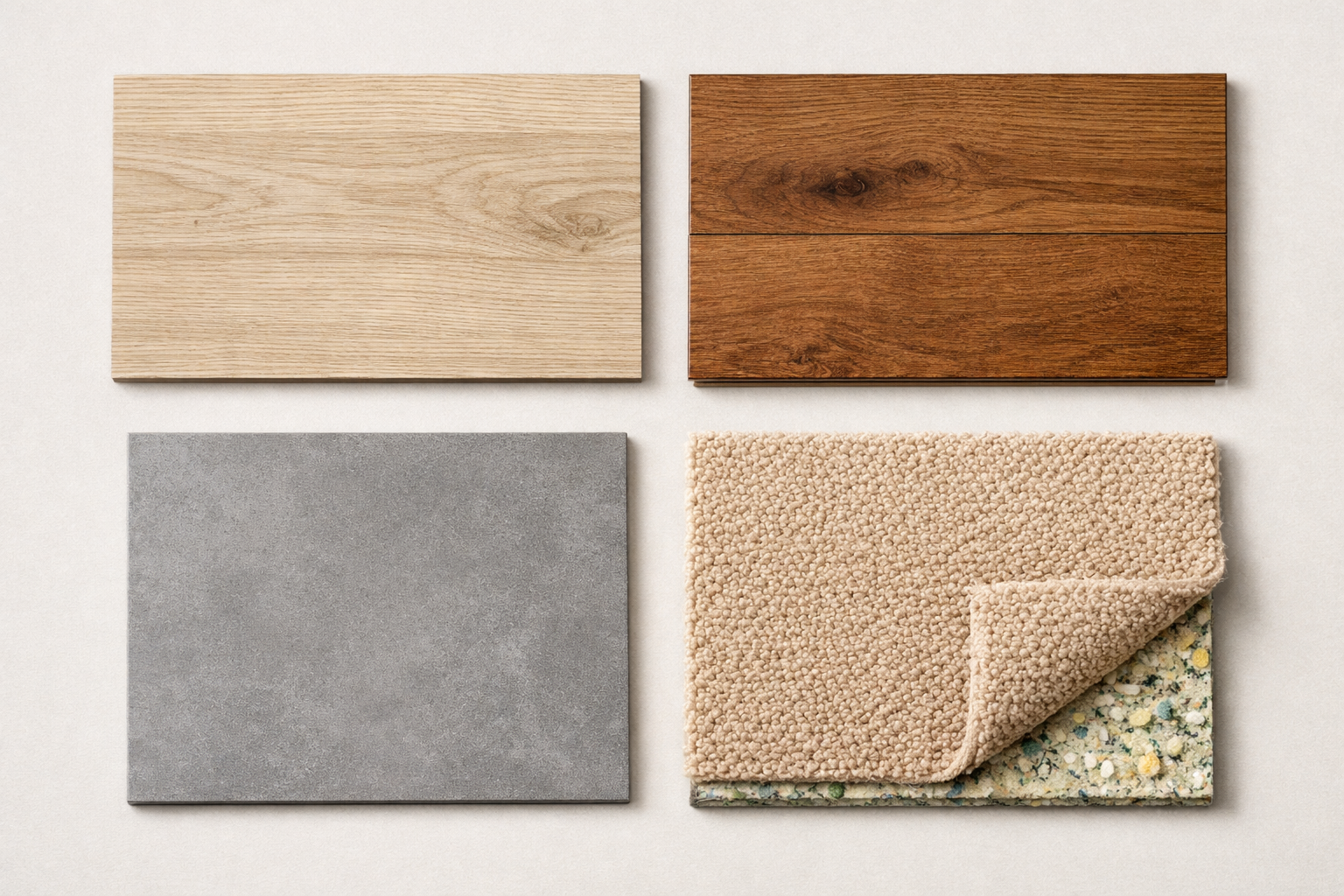
Denton homeowners commonly compare four categories: luxury vinyl plank (LVP), engineered hardwood, tile, and carpet. Each can be an excellent choice when it’s matched to the room and installed correctly.
Luxury Vinyl Plank (LVP)
LVP is a top pick in Denton because it delivers an attractive wood look with practical, family-friendly performance. Many products offer strong wear layers that resist scratches and scuffs, and they’re generally easy to clean.
- Best for: living rooms, hallways, kitchens, rentals, and busy households.
- Pros: durable, easy maintenance, often more water-resistant than wood, wide style range.
- Cons: quality varies; subfloor flatness is critical; cheaper lines can feel hollow or show telegraphing from the subfloor.
If you’re comparing options, focus on the wear layer thickness, warranty details, and whether the system is click-lock or glue-down. Your installer should recommend the best approach based on the subfloor and traffic levels (for example, glue-down can feel more solid in some applications).
Engineered Hardwood
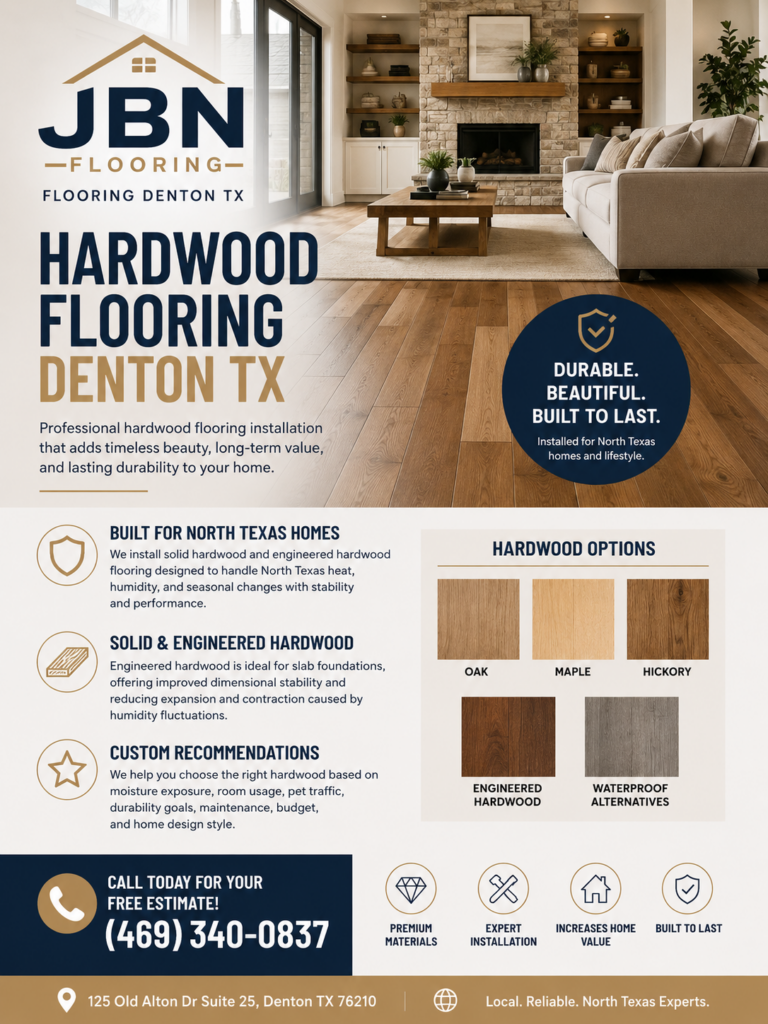
Engineered hardwood gives you a genuine wood surface with added dimensional stability compared to solid hardwood. It’s a strong middle ground for homeowners who want the warmth and character of wood but need better performance in a wider range of home conditions.
- Best for: living rooms, dining rooms, bedrooms, and open-concept areas where you want a premium look.
- Pros: real wood surface, more stable than solid wood, can boost perceived home value and design cohesion.
- Cons: not ideal for frequent standing water; some products have thinner wear layers and limited refinishing potential.
Ask about plank thickness, the veneer (wear layer) thickness, and acclimation requirements. A well-planned acclimation and install can reduce later issues like gapping or cupping.
Tile (Porcelain or Ceramic)
Tile remains the workhorse for wet areas—bathrooms, laundry rooms, and many kitchens. Porcelain, in particular, is known for low water absorption and excellent durability. Tile can also elevate an entryway or create a crisp, high-end look throughout a home when paired with the right grout color and layout.
- Best for: bathrooms, laundry rooms, kitchens, entryways, and any area prone to spills.
- Pros: water resistant, durable, easy to sanitize, huge design range (including wood-look tile).
- Cons: harder underfoot, can feel cold, longer installation timeline, prep quality is non-negotiable.
For tile, craftsmanship shows. Flatness, layout, lippage control, movement joints, and grout selection all impact how the floor looks and performs long-term.
Wet zones: tile (or water-resistant LVP). Main living: LVP or engineered hardwood. Quiet comfort: carpet for bedrooms/upstairs. Mixing materials strategically often performs better than forcing one option everywhere.
What Flooring Costs in Denton: Key Pricing Factors (Without the Guesswork)
Homeowners often ask for a simple number—“What does flooring cost in Denton per square foot?”—but accurate budgeting requires understanding what’s included. Two projects with the same square footage can differ significantly based on prep, demolition, layout complexity, and finish details.
The biggest cost drivers
- Material selection: This is usually the largest line item. Higher-quality products often cost more but can reduce long-term replacement and repair risk.
- Labor complexity: Stairs, tight hallways, intricate tile patterns, diagonal layouts, herringbone, and multiple transitions all increase labor time.
- Subfloor repairs and leveling: Addressing dips, high spots, squeaks, or damaged areas improves performance and prevents visible issues later.
- Moisture mitigation: On slab foundations or moisture-prone areas, appropriate barriers or mitigation systems can be essential (especially for wood-based products).
- Removal and disposal: Tearing out tile or glued-down floors can be time-intensive and may involve additional equipment and disposal fees.
- Finish carpentry details: Baseboards, quarter round, shoe molding, and clean transitions are “small” items that noticeably impact final quality.
What a professional estimate should spell out
To compare quotes fairly, your proposal should be clear and itemized. Look for specifics rather than vague allowances.
| Estimate item | Why it matters |
|---|---|
| Exact product line + specs | Prevents “apples-to-oranges” comparisons; confirms wear layer, thickness, or tile grade. |
| Underlayment / moisture barrier | Impacts sound, comfort, and long-term stability—especially over slab or uneven substrates. |
| Subfloor prep scope | Defines leveling, patching, or repair expectations so you don’t get surprised after demo. |
| Demolition + disposal | Old floors (tile, glued vinyl, multiple layers) can add time and cost. |
| Transitions + trim + doors | These details affect the finished look, clearances, and how “complete” the project feels. |
| Warranties (labor + material) | Clarifies who covers what if issues show up later. |
Budgeting tip: If an estimate is dramatically lower than the rest, it may be missing prep, trim, or disposal. A low number can become expensive if it leads to floor movement, cracked grout, or visible unevenness later.
A reliable way to avoid guesswork is to schedule an in-home evaluation. It allows the installer to measure accurately, check transitions, note stairs and closets, and test or discuss moisture concerns—so your quote reflects reality, not assumptions.
Timeline: How Long a Denton Flooring Project Typically Takes
Project timelines vary widely by material, home size, and how much prep is required. A small carpet replacement in a bedroom may be completed quickly, while a whole-home project with demolition, leveling, and multiple materials will naturally take longer.
Typical phases you should see on a schedule
- Measure + final scope confirmation: verify square footage, transitions, trims, and any special areas (stairs, closets, fireplaces).
- Material ordering + delivery: includes lead times and planning for where materials will be staged.
- Acclimation (when applicable): wood-based products often need time in the home to adjust before installation.
- Demolition + disposal: removal of old flooring; may include scraping adhesive or removing tile.
- Subfloor prep: leveling, patching, repairs, moisture barrier, underlayment.
- Installation: flooring laid, transitions installed, trim details completed.
- Final walkthrough + care instructions: punch list, cleaning guidance, and warranty documentation.
Why tile often takes longer
Tile installation is process-heavy. Thinset and grout need proper cure time, and certain products may require sealing. Rushing cure times can lead to cracked grout, discoloration, or compromised bond strength. That’s why tile schedules can feel slower—but the time is doing work you can’t see yet.
Ask for a schedule that includes demolition, prep, installation, and when rooms are usable again. A good plan sets expectations and reduces disruption—especially if you’re living in the home during the project.
How to Choose a Flooring Installer in Denton, TX (Checklist)
Great materials can still look bad—or fail early—if the installation is rushed or prep is skipped. Choosing the right installer is as important as choosing the right product. Use this checklist to screen contractors and compare proposals confidently.

Installer checklist (print this mentally)
- Itemized estimate: Does the quote list the exact product, underlayment, prep, transitions, trim work, and disposal?
- Subfloor + moisture evaluation: Do they assess conditions in person rather than quoting from photos alone?
- Clear scope for “surprises”: If they uncover damaged subfloor or unexpected layers after demolition, how do change orders work?
- Local, relevant examples: Can they show similar projects (tile patterns, whole-home LVP, engineered wood) and explain what made them successful?
- Warranty clarity: Do you receive written details for labor and materials, plus what voids coverage?
- Care instructions: Will they provide a maintenance plan so the floor keeps its look, not just day-one shine?
Questions that reveal professionalism quickly
- “What prep do you anticipate based on my subfloor?” A confident installer explains flatness requirements, moisture concerns, and likely prep steps.
- “What’s included in your price—transitions, trim, door adjustments?” Finish details separate “installed” from “done.”
- “How will you protect adjacent areas and manage dust?” Look for a clear plan for containment and daily cleanup.
- “If something fails, who do I call and what happens next?” You want a direct process, not vague reassurance.
Practical rule: If an installer won’t define prep in writing, you’re accepting risk. The most common “flooring problems” are actually prep problems.
Care and Maintenance Tips for Long-Lasting Floors in North Texas
Once your new flooring is installed, consistent habits protect your investment. North Texas homes often deal with grit tracked in from driveways and sidewalks, changing humidity, and busy family schedules—so maintenance should be simple, repeatable, and material-appropriate.
Daily and weekly habits that prevent wear
- Use entry mats: place them outside and inside main doors to catch grit before it becomes abrasive “sandpaper.”
- Add felt pads: under chairs and heavy furniture; replace them when they compress or collect debris.
- Sweep or vacuum routinely: especially in entryways and kitchen paths. Grit is a major cause of surface scratching.
- Handle spills quickly: prompt cleanup reduces staining and moisture intrusion at seams and edges.
Cleaning guidance by material
Always follow manufacturer recommendations, but these general rules help avoid common mistakes:
- Wood/engineered hardwood: avoid excess water; use a damp (not wet) mop and approved cleaners to protect the finish.
- LVP: typically easy to maintain; avoid harsh abrasives and watch for water pooling along edges in busy wet zones.
- Tile: use appropriate cleaners; consider periodic grout care depending on grout type and color.
- Carpet: vacuum frequently, treat spots fast, and plan periodic deep cleaning—especially in high-use areas.
Humidity and seasonal stability
Wood and engineered products respond to environmental changes. When possible, aim for more stable indoor humidity. Even modest stability can reduce seasonal movement and help your floors look consistent year-round. If you notice new gaps, squeaks, or edge lift, address it early—small issues are often simpler to fix before they grow.
A floor lasts longer when it’s protected from grit, cleaned with approved products, and kept out of prolonged moisture exposure. Small routines beat occasional “big clean” efforts.
Conclusion: Choosing the Right Floor (and the Right Team) in Denton
Upgrading flooring in Denton, TX comes down to three smart decisions: choosing a material that fits your lifestyle, planning the project around subfloor and moisture realities, and hiring an installer who documents prep and finish details clearly. LVP tends to be a practical favorite for busy families, engineered hardwood delivers real-wood warmth with improved stability, tile remains the go-to for wet areas, and carpet still wins for quiet comfort in bedrooms and upstairs spaces.
If you want the best outcome, prioritize a thorough in-home assessment and an itemized proposal—then keep the floor looking new with simple maintenance habits.
Request a Free Flooring Consultation in Denton, TX
Get recommendations tailored to your rooms, budget, and style. Call (469) 340-0837 or request a free consultation online.
Next step: jot down the rooms you want to update, note any water-prone areas, and list your must-haves (pets, scratch resistance, quieter upstairs). That prep makes your consultation faster—and your recommendations more accurate.
Related: If you’re comparing materials, ask your installer to show samples in your lighting and explain what prep is required to keep the warranty intact.