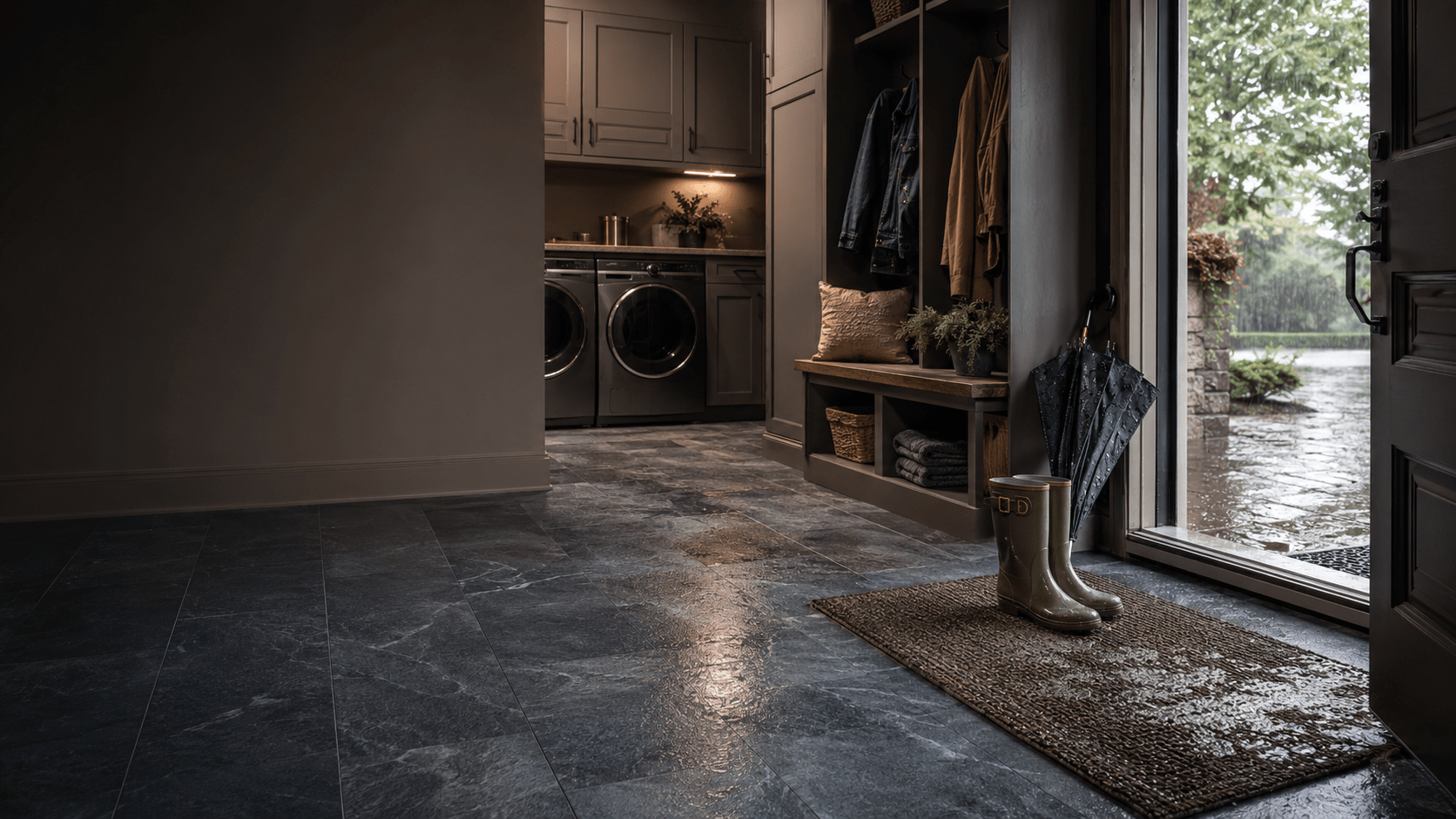
Water on top
Drinks, wet shoes, pet bowls, mopping, and minor splashes begin at the wear surface. A suitable product and prompt cleanup can make daily life easier.
JBN Flooring · Waterproof Flooring Guide
Waterproof Flooring can make kitchens, entries, laundry areas, pet zones, living rooms, and commercial spaces easier to manage. The important question is not whether the box says waterproof. It is what part of the product resists water, how the edges and room are finished, what the warranty excludes, and whether moisture is coming from above or through the slab below.
The plain-English answer
It usually means the flooring material is designed not to swell, break down, or permanently deform from ordinary water exposure within the product’s stated conditions. It does not automatically mean the seams block all water, the perimeter is sealed, the slab is protected from moisture, or a dishwasher leak cannot reach cabinets, walls, adhesive, underlayment, and neighboring rooms. The exact product instructions and warranty define the claim.
Water meets more than the wear surface
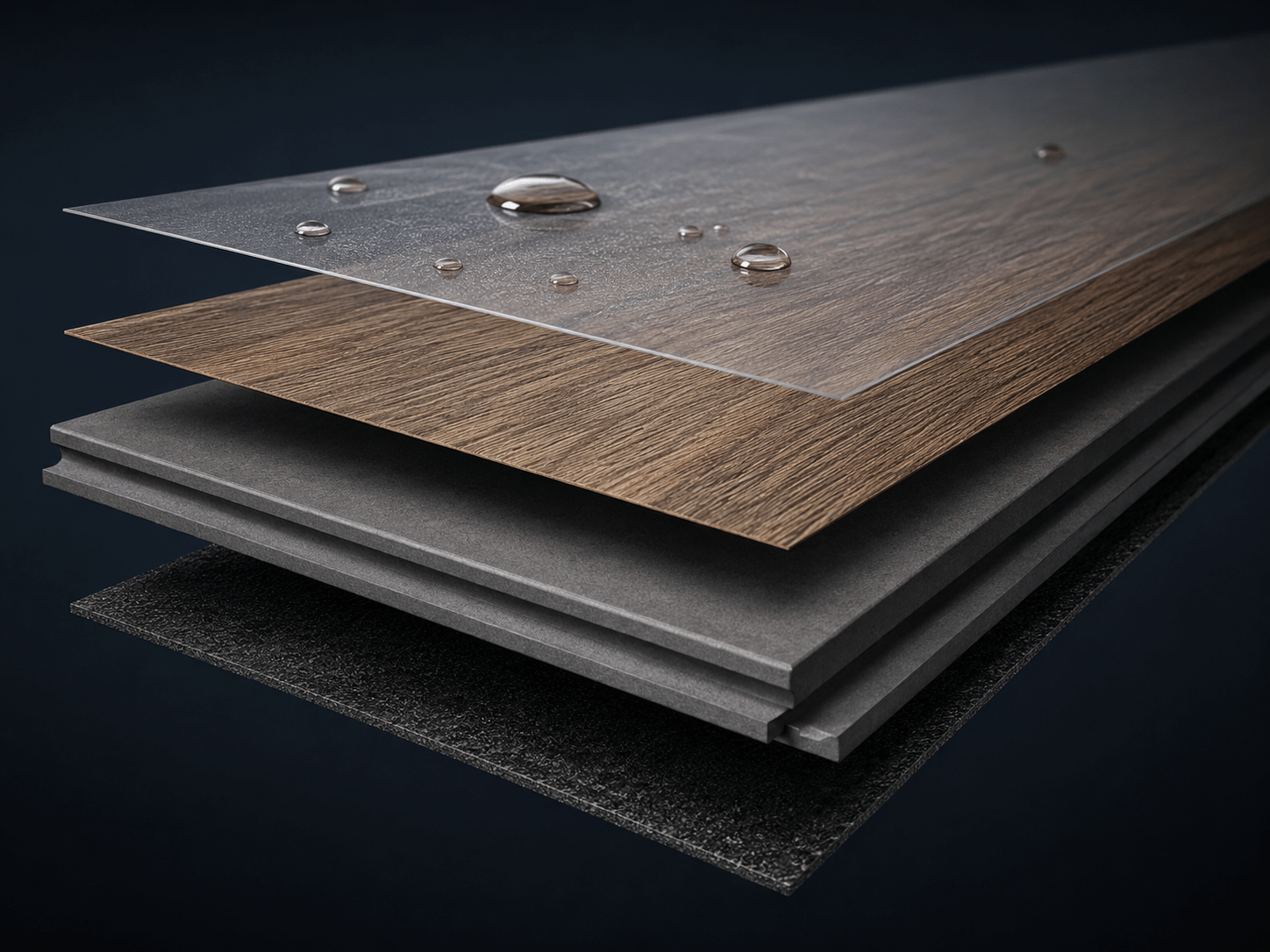
Luxury vinyl plank and tile are layered products. The wear surface receives shoes, chairs, grit, and cleaning. The printed film creates the wood or stone visual. The core provides structure, while the backing or attached pad affects the approved installation system.
When a manufacturer calls the plank waterproof, that statement normally applies to the product—not every material surrounding it. Baseboards, drywall, cabinets, wood door jambs, adhesives, patches, and some underlayments can still be damaged by water.
The locking edge matters too. A tight joint helps manage ordinary surface spills, but it should not be treated as plumbing. Edges can be damaged during installation, and water can reach the perimeter or travel from another room.
Follow the path of the water
Drinks, wet shoes, pet bowls, mopping, and minor splashes begin at the wear surface. A suitable product and prompt cleanup can make daily life easier.
Appliance leaks, overflowing fixtures, and larger spills can move under trim, through doorways, and beneath a floating floor even when the plank itself survives.
Concrete moisture is a substrate condition. A waterproof surface does not replace required slab testing, vapor control, adhesive limits, or manufacturer instructions.
The right question is not “Can this plank get wet?” It is “What happens to the entire flooring system when water reaches this room?”
Bring the samples to the risk
JBN Flooring comes to your property, measures the rooms, and helps you compare applicable flooring in your own light. Call 469-340-0837 for a free in-home estimate.
Different materials make different promises
Water terms are not interchangeable. Product-specific instructions always matter more than a category label. JBN Flooring can help you compare suitable materials currently available for your project.
| Flooring category | What it may handle well | What still needs attention |
|---|---|---|
| Waterproof LVP or LVT | Surface spills, wet shoes, pet accidents, kitchens, entries, laundry areas, and busy connected rooms when the product is approved. | Perimeter water, slab moisture, flatness, joints, direct sunlight, heat, cabinets, rolling loads, and cleanup after large leaks. |
| Waterproof-rated laminate | Wood visuals, firm feel, scratch resistance, and ordinary spills within the manufacturer’s written limits. | Claims vary widely. Edge sealing, exposure time, wet-room approval, cleaning, and warranty exclusions need careful review. |
| Sheet vinyl | Fewer field seams and practical water resistance in suitable kitchens, utility spaces, and commercial settings. | Substrate smoothness, seam treatment, adhesive, indentation, repair visibility, and current product availability. |
| Porcelain or ceramic tile | Water-tolerant surface, heat resistance, and hard-use wet-area applications when the complete assembly is designed correctly. | Grout, movement joints, waterproofing below, cracks, cold/hard feel, and the fact that tile itself is not the entire waterproof system. |
For wood-look resilient flooring, visit our waterproof LVP installation page. Denton homeowners can also review our detailed vinyl flooring guide.
Daily spill, hidden leak, or flood?
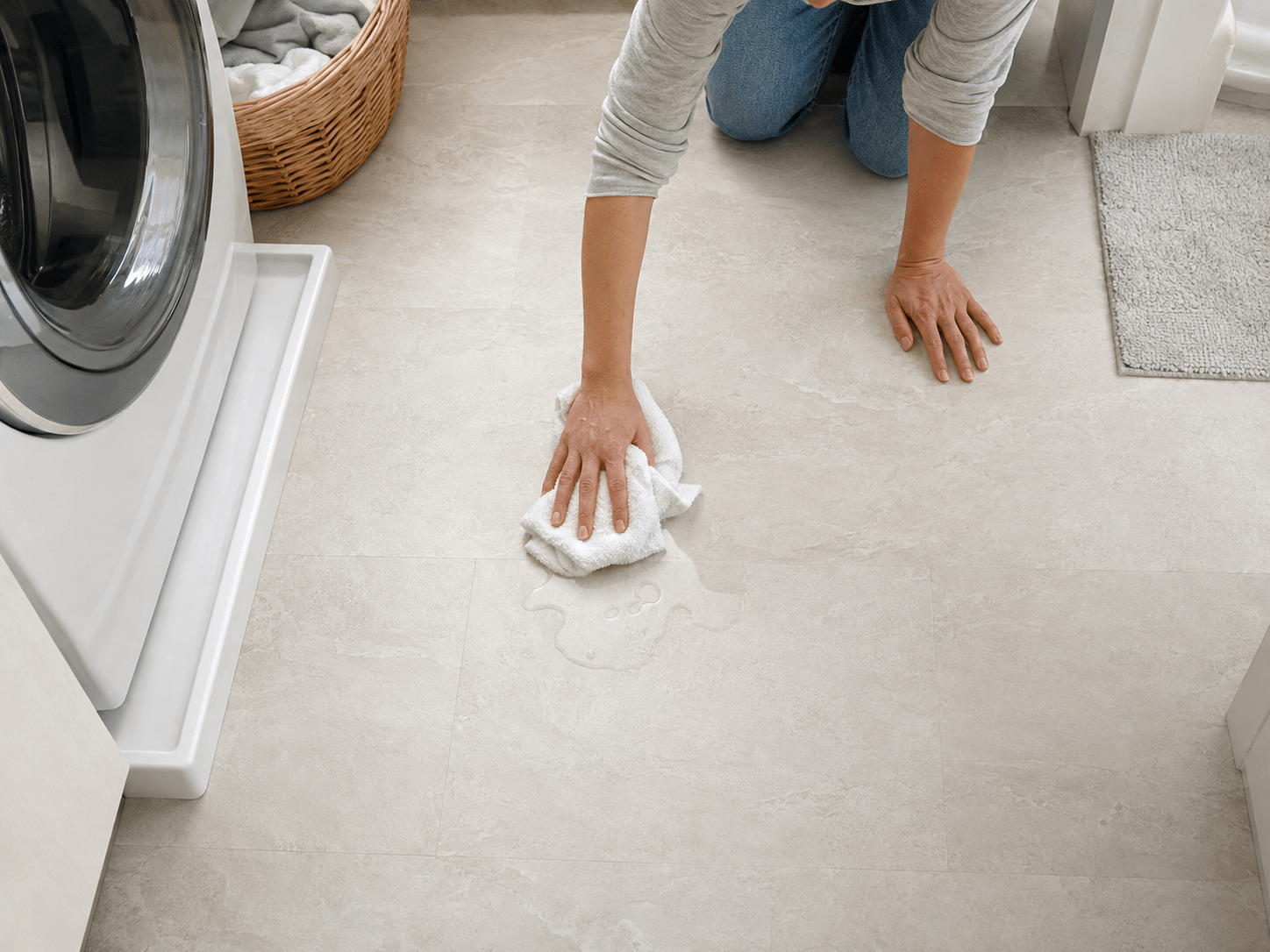
A tipped drink and a supply-line leak are not the same event. Small surface spills should still be wiped promptly. Repeated water near a pet bowl or exterior door can work toward edges, so use protective trays and washable mats.
When an appliance or fixture leaks, stop the source first. Water may move farther than the visible puddle. Flooring might need to be lifted or evaluated so the slab, underlayment, adhesive, walls, trim, and cabinets can dry. A plank that looks unchanged does not prove the assembly underneath is dry.
Floodwater can also carry contamination. That becomes a water-remediation and health issue, not merely a flooring-cleaning job. Waterproof product marketing should never replace appropriate emergency cleanup.
Stop the source, wipe it up, inspect nearby edges, and follow the flooring care instructions.
Stop the water, protect people and property, document the affected area, and arrange appropriate evaluation and drying.
Waterproof on top does not mean dry underneath
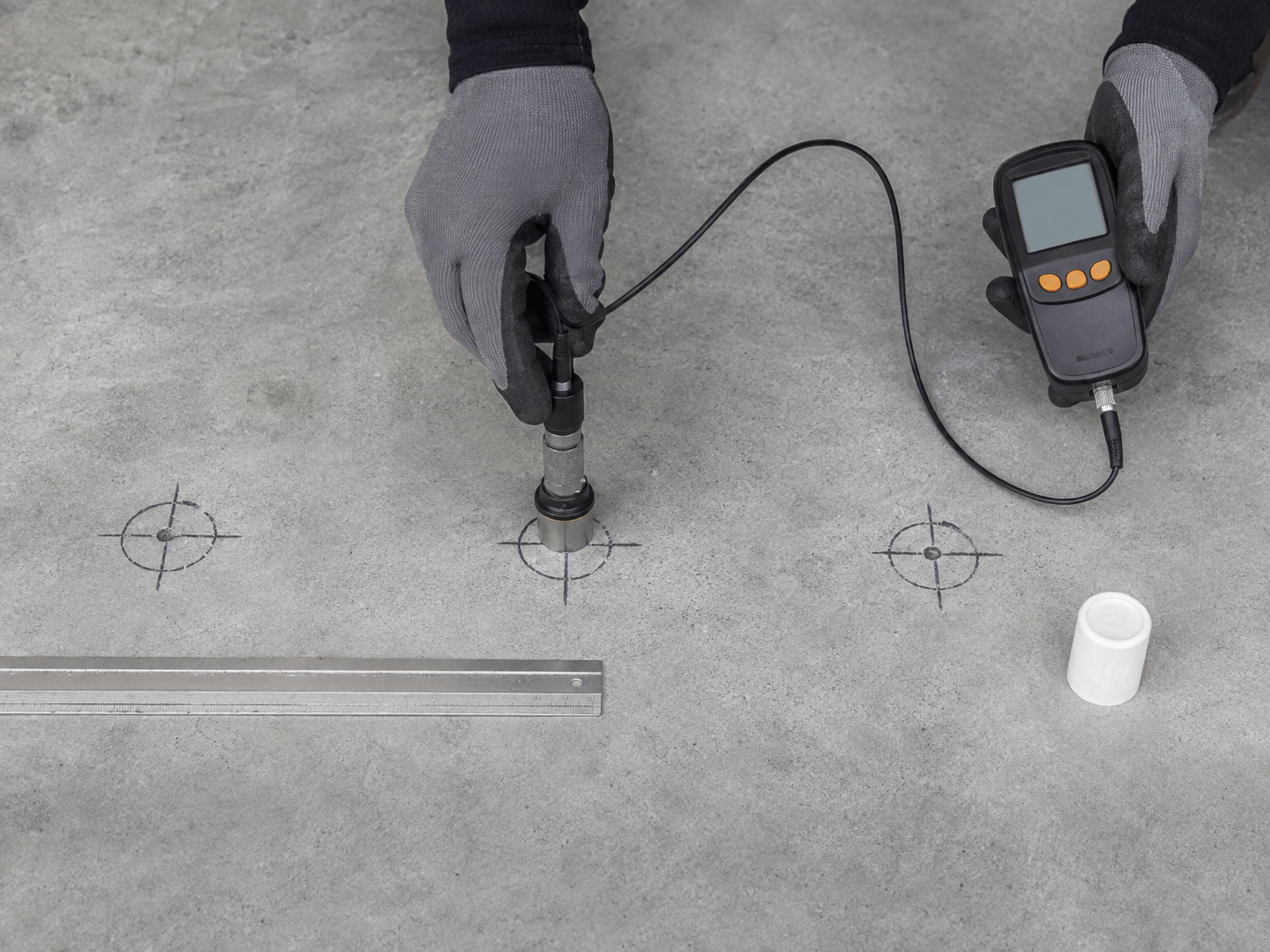
A concrete slab can release moisture vapor even when the room has never flooded. That moisture may affect adhesive, patching, primers, underlayment, coatings, and conditions beneath a floating floor. Installing a waterproof plank on top does not correct an active moisture problem below.
The ASTM F710 practice for concrete receiving resilient flooring addresses slab cleanliness, smoothness, soundness, dryness, irregularities, and moisture testing. It also states that manufacturer instructions are not superseded. That last point matters because each flooring system can publish its own approved tests and limits.
Testing is not a promise that a slab will never change. It records conditions at the time of the assessment. Known plumbing, drainage, foundation, or water-entry problems should be addressed before new flooring covers them.
Small details determine where water travels
A waterproof floor can cross an open kitchen and living room beautifully, but the layout must still follow the product’s installation limits. Floating flooring usually needs perimeter movement space and cannot be pinned by fixed objects unless the manufacturer allows it. Glue-down products have different substrate and adhesive requirements.
Bathrooms and laundry rooms add fixtures, supply lines, floor penetrations, appliance pans, and narrow cuts. Exterior entries add wet mats, grit, direct light, and temperature changes. The proposal should identify the material, installation method, known preparation, trim, transitions, fixed-object plan, and any wet-area details included in the work.
JBN Flooring does not promise a damage-proof room. We explain what the selected floor is designed to handle and what still requires ordinary maintenance, prompt leak repair, and proper use.
Style does not have to look like wood
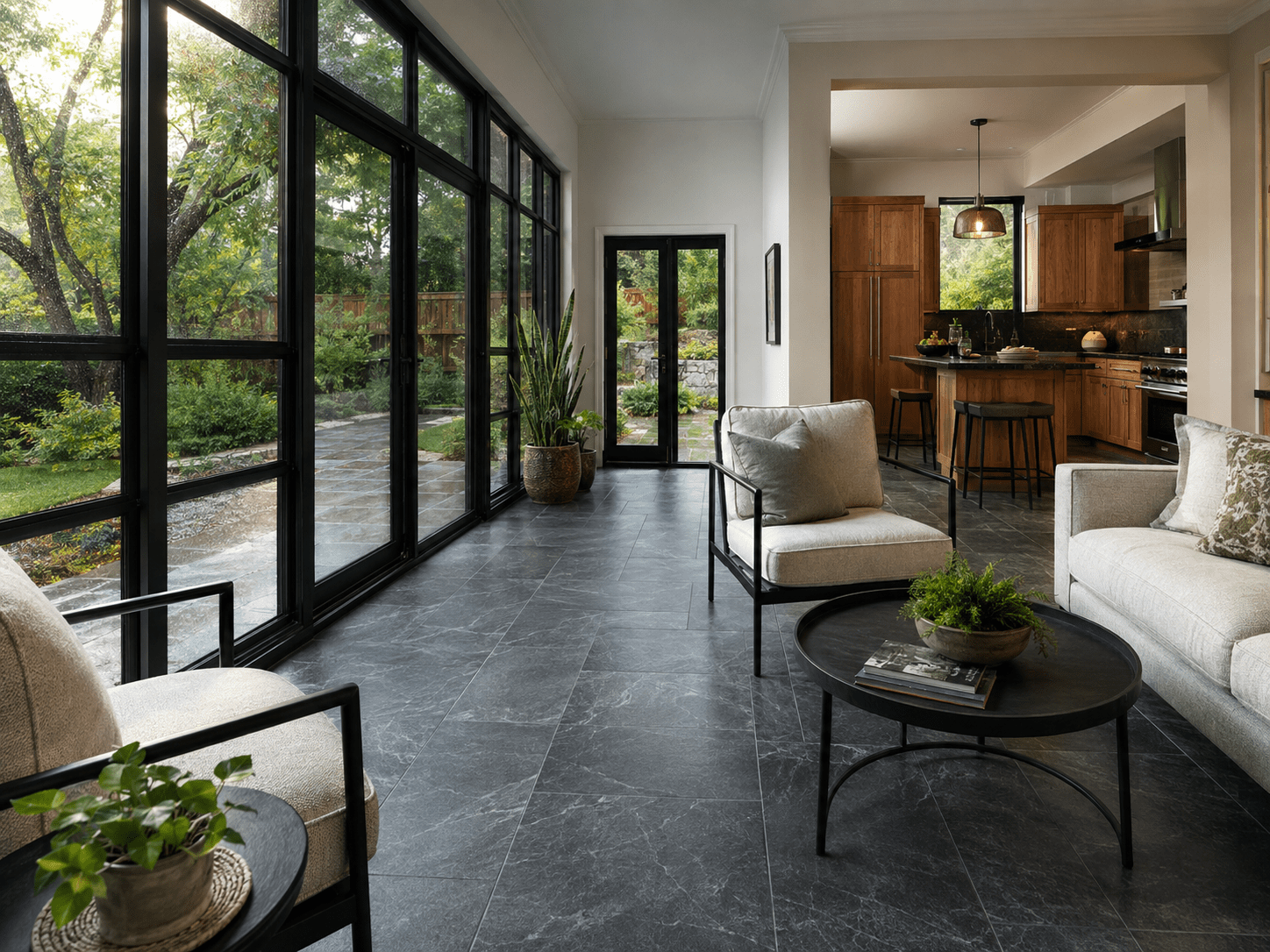
Wood-look planks remain popular, but waterproof resilient flooring can also resemble slate, limestone, concrete, and other materials. Stone visuals can give an entry, sunroom, laundry area, or kitchen a different identity without repeating wood grain through every space.
Dark floors create contrast but may show dust, lint, hard-water spots, and light-colored pet hair more clearly. Pale stone visuals brighten a room but can show soil at entrances. Pattern scale matters too: a large tile visual may feel balanced in an open room and crowded in a tight one.
Take samples into the actual room, place them flat, and view them during the day and at night. A free in-home estimate lets us discuss the floor beside the cabinets, walls, windows, and materials that are staying.
We serve Denton, Corinth, Hickory Creek, Shady Shores, Highland Village, Flower Mound, Argyle, Oak Point, Roanoke, Frisco, and nearby North Texas communities.
Questions worth asking before installation
No. The flooring product may resist water, but water can still reach walls, cabinets, trim, doorways, underlayment, adhesive, and the slab. A waterproof plank is not a substitute for a correctly designed wet-area or flood-protection system.
The difference depends on the manufacturer’s written definition. Water-resistant products usually allow limited exposure or cleanup time, while waterproof products claim the material itself will not be damaged under stated conditions. Always read the product warranty and exclusions.
It can be a practical choice when the exact product is approved for the room and installed correctly. Appliance leaks and plumbing failures still require immediate attention because water can move beneath flooring and into surrounding materials.
Many resilient flooring systems can be installed over concrete when the slab meets the product requirements for moisture, flatness, cleanliness, soundness, preparation, and vapor control. Waterproof flooring does not make slab testing unnecessary.
Only when the product is approved for that bathroom application and all manufacturer instructions are followed. The flooring surface does not replace waterproofing required around showers, tubs, walls, penetrations, or other wet-area assemblies.
No. They use different core materials and constructions. Some laminate products carry specific waterproof claims, but exposure limits, edge details, installation rules, and warranties vary. Compare the written specifications rather than relying on the category name.
Remove grit with a soft broom or approved hard-floor vacuum setting. Use a lightly damp microfiber mop and a cleaner approved by the flooring manufacturer. Avoid steam, abrasive tools, unapproved polishes, and flooding the floor with cleaning water.
Yes. We come to the property, measure the rooms, review visible conditions, and help you compare suitable flooring. Call 469-340-0837 or use the estimate button.
Choose with the whole room in mind
JBN Flooring is a division of The JBN Group, Inc., serving North Texas since 1996. Call 469-340-0837 or email sales@jbnflooring.com.
Continue your research
Independent company profiles: BBB, Dallas Builders Association, NARI Dallas, and Lake Cities Chamber of Commerce.