
Corinth TX Flooring Contractor — No Showroom Markup, No Shortcuts.
JBN Flooring installs, replaces, and repairs floors for Corinth-area homeowners who want straight answers on materials, moisture, prep, and price—based on what actually holds up in North Texas heat and shifting slabs.

Field-first promise: If we wouldn’t install it in our own Corinth/Argyle-area home—over a Texas slab that moves and breathes—we won’t recommend it. We’d rather explain the “why” now than replace a failed floor later.
Quick answer: what you get when you hire JBN Flooring in Corinth
Most homeowners don’t call a Corinth TX flooring contractor because they’re excited about planks and trim—they call because something already feels “off.” A floor that should have been quiet clicks. A hallway feels springy. A seam that looked fine on day one starts to gap after the first big weather swing. We build jobs to prevent those exact outcomes.
Homeowners in Corinth usually call after a “simple flooring job” turns into squeaks, hollow spots, or peaking boards—almost always traced back to skipped prep, rushed acclimation, or moisture assumptions on a Texas slab. We quote and build the job around North Texas conditions: humid stretches, fast temperature swings, and slabs that can transmit moisture even when they look bone-dry on the surface.
You get a contractor’s approach instead of a showroom pitch. We’ll talk wear layer, core type, expansion gaps, transitions, and subfloor flatness in plain English so you know what you’re paying for and why it matters. If you want to see who we are before you call, start at JBN Flooring, then request a flooring quote when you’re ready to compare options.
What “cheap” usually looks like
- “Leveling as needed” with no defined tolerance, scope, or documentation.
- No moisture verification—just “we’ve never had an issue” as the plan.
- Transitions improvised at the end, after the floor is already trapped.
- Ultra-thin LVP selected because the sample feels nice, not because the slab is flat.
- Timeline that ignores cure time, then blames the product later.
What value looks like with JBN
- Prep treated as a performance requirement—flatness targets are product-driven, not guesswork.
- Moisture-aware decisions so you don’t pay twice for the same room.
- Planned movement strategy: expansion gaps, soft joints, and clean transitions.
- Budget focused on what changes longevity—prep, underlayment, adhesives/fasteners, and correct trims.
- Upfront expectations on demo mess control, furniture staging, and living on the floor while systems cure.
The Corinth/North Texas reality that affects your floors (and why generic advice fails)
In Corinth and nearby Argyle, many homes sit on concrete slabs that can vary room-to-room. One side of the house may read drier while a shaded side near landscaping holds moisture longer—this is why we verify conditions instead of guessing. We’ve seen “perfectly fine” slabs on the surface that still pushed enough vapor to soften adhesive or swell edges when the home hit peak summer humidity.
Summer humidity and HVAC cycling can drive seasonal movement. We plan expansion gaps and transitions so long runs don’t trap and buckle when the house goes from a cool, conditioned interior to a hot garage entry or sunroom exposure. Spring storms and drainage issues show up first at the floor: micro-wetting at an exterior door, a refrigerator line drip, or a slab crack that wicks moisture can ruin a “waterproof” marketing claim if the install system is wrong.
If you’re comparing contractors, ask them how they handle slab flatness and moisture in Denton County—not in theory, but in a real open-concept floor plan. Then contact our team today to schedule your free estimate so we can map the risk points in your specific rooms.
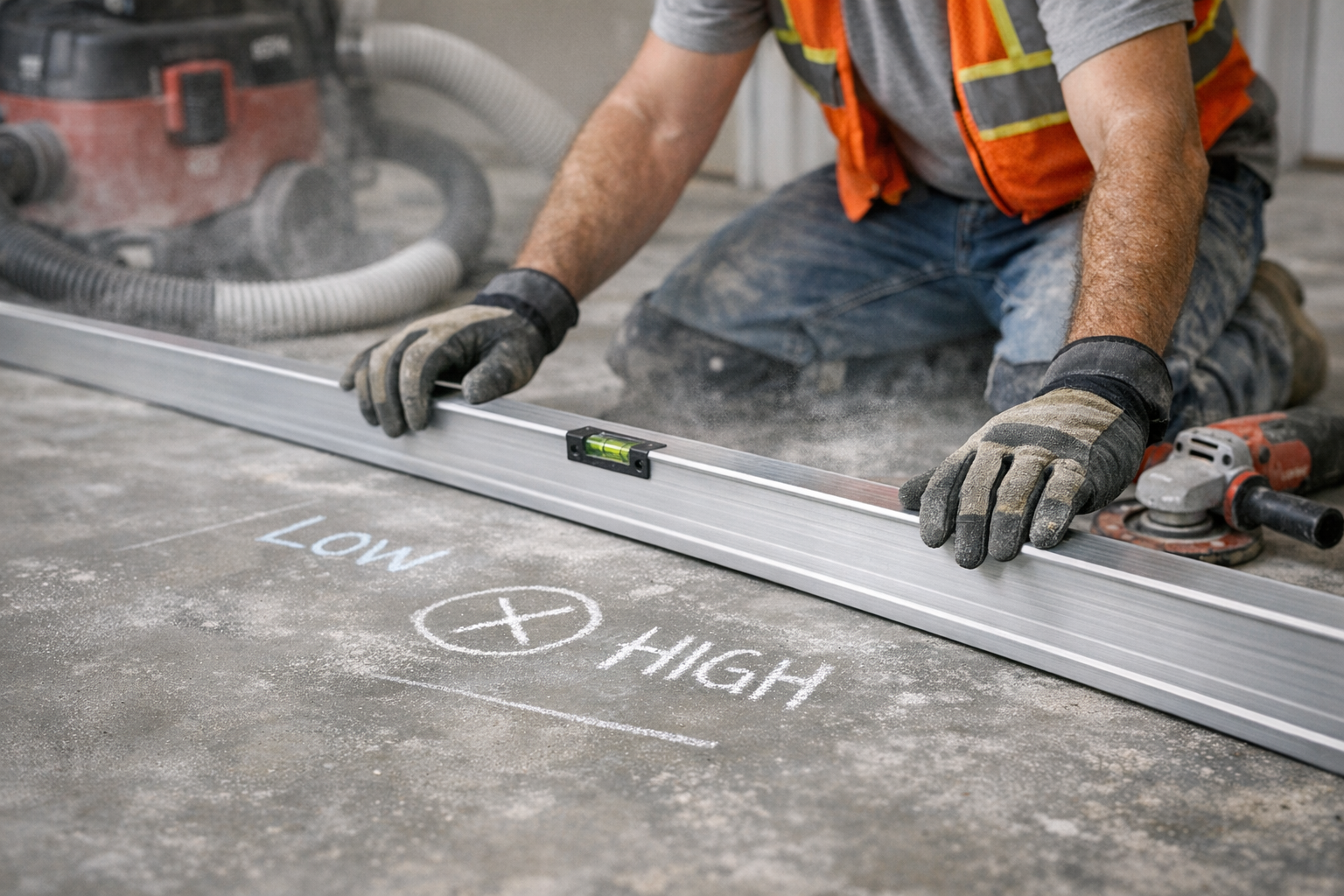
What we look for: “Birdbaths” and ridges you can’t feel with your hand but a straightedge will catch. Flooring fails on unevenness long before the wear layer ever wears out.
Room-to-room slab variation
We treat each room like its own slab environment. A shaded back bedroom can behave differently than a sunny living room, especially near exterior walls and landscaping beds that retain moisture.
Sunlight & heat loading
West-facing rooms in North Texas can heat up fast. Some products telegraph seams or crown when installed without the right underlayment and perimeter clearance.
Storm season “micro-wetting”
Small, repeated moisture events—door thresholds, fridge lines, pet bowls—cause long-term damage. We build the install details around those real-life habits.
Real homeowner problems we solve in Corinth (examples from the field)
Squeaky or “spongy” laminate in hallways often comes from subfloor deflection or floating floors laid over debris. We’ve pulled floors where a single drywall screw head—or a dried thinset ridge left from an earlier repair—caused clicking and seam damage across an entire run. That’s the kind of issue that never shows up in a quick walk-through unless someone is trained to look for it.
LVP that “separates” at the ends is commonly a locking-system issue aggravated by out-of-flat slabs. We address the slab first, then choose plank thickness and core stability that tolerate the traffic patterns typical in open-concept Corinth homes (kitchen-to-living sightlines, long runs, heavy islands). Hardwood cupping near kitchens is usually not a mystery: it’s moisture imbalance from dishwashers, ice makers, or mopping habits combined with insufficient acclimation.
If any of this sounds familiar, call us today at 469-340-0837. A five-minute conversation often confirms whether you’re dealing with a material issue—or an installation system issue that needs a different fix.
Tile cracks repeating in the same spot: usually movement—slab crack, control joint, or a hard-grouted transition. The fix isn’t “stronger grout,” it’s a movement plan (soft joints/uncoupling) that lets the floor move without failing.
Pet traffic at entries: grit is the real culprit. We recommend mat strategy, felt pads, and finish-safe cleaners so the floor looks maintained after year one—not “worn out.”
“We were told our slab was ‘fine’ by another crew. JBN showed us the high spots and low dips that were forcing the LVP lock to stress. Once the floor was prepped correctly, the tapping noise disappeared.”
“They explained why the hallway seams kept opening up—turns out the long run was trapped at two doorways. The transition plan made it look intentional instead of patched.”
Flooring options that make sense here (pros/cons without the showroom script)
Luxury vinyl plank (LVP) can be a great fit for families and rentals in Corinth, but performance depends on core type, wear layer, and locking design. We’ll steer you away from ultra-thin products that photograph well in a sample but telegraph every slab imperfection—especially around long sightlines where your eye catches a shadow line immediately.
Engineered hardwood is often the smarter “real wood” choice for North Texas because it’s built to handle movement better than solid. That said, acclimation and humidity control still matter. If your HVAC cycles hard (or you have a room that runs hotter from sun exposure), we plan the install to reduce seasonal gapping/cupping rather than pretending wood never moves.
Tile is excellent for durability and heat tolerance, but it’s unforgiving—cracks usually come from prep, not the tile. We prioritize movement joints, correct underlayment/uncoupling, and layout planning so grout lines don’t highlight lippage. Want help choosing? Speak with our flooring specialists today and we’ll match the product to your rooms, pets, and daily traffic.
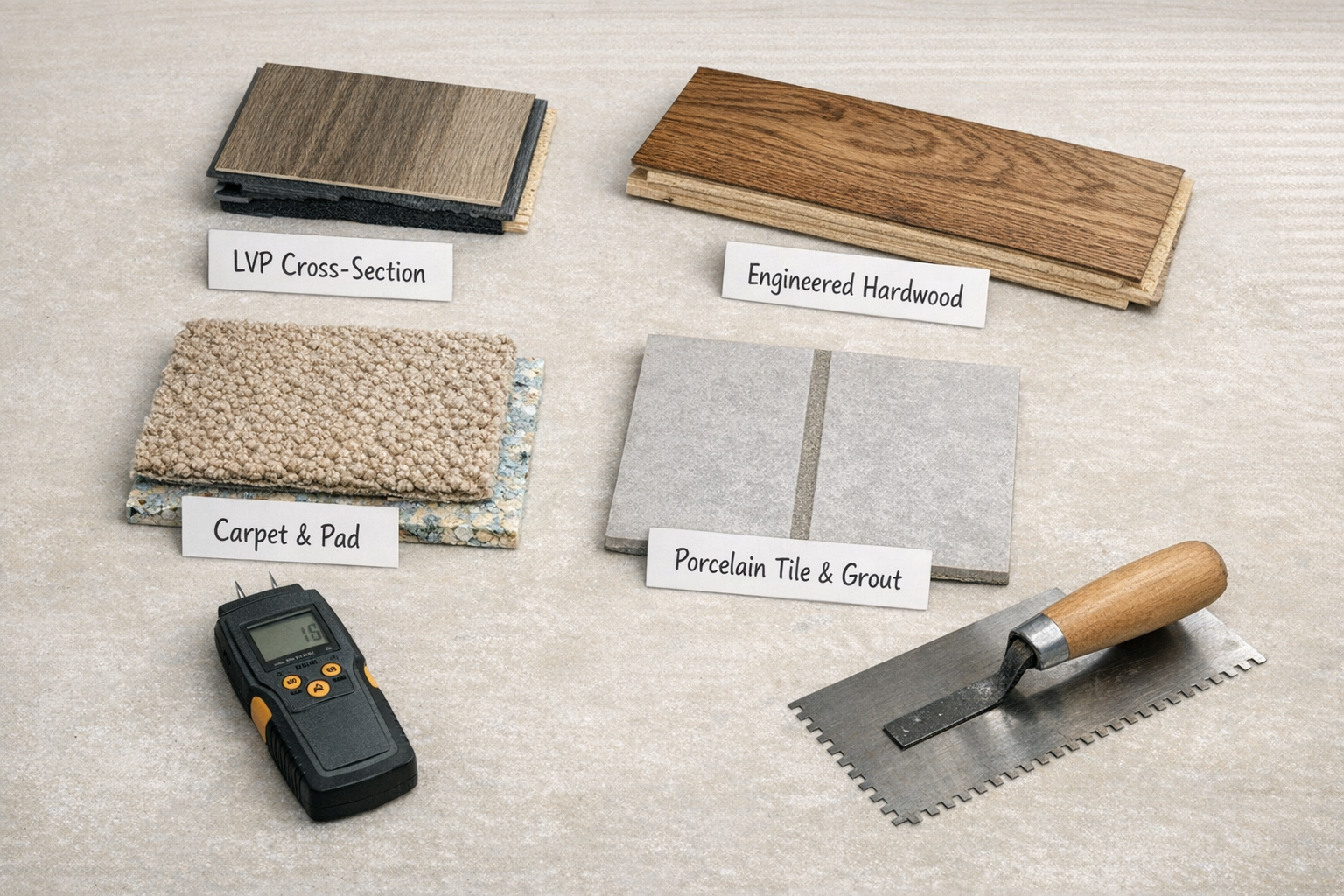
Showroom truth: “Waterproof” is marketing. Real performance comes from the system—subfloor prep, underlayment choice, edge risk management, and transitions at the places water actually shows up.
LVP (families & rentals)
We look at core stability, wear layer, and lock strength. If the slab isn’t within tolerance, the lock becomes the sacrificial part—so prep drives the recommendation.
Engineered hardwood (real wood feel)
Often the best balance for North Texas movement. We still treat acclimation seriously and talk through maintenance so you don’t fight cupping near kitchens.
Tile (durability, heat tolerance)
Prep and movement strategy matter more than the tile itself. We plan soft joints and layout so the floor can move without telegraphing stress into cracks.
Installation decisions that control longevity (what we do that most bids don’t mention)
Moisture testing isn’t optional on slabs. We check conditions and choose a vapor mitigation approach when readings—or the home’s history—suggest risk, because “it looks dry” is how homeowners end up with adhesive failure or cupping months later. Flatness prep is where floors are won or lost. We identify high spots and low areas, then grind or fill to meet the product’s tolerance so locks don’t break and tile doesn’t rock.
Transitions and expansion gaps are planned, not improvised. We account for doorways, fireplaces, cabinetry, and long hallways so the floor can move without pinching—and so it looks intentional instead of patched together. Adhesive and fastener selection is job-specific, too. A “one glue fits all” approach is how you get hollow sounds, bond failures, and squeaks that show up after the contractor is gone.
If you want a plan that matches how you actually live in the home—kids, pets, heavy furniture, frequent entertaining—request a free consultation to compare your options. We’ll map traffic flow and furniture loads (kitchen islands, pianos, heavy sectionals) and choose methods that reduce denting, seam stress, and audible tapping.
-
Verify conditions (not assumptions)
We look for slab moisture risk, prior leak history, and room-to-room variability so you don’t buy a “waterproof” product and install it into a wet system.
-
Prep to tolerance
We grind highs and fill lows to the product spec. That’s what prevents broken locks, rocking tile, and the hollow-sound complaint homeowners hate.
-
Plan movement & transitions
Long runs, doorways, fireplaces, and cabinetry need a movement strategy. We’d rather design it than “hide it” with trim later.
-
Install for your life, not the sample board
We match underlayment and method to real traffic, furniture loads, and acoustics so the floor performs where you actually walk and work.
What affects flooring price in Corinth (and how to tell value from “cheap”)
Demo and disposal can vary wildly depending on what’s under the floor—multiple layers, glued-down products, or thinset on slab can turn a “simple” replacement into a labor-heavy prep job. We call this out early so there are no surprise change orders after the house is already torn up.
Material price is only part of your total. The difference between a floor that lasts and one that fails is often prep time, moisture management, and correct accessories (underlayment, trims, transitions) that don’t show up in a quick per-square-foot quote. Floor plan complexity drives labor too: stairs, diagonal layouts, multiple transitions, tight closets, and custom cuts around fireplaces take real time.
Repairs can be cost-effective when the issue is localized (single pet-damaged area, a few broken planks, or a small tile section), but we’ll tell you when the underlying system problem makes replacement the smarter long-term move. If you’re comparing bids, ask exactly what “prep” includes—“leveling as needed” without a defined scope is where homeowners get stuck paying later.
Next step: Get your quote today and we’ll break your price into the parts that actually control performance—so you can compare apples-to-apples.
Prep scope is the truth
If the proposal can’t explain how flatness is verified and achieved, you’re gambling with locks, grout, and long-run stability.
Cure time is part of the schedule
Leveling compounds and adhesives need time. Rushing “to finish Friday” is how failures show up after the contractor is paid.
Accessories matter
Underlayment, transitions, trims, and moisture strategy aren’t fluff—they’re the system. Cheap bids often strip these out.
Homeowner tip: If two bids are far apart, ask both contractors to define “prep” in writing. Most price gaps live there—not in the plank.
Maintenance and life expectancy: how homeowners in North Texas actually keep floors looking new
Grit is the silent killer in Corinth—windy days and yard sand act like sandpaper. We recommend entry strategies (mats inside/outside, shoe habits) because finish wear is more about abrasion than “bad material.” Mopping habits matter too: over-wetting around baseboards and kitchen edges is a common cause of swelling and edge damage. We’ll teach you what “damp” really means and which cleaners won’t leave residue that attracts dirt.
Felt pads and correct casters prevent dents and seam stress. We’ve seen brand-new floors damaged in a weekend by metal bar stools or office chairs—simple protection choices save thousands in avoidable repairs. Humidity control is part of owning wood floors here; if your HVAC struggles or you have rooms that run hotter from sun exposure, we’ll suggest practical steps to reduce seasonal gapping/cupping rather than pretending wood never moves.
We also set expectations for refresh cycles based on material. Some LVP is “replace, not refinish,” while engineered hardwood may allow limited refinishing. Making that decision upfront prevents regret later. If you want product guidance built around real use (pets, kids, rentals, resale), call our team and we’ll talk through what holds up in your specific layout.
What damages floors fastest
- Grit at entries (especially during windy weeks).
- Over-wet mopping around kitchen edges and baseboards.
- Unprotected chair legs and metal stools.
- Dragging heavy furniture without sliders.
- Ignoring humidity swings in wood-floor rooms.
What keeps them looking new
- Two-mat system (outside + inside) and regular shake-outs.
- True damp mop and residue-free cleaners.
- Felt pads, correct casters, and entry habits.
- Furniture sliders for moves and rearranges.
- Practical humidity management for engineered/wood.
Local trust signals and third-party verifications (for homeowners who research before they call)
If you’re vetting contractors the way you should, we encourage you to check third-party profiles and membership directories that homeowners in Denton County commonly use when comparing bids and reputations. We show up as The JBN Group/JBN Flooring across recognized organizations; consistency matters because it’s one of the ways homeowners can confirm a real operating business rather than a “pop-up” crew.
Use these listings to cross-check service history, business details, and reviews: Better Business Bureau, Dallas Builders Association, NARI, NKBA, The Good Contractors List, Directorii, and the Lake Cities Chamber of Commerce. Social proof is useful, but we also value the kind of trust that comes from trade affiliations and verified directories—because flooring success is about process and accountability, not just pretty photos.
If you want examples of work standards and project expectations before you request pricing, these sources help you see how we operate and how clients describe the experience. When you’re ready, request a quote and we’ll walk you through the exact system your rooms require.
FAQ: Corinth flooring installation, replacement, and repair questions we hear every week
“Do I need to move all my furniture?”
We’ll tell you what can stay, what must move, and how we stage rooms so you’re not living in chaos. Heavy items like pianos and packed bookcases require a plan to avoid damage and seam stress—this is also where “quick installs” often go wrong.
“How long will my house be out of commission?”
Timeline depends on demo, prep, and cure time. For many installs the hidden time is leveling compounds and adhesives curing—rushing that is how floors fail later. We plan the schedule around those realities, not a best-case guess.
“Can you install over existing tile or concrete?”
Sometimes, but only if flatness and height constraints work. We evaluate door clearance, appliance clearances, and whether the existing surface will telegraph through or compromise the lock system.
“Is LVP really waterproof?”
It handles spills well, but repeated moisture at edges, from below, or at transitions can still cause problems. We focus on risk points like entry doors, kitchens, and slab moisture history so the system—not the marketing—does the protection.
“What’s the best flooring for pets?”
We balance scratch resistance, traction, and cleanability. We also talk nail maintenance and grit control because even “pet-proof” floors can be destroyed by sand and untrimmed nails in high-traffic entry paths.
If you’re still weighing replacement vs. repair, the fastest way to get clarity is to describe what you’re seeing (gaps, noise, cracking pattern, soft spots) and when it started. Call us today and we’ll tell you what usually causes that symptom in Corinth-area homes—and what to check before you spend money.
Want a straight answer? If we think a localized repair will hold, we’ll say so. If we see signs of a system issue (moisture, flatness, trapped runs), we’ll explain it with the “why,” not just a bigger number.
Get a quote from a Corinth-area flooring contractor who won’t cut corners
Call to talk through your rooms, slab/subfloor condition, and material options—or request a quote and we’ll build a plan that matches how you actually live in the home. If you’ve been burned by vague “prep included” language before, you’ll appreciate a scope that’s specific, slab-aware, and designed for North Texas conditions.