
JBN Flooring • Denton, TX
Hardwood Installation & Refinishing in Denton, TX (Built for North Texas Living)
JBN Flooring installs and refinishes hardwood in the rooms that show wear first—living rooms, master bedrooms, and entryways—using moisture-smart methods that hold up to Denton’s humidity swings, slab-on-grade homes, kids, pets, and daily traffic.
Prefer to start with background? Visit JBN Flooring and then use the quote form when you’re ready.
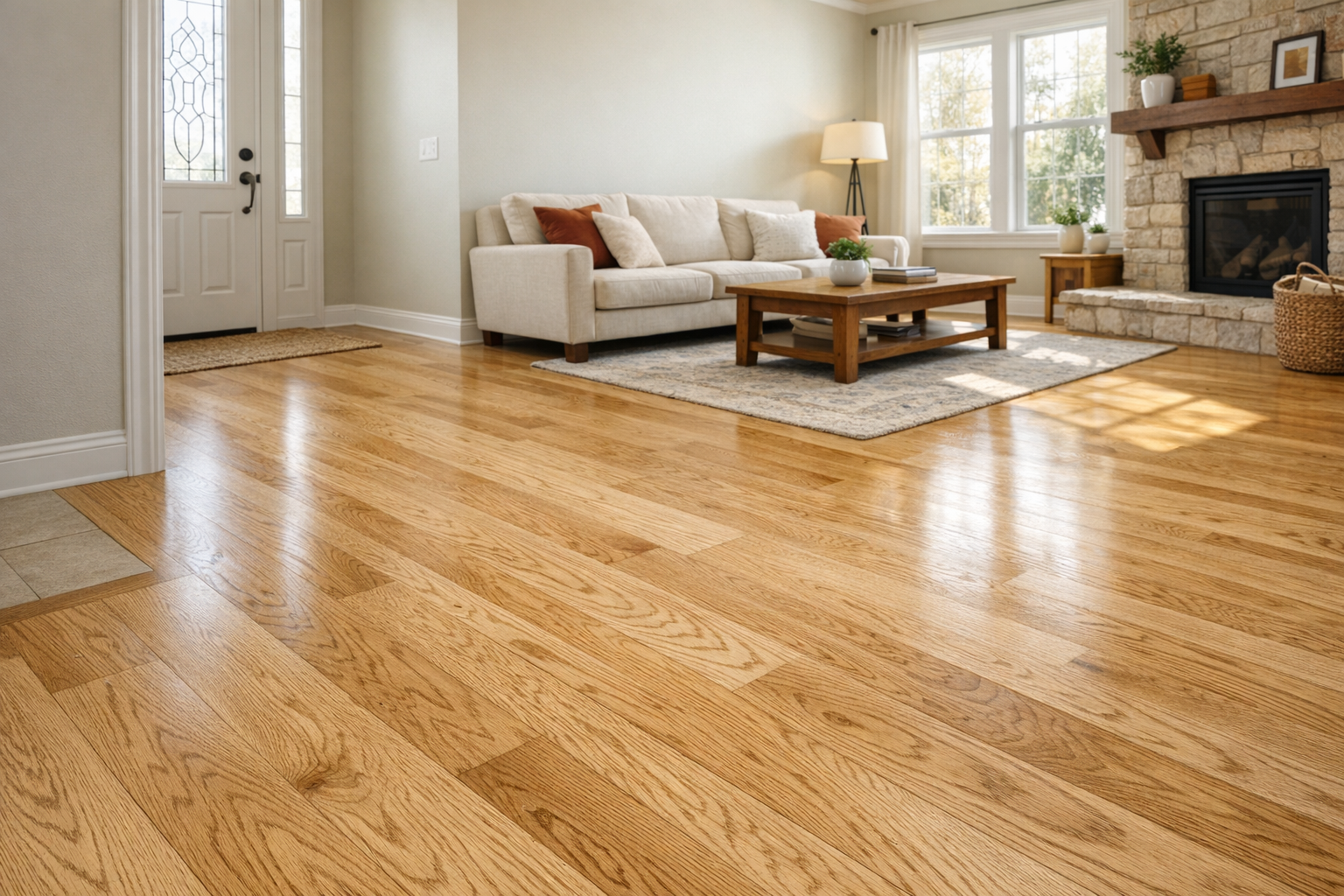
Snippet-ready: What we do (and why it lasts longer here)
Most hardwood pages talk about “beautiful floors” and stop there. In Denton, the floors that look perfect in month one are the ones that were planned for movement, moisture, and day-to-day abuse—especially in entryways and open living rooms where sun, grit, and foot traffic concentrate. Our job is to tell you the truth about what your floor needs, even if that’s a targeted repair instead of a full rip-out.
When you call us, we start with what you’re actually noticing: boards that feel slightly peaked after a storm front, squeaks that show up when the HVAC switches seasons, or a “traffic lane” that’s gone dull from the front door to the kitchen. We’ll explain whether those symptoms are finish wear, subfloor movement, or moisture imbalance—and what each fix can realistically accomplish.
From clean doorway transitions to consistent stain tone, we focus on the details you’ll see every morning when you walk through the house, not just what looks good in a quick photo.
- We help you decide between refinish, partial repair, or replacement based on what the floor is doing—not what’s easiest to sell.
- We plan around slab-on-grade realities and North Texas humidity swings so movement doesn’t telegraph later.
- We match sheen and finish chemistry to your household (dogs, kids, office chairs, and cleaning habits).
- We sweat the “everyday” details: thresholds, trim lines, stain consistency, and durability at drop zones.
If you’re ready to talk through your rooms, use Get Your Quote Today or call 469-340-0837.
Common Denton homeowner problems we see in the field (and what’s usually causing them)
Denton floors rarely fail all at once. They “tell on themselves” first—small edges lifting after a wet week, a hollow spot you only notice barefoot, or an entryway that turns gray no matter how much you clean. Those clues point to root causes you can address now, before you pay for a refinish that looks great but doesn’t hold.
For example: cupping after a weather shift is often moisture imbalance (a humid garage, a crawlspace source, or a slab that wasn’t verified dry enough), not “bad wood.” Squeaks and hollow spots are frequently subfloor or slab-flatness issues—meaning the noise can return even after a gorgeous sand-and-finish if nobody corrected the base.
We also see a lot of entryway wear-through. Once the finish is gone, grit becomes sandpaper and the wood starts darkening. The fix isn’t just adding coats; it’s choosing a finish system that fits abrasion and setting up a mat-and-maintenance plan that’s realistic for your household.
- Cupping/crowning after storms: commonly tied to moisture imbalance or inadequate acclimation to lived-in conditions.
- Squeaks/hollow spots: often subfloor movement or slab flatness—address the cause before refinishing.
- Gray/dull/blackened entry boards: finish wear-through plus grit abrasion; strategy matters more than “extra coats.”
- Patchy stain or lap marks: sanding progression and dry times—humidity and cure windows matter in Denton.
- Seasonal gaps: normal to a point; oversized gaps can signal product mismatch, acclimation, or unmanaged humidity.
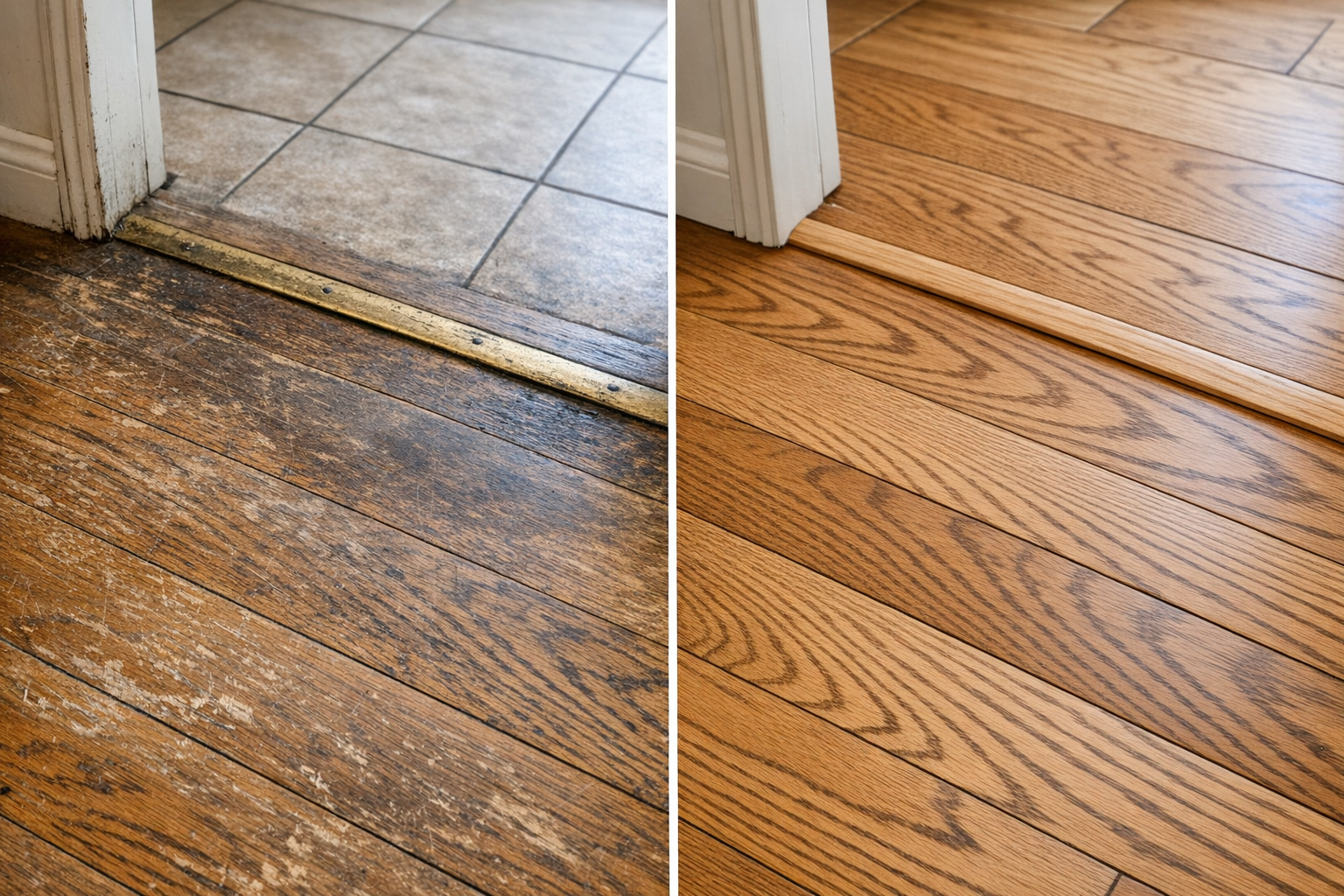
High-traffic entryways are where a finish system proves itself first—especially with Denton grit and humidity cycles.
Hardwood installation in North Texas: the technical choices that prevent callbacks
The install decisions that prevent movement and noise aren’t flashy, but they’re the difference between a floor that feels “tight and quiet” versus one that slowly develops issues you can’t unsee. In Denton, we plan installs around slab conditions, seasonal humidity, and the reality that many homes have transitions to tile, carpet, or existing hardwood that must land cleanly.
Start where problems begin: flatness & moisture
Before boards go down, we focus on the surface they’re trusting. If a slab is out of plane or a subfloor has seam issues, the floor can “print through” later as hollow spots, movement, or finish fractures. Moisture verification and prep are the unglamorous steps that keep the pretty part pretty.
Solid vs. engineered is an application call
In many Denton slab-on-grade homes, engineered hardwood can be the smarter stability play. In other homes—where height, fastening method, and conditions support it—solid hardwood can be ideal. We choose based on structure and performance, not what’s trending online.
Transitions and heights aren’t “later” details
Entry thresholds, adjacent tile, and door clearances can’t be an afterthought. We plan heights so you don’t end up with toe-stubbing reducers or a door that suddenly drags. Clean transitions are part of what makes an entryway transformation feel custom.
Room-by-room strategy
Living rooms and entries need abrasion resistance and practical maintenance; bedrooms often benefit from quieter underfoot decisions and a finish that doesn’t highlight every scuff. We tailor the plan to how each space gets used in real life.
Perimeter details signal craftsmanship
Expansion gaps, base/shoe decisions, and straight layout lines are the items homeowners notice daily—even if they can’t name them. Those details separate a “new floor” from a “well-installed floor.”
Refinishing vs. replacing: how we help you decide without guesswork
Most frustration comes from paying for the wrong solution. We’ve seen floors that didn’t need replacement get torn out, and floors that needed structural fixes get “cosmetically upgraded” only to fail again. Our approach is to diagnose first—then recommend the simplest option that actually lasts.
Refinishing is usually the best value when the wear is surface-level: dull sheen in the living room, scratches from a rolling desk chair, uneven stain from an older job, or minor pet staining that hasn’t penetrated deeply. Before recommending a sand-and-finish, we evaluate thickness, prior sand counts, and whether the damage is local or everywhere.
Replacement becomes the smarter spend when boards are structurally compromised—deep black urine damage through the wood, widespread cupping, severe gouges, or height variation that would still look wavy after sanding. And when only certain zones are failing (often an entryway), targeted repairs plus a full refinish can create a uniform look without tearing out good wood in bedrooms and closets.
Identify the symptom
Wear-through, cupping, squeaks, stain issues, sun lanes—what you see tells us where to start looking.
Confirm the cause
We check the “why”: moisture/flatness, subfloor fastening, finish chemistry, cleaning habits, and traffic patterns.
Choose the long-term fix
Refinish, targeted repairs + refinish, or replacement—based on performance and your logistics for living in the home.
Need a fast answer? Call 469-340-0837 and describe the room, the foundation type, and what changed seasonally.
Finish & product comparisons we actually use (and why Denton homes respond differently)
Finish selection is where many “good” floors turn into high-maintenance floors. Denton’s natural light can make sheen look very different from room to room, and the combination of grit at the entry plus HVAC-dry months can exaggerate scratches and swirl marks. We don’t just pick what’s popular—we match the system to how your household lives.
In family homes, satin is often the sweet spot: it reads clean and upscale, but it doesn’t spotlight every micro-scratch the way higher-gloss can—especially in wide living rooms with strong window light. For dog households, we plan around grit and nail wear; the honest truth is that maintenance strategy (mats, felt pads, and the right cleaner) usually makes a bigger difference than chasing the hardest-wood marketing claim.
Stain consistency is another “field reality.” Oak, maple, and hickory take stain differently, and we use a test-area approach so you see the color in your lighting—open concept daylight + warm bulbs can shift a tone dramatically. We also explain cure timelines in practical terms: when you can walk on it, when rugs can go back, and how to avoid imprinting in the first week.
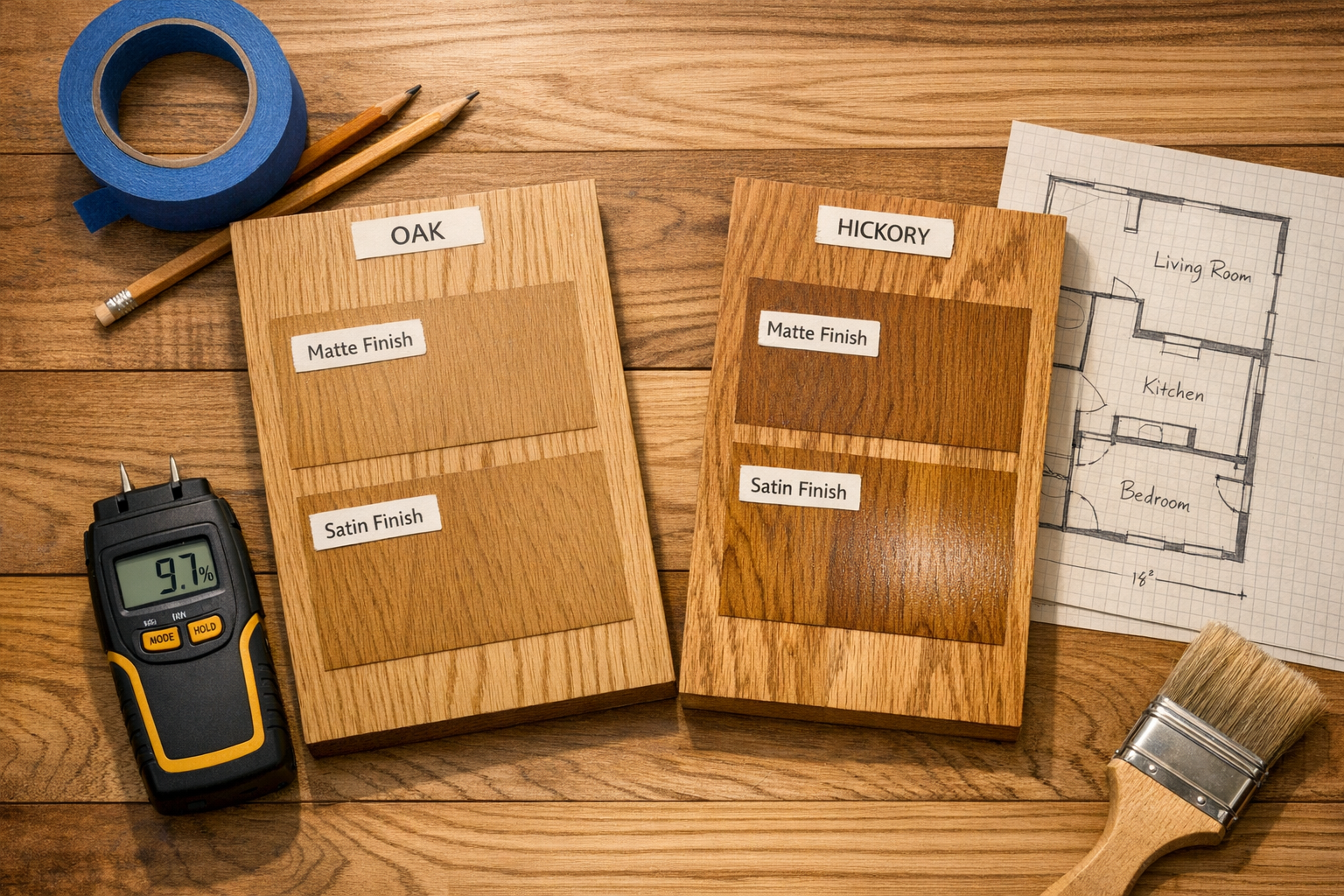
We prefer decisions you can see and feel: sample boards in your light, not guesses on a screen.
What affects hardwood pricing in Denton (real drivers, not vague ranges)
If two quotes are far apart, it’s usually because one includes the work that prevents issues—and one assumes the base is perfect. Square footage matters, but it’s not the lever that moves price the most on real projects. Prep, layout complexity, and finish system decisions are what change both cost and timeline.
Subfloor/slab prep (the hidden variable)
Leveling a slab, correcting seam issues, fixing squeaks, or replacing damaged subfloor sections takes time—but it’s what keeps the finished floor stable and quiet. Skipping prep can be cheaper now and expensive later.
Complex layouts, hallways, and stairs
Entryway transformations and tight transitions add labor because cuts and fit must land precisely next to other flooring types. These are the areas where “close enough” shows immediately.
Finish system and cure planning
Faster-turnaround systems can cost more. Higher-durability options may add steps or require cure planning so the surface isn’t imprinted or prematurely worn by furniture and rugs.
Color changes and matching
Matching a specific tone to cabinets or existing trim takes testing and sequencing. A natural finish is often simpler; a precise color match is a small project inside the bigger project.
Material grade and availability
Board length mix, character grade, and availability affect price and the final look. We help you spend on what you’ll actually notice—grain, tone, and consistency—without paying for buzzwords.
Field note: When a quote looks “too good,” it’s often because it assumes the floor is flat and dry enough and that transitions will be “standard.” In Denton slab homes, those assumptions are where callbacks are born.
Longevity in North Texas: climate, structure, and maintenance (what we tell our own neighbors)
Hardwood longevity in Denton isn’t just about “durable products.” It’s the combination of climate behavior, structural realities, and small daily habits. We’d rather give you a plan that keeps the floor looking good for years than sell you a finish that looks perfect for six months.
Denton weather swings—humid storm periods followed by dry HVAC seasons—can make wood move. Keeping indoor humidity reasonably stable helps more than any miracle coating. In slab-on-grade homes, moisture and flatness management are the foundations of long-term performance; without that, you can end up with subtle hollow spots that gradually become obvious.
Sun exposure matters too. Large windows can fade and amber finishes unevenly, creating “rug tan lines” in living rooms. We talk through layout and exposure so the floor ages more evenly. And we’re direct about cleaning: overly wet mopping and harsh cleaners are common causes of haze and premature wear. Simple upgrades—felt pads, chair glides, and smart mat placement at the front door—protect the finish where floors fail first.
- Using water-heavy mops that force moisture into seams and dull the finish over time.
- Skipping entry mats—grit at the front door is the fastest way to wear through a finish.
- Choosing high-gloss in big sunlit rooms, then being surprised by visible swirls and scratches.
- Putting rugs back too soon after finishing and trapping solvents or imprinting the surface.
- Assuming squeaks are “just hardwood” instead of a fixable subfloor/slab issue.
Want a recommendation tailored to your rooms? Use the quote form and mention your foundation type (slab/crawlspace) and the worst-wearing area (often the entry).
Local trust signals & verified listings (helpful for homeowners—and for accountability)
For a project that permanently changes your home, “trust me” isn’t enough. Denton homeowners often want proof beyond a website—consistent business identity, service area clarity, and third-party accountability. We keep verified profiles and memberships active so you can confirm who you’re hiring before anyone steps inside your home.
These listings help you cross-check business name, contact details, and reputation across independent sources. They also reduce confusion with similarly named companies, which matters when you’re inviting a crew into your living space. If you prefer to do homework first, browse the profiles below, then call us with your exact scenario—entryway wear patterns, pet staining, squeaks, or a slab foundation that needs a moisture-smart plan.
Website: https://jbnflooring.com/
FAQ: Denton hardwood installation & refinishing questions we get all the time
These are the questions we hear from Denton homeowners right before they commit—usually after they’ve lived with entryway wear, pet stains, or seasonal movement long enough to want a permanent fix. The goal is to help you plan the project around real life: pets, schedules, ventilation, and how quickly you need rooms back.
Can you refinish my floors if I have pets or kids at home?
Yes, but planning matters. Traffic control, ventilation, and a clear “when can we walk on it / move furniture back” timeline are what keep a new finish from getting damaged immediately. We’ll talk through where you can live in the house during the work, and how to protect the entryway and hall paths during cure.
How do I know if my floor can be sanded again?
We look at thickness, how many times it has likely been sanded, the depth of damage, and whether the worst areas are localized (common at the front door) or widespread. If the wear layer is too thin or damage is too deep, we’ll recommend repairs or replacement instead of gambling.
Is engineered hardwood “worse” than solid?
Not automatically. In many North Texas slab homes, engineered can be more dimensionally stable, which can mean fewer seasonal issues when indoor humidity swings. The right choice depends on the home, the install method, transitions, and the performance you want long-term.
Why does my entryway wear out faster than the rest of the house?
Grit and moisture at the front door act like sandpaper. The fix usually combines a finish strategy (abrasion resistance and realistic touch-up expectations) with simple protection steps like mats and regular dry cleaning, so the new finish doesn’t wear through first at the threshold.
What should I do if my floor is squeaking?
Squeaks often point to subfloor movement or fastening issues. Refinishing alone won’t solve it, so we address the cause before investing in a new surface look. If it’s a slab-related hollow spot or a subfloor seam issue, the fix is different than “just tighter boards.”
Still deciding? Call 469-340-0837 and tell us your foundation type and which room bothers you most.
Get a hardwood plan that matches your home—not a generic quote
Call JBN Flooring or request a quote. We’ll talk through your rooms (living room, master bedroom, entryway), what you’re seeing, and what will actually hold up in Denton’s climate—then recommend the best path forward.