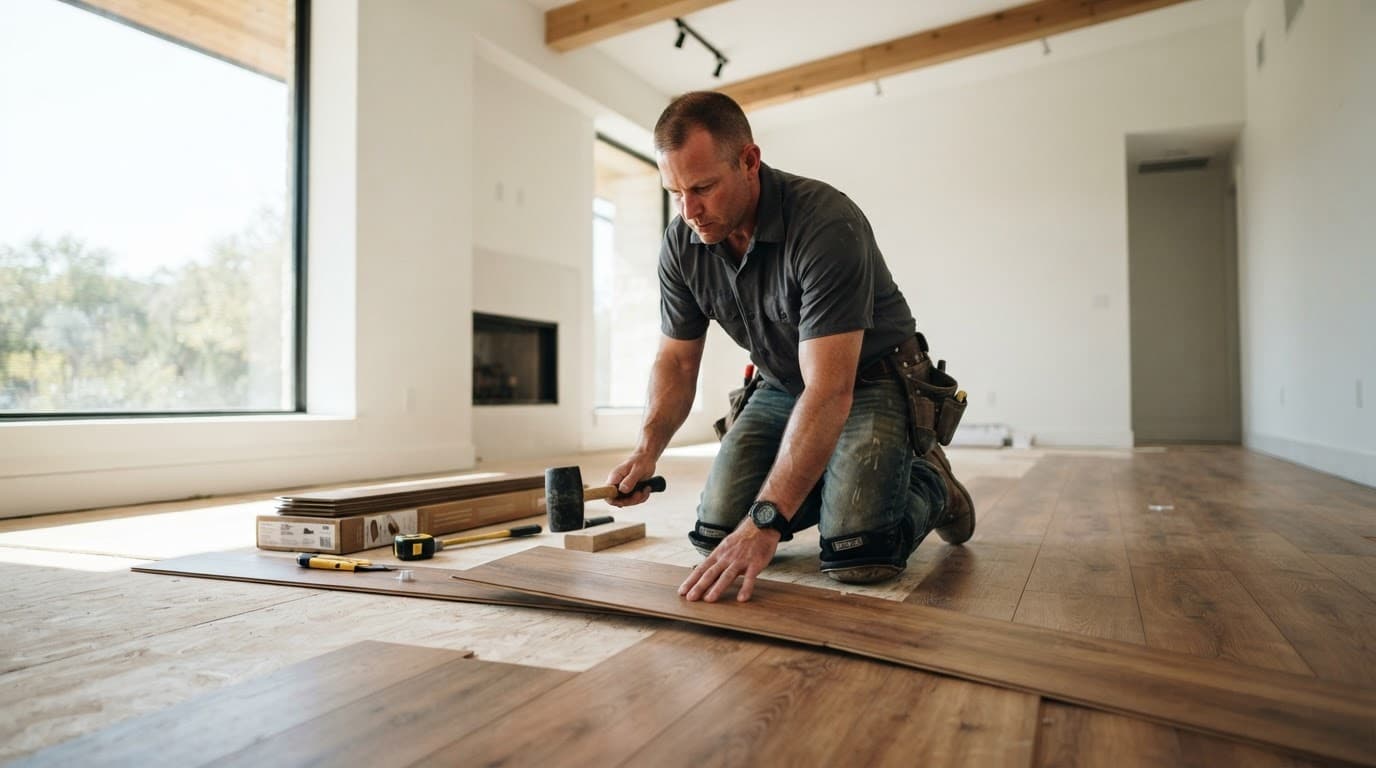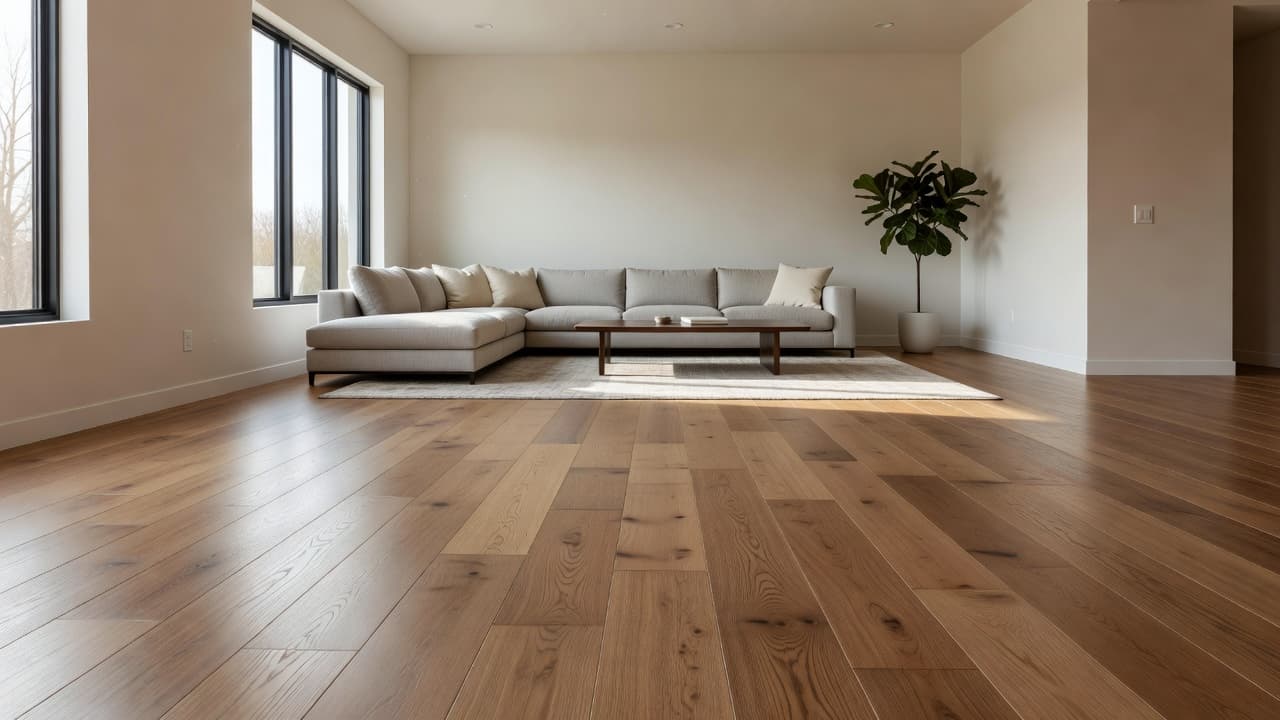
Floor Installation in Denton, TX That’s Built for Real Homes (Not Showroom Conditions)
JBN Flooring installs LVP, hardwood, laminate, and tile with the prep, moisture checks, and layout decisions that keep floors quiet, flat, and durable through North Texas heat, humidity swings, and slab realities.
Want to learn more about our company? Visit JBN Flooring.
Why Denton Homeowners Replace Floors (And What Usually Goes Wrong)
Most people don’t start by wanting a “new floor.” They start with one specific annoyance that keeps getting worse: a hollow click under the same hallway step, grout lines that keep cracking in front of the fridge, or a bedroom doorway that suddenly feels like it’s “pushing up.” In Denton, those problems show up faster because real homes aren’t controlled environments—summer humidity spikes, A/C cycles hard, and many neighborhoods sit on slab foundations that aren’t perfectly flat after years of settling.
We’re called in after the install “looked great” for a few months and then started talking back—squeaks, movement, gaps, or that crunchy sound when a click floor flexes over a low spot. The pattern is consistent: the visible surface gets all the attention, while the subfloor/slab and movement plan get treated like an optional line item. That’s the part that fails first.
What we see on real Denton jobs
The failure point is rarely the middle of a room—it’s transitions, hallways, under appliance runs, and along west-facing walls where heat loads build up and materials move. Those are the “stress lanes” we plan around from day one.
Noisy, hollow-sounding floors
Many Denton homes end up with click floors that “work” underfoot because leveling was skipped. What starts as a small dip turns into joint separation, squeaks, or cracked grout in the same traffic lanes.
Buckling at doorways and hallways
Summer humidity and temperature swings expose weak details fast. We often find expansion gaps pinched tight by baseboards, heavy transitions, or jambs that weren’t undercut correctly.
Water events that become tear-outs
Fridge line leaks, dishwasher seepage, pet accidents, and entryway storm water are real. The wrong product choice—or poor edge sealing—turns minor cleanup into swelling and staining.
Showroom decisions that don’t fit the house
A sample board can’t show you what direct afternoon sun, slab moisture, or uneven subfloors will do. Denton conditions change what performs well day-to-day.
Subfloor surprises
Homeowners get blindsided by how much the subfloor drives the result. The floor you see is only as good as what it’s installed over—especially where settling creates long, shallow dips.
“It’s only one spot” becomes the whole floor
Problem areas spread: a soft spot invites more flex, which stresses locks or grout, and soon the fix costs more than doing the prep correctly at the start.
Our Installation Process (The Parts Competitors Don’t Like to Talk About)
The biggest difference between a floor that feels solid for years and a floor that starts failing in season one is what happens before the first plank or tile goes down. If you’ve ever walked on an LVP floor that sounded “drummy” or felt bouncy near the pantry, you’ve experienced what a rushed prep plan does. We treat prep, moisture strategy, and layout as performance decisions—because in Denton, slab flatness and humidity swings don’t care how nice the plank looks on the box.
Our approach is to diagnose how your home will stress the floor: rolling chairs in an office, kids’ traffic lanes from the garage, heavy appliances that concentrate load, and rooms with big windows that heat the surface past room temperature. Then we build the install plan around those realities—so the floor is quiet, transitions are clean, and the system can move the way it needs to without pinching.
On-site evaluation (beyond square footage)
We look at traffic patterns, pets, kids, rolling loads, and how the home is lived in—because what survives in a guest room can fail early in a kitchen or entry.
Moisture & flatness checks that drive the plan
On slab homes, readings and straightedge checks determine prep. If moisture is high or the slab is wavy, we recommend the right prep to prevent hollow spots and joint stress.
Layout built to reduce stress (not just look good)
We plan direction, stagger, and transitions to avoid sliver cuts and to keep long runs from telegraphing slab variation—especially through halls and doorways.
Material handling is part of the install
Denton summers are no joke. Product left in a hot garage or rushed from delivery to install can change size after it’s down—showing up as end gaps, tight edges, or peaking. We acclimate and stage materials to match real site conditions.
Finish details that protect the investment
Correct expansion gaps, clean trim returns, door jamb undercuts, and a transition strategy that doesn’t pinch a floating floor. We end with a walkthrough that explains what to watch for in the first few weeks.
Choosing the Right Flooring for Denton, TX: LVP vs Hardwood vs Tile vs Laminate (Real-World Tradeoffs)
“What’s the best flooring?” in Denton usually means “what won’t give me problems with kids, pets, sunlight, and a slab?” The honest answer is that every material has a failure mode, and our job is to help you choose the one you can live with—and then install it so you don’t accidentally trigger that failure mode. For example: LVP is forgiving with spills, but it will telegraph slab waves if flatness is ignored; tile lasts forever, but it punishes movement and poor prep; hardwood is timeless, but it demands respect for seasonal humidity changes.
We’ll walk rooms with you and identify the home’s “stress points”: west-facing windows, appliance runs, hallway funnels, and transitions where different substrates meet. That’s where we decide product type, underlayment strategy, and transition details—not from a showroom board, but from your house’s conditions.
One field note that saves people money
If a click floor feels “spongy” in one area before installation, it will feel worse after furniture goes in. That’s not a plank problem—it’s a flatness and support problem. Fixing the subfloor first is almost always cheaper than chasing squeaks and broken locks after the fact.
What Affects Floor Installation Pricing in Denton (And How to Avoid Surprise Add-Ons)
If you’ve ever compared flooring quotes and wondered why numbers vary wildly, you’re not imagining it. Pricing isn’t just “labor per square foot.” In Denton, the variables that decide whether a floor performs are the same variables that change cost: subfloor flatness, demolition complexity, moisture conditions on slab, and the detail work at transitions and stairs. The cheapest quote often assumes the best-case scenario—until install day, when prep and trim become “extras.”
We try to remove ambiguity early. That means explaining what we’re seeing, why it matters, and what’s included so you can compare bids fairly. When we recommend prep, it’s not to “upsell”—it’s because a floor that fails at month eight costs more than doing it correctly on day one.
How to compare bids without getting burned
Ask each installer to define what “prep” includes (grinding? patching? self-leveling? moisture mitigation?), what transitions/trim are included, and whether door jamb undercuts and stair noses are in the scope. If it’s vague, it’s usually expensive later.
Subfloor prep (the biggest variable)
A floor can look “fine” to the eye but still be outside manufacturer flatness tolerances. We price based on what the floor needs to perform—not just what it needs to get installed.
Removal & disposal complexity
Tile on slab vs glued-down vinyl vs carpet/pad changes labor. Denton remodels often have multiple layers, and “history” under the current floor affects the plan.
Transitions, trim, and stairs
Reducers, stair noses, baseboards, quarter round, and door jamb undercuts are where quotes can mislead. We spell out what’s included so you can compare apples to apples.
Room geometry and waste factor
Angled halls, islands, tight closets, and multiple doorways add cut time and material waste. It’s normal—but it should be explained up front, not buried in change orders.
Product-driven labor and tolerances
Large-format tile needs a flatter substrate and tighter setting technique. Thicker rigid-core LVP can bridge minor imperfections, but meaningful dips/humps still cause failure.
Moisture strategy on slab
When slab moisture is elevated, underlayment/adhesive selection matters. The right system costs more up front, but it’s cheaper than a full tear-out.
A realistic example we see in Denton
A homeowner replaces carpet with click LVP and chooses the lowest bid. The installer skips flatness checks and uses a soft underlayment “for comfort.” Two months later, the hallway clicks, a doorway joint starts separating, and the kitchen run near the fridge feels bouncy. The fix isn’t “a new plank”—it’s pulling the floor back, correcting the low spot, switching to the correct underlayment, and rebuilding transitions so the floor can float. The “savings” disappears fast when you pay twice.
Longevity in North Texas: Heat, Humidity Swings, Slab Movement, and Sunlight
North Texas floors don’t fail because the material is “bad.” They fail because movement was ignored or moisture was guessed at. Denton summers bring long stretches of heat, then heavy A/C cycling—exactly the recipe that exposes pinched perimeters, tight transitions, and rushed acclimation. Add in slab moisture that can migrate even when the surface looks dry, and you have a job that needs a plan, not just a product.
We design installs to tolerate real conditions: controlled expansion gaps, transitions that don’t trap a floating floor, and prep that eliminates stress points rather than hiding them. For big-window rooms, we talk through sunlight effects in plain terms: the floor surface can get far hotter than room temperature in west-facing areas, which is why some products gap more visibly or stress locks if the layout and support aren’t right.
Expansion strategy isn’t optional
Tight perimeter cuts and pinched transitions cause peaking and buckling in floating floors. We build movement room where the floor needs it—especially at hallways and doorways.
Moisture can be invisible
Concrete slabs can transmit moisture even when they look dry. Testing and matching underlayment/adhesives to conditions prevents avoidable failures.
Sunlight changes the rules
Direct sun through large windows can push surface temps high. We discuss ratings, coverings, and layout choices that reduce visible gapping and joint stress.
Movement happens—plan for it
Older homes and remodels can shift subtly. We choose assemblies that tolerate movement so failures don’t show up at grout lines, seams, and transitions.
Underlayment myths (comfort vs lock strength)
Thicker isn’t always better. Too much cushion makes click joints flex and unlock. We balance sound reduction with the stiffness locking systems need.
Maintenance is part of longevity
Entry mats, drip trays under icemaker lines, and fast cleanup prevent many “mystery” failures. We give practical habits based on the material you choose.
The homeowners who are happiest a year later are the ones who agreed to fix the subfloor even when it wasn’t “visible.” They don’t call us back for clicking, gaps, or cracked grout—because we removed the conditions that create those problems. Field note from Denton-area installs
Common Mistakes We See in DIY and Low-Bid Installations (So You Can Avoid Them)
DIY can work when the conditions are friendly and the installer is patient. The problem is that most Denton jobs aren’t friendly: slab dips hide under old carpet, doorways pinch movement, and the “one uneven spot” is exactly where the kitchen traffic lives. Low-bid installs often fail for the same reasons as rushed DIY—because the time and materials that prevent failure (leveling, acclimation, correct transitions) get treated as expendable.
If you’re planning a project, use this section as a checklist. These are the issues we fix most often, and they’re frustrating because they’re preventable. A floor is a system: subfloor + prep + product + transitions + trim. If one part is wrong, you feel it every day.
Skipping flatness checks and leveling
The fastest path to hollow LVP spots and tile lippage. It may look good on day one, then fail under furniture load and daily traffic.
Wrong underlayment (or doubling it)
“Extra cushion” often creates joint failure. Click floors need the right balance of sound control and stiffness to keep locks engaged.
Rushing acclimation / hot-garage storage
Materials stored in extreme heat can shrink/expand after installation. That’s how end gaps, tight edges, and squeaks appear later.
Bad transitions at doorways
Mixing flooring types can pinch floating floors or leave exposed edges that chip. We plan transitions around movement needs, not just appearance.
Poor moisture management in wet zones
Swelling and staining usually start at appliances and entries. We advise on product choice and simple habits like mats, drip trays, and quick response.
Ignoring the “stress lanes”
Failures show up where people walk and where weight sits (fridge, island stools, desk chairs). We reinforce the plan around those zones.
Quick self-check before you commit to an install
Put a long straightedge (or the longest level you have) across the slab in multiple directions—especially through hallways and in front of the fridge/dishwasher. If you can slide a stack of coins under one spot but not another, you’ve found the kind of variation that makes click floors flex and tile show lippage. That doesn’t mean the job can’t be done—it means the prep plan needs to be honest.
Local Trust Signals & Verified Listings (For Homeowners Who Verify Before They Hire)
If you’re doing your homework (you should), don’t stop at a gallery and a few testimonials. Verify the business across third-party sources: consistent naming, service area, and feedback patterns matter more than a single star rating. In busy seasons—especially after storms or during high-volume remodeling—Denton homeowners see more “pop-up” operators. Legit contractors are easy to verify because their footprint matches across platforms.
We’re comfortable being compared. Use the links below to validate JBN Flooring / The JBN Group across recognized organizations and directories. If you’re comparing bids, verification helps ensure you’re not accidentally dealing with a look-alike profile or a company that changes names between platforms.
What to look for when you verify
Consistent company identity, long-term presence, and clear contact paths. Red flags include mismatched names, missing history, or profiles that only appear during peak demand periods.
Third-party profiles
Check independent listings to confirm legitimacy and consistency across platforms.
Associations & trade networks
Memberships and professional networks can be another layer of due diligence.
Local & community presence
Local listings and community ties help confirm a real, established operation.
Prefer starting with a conversation?
Call us and tell us what you’re dealing with: “hollow spots in the hallway,” “tile grout cracking near the island,” or “we’re worried about pets and spills.” Those details help us give practical guidance immediately—even before measurements.
Floor Installation FAQs (Denton, TX Homeowner Questions We Hear Weekly)
These are the questions we hear repeatedly on Denton installs—usually after someone has already had one bad experience or is trying to avoid the most common failure points. If your situation is specific (sun-baked west-facing rooms, older slab, pets, or a prior water event), tell us that up front. Those details change the right material choice and the prep plan.
How long does installation take?
Timelines depend on demolition, subfloor prep, and material type. A straightforward LVP install can move quickly, but leveling, patch cure, and adhesive cure times can add days when done correctly. If someone promises “one day no matter what,” ask what they’re doing about prep and cure windows—because the floor will collect that time later as a repair.
Do you need to level the floor for LVP?
If the slab/subfloor isn’t within manufacturer flatness tolerances, yes—because click joints fail from flex. Leveling isn’t about perfection; it’s about removing the waves that make the floor feel bouncy, sound hollow, and stress the locking system in hallways and doorway funnels.
Can you install over existing tile?
Sometimes, but only when height, flatness, and transition impacts are handled. We often recommend removal when tile lippage or hollow spots would telegraph into the new floor, or when raising the floor creates problems at cabinets, appliances, or exterior doors. “Can” and “should” aren’t the same.
What’s better for Denton homes with pets?
LVP is usually the most forgiving for accidents and scratch resistance, but we also talk about traction, cleaning habits, and what wear layers actually hold up in real kitchens and hallways. If you have big dogs, we’ll discuss how nails, sand grit, and water bowls affect edges and finish—because that’s what shows first.
Will my floor expand and contract in Texas?
All floors move. The difference between a stable floor and a problem floor is how the install accounts for movement: expansion gaps, correct transitions, acclimation, and moisture management. In Denton, the combination of hot stretches and hard A/C cycles is exactly why we don’t treat movement planning as a “maybe.”
Why do some new floors feel “hollow”?
That sound is usually the floor bridging a low spot or flexing because the underlayment is too soft for the locking system. It’s common in hallways and in front of heavy appliances where loads concentrate. The fix is almost never “add trim”—it’s correcting support and flatness so the floor stops moving.
If you only remember one thing
Product matters, but conditions matter more. Denton’s humidity swings, slab moisture realities, and sun exposure punish shortcuts. The install plan—prep, movement, layout, and transitions—is what determines whether your floor feels solid and stays that way.
Get a Quote From a Denton Flooring Installer Who Cares About the Subfloor as Much as the Surface
Call JBN Flooring or request a quote online. We’ll help you choose the right material for your home’s traffic, sunlight, slab conditions, and long-term maintenance—then install it the way it needs to be installed.
Prefer to verify first? Start with the BBB listing and our Google profile.