
The hickory boards
Solid or engineered construction, grade, width, board-length mix, core quality, wear layer, milling, and finish affect material cost.
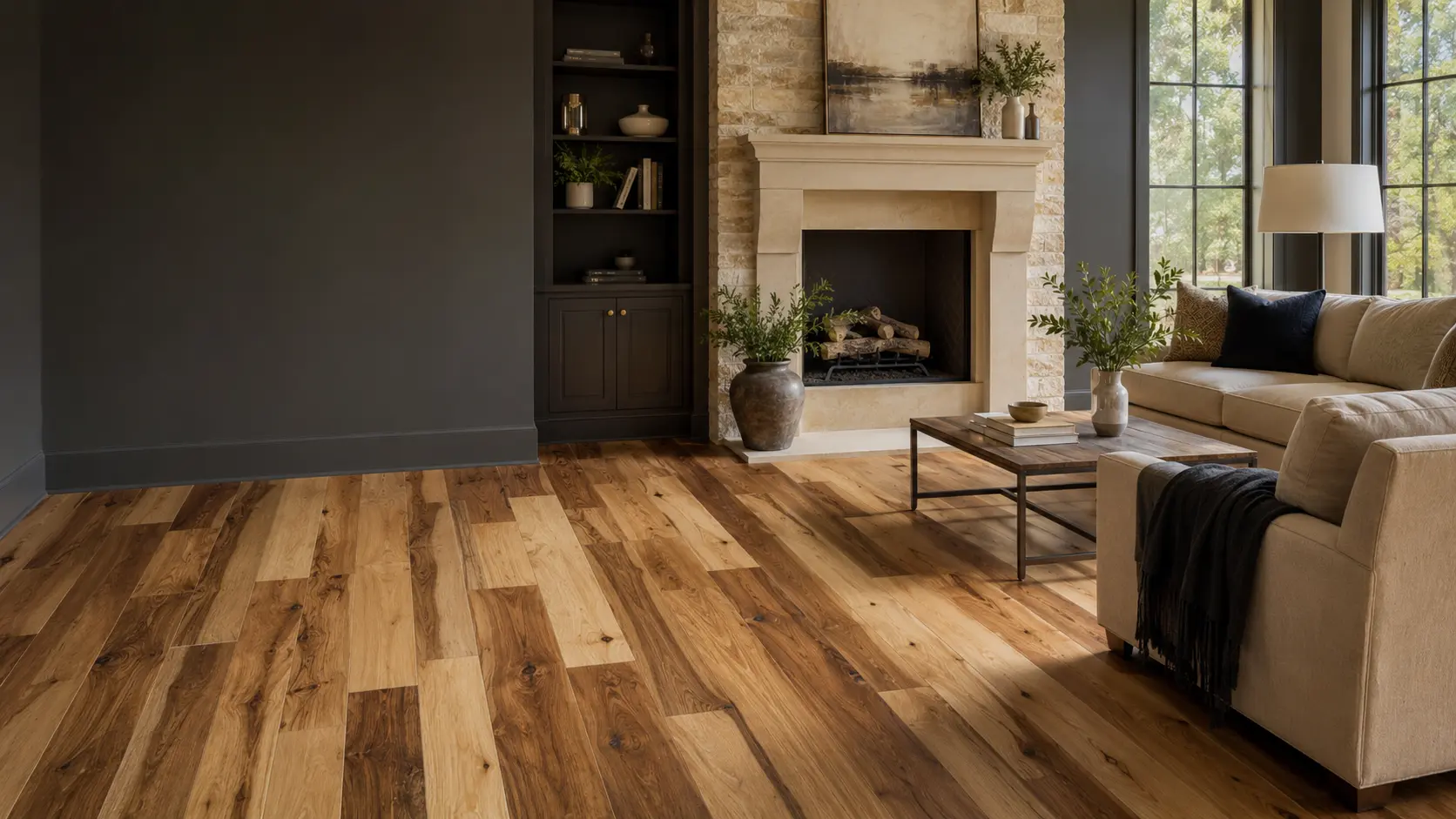
Hickory hardwood brings bold grain, rich color, and real strength to a North Texas home. We help you compare solid and engineered hickory. We also help you choose the grade, finish, and plank size that suit your rooms.
What Makes Hickory Different?
A hickory floor may shift from pale cream to warm tan and brown in one room. The grain may look calm on one board and bold on the next.
That mix is part of its charm. Most people who pick hickory want a floor with life and warmth. It can give a large room a relaxed feel without the need for a dark stain.
The grade controls how much change you see. A clean grade has fewer large knots and less color shift. A character grade keeps more knots, dark streaks, and light sapwood. One is not better than the other. It comes down to the look you want.
Finish matters too. A low sheen cuts glare and lets the grain show. A light texture can also help small marks blend with the wood.
Call 469-340-0837 to see hickory samples in your home and under your own lights.
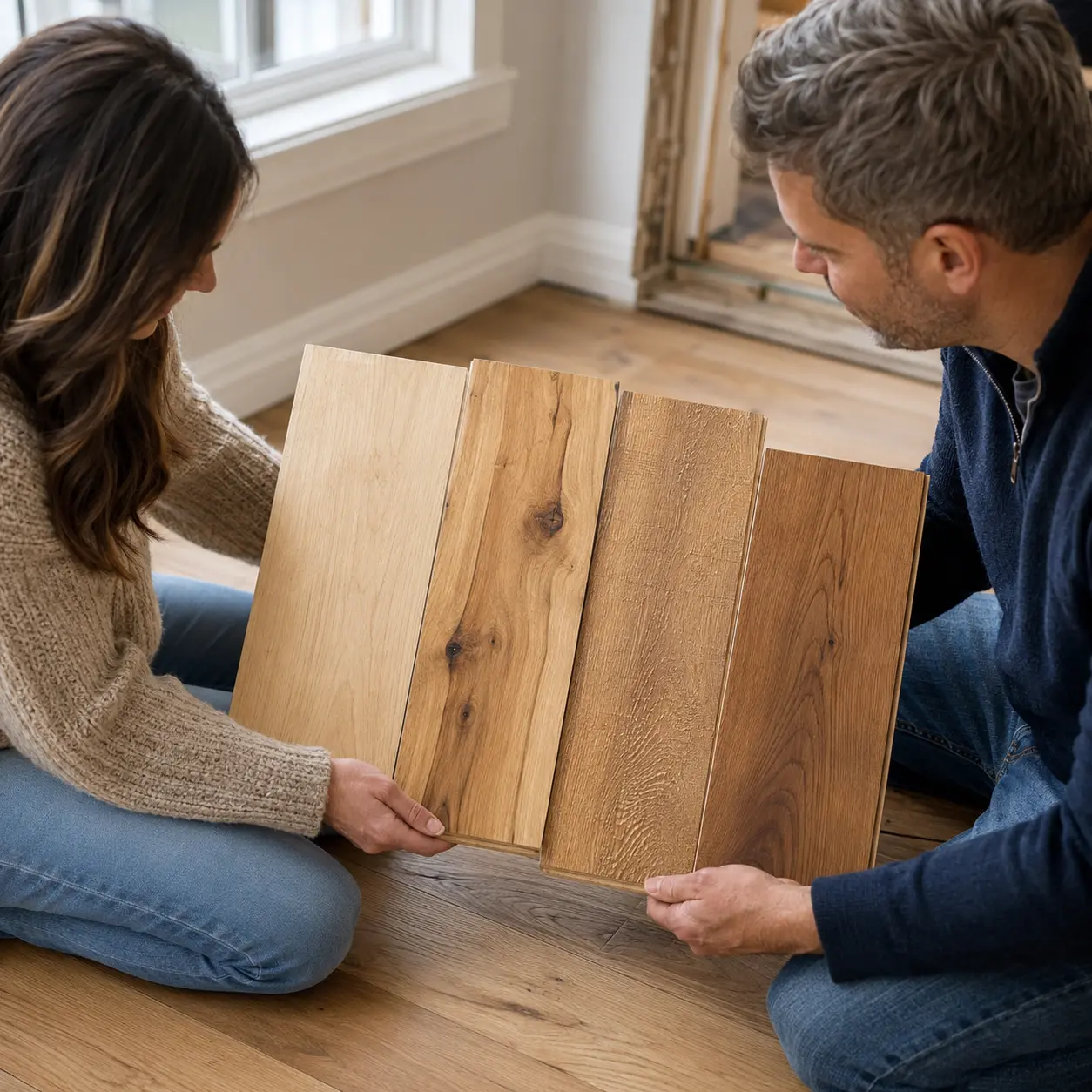
We will help you compare grade, width, texture, color variation, and construction without a hard sell.
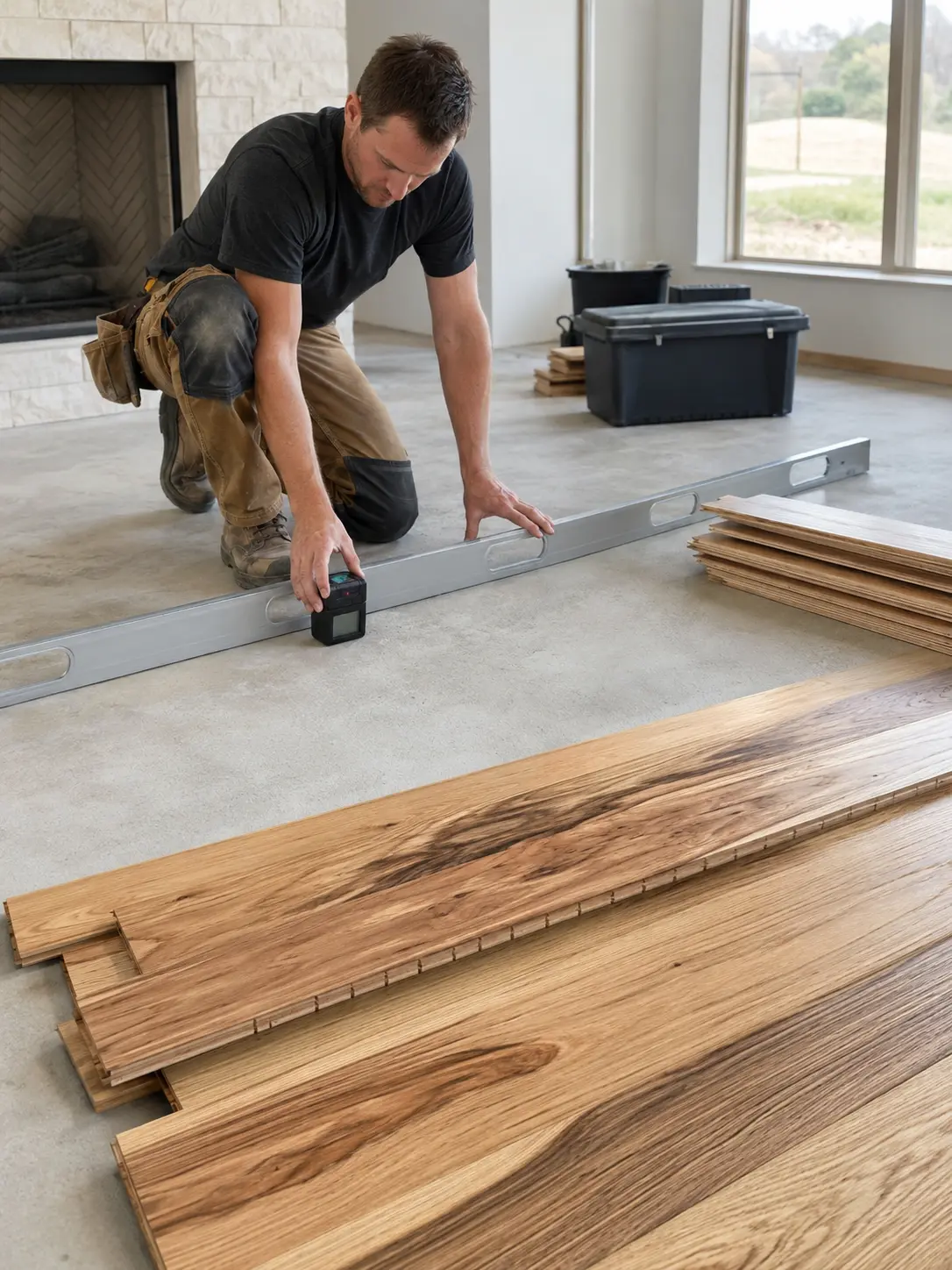
Solid or Engineered Hickory?
Both choices have real hickory on top. The key difference is what sits below that top layer.
Engineered hickory has a real wood face over a layered core. It is often a smart place to start in a North Texas slab home. Its core adds more stability and may allow for wider boards.
Solid hickory is one piece of wood from top to bottom. It can work well over the right wood base. The room, plank width, and install plan must all make sense.
Hickory is dense, so small details count. We check the floor below, moisture, flatness, room layout, and doorways. We also follow the product rules for glue, nails, trim, and gaps.
Learn more about engineered wood installation, or call 469-340-0837 to talk about your home.
What Changes the Price?
The product, the supporting floor, and the finish details all shape the final scope.
Solid or engineered construction, grade, width, board-length mix, core quality, wear layer, milling, and finish affect material cost.
Moisture needs, floor flatness, approved preparation, adhesive or underlayment, and existing transitions affect installation.
Stairs, fireplaces, cabinets, doorways, trim, long sightlines, and custom layouts add work a basic online range cannot show.
We measure the rooms and review the property before giving you an estimate. That produces a clearer number and a scope you can actually compare.
Wide-Plank Hickory
Wide hickory planks can make an open room feel warm and settled. They also call for the right board and careful floor prep.
Fewer seams give each board more room to stand out. Light wood, dark grain, and knots become part of the whole room. Some people love that bold mix. Others want a clean grade with a softer blend.
For a slab home, engineered hickory can give you the wide-board look with more stability. Still, all products are not equal. We check the core, top layer, edge fit, finish, and install rules.
We plan the layout through each linked room. Islands, halls, fireplaces, and tile edges can change the best board direction. They can also change how smooth the floor looks from one room to the next.
The widest sample is not always the best fit. We will show you the tradeoffs before you place the order.
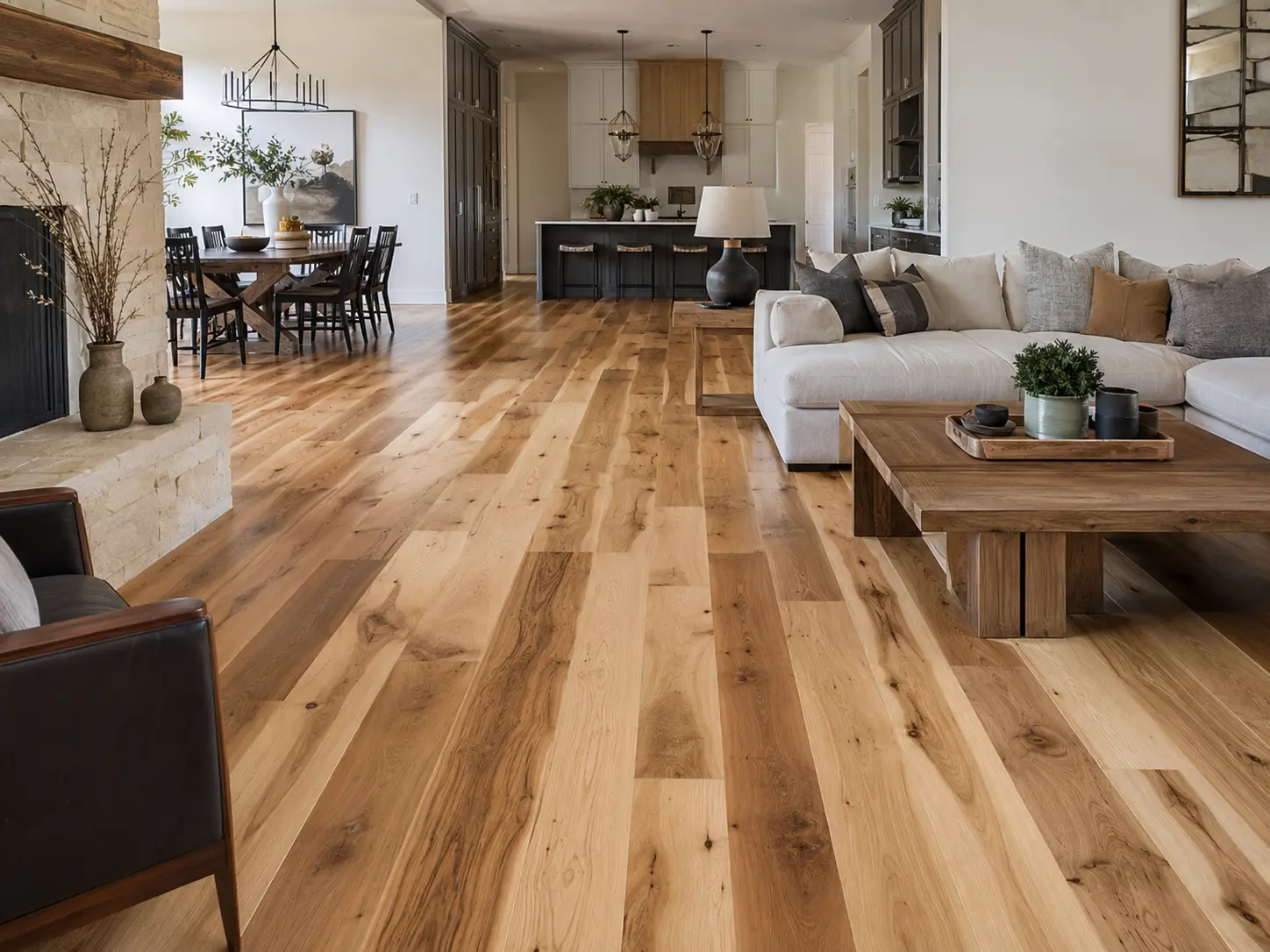
Let us look at the room, supporting floor, sightlines, and transitions before you choose a width.
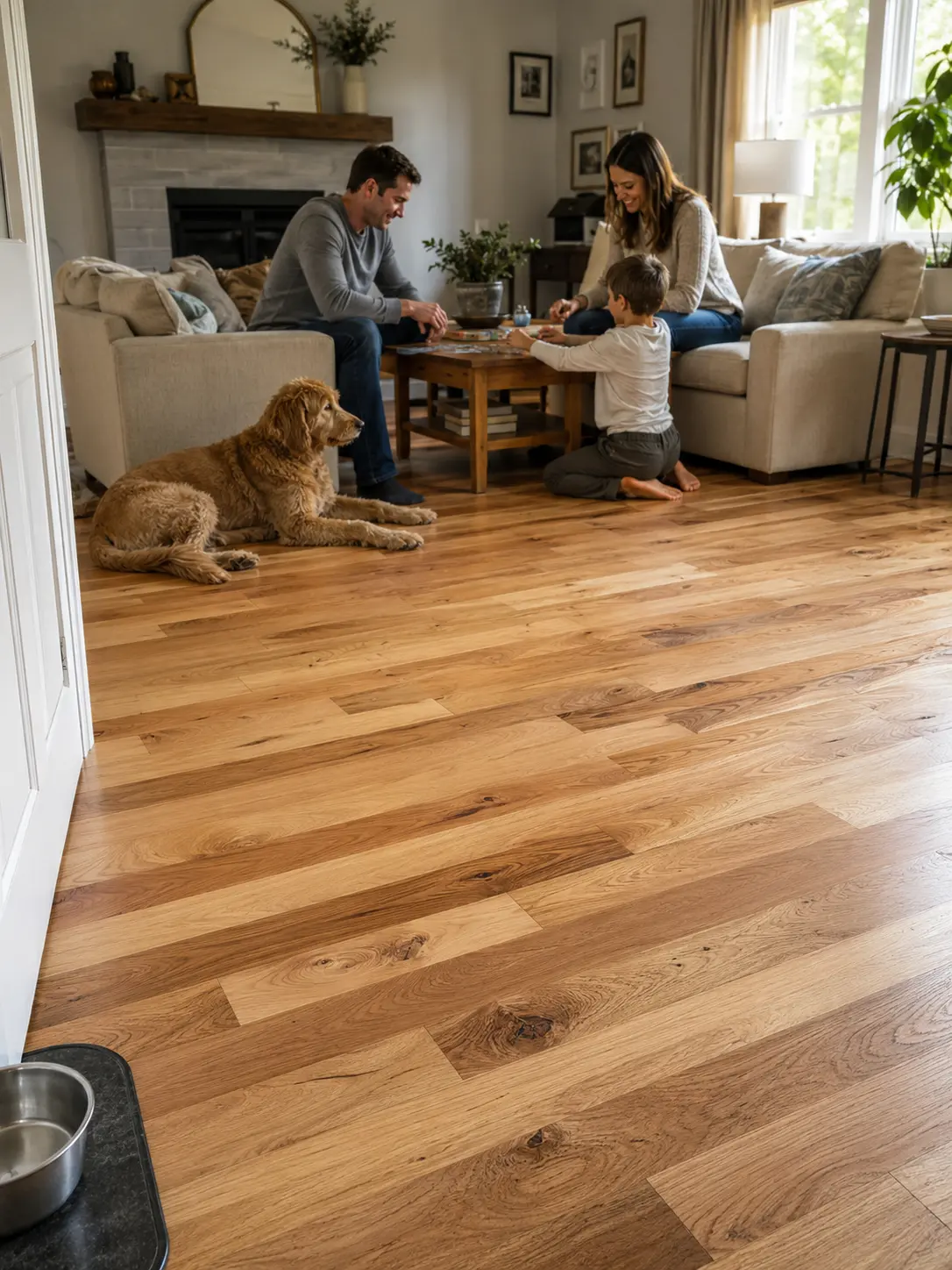
Hickory in an Active Home
Hickory is one of the harder woods grown in the United States. That can help in a busy home. It does not make the floor free from dents or scratches.
The grain and color can work in your favor. A small mark may blend into a low-sheen hickory floor. It may stand out more on a dark floor with a smooth, even look.
Dogs, grit, desk chairs, toys, and water bowls are part of real life. Use entry mats and felt pads. Keep pet nails neat, and place a tray under water bowls. These small steps help without making the room feel off-limits.
Hickory is real wood, so it is not waterproof. Wipe up spills soon and do not leave water on the floor. For a room that gets wet often, waterproof LVP may be the better fit. We will tell you if it is.
The goal is a floor you can enjoy, not one you fear using.
Hickory or White Oak?
Hickory and white oak can both make excellent floors, but they create very different moods.
| What to compare | Hickory | White oak |
|---|---|---|
| Color movement | Often high, from pale cream to medium brown | Usually calmer and more neutral |
| Grain | Bold and varied | Often straighter and quieter |
| Hardness | Harder on the standard Janka scale | Still a durable residential hardwood |
| Room effect | Warm, lively, and full of character | Calm, natural, and restrained |
If you want a floor where the boards do not all look alike, hickory deserves a close look. If you prefer a quieter field of color, explore our white oak hardwood flooring.
How the Project Moves Forward
We learn how the space is used, what you like, and what you want to avoid.
We measure the rooms and look at the supporting floor, doors, and transitions.
Compare construction, grade, width, texture, color movement, and finish.
We complete the agreed preparation, layout, installation, trim, and transitions.
We inspect the result, clean the area, and review basic floor care.
Based in Denton
JBN Flooring is based in Denton and is a division of The JBN Group, which has served North Texas since 1996. We install suitable hickory flooring for homes and businesses across Denton County and nearby communities.
A slab home in Argyle may point us toward a different construction than a Denton home with a wood subfloor. Strong Flower Mound sunlight can affect the color and sheen conversation. Pets, stairs, open layouts, and connected tile also shape the plan.
We build the recommendation around the property instead of forcing the same hickory floor into every room.
Local Contact
A division of The JBN Group, Inc.
125 Old Alton Drive, Suite 25
Denton, TX 76210
Independent Company Profiles
These third-party pages provide independent company and association information.
Frequently Asked Questions
It can be. Hickory is one of the harder domestic flooring woods, and its grain and color variation can help small marks blend in. No real wood is scratch-proof or dent-proof.
Yes. Engineered hickory has a genuine hickory surface over a layered core. Product quality varies, so the wear layer, core, milling, and finish matter.
Engineered hickory is often considered for slab homes when the slab and flooring meet manufacturer requirements for moisture, flatness, preparation, and installation materials.
It can, but pet nails and grit can mark any wood. Natural variation, lower sheen, texture, nail care, mats, and furniture pads can make daily wear less obvious.
No. Hickory is natural wood. Spills should be wiped up quickly, standing water should be avoided, and cleaning should follow the product maker’s instructions.
Yes, hickory is harder on the standard Janka scale. Hardness is useful, but finish, texture, household habits, and installation quality still affect daily performance.
Natural hickory commonly moves from pale cream sapwood to warmer brown heartwood. Grade and color sorting can make the finished floor calmer or more varied.
Cost depends on construction, grade, width, board lengths, finish, square footage, preparation, installation method, stairs, trim, and transitions.
Timing depends on the product, room size, site conditions, preparation, installation method, stairs, trim, and transitions. We explain the schedule after reviewing the project.
Yes. We serve Denton County and nearby North Texas communities. Call 469-340-0837 to confirm your address.
Free In-Home Estimate
Tell us what you like, how the rooms are used, and how much natural variation you want. We will help you compare solid and engineered hickory, then explain the installation scope in plain language.