
The boards themselves
Solid versus engineered construction, wear-layer thickness, core quality, grade, plank width, board-length mix, milling, and finish all affect material cost.
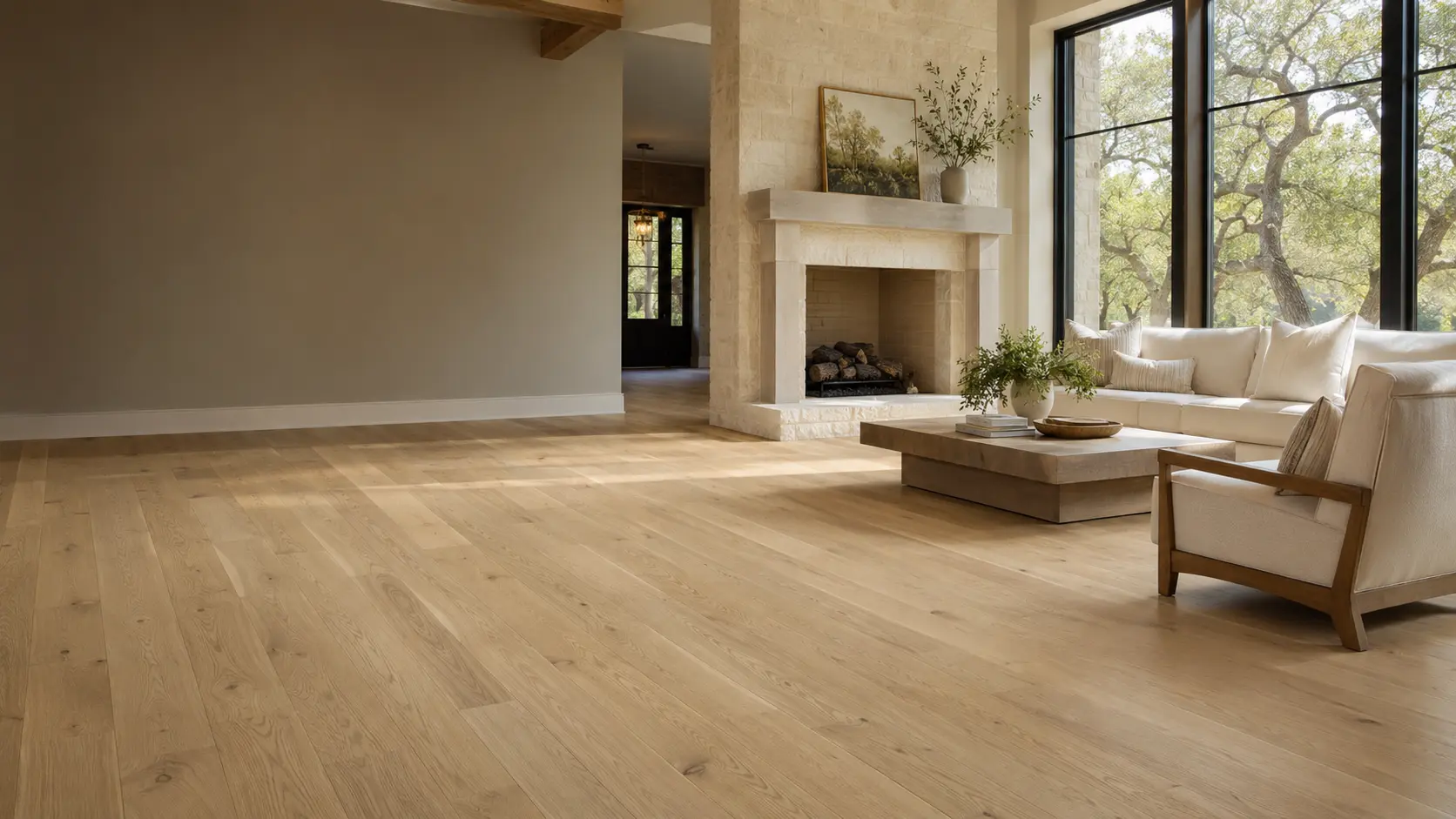
White oak brings a calm grain, neutral color, and genuine wood character to North Texas homes. JBN Flooring helps you compare solid and engineered white oak, choose the right width and grade, and plan the installation around your slab or subfloor.
A Closer Look at White Oak
White oak has a quieter look than many wood species. Its grain is often straighter, and its natural color tends to sit in a neutral tan-to-light-brown range rather than pulling strongly red or orange.
That makes it easy to place beside painted cabinets, natural stone, warm white walls, black window frames, and the mixed wood tones found in many North Texas homes. It can lean modern without feeling cold, and it can work in a traditional room without looking dated.
When we bring white oak samples into a home, we look at them near the windows and beside the cabinets. The room comes first. A sample that appears pale in one space can pick up a warmer cast in another. Real light tells us more than a screen.
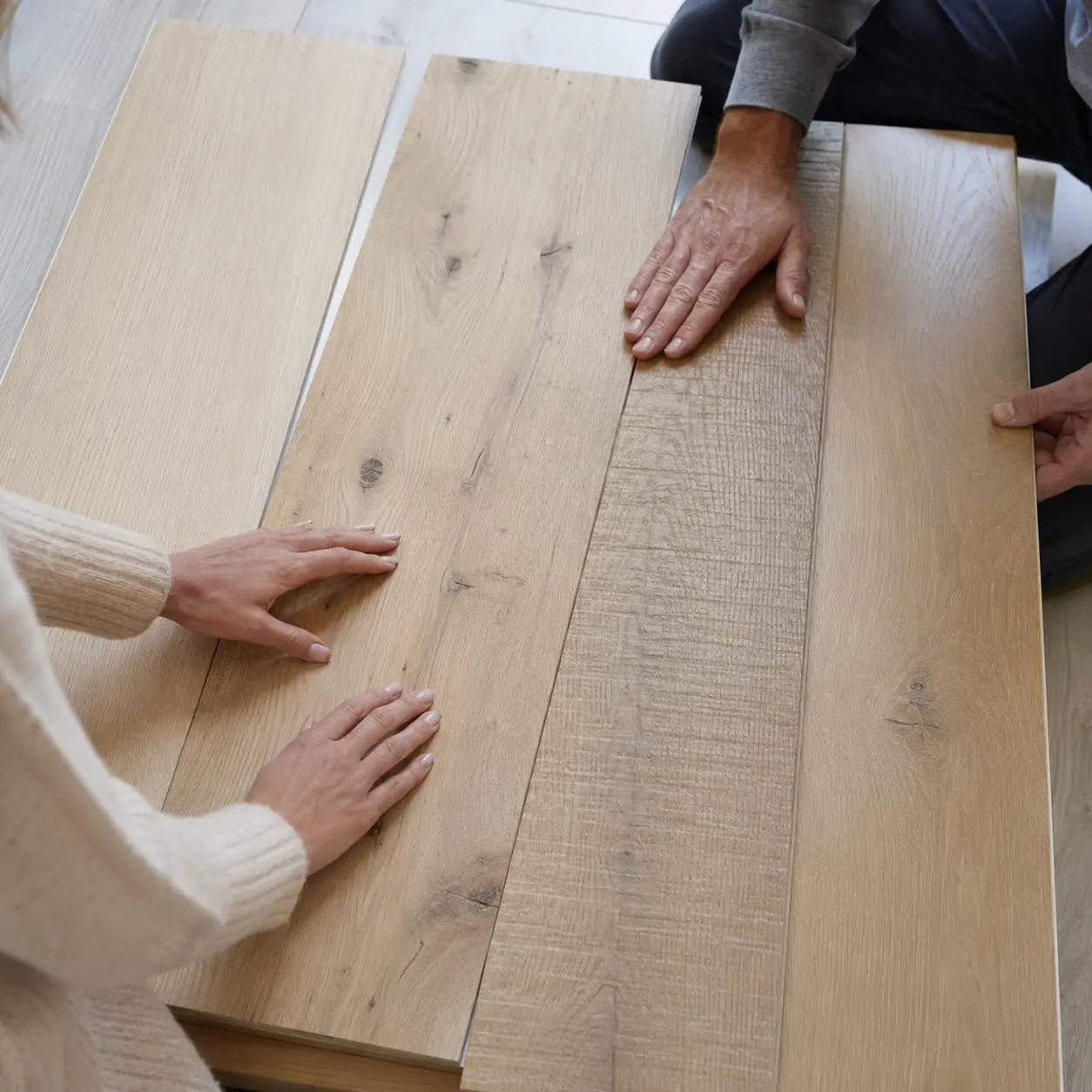
White oak is available in many grades and finishes. Cleaner boards create a quiet, consistent floor. Character-grade boards allow more knots, mineral streaks, and natural color shifts. Neither is better; they simply create different rooms.
For a broader species overview, visit our oak hardwood flooring page.
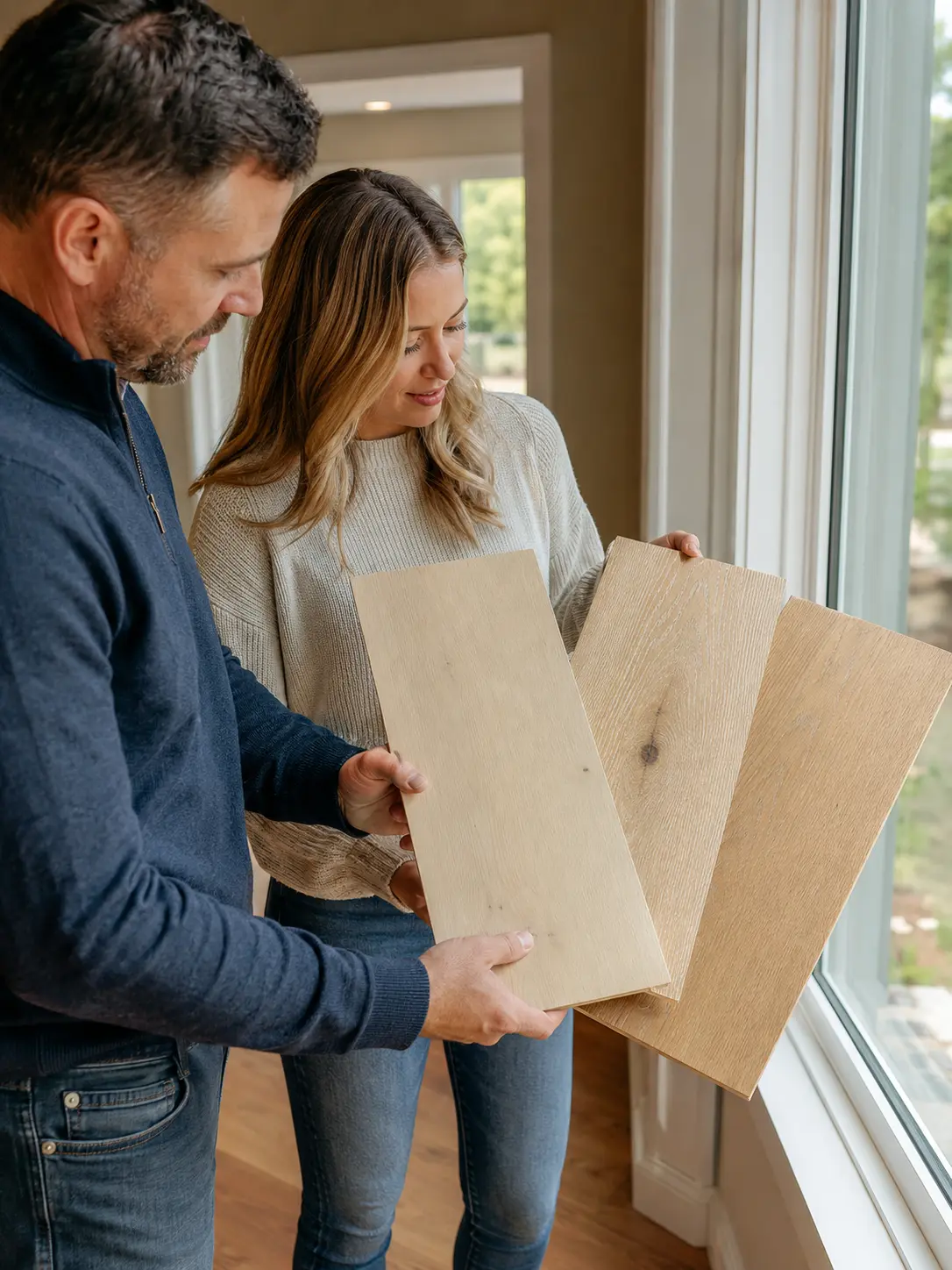
We will help you compare color, grade, texture, and width where the floor will actually be installed.
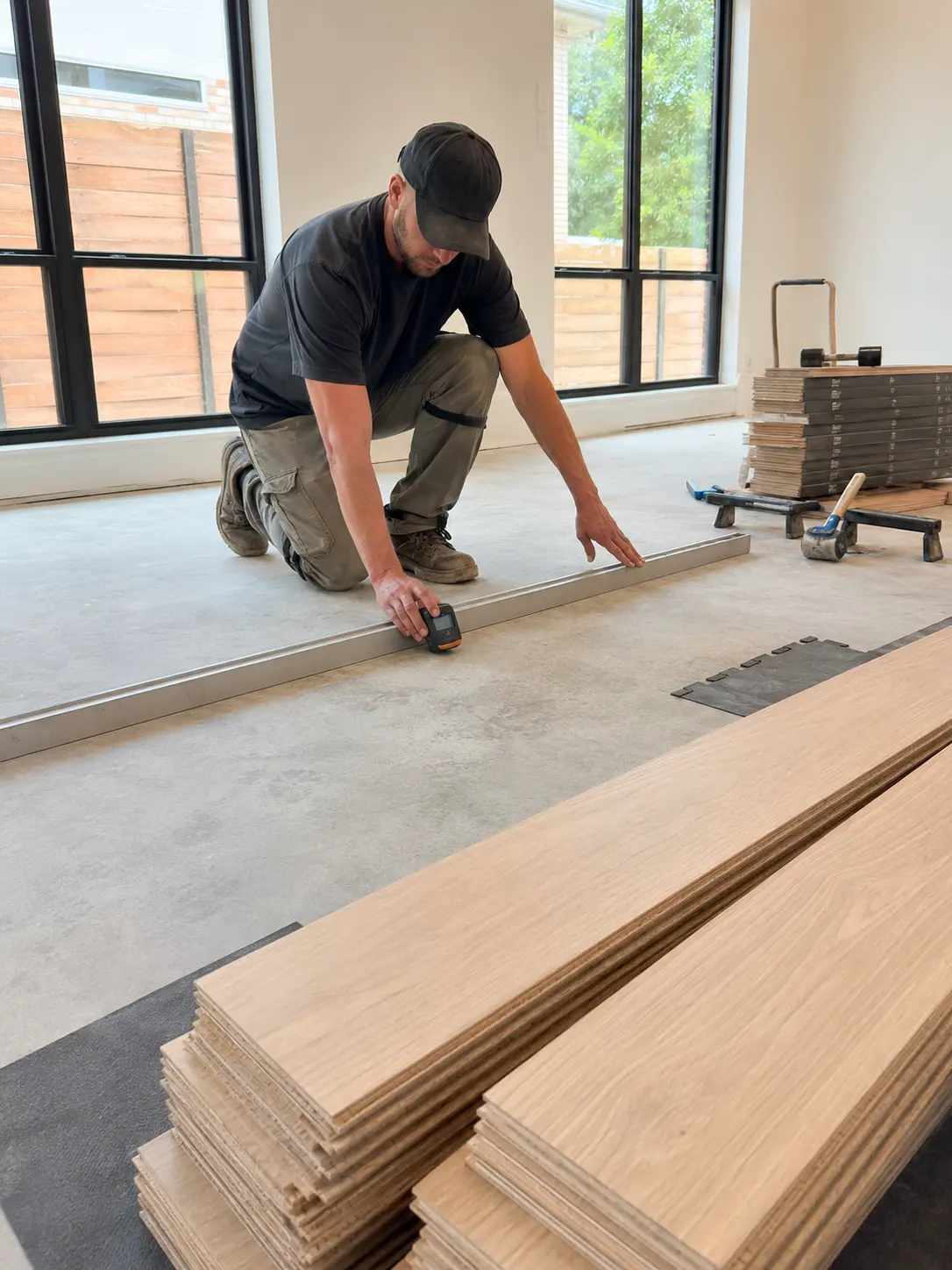
Solid or Engineered?
Both constructions can give you a genuine white oak surface. The difference is what sits underneath and how the board responds to the home.
Engineered white oak has a real wood surface over a layered core. It often becomes the practical starting point for a North Texas slab-foundation home because the layered construction adds stability. It is also widely available in the wider planks many homeowners want.
Solid white oak is one piece of wood from top to bottom. It can be an excellent choice when the home has a suitable wood subfloor and the product, width, and room conditions work together.
We do not choose between them from the species name alone. The house helps settle it. We look at the supporting floor, moisture conditions, connected rooms, plank width, sunlight, and the flooring maker’s installation requirements.
Learn more about our engineered wood installation process.
What Changes the Price?
Two white oak floors can look similar in a photograph and land in very different price ranges. The construction, board quality, size, finish, and site conditions explain most of that difference.
Solid versus engineered construction, wear-layer thickness, core quality, grade, plank width, board-length mix, milling, and finish all affect material cost.
Moisture needs, floor flatness, approved preparation, adhesive or underlayment, and the condition of transitions shape the installation scope.
Stairs, fireplaces, cabinets, doorways, trim, long sightlines, and custom layouts add work that a simple square-foot number cannot show.
We provide a project-specific estimate after measuring the rooms and reviewing the site. That gives you a clearer number than a broad online range.
Wide-Plank White Oak
Wide-plank white oak shows more grain on each board and creates fewer seams across the room. In an open layout, that can make the floor feel less busy.
The look is especially popular with light natural colors and low-sheen finishes. Still, width is not only a style decision. Wider boards make the construction, floor flatness, room span, and seasonal movement more important.
In slab homes, engineered white oak often gives homeowners the wide-plank appearance they want with added dimensional stability. We still review the core, wear layer, milling, and approved installation method because not every engineered product is built the same way.
We also plan how the boards will travel through connected rooms. Direction changes, narrow hallways, islands, fireplaces, and tile transitions can affect whether the finished floor looks continuous or chopped up.
If wide planks are your main goal, we will be direct about what the house and product can support. A slightly narrower board that lies well is a better investment than chasing the widest sample in the rack.
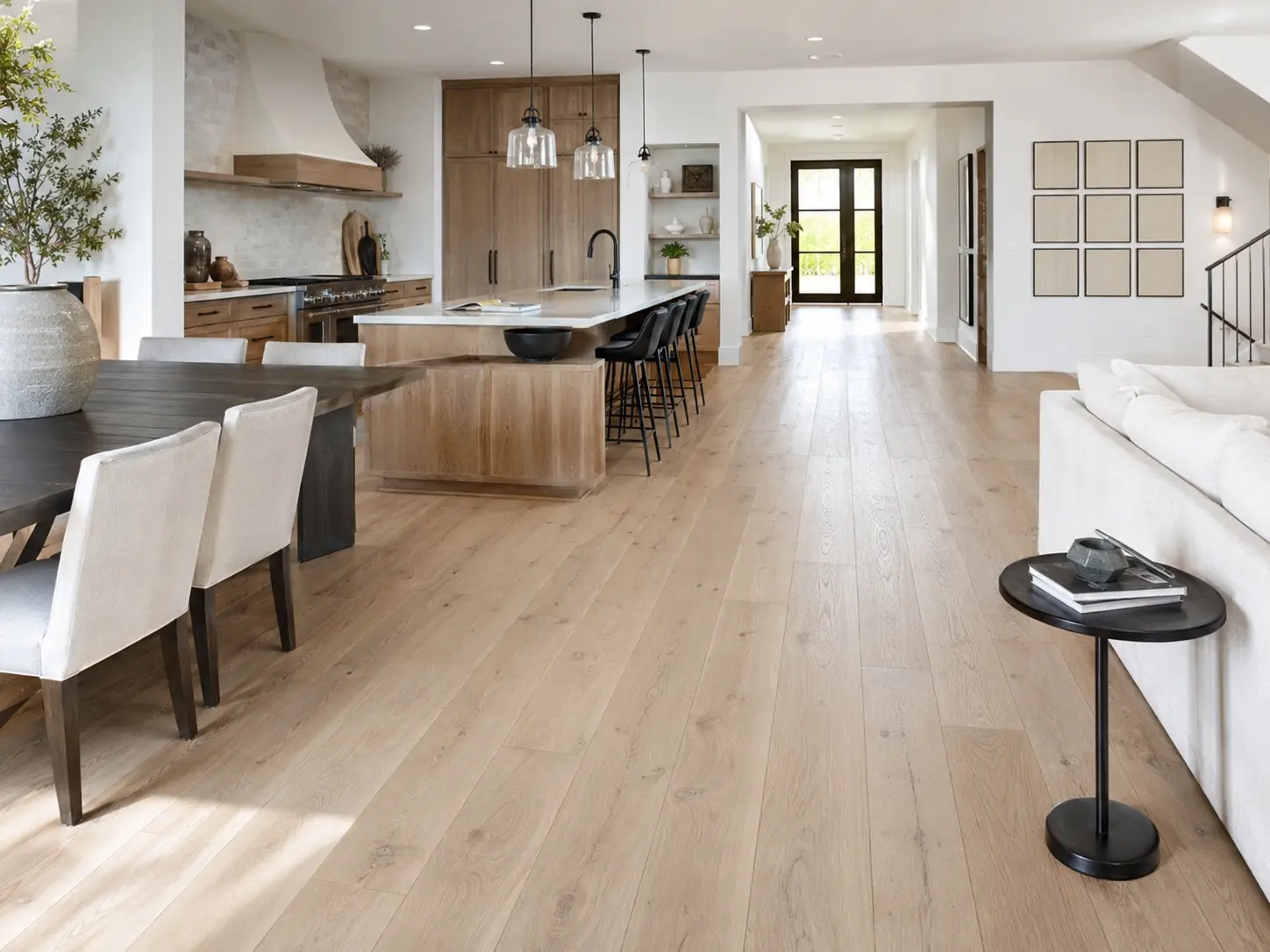
Let us look at the room, slab, sightlines, and transitions before you settle on a width.
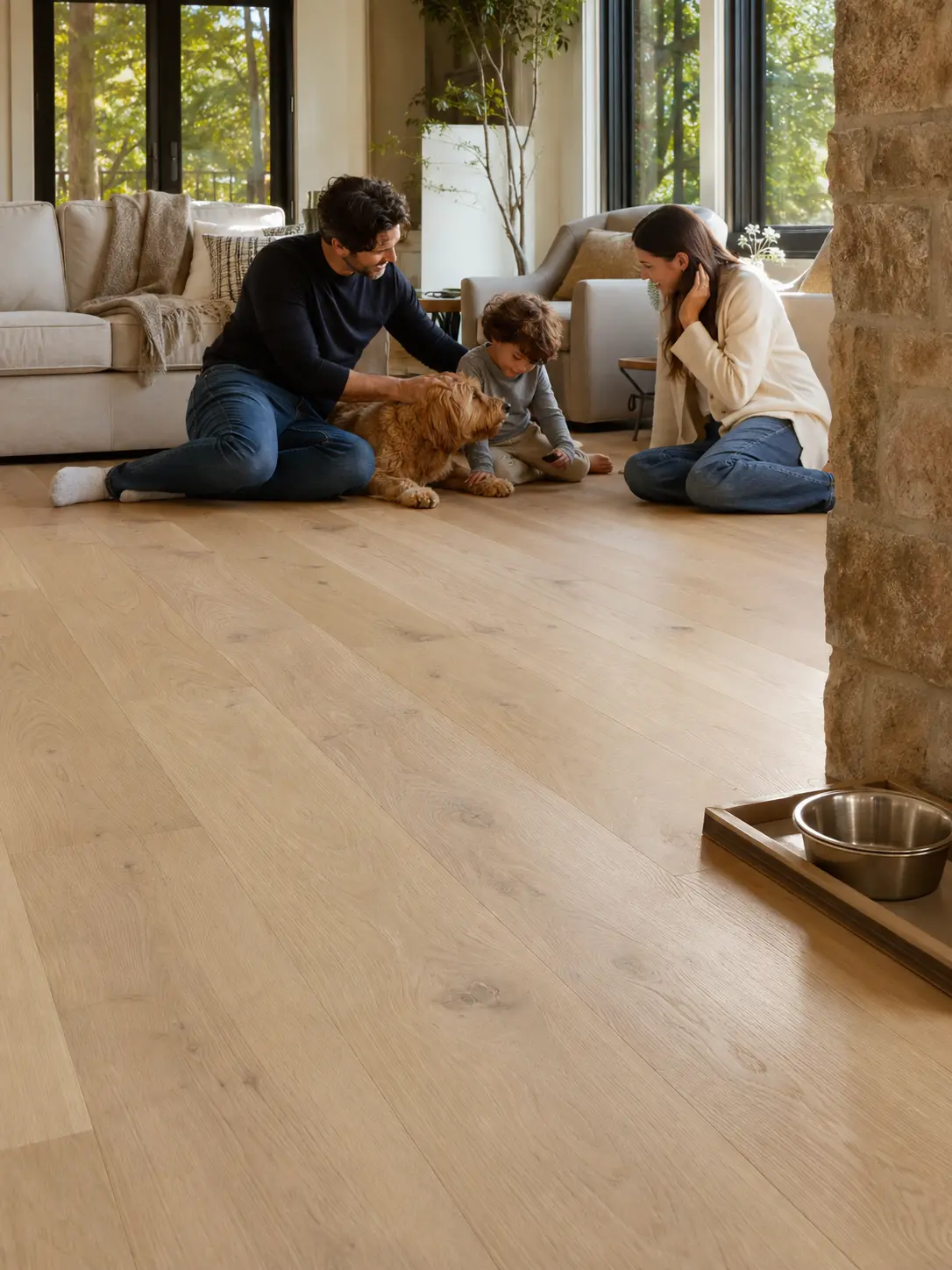
White Oak in a Busy Home
White oak can work in an active home, but we will never describe natural wood as scratch-proof or waterproof.
A floor’s hardness matters, but it is not the whole story. Dark color, high sheen, and a perfectly smooth surface can make a small mark stand out. Natural tones, visible grain, a wire-brushed texture, and a lower sheen are often more forgiving.
Pet nails, tracked-in grit, rolling chairs, dropped toys, and water bowls all deserve a little planning. Entry mats, felt pads, chair mats approved for wood, regular nail care, and a protective tray under pet bowls can do more than many expensive product claims.
Spills should be wiped up promptly. White oak is real wood, and standing water can affect the finish and boards. If a room sees frequent water, we will explain when waterproof LVP is the easier choice.
Our goal is not to talk you into white oak everywhere. It is to help you place it where you can enjoy it without worrying about every ordinary day.
White Oak Grades and Finishes
White oak has a recognizable grain and neutral undertone, but it does not come in only one look. Grade, texture, plank width, and finish can change the entire mood of the room.
Cleaner grades limit large knots and dramatic color shifts. They work well when you want the floor to feel calm across an open living area. Character grades allow more knots, mineral streaks, and natural movement from board to board. That variation can make a busy household feel more relaxed about the first small mark.
A wire-brushed surface follows the grain and adds light texture. It can soften reflections and make everyday wear less noticeable. Smooth boards create a cleaner appearance, but very dark colors and high sheen may show dust, footprints, and fine scratches more easily.
Plank width changes the rhythm as well. Wider white oak boards show more grain and create fewer seams. Narrower boards bring a more traditional pattern. In either case, the board construction and the flatness of the supporting floor still matter.
| White oak detail | What it changes |
|---|---|
| Cleaner grade | Quieter grain, fewer knots, and a more consistent floor |
| Character grade | More knots, mineral streaks, and natural color movement |
| Wire-brushed texture | More depth with less glare and softer scratch visibility |
| Low-sheen finish | A relaxed appearance that is easier to live with in bright rooms |
How We Handle the Project
The installation itself matters, but the decisions made before the first board goes down are just as important.
We learn how you use the space, what you like, and what you want to avoid.
We measure the rooms and look at the slab or subfloor, transitions, and fixed objects.
Compare construction, grade, width, texture, color, finish, and care.
We complete the agreed preparation, layout, installation, trim, and transitions.
We check the finished floor, clean the area, and review basic care.
Based in Denton
JBN Flooring is based in Denton and is a division of The JBN Group, which has served North Texas since 1996. We install suitable white oak flooring for homeowners and businesses across Denton County and nearby communities.
A slab home in Argyle may point us toward a different product than an established home with a wood subfloor in Denton. Strong afternoon light in Flower Mound can affect the color and sheen conversation. We build the recommendation around the property rather than repeating the same answer everywhere.
Local Contact
A division of The JBN Group, Inc.
125 Old Alton Drive, Suite 25
Denton, TX 76210
Independent Company Profiles
These third-party pages provide independent company and association information for homeowners doing their homework.
Frequently Asked Questions
Yes, when the construction and installation plan fit the property. Engineered white oak is often considered for slab-foundation homes because its layered construction adds stability.
Yes. Engineered white oak has a genuine white oak surface over a layered core. Product quality varies, so the wear layer, core, milling, and finish deserve attention.
Neither is right for every home. White oak usually has a neutral tone and calmer grain. Red oak is typically warmer with a more visible grain. White oak is slightly harder, but design and product quality often matter more.
Engineered white oak is often installed in slab homes when the slab and product meet the manufacturer’s requirements for moisture, flatness, preparation, and installation materials.
It can, but no real wood is scratch-proof. Natural color, visible grain, lower sheen, light texture, regular nail care, mats, and furniture pads can make daily marks less obvious.
No. White oak is natural wood. Spills should be wiped up promptly, standing water should be avoided, and cleaning should follow the product maker’s instructions.
Natural wood changes as it ages and receives light. Window coverings, balanced sunlight, and occasional furniture rearrangement can help the floor age more evenly.
Cost depends on solid or engineered construction, grade, width, board lengths, finish, square footage, preparation, installation method, stairs, trim, and transitions. We provide a project-specific estimate after measuring the rooms.
Timing depends on the product, room size, site conditions, preparation, installation method, stairs, trim, and transitions. We explain the expected schedule after reviewing the project.
Yes. We serve Denton County and nearby North Texas communities. Call 469-340-0837 to confirm your address.
Free In-Home Estimate
Tell us what you like, how the rooms are used, and what matters most. We will help you compare solid and engineered white oak, then explain the installation scope in plain language.