
Flower Mound Flooring That Holds Up to Kids, Dogs & Texas Heat.
If your floors are scratching, cupping, or “clicking” after a North Texas summer—or you’re tired of cleaning muddy paw prints that never fully wipe out—JBN Flooring installs, replaces, and repairs floors that are chosen for real Flower Mound living. We plan for humidity swings, slab movement, sun-baked rooms, and busy households so your floor looks good on day 1 and still performs years later.
Looking for a proven local team? Start at the JBN Flooring homepage and then request a flooring quote for your Flower Mound home.

Why Flower Mound floors fail early (and what we do differently)
Most “floor failures” we get called out for in Flower Mound aren’t dramatic—at first. They start as tiny gaps you only notice when afternoon sun hits the seams, a soft hollow sound in the main walkway, or click-lock joints that feel like they’re flexing under the breakfast-table chairs. In our experience, the problem is usually the install system, not the label on the box.
We plan around the reality of North Texas: high heat, fast HVAC cycles, stormy weeks that spike indoor humidity, and slab homes that can push moisture vapor up when conditions change. That’s why we focus on acclimation, moisture awareness, and subfloor flatness before we recommend a product. If you want a plan built for your house—not a generic package—contact our team today to schedule your free estimate.
- In Flower Mound, a lot of “mystery gaps” and board cupping we see aren’t product defects—they’re acclimation and moisture problems caused by big indoor/outdoor swings from July heat to winter heating, especially in homes with strong HVAC cycles and west-facing glass.
- On slabs, the most common hidden issue is moisture vapor coming up through concrete; when installers skip moisture testing and proper underlayment or adhesive selection, you get loose planks, hollow sounds, or adhesive breakdown months later—often right after a rainy spell.
- In busy homes, durability isn’t only about the wear layer; it’s about the whole system: correct subfloor flatness, expansion gaps that don’t get pinched under heavy cabinets, and transitions that allow movement without creating trip edges.
- We plan installs around real homeowner schedules—move-in deadlines, pets underfoot, and furniture logistics—so you don’t end up with rushed prep, skipped leveling, and “we’ll come back later” punch lists that drag on.
If you’re comparing bids, ask how each installer handles subfloor flatness tolerances for rigid-core products and what their plan is for slab moisture—not just what brand they prefer.
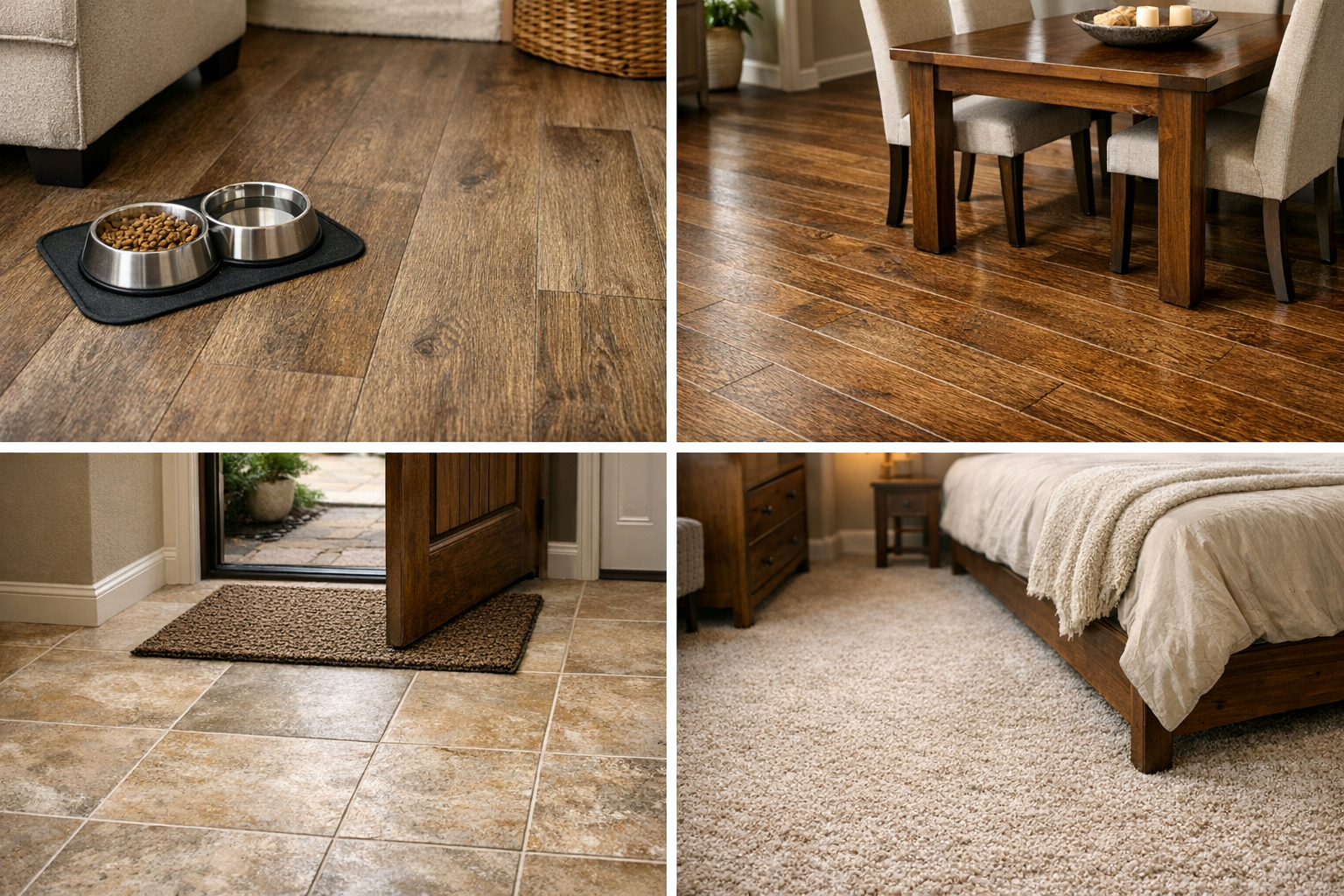
Flooring options we recommend for real life: LVP, engineered wood, tile, carpet (and when each wins)
In Flower Mound, the “best floor” depends on where life actually happens: the dog’s water bowl station, the hallway kids sprint through after practice, the kitchen path between sink and fridge, and the sun-baked corner near large glass. We don’t sell you a category—we match a system to the way your home behaves.
When homeowners ask about “LVP vs hardwood for Texas homes,” the answer is rarely just aesthetics. It’s about joint stability, surface texture, underlayment acoustics, and how much you want to worry about spills. If you’re stuck deciding, request a free consultation to compare your options and we’ll walk through the tradeoffs based on your rooms, not a showroom script.
LVP for kid + pet reality
For most households with dogs and kids, we often steer toward quality LVP with a rigid core and a truly protective wear layer; it’s forgiving with spills and dropped toys, but it still needs a flat subfloor and the right underlayment so you don’t get telegraphing seams or a bouncy feel.
Engineered hardwood for warmth + stability
Engineered hardwood is the go-to when you want wood warmth with better stability than solid hardwood; we look at veneer thickness, core construction, and how the product is rated for humidity swings so you don’t end up with seasonal edge lift in sunlit rooms.
Tile where water and grit win
Tile is unbeatable for long-term scratch and water resistance—especially near entries, laundry rooms, and kitchens—but we treat it like a system: crack isolation membrane choices, movement joints, and layout planning so you don’t get stress cracks that show up 12–18 months later on slabs.
Carpet for upstairs comfort
Carpet still makes sense upstairs and in bedrooms when noise control matters; we focus on pad density and proper stretch-in so you don’t get ripples, premature matting, or seam separation where kids play and roll toys.
North Texas climate + your home’s structure: what we check before recommending a floor
Two Flower Mound homes can be the same square footage and still need completely different flooring systems. We’ve walked into houses where the living room looks perfect on the surface, but the slab has just enough moisture vapor to cause adhesive issues later. We’ve also seen pier-and-beam homes where seasonal movement telegraphs as squeaks and seam stress if the subfloor isn’t tightened and flattened before install.
Before we recommend anything, we look at how the home is built and how it’s lived in—especially west-facing rooms where the sun beats down for hours. That’s where you’ll notice fading, micro-scratches in raking light, and joints that get stressed by heat cycling. If you want a plan tailored to your house and timeline, reach out for a Flower Mound flooring estimate—we’ll ask the questions that prevent expensive “round two” replacements.
Slab foundation checks
- Moisture risk and vapor movement through concrete
- Flatness tolerances for rigid-core/click systems
- Transition height planning to avoid trip points
- Sound/feel tuning with the right underlayment
Pier-and-beam checks
- Subfloor deflection that creates squeaks and seam stress
- Fastener pattern, panel integrity, and high/low spots
- Humidity swings under the home affecting stability
- Stair/hallway alignment so layouts stay clean
Practical tip we share a lot: if a bid doesn’t clearly describe how the installer handles moisture and subfloor prep, the “savings” often shows up later as hollow spots, seam separation, or change orders after demo.
Common homeowner mistakes we see in Flower Mound (and how to avoid them)
We get a steady stream of “Can you fix this?” calls that start with the same few decisions. The most common is choosing a floor by a tiny sample board—then being shocked when the installed floor looks glossier, darker, or more “striped” once Texas sunlight hits it. The second is assuming “waterproof” means “install it fast anywhere,” even on slabs that haven’t been tested or leveled.
A good install is about removing surprises: planning transitions at bathrooms and bedrooms, keeping expansion space where it belongs, and solving the original failure (moisture, uneven substrate, pet issues) before the new floor goes down. If you’re unsure what’s causing your current problem, speak with our team today—we’ll help you avoid repeating the same failure with a different product.
Sample-board decisions
Choosing a floor by the sample board alone: in real rooms, gloss level, embossing, and color variation behave differently—especially with Texas sunlight; we help you avoid the “it looked different at home” regret by talking through lighting, window direction, and traffic paths.
“Waterproof” misunderstandings
Assuming ‘waterproof’ means ‘no prep needed’: waterproof planks can still fail if the slab is wet, the subfloor is wavy, or the perimeter is pinched; we explain where waterproof claims stop and installation reality begins.
Ignoring the root cause
Replacing floors without fixing the cause: if a previous floor failed from moisture, pet accidents, or an uneven slab, installing the same way again just repeats the problem; we identify the root cause so your next floor lasts.
Rushed transitions
Overlooking thresholds and transitions: we often see DIY or rushed installs that create uneven transitions at bedrooms and baths; we plan clean, safe transitions that look intentional and help floors move correctly.
Our installation process (the parts you don’t see—but you’ll feel every day)
Homeowners usually remember two things after a flooring job: how the floor feels underfoot and whether it stays quiet and tight after the first big season change. That’s why we spend our time on the invisible stuff—layout, prep, and jobsite habits that prevent nuisance problems like squeaks in the main walkway or a “drum” sound in open areas.
We also plan around real living. If you’ve got dogs that pace when strangers are in the house, or kids who need a safe path to the kitchen, we stage the work so you can function while the job gets done. If your goal is a floor that looks premium and stays stable, not just a fast install, contact our team today to schedule your free estimate.
We design for how you actually live
We start with questions contractors rarely ask: who lives here, where the dogs run, where spills happen, whether you mop daily or weekly, and what rooms take direct afternoon sun—because those answers determine product, underlayment, and layout choices.
We verify the substrate before we “sell a system”
We verify substrate conditions before we commit to a system; that means checking flatness and identifying areas that need prep so you don’t get future noise, joint stress, or uneven wear in the exact spots you walk every day.
We layout like finish carpentry
We plan layout like a finish carpenter would: consistent lines, thoughtful starting walls, proper staggering, and transitions that aren’t “afterthought strips”—so the floor reads clean and premium, not like a patchwork.
We manage dust + disruption
We manage dust and disruption with practical jobsite habits: protecting adjacent surfaces, staging materials, and keeping paths safe so families can still live in the home during the project when needed.
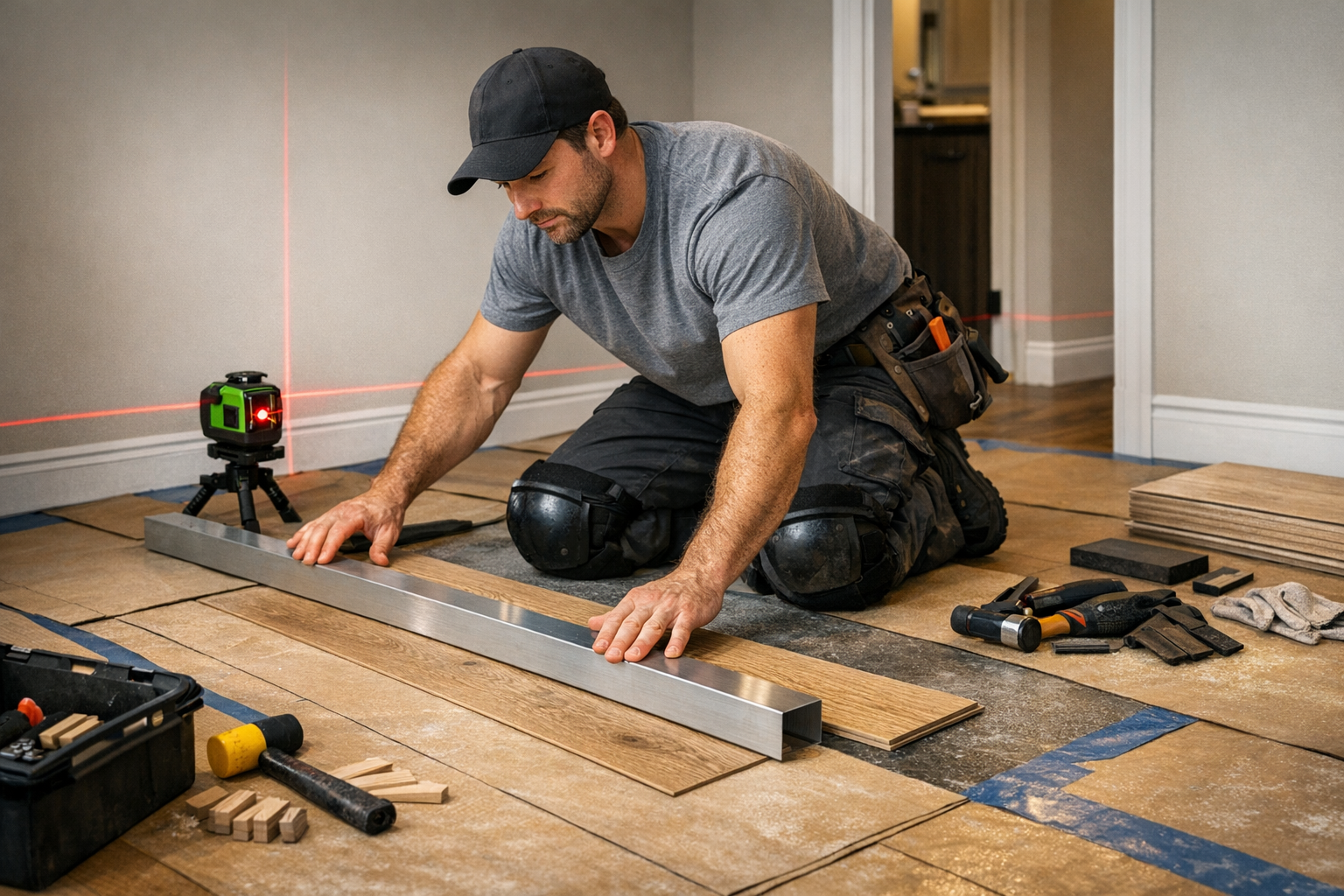
Field note: the “clicking” sound many homeowners complain about often traces back to a high spot or shallow dip that wasn’t corrected. Fix the flatness, and the noise usually disappears—without blaming the product.
Pricing in Flower Mound: what actually drives the number (and how to protect your investment)
Square footage is the easiest number to quote—and the least honest way to predict a real project. In Flower Mound, the cost usually moves because of demolition complexity, how much furniture logistics are involved, and how many “small” details add up: door jamb undercuts, floor height changes, and transitions that keep movement clean across open-concept spaces.
If you’re comparing quotes, we recommend looking for two things: (1) whether subfloor prep is clearly defined, and (2) whether the installer explains why a specific material is a good fit for your structure and sunlight. If you want a clear scope and a plan that reduces surprise change orders, request your quote online or call us to talk it through.
Prep + demo are the “real” variables
Square footage is only the starting point; the real cost drivers are demolition complexity, furniture moving, floor height changes at transitions, and the amount of subfloor prep needed to meet flatness tolerances for today’s rigid-core products.
Stairs + alignment take time
Stair work, tricky hallways, and open-concept layouts take more time than most homeowners expect because layout alignment and nose details matter; done right, it looks seamless, done fast, it looks ‘builder basic’ and wears poorly.
Cheaper material can cost more
Material selection affects more than the purchase price: a cheaper product with a weak locking profile or inconsistent milling can raise labor time and increase failure risk, which is why we talk value in terms of years of service, not just initial cost.
Spend where it protects performance
We help you prioritize where to spend and where to save—like investing in better underlayment and prep in high-traffic areas, while choosing cost-effective finishes where wear is minimal.
Maintenance & longevity: how to keep your floors looking new in a busy Texas household
If you want your floor to look “new” past the first year, the biggest win is preventing the slow, invisible damage—grit, micro-scratches, and moisture habits that creep in around entry doors, pet zones, and rolling chairs. In Flower Mound, we see fine dust and driveway debris act like sandpaper. That’s how you end up with dull traffic lanes even when the floor is technically “durable.”
We’ll give you a maintenance plan that fits how you live (not a generic care sheet). If you’ve got dogs, we talk about nails and traction. If you’ve got a home office, we plan for chair protection. And if you travel and leave the HVAC higher, we’ll explain how to keep humidity swings from turning into seasonal gaps and noise. Want a floor you don’t have to baby? Talk with our team and we’ll build a system around your routines.
- For LVP and engineered wood, grit is the enemy; in Flower Mound we see fine outdoor dust and driveway debris act like sandpaper, so entry mats and regular dry sweeping prevent the “dull traffic lane” look.
- Dog nails and chair glides cause most scratches—not normal foot traffic; we’ll tell you which felt pads actually stay on, when rubber-backed rugs are risky, and how to avoid rolling office chair damage in home offices.
- Moisture management is daily-life practical: wipe spills quickly, avoid over-wet mopping, and watch for pet bowl areas; we often recommend small, invisible habits that stop swelling at edges and prevent odor issues over time.
- Seasonal HVAC habits matter; keeping interior humidity more consistent reduces gapping and noise, and we explain what ranges typically keep floors stable without turning your home into a science project.
If your current floor is already squeaking, separating, or “feels loose” in a few lanes, call sooner rather than later—small corrections are often easier before more joints get stressed.
Local trust signals & third-party verification (so you’re not taking our word for it)
Flooring is one of those trades where the photos can look great on install day—and still fail later if the system was wrong for the slab, the humidity, or the transitions. We encourage homeowners to verify who they’re hiring through credible third parties, and to compare scopes, not just totals. The best contractors will be transparent about moisture strategy, prep allowances, and what happens when hidden conditions appear after demo.
If you’re in research mode, check our listings and reviews, then bring your questions to a real conversation. When you’re ready, request a quote and we’ll spell out what’s included so you can compare apples to apples.
How to compare bids like a pro
Compare what’s included: moisture testing approach, subfloor prep allowances, warranty clarity, and how change orders are handled when hidden conditions show up.
Industry & local affiliations
Use association listings and verified contractor directories to confirm you’re hiring an established local business with a track record in North Texas—not a temporary crew cycling through names.
Verified profiles & reviews
For social proof and ongoing project updates, check our public profiles and reviews to see how we handle real customers and real timelines.
What we want you to verify
We encourage homeowners to verify contractors through reputable third parties—because the best time to check credentials and complaint history is before you sign, not after a problem arises.
Note: You’ll see “The JBN Group” referenced across some third-party directories, listings, and associations.
FAQ: Flower Mound flooring questions we answer every week
These are the questions we get on phone calls, at kitchen tables, and during “we need to decide this week” remodel timelines. The honest answers usually start with: where is the home (slab vs pier-and-beam), how does the sunlight hit the room, and what kind of mess happens on an average Tuesday. If you want help deciding without guesswork, request a free consultation and we’ll translate product claims into what you’ll actually live with.
What flooring is best for dogs in Flower Mound?
It depends on nail wear, slip resistance, and cleanup habits; we often recommend specific LVP textures or tile in the highest-risk zones and explain why some ultra-smooth finishes show scratches faster.
Can you install flooring over existing tile or wood?
Sometimes, but we check height at doors, appliance clearances, and flatness; skipping those checks is how you end up with doors that drag and transitions that feel like speed bumps.
How long does a typical install take?
A straightforward bedroom-to-bedroom replacement may move quickly, but projects that require leveling, demo, and careful transitions take longer; we set expectations based on prep requirements, not best-case guesses.
Do I need a moisture barrier on a slab in North Texas?
Often yes, but the correct solution depends on test results and the product system; we explain when underlayment is enough and when a different approach is smarter.
What’s the biggest red flag in a flooring quote?
When subfloor prep is vague or excluded; if the bid assumes a perfect substrate, the “real price” usually shows up later as change orders or performance issues.
Get a Flower Mound flooring plan that’s built for your home (not a generic package)
Tell us what you’re dealing with—scratches, pet accidents, sun exposure, slab concerns, or a tight move-in date—and we’ll recommend a flooring system that fits your house and your life. Call 469-340-0837 or request your quote online.
Prefer to start with background? Visit JBN Flooring and then use the quote form to share photos and details.