
Waterproof LVP Flooring Built for Denton Kitchens, Entryways & Rentals
JBN Flooring installs waterproof Luxury Vinyl Plank the way it holds up in real North Texas life: muddy shoes at the back door, spilled dog bowls, rental turnover, and shifting seasons. If you want a floor that looks like wood but behaves like a work truck, we’ll help you choose the right core, wear layer, and underlayment—and install it so it stays tight, quiet, and flat.
Looking for more services? Visit JBN Flooring.
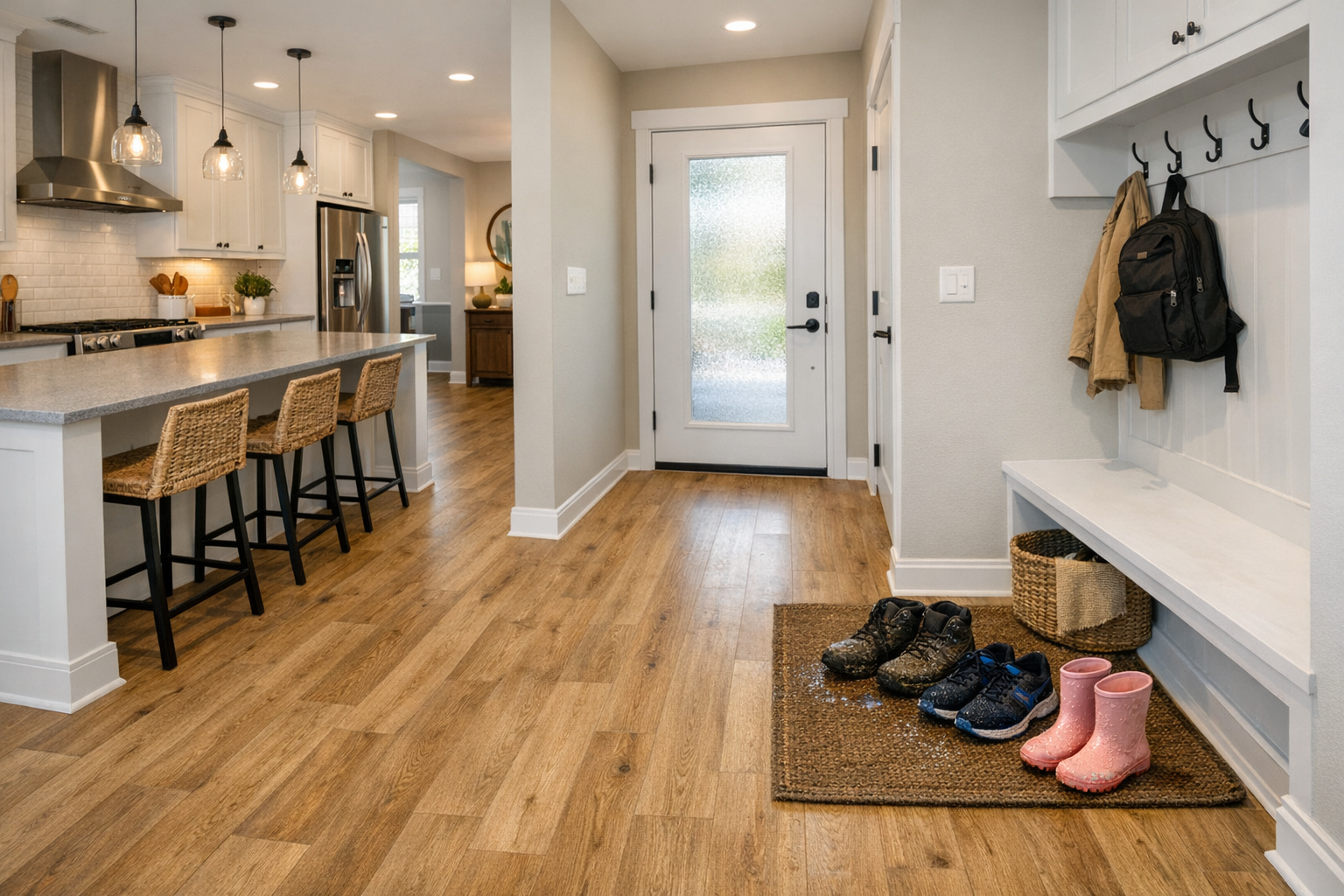
Quick answer: Is waterproof LVP a smart choice in Denton, TX?
In Denton, “waterproof” isn’t just a marketing buzzword—it’s a practical response to how homes get used here. Think: sudden thunderstorms that turn the back patio into a mud track, humidity swings that make materials expand and contract, and busy entryways that funnel grit straight across the floor. Waterproof LVP is often a smart choice because it’s forgiving in the exact places most homeowners struggle: kitchens, exterior doors, and rentals where downtime costs money.
The part most websites skip: the floor’s long-term performance is usually decided before the first plank clicks together. A premium product installed over a wavy subfloor can still feel hollow, “click,” or separate in the traffic lane. We treat the word “waterproof” as a starting point, then build the install around flatness, movement, and clean transitions—so the floor behaves like it should.
Real-world takeaways we see in Denton homes
- 1Yes—humidity + traffic are the real enemies. Denton homes see big swings and heavy patterns near doors and kitchens that punish hardwood and cheap laminate.
- 2“Waterproof” is forgiving, not magical. It handles spills, pet accidents, wet footprints, and mop water without swelling like fiber-based products can.
- 3Install details decide whether it stays tight. Flatness, expansion gaps, jamb cuts, and transition planning are what prevent edge-lift and click-joint failure.
- 4Rentals win on predictability. Keep spare boxes, replace a damaged plank, and avoid refinishing downtime that disrupts tenants or family routines.
Kitchen-proof by design
The day-to-day mess in Denton kitchens isn’t dramatic flooding—it’s repeated micro-events: a dripping dishwasher corner, the sink cabinet getting splashed, and little puddles from rinsed produce. Waterproof LVP gives you a surface that won’t punish you for living normally, as long as edges and transitions are detailed correctly.
Entryway durability that doesn’t look “plastic”
Entryways are grit funnels. We spec LVP to handle sand and small gravel while still looking like a finished interior—right plank size, controlled pattern repeat, and a sheen that doesn’t spotlight every micro-scratch the second the sun hits it.
Rental turnover-friendly
If you manage rentals, you don’t want a floor that’s “perfect” only when it’s new. We plan for fast repairs (replaceable planks), predictable cleaning, and transitions that don’t break loose when furniture gets dragged during move-out weekend.
What Denton homeowners actually complain about (and what we build the install around)
When homeowners call us about “bad LVP,” the plank is rarely the whole story. The most common complaints in Denton come from traffic patterns, finish choices that fight real life, and installs that weren’t built around movement and flatness. We hear the same phrases over and over—then we build the plan around preventing those exact outcomes.
The goal isn’t just a floor that looks good in a wide-angle photo. It’s a floor that still looks intentional after a stormy week, after a tenant move-out, and after the first summer when the house cycles from cool AC to hot afternoons and back again.
Typical “save me” call: “The floor looks great in the guest room, but the hallway started clicking and now the joints are opening.” That’s almost always a flatness/traffic-lane problem—so we treat hallways, kitchen-to-living transitions, and exterior doors as priority zones during prep.
Another common one: “It shows every footprint.” That’s a finish and sheen mismatch. We’d rather you love the floor on day 200 than be impressed on day 2.
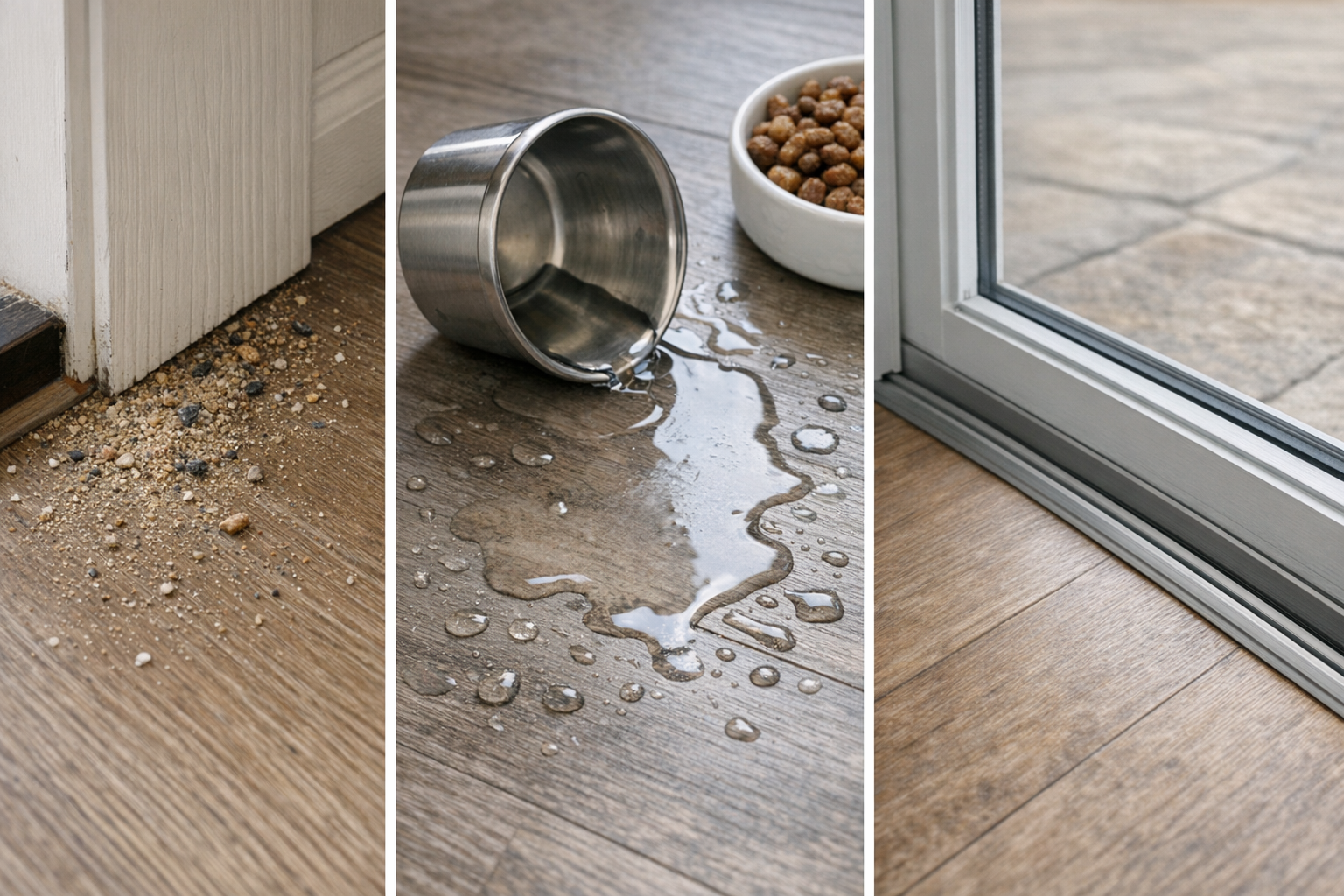
Four complaints, four build-around fixes
- A“My entryway always looks scratched.” We focus on wear layer, realistic sheen, and a walk-off mat strategy because grit is what does the damage—fast.
- B“The kitchen feels sticky to keep clean.” We steer you away from ultra-gloss and toward textures that hide life without trapping grime.
- C“It clicks or feels bouncy.” Usually uneven subfloor or wrong underlayment thickness; we prep to tolerance so joints aren’t doing structural work.
- D“I don’t want cheap rental vibes.” Plank width, pattern planning, stair noses, and clean reducer details make it look custom—not flipped.
Choosing the right waterproof LVP (what we look at beyond the showroom sample)
Showroom samples are designed to sell you on the look. We’re more interested in what happens once that plank is in a Denton home with sun coming through the windows, furniture legs sliding, and a hallway that gets walked 200 times a day. Two products can look similar on a rack and perform completely differently once installed—especially in entryways and rentals.
We also pay attention to the details homeowners don’t see until it’s too late: whether the locking profile feels “crisp” or fragile, how the edges are finished, and whether the texture hides dust without becoming a dirt trap. If your goal is a floor that still feels tight in the click joints a year from now, those choices matter as much as the color.
Core type & stability
Rigid cores (often SPC/WPC styles) can feel more stable through temperature swings, but they still need a flat subfloor. A stiff plank over waves can telegraph imperfections and stress joints—especially in long hallways.
Wear layer is daily-life insurance
The wear layer and top coat take the beating from sandy grit, pet nails, and chair movement. For entryways and rentals, we typically guide you toward thicker wear layers because that’s what buys you time.
Locking profile quality
Edge and locking geometry are what keep joints from separating. If the click system is fragile, one low spot becomes a chronic “unzipping” lane where the floor fails first.
Sheen & texture that fits real mess
Medium sheen and realistic embossing usually look cleaner day-to-day than glossy finishes. We’re aiming for “always looks good,” not “looks perfect when nobody uses it.”
Sunlight & undertones
Denton sunlight can wash a color out or make it go orange/gray depending on undertone. We prefer in-home checks so the floor complements cabinets, paint, and stone—not fights them.
Plan for spares
Especially for rentals: we recommend keeping extra boxes from the same lot when possible. A plank replacement is simple—unless the exact product is discontinued.
Comparison that matches homeowner decision-making
Waterproof LVP in kitchens/entryways
Best when you want wood-look aesthetics with a forgiving surface for spills, wet shoes, and frequent cleaning. The win is predictable upkeep and repairability—especially in traffic lanes and rental turnover. The “gotcha” is that floating floors still need room to move and a flat subfloor to protect the joints.
Engineered hardwood (when it’s the right emotional fit)
If you want a warmer, quieter feel underfoot and you’re willing to be stricter about moisture, engineered hardwood can be a great option. But in Denton, kitchens and exterior doors demand discipline: wipe-ups, humidity management, and careful appliance/leak prevention.
How we install LVP so it stays flat, quiet, and tight (the field details most pages skip)
The difference between an LVP floor that “feels solid” and one that clicks, shifts, or sounds hollow is usually prep and planning—not luck. In Denton homes, the problem areas are predictable: where a kitchen meets a living space, where hallways concentrate traffic, and where exterior doors bring in grit and moisture. We start by treating those zones as stress tests.
We also plan the finish details early. Homeowners don’t call us to admire the middle of the room—they notice the edges: how the floor meets tile, how it transitions at a bedroom door, and whether the stair nose looks like a clean design choice or a last-minute patch. Those “last 10%” details are where a premium install shows.
Our step-by-step installation logic
-
Start with subfloor reality
We check for dips and humps where kitchens meet living areas and where hallways funnel traffic. Those are the spots that cause click-joint failure first if they aren’t corrected.
-
Plan transitions at logical stress points
Long runs can look great on paper, but doorways and direction changes can protect the floor from seasonal movement and reduce edge lift risk—without making the home feel chopped up.
-
Cut jambs and set clearances correctly
Tight jamb cuts plus proper expansion space keep the floor from “pinching,” a common reason homeowners see buckling after a humid stretch or cold snap.
-
Match underlayment to product specs
Too thick can feel soft and stress joints; too hard can sound hollow. We match the underlayment to the manufacturer’s requirements so you don’t end up with a louder house and a warranty problem.
Quiet underfoot
We’re listening for the “hollow hallway” before you ever have to. Correct prep, correct pad, and tight locking engagement make a big difference in how the floor sounds in open areas and corridors.
Clean transitions
Reducers, stair noses, and door thresholds are chosen for function first—then color-matched. A clean transition isn’t just pretty; it keeps edges protected where traffic and moisture hit hardest.
Traffic-lane durability
The first failures usually show up where you walk the most: kitchen-to-fridge paths, hallway runs, and back-door entries. We plan the install so those lanes aren’t sitting over the “worst” subfloor.
North Texas climate + moisture: what “waterproof” doesn’t protect you from
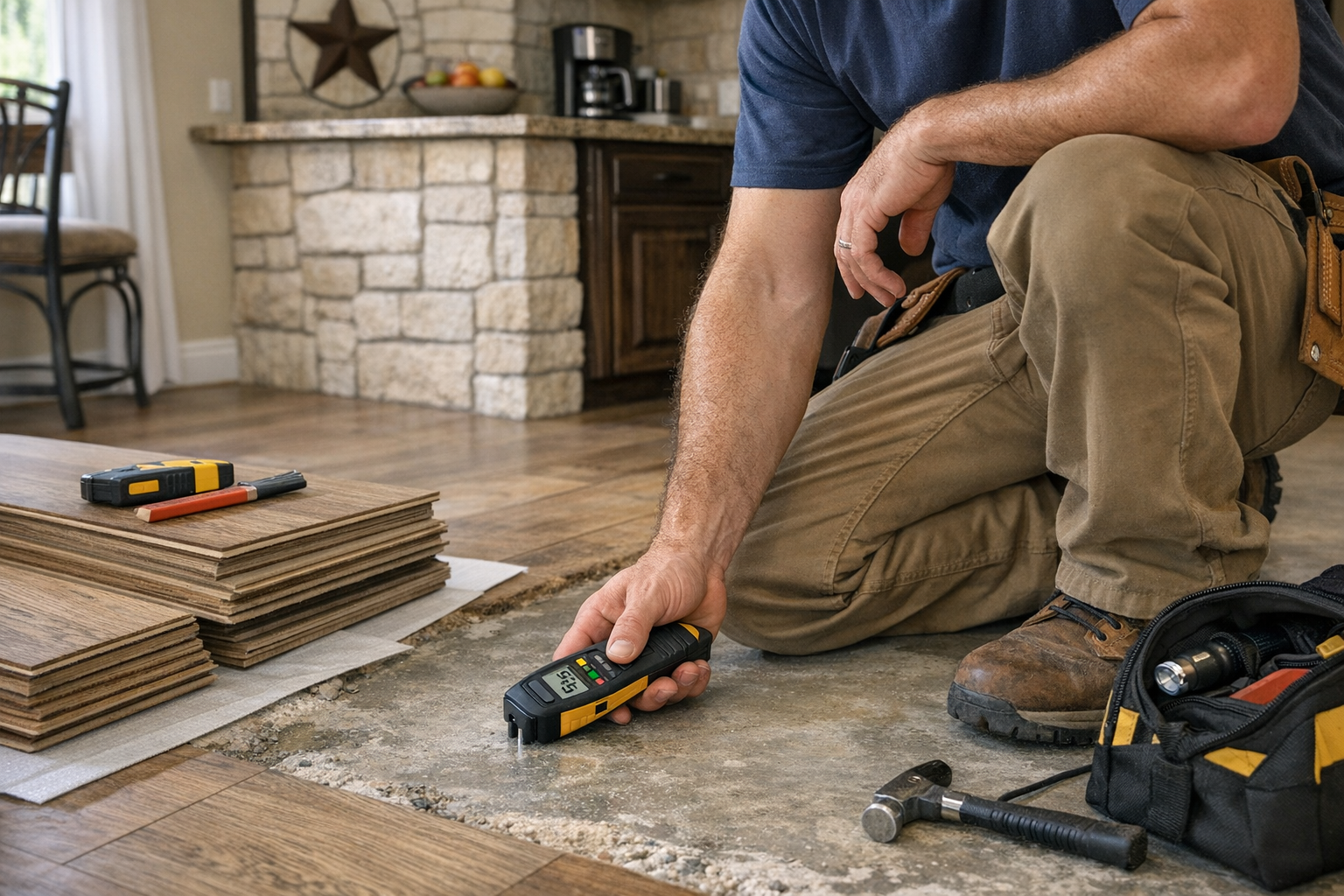
“Waterproof” mostly refers to the plank itself—how it handles water on top. But Denton’s real long-term risk often comes from what you don’t see: vapor and moisture migration from below, especially on slabs, or lingering effects from an old leak that never fully got resolved. That’s when homeowners get odor complaints, underlayment issues, or a floor that feels fine until it doesn’t.
We separate the two moisture categories from day one. Surface water is usually manageable with smart detailing and good habits. Moisture from below is the silent issue that can wreck assemblies over time if you don’t test, plan, and choose the right system. If you’ve had a previous leak (dishwasher, fridge line, or a past plumbing event), we treat it like an investigation—not a guess.
Where we see “surprise moisture” in real kitchens
- 1Under the fridge line and dishwasher. Slow leaks don’t announce themselves—until the cabinet toe-kick swells or the smell shows up.
- 2Sink base cabinets. The danger zone isn’t the middle of the floor; it’s repeated splashes and a small drip that becomes a habit.
- 3Slab vapor. On slab homes, it’s often vapor—not puddles. The wrong underlayment/system can trap odor or create persistent issues under a floating floor.
- 4Old leak footprints. We look for staining patterns, baseboard swelling, and soft spots so you’re not installing over a problem that returns later.
Common homeowner mistakes with waterproof LVP (that we help you avoid)
We’re not here to scare you—just to save you from the common “I wish someone told me” moments. Most LVP disappointments aren’t about picking vinyl instead of wood. They’re about choosing a product that doesn’t match the way the home is used, then installing it without the prep and detailing that protects click joints and edges.
The fastest way to turn a good product into a headache is to treat prep like an optional upgrade. If a hallway is crowned or a kitchen transition dips, your floor will tell on it—usually right where you walk the most. We’d rather be honest about the prep upfront than leave you with a beautiful room and a failing traffic lane.
Buying based on color alone
A plank can look perfect under showroom lighting and look washed out or too busy under Denton sunlight. We push in-home checks and undertone alignment so the floor supports your cabinets and paint instead of competing with them.
Skipping prep to “save money”
Installing over uneven subfloors is the classic pay-twice move. The failure shows up as broken joints in the traffic lane you can’t ignore—hallways, kitchen paths, and door entries.
Using the wrong cleaner
Too much water, harsh chemicals, or waxy “shine” products leave films that attract dirt and make the floor look dull. We give a simple maintenance plan that keeps the wear layer doing its job.
Forgetting door & trim details
If reducers, stair noses, and base/quarter-round aren’t planned, the final 10% can look like an afterthought even when the main field looks great. We plan those details early so the finish feels intentional.
Over-promising “seamless everywhere”
Some homes benefit from strategic transitions that protect movement and reduce risk—especially across multiple rooms. We’ll explain where a break helps and where it would just be visual noise.
Not planning furniture/appliance moves
Dragging heavy appliances can crush edges and stress joints. We plan clearances and moves so reinstall doesn’t turn into chipped edges and “mystery” damage.
Pricing: what actually drives the cost of LVP flooring in Denton
If you’ve ever compared LVP quotes and thought, “How can these be so far apart?”, you’re not missing anything. LVP pricing isn’t just square footage—it’s specification plus prep plus layout complexity. In Denton homes, kitchens and entryways tend to carry more labor because the details matter: toe-kicks, islands, tight jamb cuts, and transitions that need to look clean while protecting the edges.
The most honest line item is prep. Leveling, patching, removing old flooring, addressing squeaks or soft spots, and making the subfloor meet flatness tolerances is what separates professional installs from the “overlay and pray” approach. When we talk budget, we also talk longevity—because a floor that fails early is never the cheaper option, especially in rentals.
What moves the number (and why it matters)
- 1Material spec. Wear layer, locking quality, and attached pad can change performance dramatically—even when two floors look similar.
- 2Prep and leveling. This is where the “cheap” install becomes expensive later. Flatness protects joints, sound, and feel.
- 3Layout complexity. Stairs, tight closets, angles, and appliance moves add time. Kitchens often take longer because cuts determine the finished look.
- 4Longevity math. Slightly higher upfront spend on the right spec + right prep can prevent early replacement, tenant complaints, and repeated repairs.
If you want a quote that’s actually useful, use Get Your Quote Today and tell us where the floor is going, what’s under it (slab vs. pier-and-beam), and whether you’ve had any past leaks.
Where waterproof LVP is the best fit (and when we’d tell you to consider something else)
We like waterproof LVP a lot—but only when it’s the right tool for the job. In Denton, it shines in the spaces where “life happens” and where maintenance needs to be predictable: kitchens with normal spills, entryways that see wet footprints, and rentals where you need durability without refinishing downtime.
That said, we’ll tell you when another option might serve you better. If you want the quieter, warmer feel of real wood and you’re willing to manage moisture carefully, engineered hardwood can be the better emotional fit. If there’s chronic moisture from below or a recurring leak history, the smartest money may go toward solving the moisture first instead of installing a floating system that could trap odor underneath.
Best fits in Denton
Kitchens where spills are normal, high-traffic entryways that see muddy shoes during storms, and rentals where you want consistent look, fast turnover, and easy spot repairs.
When to consider engineered wood
If “quiet and solid” matters more than “forgiving,” and you’re ready for moisture discipline and different maintenance expectations, engineered hardwood may be a better match.
When we pause for moisture
If an area has chronic moisture from below or a history of recurring leaks, we may recommend addressing the source first or selecting an alternative assembly to avoid trapped odor and repeated issues.
When products are discontinued
If you’re matching an existing floor and the product is gone, we’ll talk transition strategies so the home looks intentional—not like a patchwork remodel.
Rental strategy that works
We design for abuse: moderate sheen, durable wear layer, clean reducers, and a plan for spare material so repairs don’t require replacing the entire floor.
Entryway “grit control” plan
We recommend a real walk-off zone (not a tiny mat), furniture pads, and cleaning habits that remove grit before it becomes sandpaper under shoes.
Local trust signals & verifications (for homeowners who do their homework)
Denton homeowners ask smart questions—and they should. If you’re comparing contractors, don’t just read star ratings. Look for consistent business naming across profiles, real project photos (not stock), and reviews that describe outcomes you can verify in a walkthrough: clean transitions, flat floors, problem-solving around subfloors and doorways, and how the team handles surprises.
Third-party directories are useful as a cross-check: they help confirm association membership, business history, and how issues get handled. If you’re the kind of homeowner who wants receipts, you can review JBN Flooring/The JBN Group across the sources below using the links on this page.
Citation links
Prefer to start at the main site? Visit JBN Flooring for additional services and project info.
FAQ: Waterproof LVP flooring in kitchens, entryways, and rentals
These are the questions we hear most often from Denton homeowners and rental owners—especially after they’ve read conflicting advice online. The short version: yes, waterproof LVP can be an excellent fit, but the “details” aren’t optional. Appliance moves, subfloor flatness, expansion space, and transitions are what decide whether the floor stays quiet and tight in the places you use the most.
Yes, but the details matter—heavy appliances can stress click joints if the subfloor isn’t flat or if the floor is pinned. We plan appliance moves and clearances so edges don’t get crushed during reinstall, and so the floor can still move the way a floating system needs to.
The surface typically handles it, but water can still find edges and transitions. The fix is fast cleanup and smart detailing—tight cuts, correct transitions, and avoiding pinched expansion gaps that force water into seams.
Not always—overall thickness doesn’t guarantee durability. Wear layer quality, locking profile, and proper prep are usually more important to long-term performance in traffic lanes than a thicker plank that’s installed over an uneven subfloor.
Choose realistic texture and moderate sheen, use a real entry mat system, and avoid waxy cleaners. The goal is a clean wear layer—not a shiny film that grabs dust and footprints.
Many projects are 1–3 days depending on demo, prep, and room complexity. Rentals can be scheduled to minimize vacancy time, but we won’t rush the prep that keeps joints from failing later.
Still not sure what spec you need?
Tell us where the floor is going (kitchen, entryway, rental), what you’re dealing with (pets, kids, slab vs. pier-and-beam, past leaks), and what you want it to feel like (quiet/solid vs. ultra-durable). We’ll help you choose a product that fits your house—not just your Pinterest board.
Get a waterproof LVP floor that’s chosen and installed for real Denton living
Tell us where the floor is going (kitchen, entryway, rental), what you’re dealing with (pets, kids, slab vs. pier-and-beam, past leaks), and we’ll recommend a durable spec and a clean installation plan. Call for fast answers or request a quote online—no white CTA buttons.
Prefer to browse first? Start at JBN Flooring.