Your floor takes daily abuse from Texas heat, muddy shoes, pets, spills, and heavy foot traffic. A good-looking product can still fail if moisture testing, subfloor preparation, or installation details get overlooked.
When you search for reliable flooring installation in Flower Mound, TX, you need more than a material recommendation. You need a flooring contractor who understands slab foundations, humidity swings, room conditions, and the way your household uses each space. Selecting the right flooring materials is essential for both residential and commercial properties to successfully handle the unique climate demands of the region. Ultimately, the right process starts with the home, not a product sample.
Key Takeaways
- Flower Mound’s climate and concrete slabs make moisture testing important before installation.
- Luxury vinyl plank and vinyl flooring fit busy kitchens, bathrooms, laundry rooms, and pet-friendly homes.
- Engineered hardwood offers a more stable wood option than solid hardwood for many North Texas homes.
- Proper subfloor preparation affects comfort, appearance, and long-term floor performance.
- JBN Flooring provides flooring installation, replacement, and repair services across Flower Mound and nearby communities.
Flower Mound’s Climate Changes the Flooring Decision
Flower Mound homes deal with hot summers, shifting humidity, intense sunlight, and temperature changes between air-conditioned rooms and garages or enclosed patios. These conditions can affect wood movement, adhesive performance, and gaps between flooring planks.
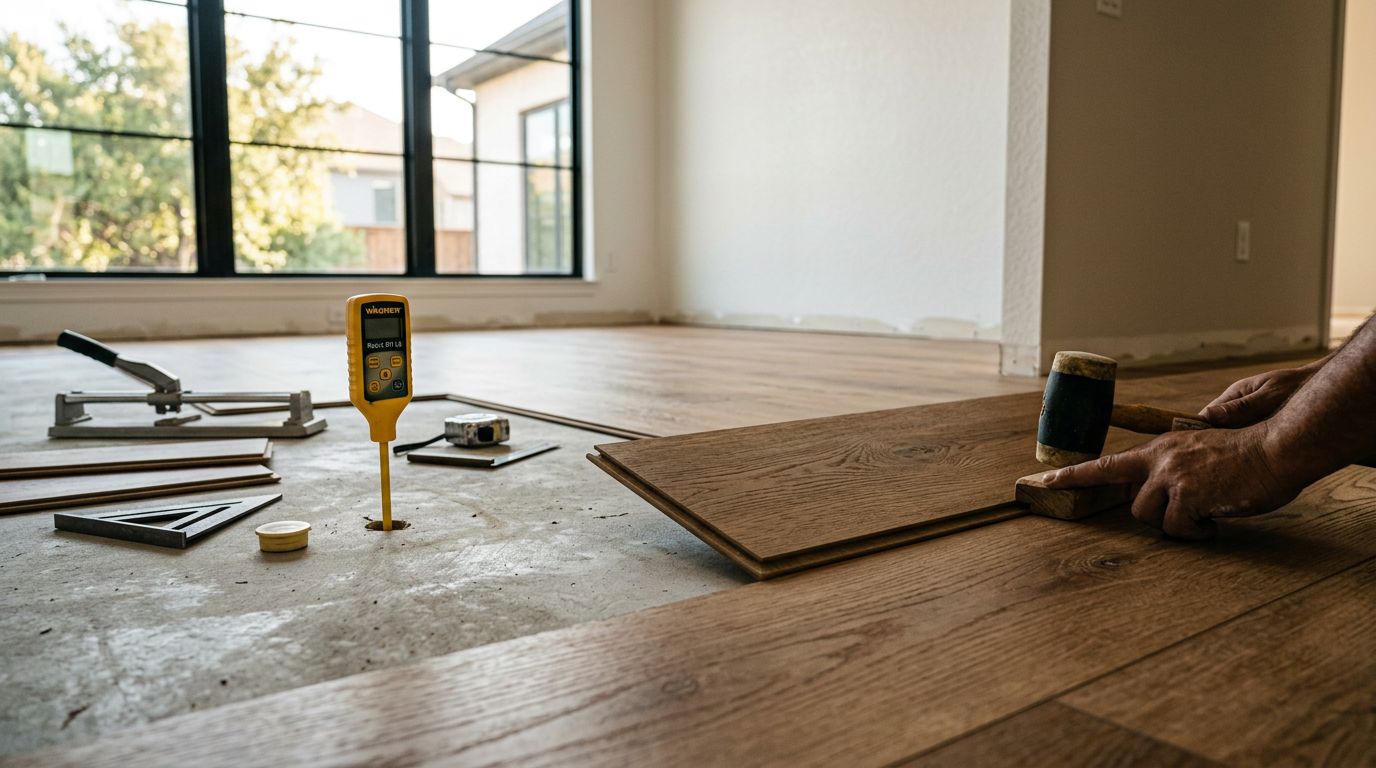
Concrete slabs add another concern. A slab can look dry while still holding moisture below the surface. If a flooring company does not account for slab moisture during the installation process, wood, laminate, or vinyl flooring can suffer from adhesive failure, buckling, odors, or other significant problems later on.
A professional flooring installation begins with an inspection of the existing floor. Your installer should look for subfloor repair needs, cracks, loose materials, moisture concerns, and transitions between rooms. The goal is a stable, clean surface before new flooring goes down.
Flower Mound neighborhoods such as Wellington, Lakeside DFW, and Canyon Falls include many homes with open floor plans and concrete foundations. That layout often makes subfloor preparation even more important because these high-traffic areas can be easily affected by a single uneven section, which may compromise the entire space. Homes in Highland Village, Lewisville, Argyle, Bartonville, and Double Oak can face similar conditions.
You should also consider sunlight. Rooms with large windows may need flooring with good color stability and window coverings that reduce direct exposure. For more local guidance, review JBN Flooring’s information on Flower Mound flooring installation services.
Compare Flooring Options for Your Home
The best floor depends on the room, your maintenance habits, and your expectations for durability. A busy household with dogs needs a different solution than a formal sitting room with limited traffic.
Luxury vinyl plank for busy rooms
Luxury vinyl plank, often called LVP flooring, is one of the most practical choices for North Texas homes. These luxury vinyl planks offer strong resistance to spills, scratches, and daily wear. Because these floors are scratch-resistant, they hold up well under heavy foot traffic. Many quality rigid-core products are sold as waterproof vinyl flooring, which makes them ideal for kitchen and bathroom environments where moisture is common.
LVP can reproduce the appearance of oak, hickory, or other wood species without the same moisture sensitivity as solid hardwood. It also feels warmer and less rigid than tile underfoot. SPC rigid-core products provide a firm base over properly prepared subfloors, but they still need a reasonably flat surface.
LVP isn’t maintenance-free. Grit can scratch the wear layer, and standing water can reach the subfloor through poorly sealed edges or damaged transitions. Sweep often, use manufacturer-approved cleaners, and avoid soaking the floor.
Because temperature changes can affect rigid-core products in rooms without steady climate control, proper acclimation and expansion gaps matter. A recent North Texas LVP flooring guide also addresses temperature movement and installation conditions.
Hardwood and engineered hardwood
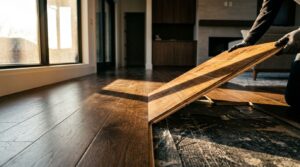
Hardwood flooring brings natural character and can last for decades with appropriate care. Solid wood can be sanded and refinished several times, as hardwood refinishing allows you to restore the beauty of your floors after years of wear. However, it responds to moisture and temperature changes. On a concrete slab, installation requires careful planning, moisture control, and the right adhesive or subfloor system.
Engineered hardwood flooring has a real wood surface bonded to layered material. Its construction gives it more dimensional stability than many solid wood products, which can make it a better fit for some North Texas homes. Engineered white oak and hickory are popular choices because they offer a durable surface and a range of natural grain patterns.
However, engineered wood is not waterproof. You should clean spills quickly and avoid installing it where repeated standing water is likely. A well-installed engineered floor can perform beautifully in living rooms, dining rooms, offices, and bedrooms when indoor humidity stays reasonably consistent.
Laminate flooring for controlled spaces
Laminate flooring offers a wood-look appearance at a lower material cost than many hardwood products. Its wear layer can handle normal household traffic, and modern designs look far more natural than older styles.
Laminate flooring works best in dry areas where spills are controlled. Some products include water-resistant construction, but water resistance doesn’t make every floor suitable for bathrooms or laundry rooms. Water can enter at seams, edges, and transitions if installation or cleanup falls short.
Ask about the product’s moisture rating, underlayment requirements, warranty terms, and cleaning instructions before choosing it. A flooring contractor should also explain whether your existing slab meets the manufacturer’s requirements.
What a Professional Flooring Installation Includes
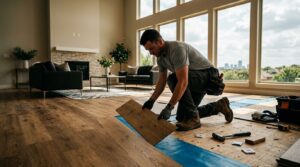
A successful flooring installation involves much more than simply removing old planks and laying down new ones. Professional flooring installers manage the entire installation process to ensure long-term durability and aesthetic appeal. Your project scope should clearly identify furniture movement, demolition, debris disposal, trim removal, subfloor repairs, transition placement, and final cleanup.
After removing the old flooring, the installer must conduct thorough subfloor preparation. If you are choosing tile flooring, this step is particularly critical to prevent future cracks or shifting. For materials like porcelain and ceramic tile, concrete may need grinding, patching, leveling, or moisture mitigation to provide a perfectly stable base. Meanwhile, wood subfloors may require additional screws, replacement sections, or repairs around plumbing and high-traffic areas.

Photo by La Miko
Material acclimation also matters. Wood products need time to adjust to the home temperature and humidity. Vinyl and laminate products have their own manufacturer requirements as well. Skipping these steps can create avoidable movement, gaps, or warranty issues.
The installation method depends on the material chosen for your home. LVP may use a floating system, glue-down installation, or another approved method. Engineered hardwood may require glue-down, nail-down, or floating installation based on the specific product and the condition of the subfloor. Your installer should explain the chosen method before any work begins.
Doorways and transitions deserve attention too. Poorly planned transitions create trip points and make rooms look disconnected. A skilled installer measures these details carefully before cutting the first plank.
For additional technical background, this guide to moisture and substrate preparation covers the conditions that affect flooring performance.
Planning Your Floor Replacement and Maintenance
A floor replacement project usually starts with three decisions: the rooms involved, the desired material, and the project schedule. Replacing one connected area often creates a more consistent appearance, but you may choose separate materials for bedrooms, bathrooms, and living spaces.
Your budget should include more than the flooring itself. When comparing material prices, you should weigh the carpet installation cost against the price of hard surfaces to find the best fit for your lifestyle. Ask about demolition, subfloor preparation, baseboards, transitions, delivery, furniture handling, and disposal. To help you find affordable flooring solutions, JBN Flooring offers a mobile flooring showroom and a free in-home consultation, ensuring you get an accurate quote without surprises. A low initial price can change when hidden repairs appear, so request a written estimate that clearly explains all associated costs.
You should also plan for the days after installation. Keep heavy furniture off new floors for the period recommended by the manufacturer. Felt pads protect surfaces, while entry mats reduce grit and moisture. Use a vacuum or soft broom that will not drag metal or hard debris across the finish.
If your current floor has isolated damage, full replacement may not be necessary. Professional floor repair can address loose planks, minor scratches, damaged transitions, or localized subfloor problems. Repair makes sense when the existing material is still available and the surrounding floor remains in good condition.
When damage covers multiple rooms or the material has reached the end of its service life, replacement is usually more practical. JBN Flooring can help you compare repair, partial replacement, and a full new installation based on the condition of your home.
Flower Mound Flooring Installation FAQs
How long does floor installation take?
The timeline depends on the material, square footage, demolition, and subfloor condition. A straightforward LVP project may move faster than hardwood installation because wood often requires more acclimation and preparation. Repairs, leveling, moisture mitigation, and custom trim can add time.
Ask for a room-by-room schedule before work begins. That helps you plan furniture, pets, children, and access to kitchens or bedrooms.
Is LVP better than hardwood for Flower Mound homes?
LVP is often the easier choice for rooms exposed to spills, pets, or frequent traffic. Hardwood offers natural material, a distinctive appearance, and the ability to refinish certain products. Engineered hardwood provides a middle option for homeowners who want real wood with more stability over concrete.
The better choice depends on the room and your priorities. A flooring contractor should compare products instead of recommending one material for every space.
Can you install flooring over concrete?
Yes, many flooring products can go over concrete after the slab passes moisture and flatness checks. LVP, laminate, tile, natural stone floors, and engineered hardwood each have different installation requirements. Concrete may need patching, grinding, leveling, or moisture mitigation before installation.
Never assume a clean-looking slab is ready for flooring. Testing protects the material and the investment beneath it.
How should you choose a flooring company?
Look for clear estimates, local experience, material-specific installation knowledge, and a willingness to discuss subfloor conditions. When searching for reliable flooring companies Flower Mound TX, ask who handles floor repair, what preparation is included, and how the company addresses transitions and cleanup. Requesting a free estimate is a great way to ensure quality service and long-term customer satisfaction.
JBN Flooring provides residential flooring services for homeowners across Denton County and North Texas. You can Get Your Free Flooring Estimate or Call 469-340-0837 to discuss your Flower Mound project.
Conclusion
A successful flooring installation in Flower Mound, TX starts beneath the visible surface. Moisture testing, slab preparation, correct installation methods, and a material suited to your specific rooms matter as much as color and texture.
Waterproof flooring and other moisture-resistant products fit many busy homes in the area, while engineered hardwood flooring and traditional hardwood flooring offer natural warmth in the right spaces. By relying on practical recommendations from a local flooring contractor, you can choose a floor that looks beautiful and holds up to the unique demands of North Texas living.