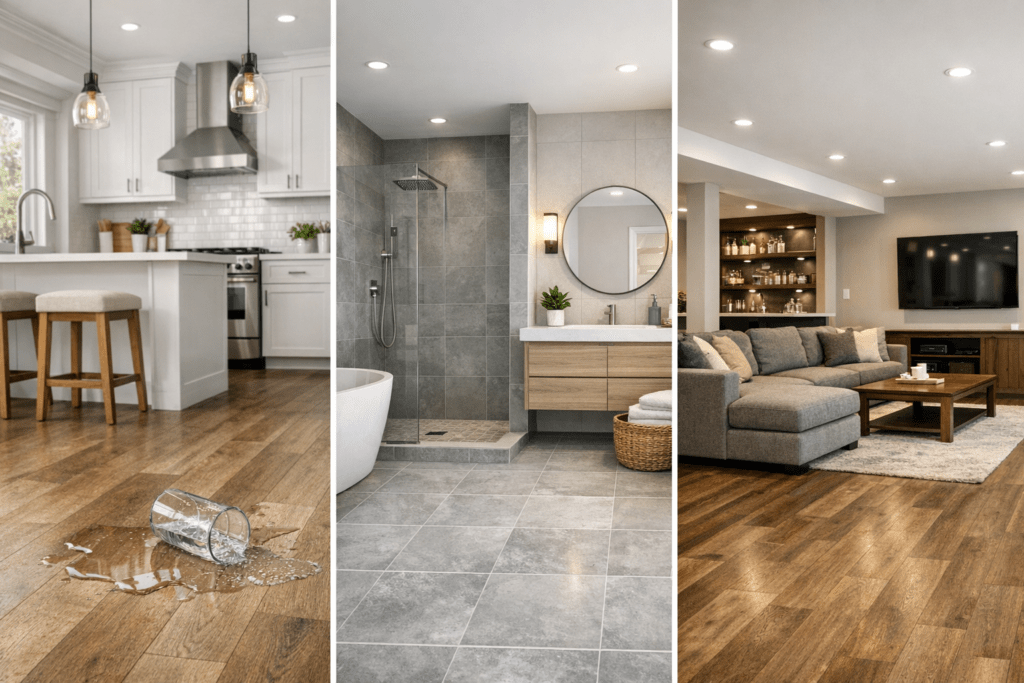
Best Waterproof Flooring Options: Pros, Cons, and What Works Best for Your Home
Compare today’s most water-resistant and truly waterproof floors, learn where each performs best, and choose a surface that fits your style, budget, and maintenance needs.
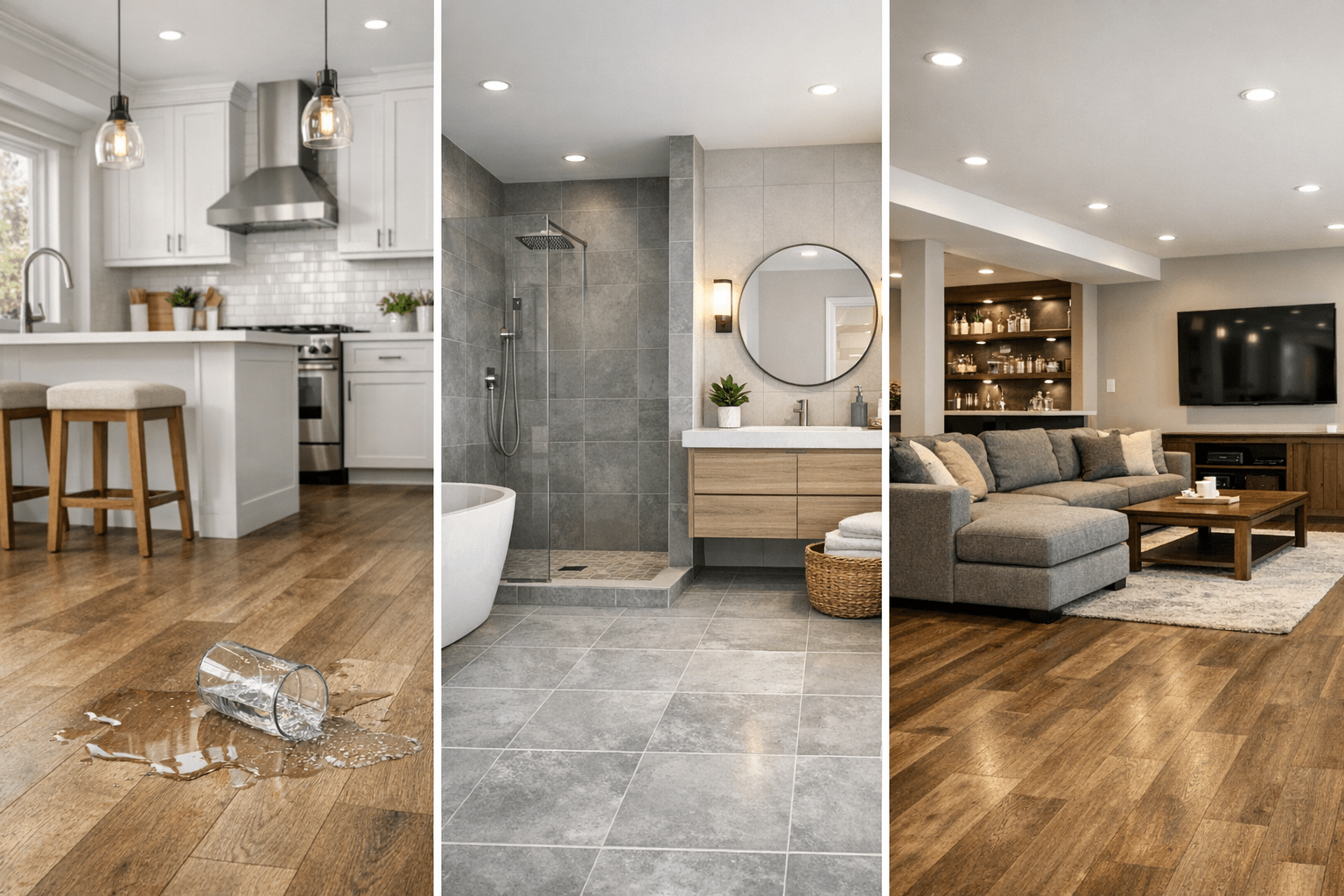
From kitchens to basements, “waterproof” means different things depending on the material—and the system underneath it.
Best Waterproof Flooring Options for Busy Homes
Water and floors have a complicated relationship. In real homes, moisture doesn’t show up only as dramatic floods. It’s the everyday stuff: wet shoes at the entry, a dishwasher that burps a little water, kids who hop out of the bath too fast, a pet accident you don’t discover right away, or a basement that feels “fine” until humid summer air meets a cool slab.
The good news is that modern flooring offers more genuinely water-tough options than ever. The tricky part is separating marketing language from real-world performance. A floor can look perfect after a spill and still be quietly failing at the seams, swelling at the edges, or trapping moisture where you can’t see it.
Key idea:
Waterproof flooring is as much about the system (subfloor prep, seams, transitions, perimeter details) as it is about the plank or tile you can see.
Below, we’ll break down what “waterproof” actually means, compare the top materials, and show you what tends to work best in bathrooms, kitchens, laundry rooms, mudrooms, and basements.
What “Waterproof” Really Means (And Why It Matters)
“Waterproof” is one of the most overused words in flooring. Some products can handle splashes and damp mopping, while others can survive a plumbing leak with minimal damage. Understanding the difference protects your investment—and your subfloor.
Water-resistant vs. waterproof: the practical difference
A water-resistant floor is designed to handle short, small exposures. Think: a knocked-over water glass that you wipe up soon. A truly waterproof surface and system, on the other hand, can withstand standing water without swelling, delaminating, or permanently warping.
Many “waterproof” claims are really about the top surface. If water can get through seams or around edges and reach a vulnerable core or subfloor, problems can show up weeks or months later.
Moisture comes from above—and below
Most homeowners focus on spills, but moisture can also migrate upward as vapor. This matters most in basements and slab-on-grade homes. If the slab has elevated moisture, the “right” flooring choice shifts toward materials that tolerate vapor movement and don’t trap moisture in a way that causes odor, mold risk, or adhesive failure.
Installation details determine whether “waterproof” holds up
Even a great product can fail early if the install isn’t matched to the room’s moisture realities. In wet areas, performance depends on details like:
- Seam integrity (click-lock precision, welds, or grout quality)
- Subfloor flatness (reduces stress at joints and prevents “pumping” water through seams)
- Perimeter and transition detailing (so water doesn’t sneak under the floor at edges)
- Appropriate underlayment or moisture barrier (especially over concrete)
Takeaway for bathrooms and basements:
If you choose the wrong product—or skip system steps—common outcomes include swelling, lingering odor, increased mold risk, and premature replacement even if the floor looked fine at first.
Top Waterproof Flooring Choices: Quick Comparison
There isn’t one best waterproof floor for every home. The best choice depends on foot traffic, pets, your comfort preferences, the subfloor you’re installing over, and how much standing water is realistically possible in that room.
| Flooring type | Where it shines | Main strengths | Watch-outs |
|---|---|---|---|
| LVP/LVT (luxury vinyl) | Kitchens, living areas, many baths, laundry rooms | Water-tough, warm underfoot, realistic visuals, easy maintenance | Quality varies; seams/edges still matter; not ideal for chronic standing water without the right detailing |
| Porcelain/Ceramic tile | Bathrooms, mudrooms, showers (with proper systems) | Inherently water-safe at surface, heat/humidity tolerant, longest lifespan | Hard/cold feel; grout maintenance; requires skilled substrate prep |
| Sheet vinyl | Laundry rooms, kitchens, utility spaces | Few seams, budget-friendly, simple to clean | Can dent/tear; subfloor imperfections telegraph; design options vary by grade |
| Waterproof laminate | Hallways, kitchens, open concept living areas | Great value, authentic wood visuals, comfortable feel | Less forgiving of uneven subfloors; standing water time limits vary by brand |
| Sealed concrete / epoxy | Basements, slabs, garages, modern utility rooms | Moisture-tolerant, durable, low upkeep | Can feel hard; requires correct prep and moisture testing to avoid peeling |
A quick cost reality check: the cost to install waterproof flooring per square foot varies widely based on material grade, demolition needs, floor prep, and local labor rates. Tile and epoxy systems often cost more upfront due to prep complexity, while LVP and sheet vinyl can be more economical—especially when subfloors are already in good shape.
If comfort matters most
LVP/LVT tends to feel warmer and a bit more forgiving underfoot than tile, while still handling daily moisture well.
If “bulletproof” matters most
Tile (installed with proper waterproofing in wet zones) sets the benchmark for long-term water protection.
Luxury Vinyl Plank/Tile (LVP/LVT): The Most Popular Waterproof Pick
Luxury vinyl plank and tile have become the go-to answer for many homeowners who want a wood or stone look without worrying about everyday moisture. It’s also one of the easiest ways to get a consistent floor through kitchens, living areas, and hallways while keeping cleanup simple.
Why LVP/LVT performs well around water
Many LVP/LVT lines use waterproof cores and non-porous wear layers. When paired with tight locking seams and proper underlayment (or an attached pad where appropriate), they handle spills, wet shoes, and routine mopping very well.
- Spill resistance: Great for daily messes—especially in kitchens and laundry rooms.
- Dimensional stability: Better than traditional wood-based products in humidity swings.
- Comfort: Typically warmer and quieter than tile, particularly over concrete.
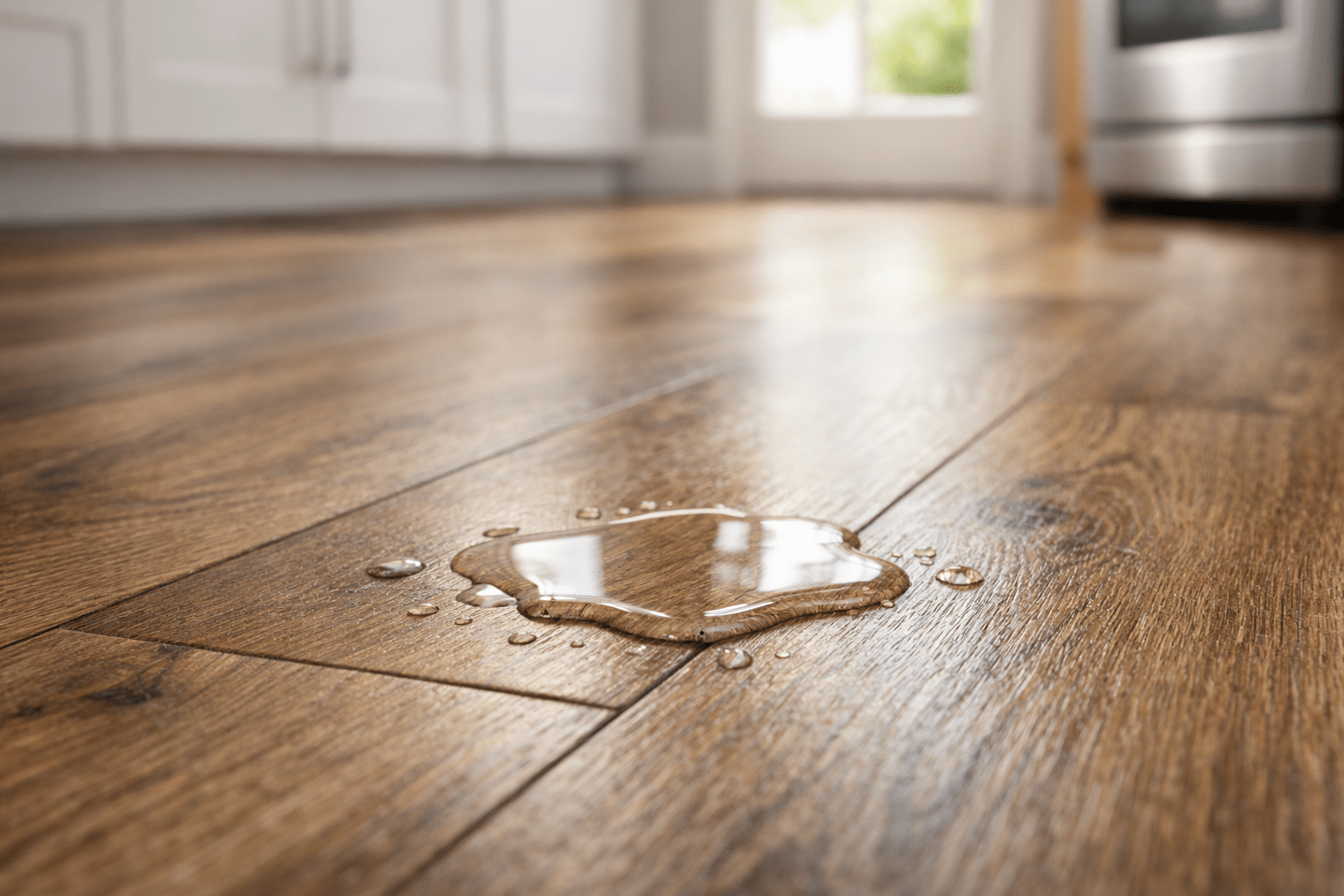
Quality LVP/LVT resists surface moisture—but seam tightness and perimeter detailing still determine real-world performance.
What to look for: wear layer, finish, and build quality
Not all vinyl is created equal. For busy homes (pets, kids, high traffic), pay special attention to the wear layer and overall construction. In general, a thicker wear layer improves scratch and scuff resistance, but the finish quality and brand reputation matter too.
Also consider:
- Embossing and texture: More realistic visuals and improved slip feel.
- Edge profile: Micro-bevels can look more like wood but may collect grime if cleaning is inconsistent.
- Plank thickness and core type: Often affects dent resistance and how forgiving the floor is over minor subfloor imperfections.
Pros and cons (honest version)
Pros
- Excellent everyday water resistance
- Wood/stone looks without wood swelling risk
- Comfortable underfoot compared to tile
- Great for open layouts and fast refreshes
Cons
- Quality varies widely by product line
- Standing water should still be addressed quickly
- Can scratch/dent with heavy grit or sharp furniture without protection
- Edges/transitions are weak points if installed incorrectly
Where it works best
If you’re searching specifically for the best waterproof flooring options for bathrooms, LVP/LVT can be a good fit for many half baths and some full baths—especially when you’re careful about installation details and ventilation. For shower areas or rooms with frequent standing water, tile systems often remain the safest long-term choice.
Installation tip that prevents callbacks:
Prioritize subfloor flatness and tight seam engagement. A floor that flexes can “pump” moisture through joints, especially near tubs, toilets, and laundry appliances.
If you’re researching waterproof vinyl plank flooring pros and cons, the most important “con” to understand is that vinyl is water-tough, but the installation perimeter and transitions determine whether water stays on top—or finds a path underneath.
Porcelain/Ceramic Tile: Maximum Water Protection With the Right Build
Tile has earned its reputation in wet spaces for a reason: the tile surface itself doesn’t absorb water the way wood-based products can. For bathrooms, mudrooms, and certain laundry rooms, tile can be the most durable long-term solution—when the system underneath it is built correctly.
Tile is only as waterproof as what’s underneath
Homeowners are often surprised to learn that grout and tile aren’t the whole story. Water can migrate through cement grout and reach the substrate. In true wet zones (showers, shower-adjacent floors, tub surrounds, and any area that sees regular saturation), proper waterproofing membranes and correct substrate prep are essential.
Tile is a finish surface. In showers and wet zones, the waterproofing layer beneath it is what protects your home.
Grout choice changes maintenance
Grout is often where tile wins or loses on day-to-day upkeep. Cement grout is common and cost-effective but can stain and absorb moisture. Epoxy grout is more stain-resistant and moisture-resistant, but it requires experience to install cleanly and efficiently.
Comfort considerations: cold and hard vs. long-lasting
Tile can feel colder and harder underfoot than resilient floors. Many homeowners solve that in a few ways:
- Radiant heat: Especially popular in bathrooms.
- Rugs or runners: Adds comfort at vanities and sinks.
- Matte or textured finishes: Better traction where floors get wet.
When tile is the best answer:
If you want the highest ceiling for water protection and longevity—especially in full bathrooms—tile with proper waterproofing is hard to beat.
If you’re weighing tile vs luxury vinyl for kitchens and laundry rooms, tile tends to win on heat, cleaning tolerance, and long lifespan, while LVP often wins on comfort, speed of install, and a softer feel underfoot.
Waterproof Laminate: A Strong Value Option for Many Rooms
Laminate has come a long way. Traditional laminate had a reputation for swelling when exposed to water because of its wood-based core. Newer “waterproof laminate” lines address that with tighter joint engineering and improved cores designed to withstand spills for longer periods.
Where waterproof laminate fits best
Waterproof laminate can be a strong value choice for open-concept living spaces, hallways, and kitchens where you want a consistent wood look at a competitive price—especially when spills are wiped up promptly.
- Great for: living rooms, dining areas, hallways, many kitchens.
- Use caution in: full bathrooms, rooms with frequent standing water, or chronic moisture.
What installers care about: flatness and expansion gaps
Laminate is typically less forgiving than vinyl if the subfloor has waves, dips, or high spots. When the floor flexes, joints can stress and eventually open—creating a path for moisture. Correct expansion gaps and transitions also matter, because laminate needs room to move with seasonal changes.
Basement reality check:
If you’re considering waterproof laminate flooring for basements, start with moisture conditions. In basements with higher vapor drive or temperature swings, vinyl, sealed concrete, or epoxy systems may be safer long-term.
Pros and cons to keep expectations realistic
Pros
- Excellent wood visuals for the price
- Comfortable, stable feel underfoot
- Good performance for everyday spills
- Great for cohesive style in open areas
Cons
- Standing-water tolerance varies by line and warranty
- Requires flatter subfloors than many expect
- Less ideal for true wet zones (showers, frequent saturation)
- Joint failure risk increases with poor prep
Sheet Vinyl, Sealed Concrete, and Epoxy: Smart Alternatives
If you’re focused on practicality—or you’re dealing with a slab/basement—these alternatives can outperform trendy plank floors in the areas that matter most: seams, vapor tolerance, and durability.
Sheet vinyl: fewer seams, fewer leak paths
Sheet vinyl is an underappreciated performer in laundry rooms, kitchens, and utility spaces. Because it comes in wide rolls, it can dramatically reduce seams (often the weak points for water intrusion). It’s also easy to clean and typically budget-friendly.
- Best for: laundry rooms, mudrooms, secondary kitchens, rentals, playrooms.
- Watch-outs: can dent/tear, and subfloor imperfections can show through.
Sealed concrete: a slab-friendly solution
Sealed concrete can be ideal when you want a modern look and minimal upkeep, especially over slabs and in basements. The key is choosing the right sealer and doing moisture testing and prep so the finish doesn’t peel or develop white mineral deposits (efflorescence).
Epoxy: a tough, moisture-tolerant coating system
Epoxy coatings can create a waterproof, chemical-resistant surface that’s highly durable in basements, garages, and multipurpose rooms. Like tile, epoxy success is heavily prep-dependent—surface prep and moisture conditions make or break the result.
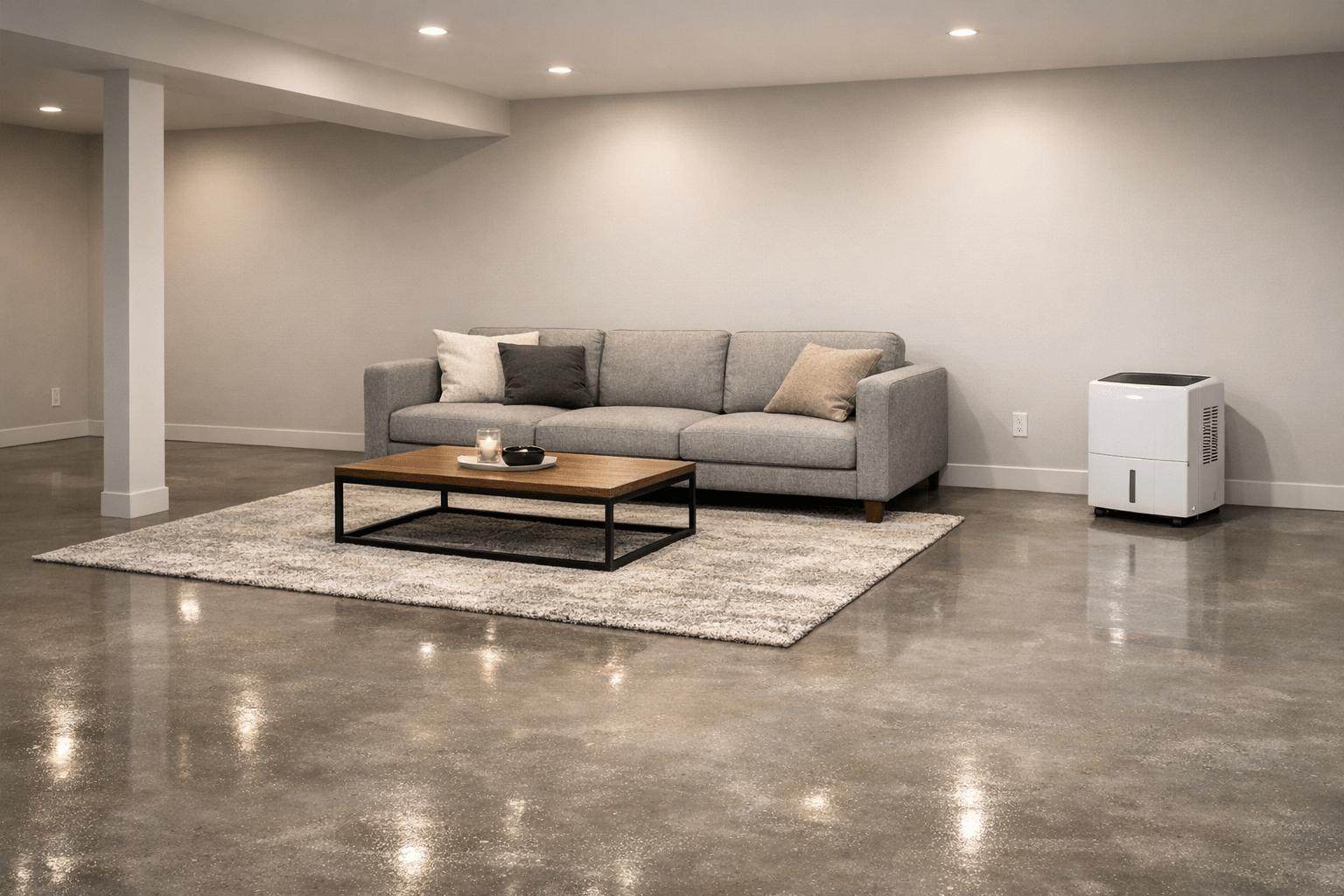
Sealed concrete and epoxy systems can be excellent options when moisture tolerance and durability matter more than softness.
When these alternatives are the smartest pick:
If your space is moisture-prone (especially a basement on a slab), sealed concrete or epoxy can reduce risk because you’re not relying on click seams or wood-based cores to stay stable.
How to Choose the Best Waterproof Flooring for Each Room
Choosing well gets much easier when you stop thinking in terms of “best overall” and start thinking in terms of what kind of water exposure this room actually experiences.
Bathrooms: prioritize true waterproof systems
Bathrooms are the highest-stakes room because humidity and splashes are daily, and failures can affect subfloors and adjacent rooms. For the most dependable results:
- Showers/wet zones: tile with proper waterproofing is typically the gold standard.
- Bathroom floors outside the shower: tile is excellent; LVP/LVT can work well with careful detailing and good ventilation.
- Slip resistance: choose finishes with traction and use bath mats where water routinely lands.
Kitchens: balance durability, comfort, and stain resistance
Kitchens need a floor that handles constant foot traffic, dropped utensils, chair movement, and frequent cleaning. Strong contenders include LVP, tile, and sheet vinyl. Your best choice depends on how you live:
- If you cook a lot: tile resists heat and aggressive cleaning; sheet vinyl cleans fast.
- If you want comfort and speed: LVP is a great middle ground.
- If you want seamless water protection on a budget: sheet vinyl deserves a close look.
Basements: test moisture first, then pick the right category
Basements can look dry but still have elevated vapor. Before choosing a floor, confirm moisture conditions and think about temperature swings. Then match the floor to the environment:
- Often best: vinyl systems, sealed concrete, or epoxy coatings.
- Sometimes workable: waterproof laminate, depending on product limits and the basement’s moisture profile.
- Plan for comfort: area rugs can add warmth without risking a wall-to-wall moisture trap.
Mudrooms and entries: grit + water is the real enemy
Entries punish floors with abrasive grit and moisture. Whichever waterproof option you choose, you’ll extend its life by controlling grit at the door and protecting high-wear spots:
- Use quality walk-off mats inside and outside
- Add felt pads or protective feet under benches and storage
- Clean grit frequently—fine sand acts like sandpaper
Rule of thumb:
If the room can see standing water, lean toward tile (with proper waterproofing), sheet vinyl, or sealed concrete/epoxy. If the room mostly sees spills and dampness, LVP/LVT and select waterproof laminate can be excellent.
Conclusion: Pick the Waterproof Floor That Matches Your Real Life
The best waterproof flooring option is the one that matches your home’s moisture conditions, comfort preferences, and maintenance habits—not just the one with the boldest label.
- LVP/LVT is the most popular “all-around” pick for busy homes because it’s water-tough, comfortable, and stylish.
- Tile delivers the highest ceiling for water protection in bathrooms and true wet zones—when built with the right waterproofing system.
- Waterproof laminate can be a strong value in many living spaces, especially where spills are handled promptly.
- Sheet vinyl, sealed concrete, and epoxy are smart, durable alternatives—particularly in basements, utility rooms, and slab environments.
If you’re narrowing down options and want a recommendation tailored to your rooms, subfloor, and lifestyle, an on-site assessment can prevent expensive guesswork.
Ready to Choose the Right Waterproof Floor?
Get expert guidance on the best material for your rooms, budget, and lifestyle. Call us today or request your no-cost consultation to get started.