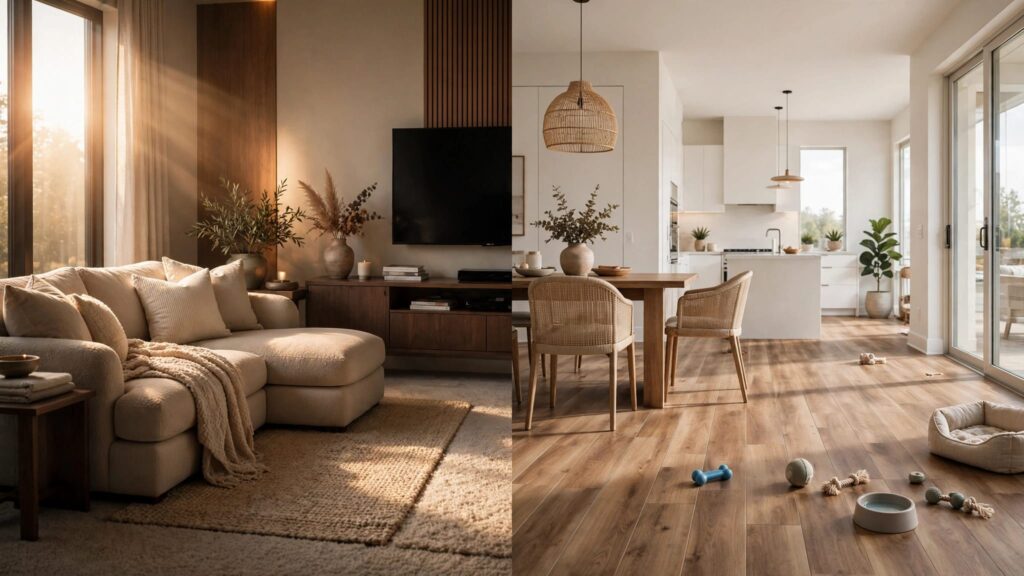
Your living room floor takes the daily hit from shoes, pets, sunlight, spills, and furniture. When you compare carpet vs LVP, the better choice depends less on a trend and more on how your household uses the room.
For many North Texas homes, luxury vinyl plank is practical for heat, humidity, pets, children, dust, and spills. Carpet still earns its place when underfoot comfort, warmth, softness, and sound control matter most. The right choice starts with an honest look at moisture, traffic, allergies, and the concrete slab below your feet.
Key Takeaways
- Carpet provides the most comfort, warmth, and sound absorption, making it a strong fit for quiet living rooms, media spaces, and households that prioritize softness.
- LVP is usually the more practical choice for active North Texas living areas with pets, children, spills, high traffic, and open living-kitchen layouts.
- Moisture testing, slab preparation, leveling, and transition planning should come before choosing either material, especially over a concrete slab.
- Compare total cost of ownership—not just installation price—by considering cleaning, repairs, replacement timing, and disposal over 15 years.
- Rugs can add warmth and softness over LVP, while carpet requires consistent vacuuming, spot treatment, and periodic professional cleaning to manage dust, stains, and odors.
Carpet vs LVP in North Texas living rooms
Carpet and LVP flooring create different living experiences in North Texas homes. Carpet cushions every step and softens a room visually. LVP provides a durable wood-look surface that’s easier to clean after everyday messes.
| Factor | Carpet | Luxury vinyl plank |
|---|---|---|
| Underfoot feel | Soft, warm, and cushioned | Firm, with texture varying by product |
| Water tolerance | Poor after spills or moisture exposure | Strong with properly rated products |
| Daily cleaning | Vacuuming and spot treatment | Sweeping and damp mopping |
| Sound absorption | Excellent | Moderate without the right underlayment |
| Typical useful life | Often 5 to 15 years | Often 15 to 25 years |
| Best fit | Lower-traffic, dry, comfort-first spaces | Busy living rooms, pets, kids, high traffic areas, and slab homes |
Carpet often has a lower upfront price, but its maintenance requirements may grow with stains, odors, traffic lanes, or pet damage. Some commercial flooring prioritizes extreme durability, but residential living rooms also need comfort, appearance, and manageable upkeep. LVP usually costs more to install, yet it often stays presentable longer in active family rooms.
Comfort and acoustics favor carpet
If you spend evenings barefoot on the floor or have young children playing in the living room, carpet feels noticeably softer. It also absorbs impact noise better than a hard surface, which helps in upstairs rooms, townhomes, and media spaces.
Over a slab, LVP’s acoustic performance depends on its underlayment and room placement. Carpet can make an open room feel quieter, especially with tall ceilings common in newer homes around Argyle, Lantana, and Northlake. A quality pad improves comfort and can help carpet hold its shape under furniture.
Moisture and cleanup favor LVP
LVP is often easier when life gets messy. Properly rated LVP offers better water resistance for muddy paws, spilled drinks, leaking dog bowls, and rainy-day shoes.
That doesn’t mean every LVP product is the same. Choose a reputable product with a suitable wear layer, and follow its care directions. Also, remember that “waterproof flooring” describes the plank’s surface performance. It doesn’t fix a wet slab, an active leak, or a poorly prepared subfloor.
North Texas climate changes the decision
North Texas summers bring heat, humidity, and dust, while indoor conditions shift as air conditioning runs hard. Those cycles matter in homes across Denton, Flower Mound, Corinth, Highland Village, and Frisco, especially when the living area sits on a concrete slab.
The National Center for Healthy Housing’s carpet guidance recommends water-resistant floors where moisture is a concern, including slab-on-grade construction. The same moisture checks used for basement flooring apply to a North Texas living room over a slab, even without a basement. LVP’s moisture resistance describes the surface, not the slab beneath it, so test the concrete before installing carpet and pad.
A moisture vapor problem beneath new flooring rarely stays small. Covering it can trap odor, loosen adhesive, or damage the slab and replacement floor.
Concrete slab preparation comes before material choice
A good flooring contractor reviews subfloor conditions before discussing plank color or carpet style. Ask about moisture testing, leveling, cracks, old adhesive, and transitions near tile or hardwood. Commercial flooring specifications can inform installation, but they don’t replace residential slab testing.
For LVP, the floor must be flat enough for the locking system to stay engaged. A floating plank floor can separate, flex, or make noise if it bridges dips in the slab. Carpet is more forgiving of minor texture, but it still needs a dry, sound surface and the right pad.
If you’re planning a full flooring installation in Denton, ask for testing and leveling details in writing. Confirm how the contractor will address cracks, old adhesive, and transitions before choosing color or style. Those steps have a bigger effect on the finished result than most homeowners expect.
Upfront cost and 15-year ownership
Installed prices change with product grade, furniture moving, demolition, floor prep, trim work, and room layout. The final installation cost can vary widely, so broad ranges only set expectations.
Carpet installed in a living area often lands around $3 to $7 per square foot, depending on fiber, pad, and labor. Luxury vinyl plank commonly falls around $4 to $9 per square foot installed. Slab repairs, glued-down flooring removal, or complex transitions can raise either number.
The replacement cycle changes the math
A lower initial price doesn’t always mean a lower total cost of ownership over 15 years. A busy household may shorten the replacement cycle, increasing the total cost of ownership through traffic lanes, stubborn stains, or lingering odor.
A well-installed LVP floor can often stay in service through that period with routine cleaning. Compare cleaning, repairs, replacement, and disposal, not material price alone:
- Carpet’s maintenance requirements may include professional cleaning every 12 to 18 months, plus eventual replacement and disposal.
- LVP needs regular sweeping and a lightly damp mop, although damaged planks and failed joints still need attention.
- Both materials need proper subfloor preparation, clean transitions, and protection from plumbing leaks.
Carpet tiles allow localized replacement and are common in some commercial flooring applications, but they’re less typical than broadloom carpet in a conventional living room. Flooring condition can influence buyer perception and resale value, but no material guarantees a particular return.
For rental properties in Lewisville or a busy family room in Southlake, predictable maintenance and localized LVP repairs can make budgeting easier for owners. If damage occurs, floor repair in Denton may allow targeted plank replacement instead of replacing an entire room.
Pets, allergies, and everyday maintenance
A living room in a busy North Texas household with two dogs and children has different needs than a quiet home with no pets. Carpet fibers can hold dust, pet hair, pollen, and dander, while hard surfaces make debris easier to see and remove for allergen management. Regular vacuuming helps, but stain removal and odor control take more work after an accident.
A peer-reviewed review of carpet and indoor environmental quality found that vacuuming can remove a portion of collected dust and allergens. People with asthma or strong allergy symptoms often prefer hard-surface floors because they can see and remove debris more easily. Household sensitivity and cleaning habits matter as much as material selection.
Practical cleaning routines and maintenance requirements
For carpet, vacuum high-traffic paths at least twice weekly, treat spills immediately, and use professional cleaning when soil or odor builds up. Avoid soaking carpet during spot cleaning because moisture can reach the pad.
For LVP, a resilient flooring option, sweep or vacuum with a hard-floor setting, then damp-mop with a manufacturer-approved cleaner or plain water as directed. Skip steam mops, abrasive scrubbers, and wax products unless the manufacturer permits them. Commercial flooring cleaning chemicals or protocols may be too aggressive for residential carpet, pad, finishes, or LVP.
Allergy Standards’ flooring guidance explains why flooring type and cleaning method both affect allergen management. Hard surfaces are easier to wipe clean, but neither floor eliminates allergens, and both still need frequent care so dust doesn’t collect along walls and under furniture.
Sound, style, and the feel of the room
Carpet’s sound absorption is hard to match. If your living room sits above bedrooms or shares a wall with neighbors, it can soften footsteps and dropped toys. Carpet and pad also provide thermal insulation, creating a warmer feel underfoot without promising major energy savings.
LVP can sound more hollow over a hard slab with the wrong underlayment. Its acoustic performance depends on the slab, underlayment, room location, and product system. In a multi-story home, verify the flooring system’s sound rating before installation. Ratings or hard-surface assumptions from commercial flooring may not predict comfort in a residential living room. Underlayment can help, but it won’t make LVP perform like thick carpet and pad.
Use rugs when you want warmth without wall-to-wall carpet
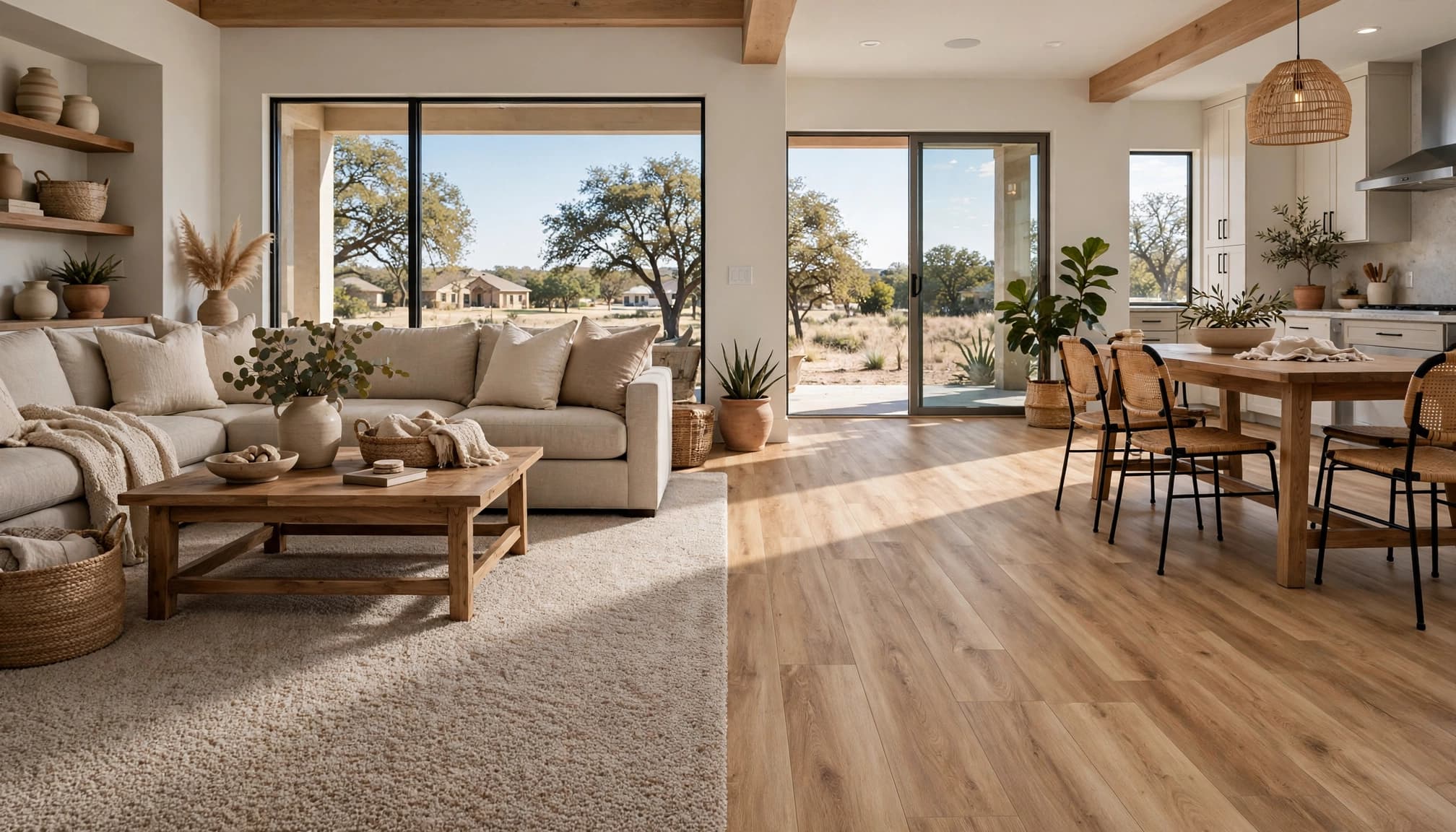
Area rugs let you add softness over LVP where it matters most, such as in front of a sofa or beneath a coffee table. You can remove them for cleaning, change them with the seasons, and keep the main floor easy to maintain.
This approach works well for open layouts in Plano, Grapevine, and Keller. You get the continuity of luxury vinyl plank through the living room, kitchen, and hall, while rugs keep the seating zone comfortable. Plank colors, consistent layouts, and removable rugs also provide design versatility without requiring wall-to-wall carpet.
Choosing by household, not by sales pitch
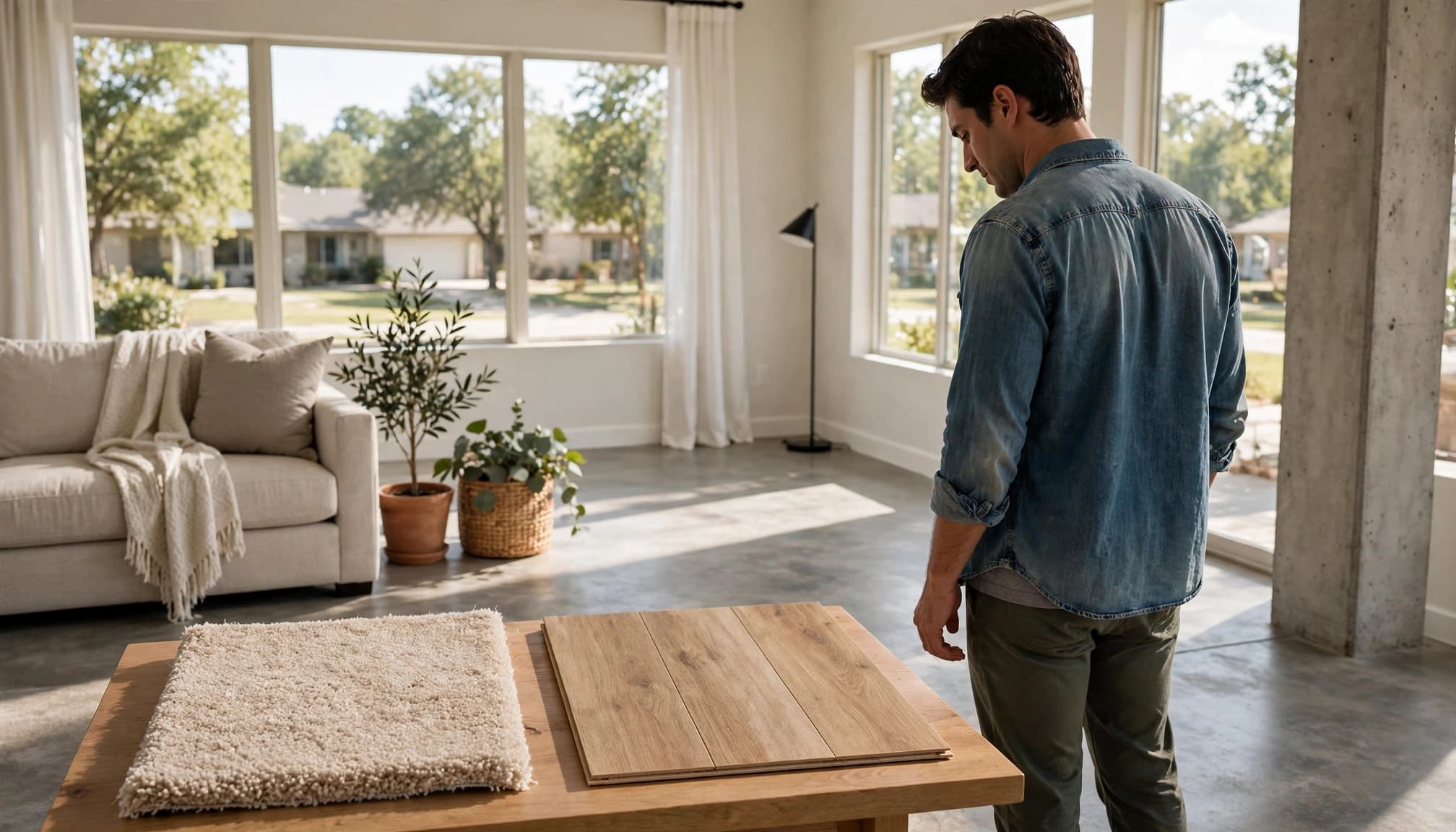
When deciding between carpet vs LVP, start with the way you live rather than a sample board’s look. These household profiles can point you in the right direction.
Choose carpet when comfort is your priority
Carpet isn’t limited to low-traffic rooms. It fits living spaces where you want warmth, quiet, and a soft landing for children. A dense, durable carpet can handle regular use when you’re willing to clean it consistently.
It can also complement a home where hardwood flooring or engineered hardwood already runs through nearby areas. That creates a clear shift into a cozy lounge or media room, while bedroom carpet can provide softer comfort elsewhere.
Choose a durable fiber and dense pad. Carpet’s maintenance requirements include vacuuming, spot treatment, and periodic cleaning. If allergies, pets, dust, or frequent entertaining are part of the picture, select a stain-resistant carpet and plan on consistent care.
Choose LVP when the room works hard
LVP is often a practical, pet friendly choice for children, frequent guests, patio access, and open living-kitchen plans. It suits high traffic areas and can provide one continuous surface through busy parts of the home, but it isn’t maintenance-free.
Pet nails and tracked-in grit can make scratches more visible. Use mats under water bowls, and clean accidents promptly. Routine sweeping and mopping are straightforward, but product instructions still matter.
Its water resistance helps near kitchens, exterior doors, and pet areas, but not every product is waterproof. For homes that need dependable protection, explore waterproof LVP flooring installation.
Quality laminate flooring can be a budget-friendly hard-surface option in dry rooms. However, a commercial flooring durability claim doesn’t automatically prove a product is comfortable, quiet, scratch-resistant, or suitable for a family living room.
LVP can also make sense in rental properties, where repairability, turnover, and predictable upkeep matter. Carpet may still be appropriate when comfort matters more than fast surface cleanup.
A local Denton flooring company should inspect the slab, discuss your daily traffic, and explain realistic product limits. Resale value can be one consideration, but it shouldn’t outweigh comfort, upkeep, and how your household uses the room. That’s how you avoid a floor replacement that looks great on day one but disappoints after one Texas summer.
Get the installation details right
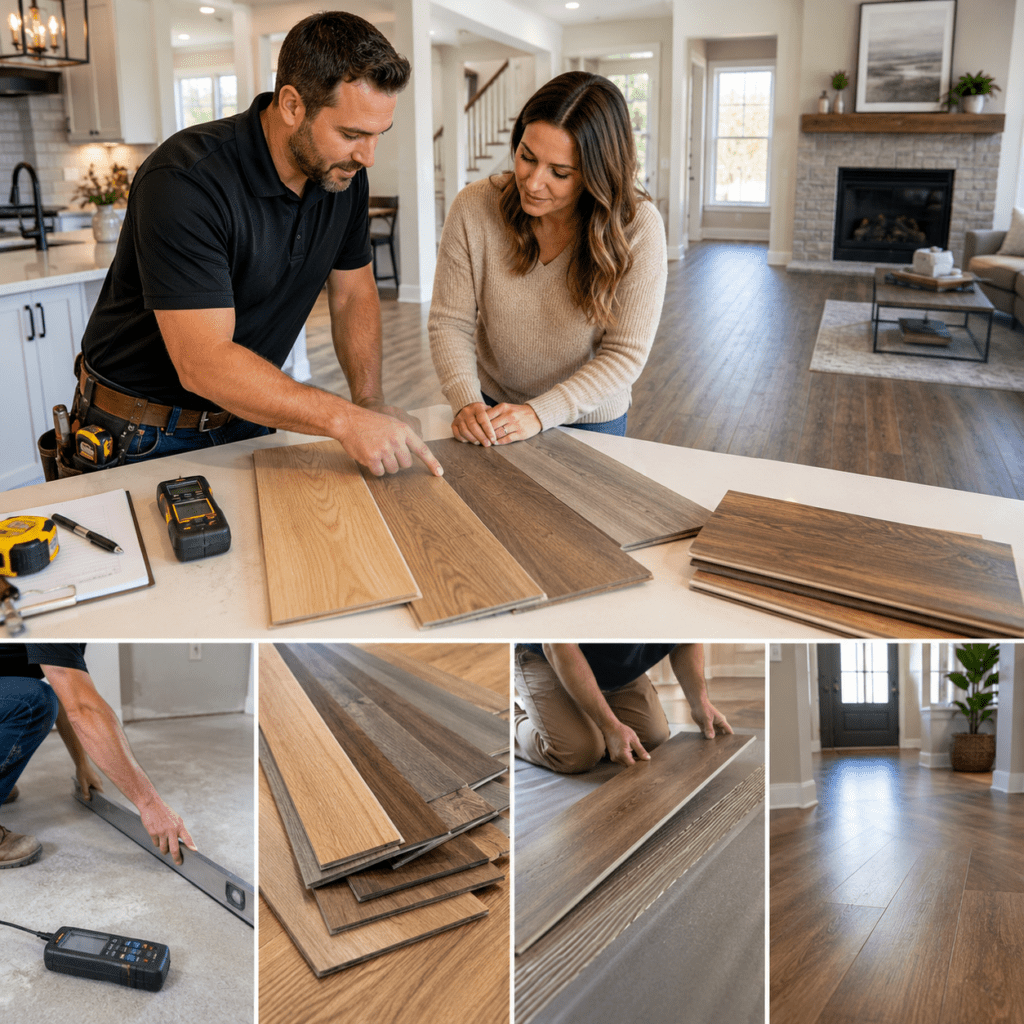
Material selection is only half the job, especially in North Texas slab homes. Professional flooring installation includes removal, moisture testing, floor leveling when needed, correct expansion gaps, transition planning, trim work, and a final walkthrough. These details affect performance, appearance, and long-term home value.
The installation cost can exceed the material price when prep, demolition, leveling, transitions, and trim are included. Proper installation also supports the total cost of ownership by helping prevent premature repairs, odor problems, plank separation, and replacement expenses.
Do not cover a soft spot, musty smell, or recurring moisture mark before finding the cause. Product moisture resistance cannot compensate for an active leak or wet slab. You may need a repair before either carpet or LVP goes down. A thorough Denton flooring contractor can help you separate a cosmetic update from a deeper floor issue.
For a clear scope and a practical recommendation for your home, Get Your Free Flooring Estimate. You can also Call 469-340-0837 to discuss your living area, existing floor, pets, room use, and budget.
A practical choice for your North Texas home
Carpet remains the comfort leader, while LVP is usually more forgiving for active North Texas living areas. Slab condition, allergies, pets, cleaning, repairs, replacement timing, and daily comfort all shape total cost of ownership beyond installation price.
The best floor is the one that fits your household for years, not the one with the lowest price on installation day. Resale value matters, but household fit and long-term condition matter more than assuming either material guarantees a higher return. Choose the performance you will live with every day.
Frequently Asked Questions
Is carpet or LVP better for a living room with dogs?
LVP is usually better for dogs because it handles tracked-in dirt, shedding, water bowls, and occasional accidents more easily. Choose a textured plank with a durable wear layer, and keep your dog’s nails trimmed to reduce scratching.
Does LVP feel cold compared with carpet?
Yes, LVP feels firmer and cooler than carpet, especially over concrete. Rugs, furniture placement, and compatible underlayment can make the room feel warmer, but carpet remains the softest option underfoot.
Can you install carpet or LVP over a concrete slab?
Yes, if the slab is dry, stable, and properly prepared. Moisture testing and flattening are especially important for LVP. Carpet also needs a dry slab because dampness can affect the pad and cause odors.
Is LVP better than carpet for allergies?
LVP is often easier to clean when allergies are a concern. Carpet can collect dust and dander, although frequent HEPA-filter vacuuming and professional cleaning can reduce buildup. Your household’s sensitivity and cleaning routine should guide the choice.
Should you replace carpet with LVP throughout the house?
A continuous LVP floor can make sense for open living areas, halls, kitchens, and rental properties. You may still prefer carpet in bedrooms or an upstairs media room, where comfort and sound absorption matter more.