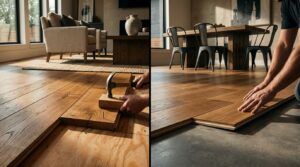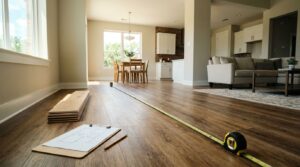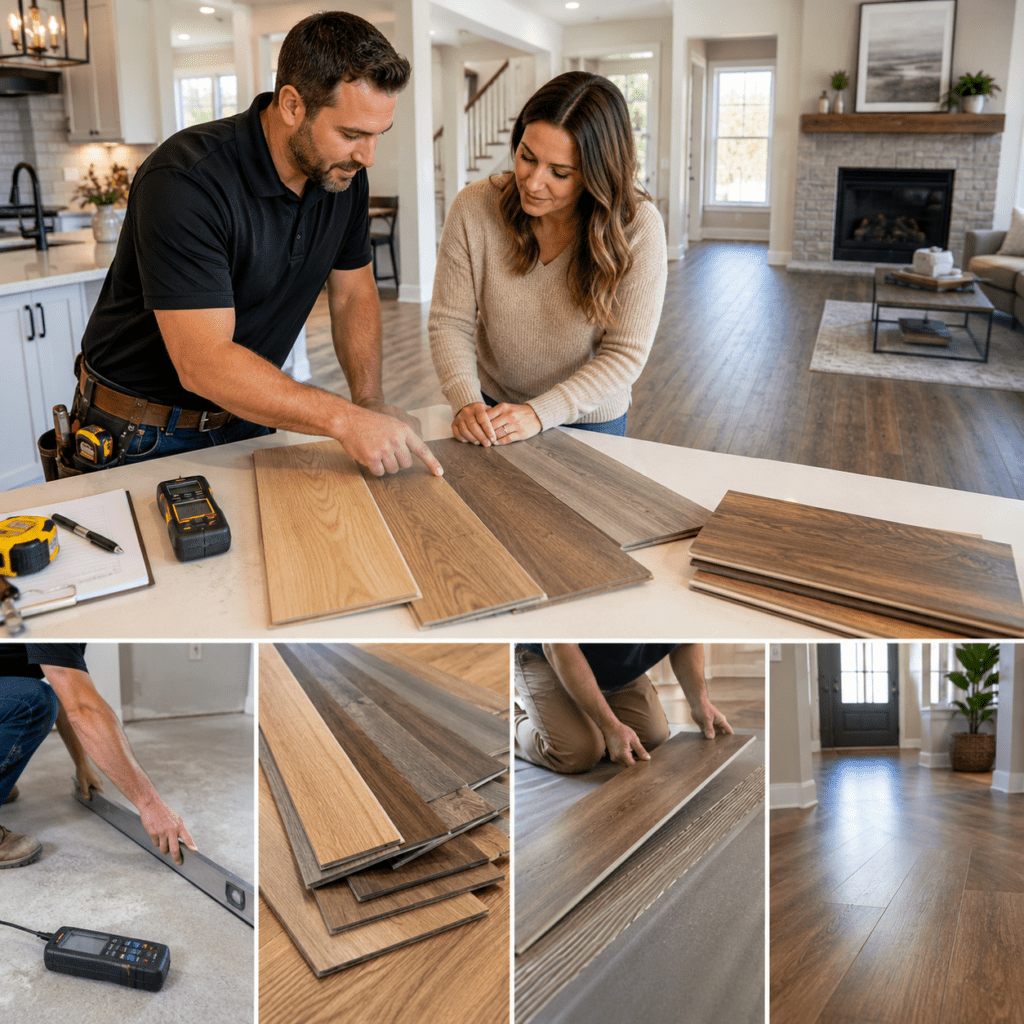
A hardwood floor can look fine on day one and still fail by the next season. If you’re planning a DIY hardwood floor installation, the danger usually isn’t the saw cut you notice right away. It’s the moisture issue, uneven subfloor, or tight plank spacing you don’t notice until months later.
In Denton, DFW, and across North Texas, your floor has to deal with humidity swings, shifting slab foundations, pets, and heavy foot traffic. That’s why the smartest move isn’t always doing it yourself, or even choosing hardwood at all.
Why DIY hardwood floor installation goes wrong so often
Short answer: wood moves, and most DIY plans don’t account for that.
Hardwood flooring looks simple because the finished surface is clean and flat. The hard part is everything below it. If your subfloor is uneven, damp, or weak, the floor above it won’t stay quiet or straight for long.
Many homeowners focus on plank color first. That’s normal, but it’s where trouble starts. You can buy beautiful boards and still end up with squeaks, gaps, cupping, and edge lift if the prep work is off.
In North Texas, this gets tougher because your home doesn’t stay perfectly still. Slab movement, indoor humidity swings, and hot summers put stress on wood. Solid hardwood can react more than you expect, especially if you install it too soon after delivery.
A floor doesn’t fail only because of bad boards. It often fails because the house and the prep were ignored.
DIY hardwood jobs also get harder once you reach doorways, vents, transitions, and cabinets. A small layout mistake at the first row can throw off the whole room. Then you start trimming boards to hide the problem, and the floor never looks quite right.
If you want hardwood, you need to treat it like a system, not a weekend surface upgrade.
Which mistakes cause the biggest hardwood floor problems?
The biggest mistakes are skipped acclimation, poor moisture checks, and bad subfloor prep.
The first common error is rushing the install. Wood needs time to adjust to your home’s conditions. If you bring it in and install it right away, the boards may shrink or swell after they settle.
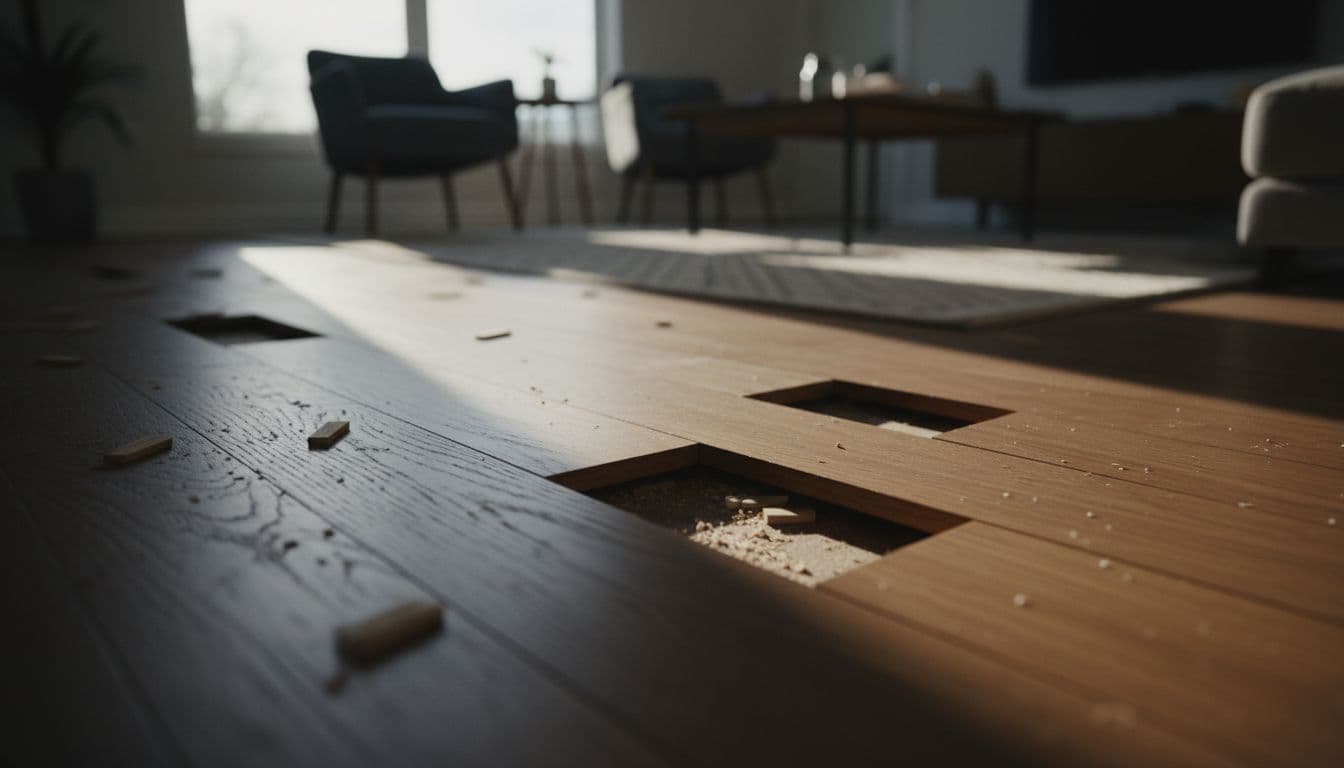
The second mistake is assuming the subfloor is flat because it looks flat. It often isn’t. Even small height changes can cause hollow spots, flex, and noisy boards. Over time, that movement can loosen fasteners and open joints.
Moisture is the third problem, and it’s the one many DIY installers miss. Wood and moisture don’t negotiate. If you skip testing, especially over concrete, the floor can cup, buckle, or stain. That’s a bigger risk in kitchens, entry areas, and homes with pets.
You also see trouble when homeowners:
- install boards too tight to the wall and leave no expansion gap
- mix plank lengths poorly, which makes seams look patterned and obvious
- use the wrong nailer, fastener spacing, or adhesive
- ignore floor height changes at nearby rooms
Texas humidity can turn a “small” mistake into a full flooring replacement. A gap that looks minor in winter can become wider by late summer. A slightly wet slab can damage a floor room by room.
If you’re set on wood, test moisture, check flatness, and read the product instructions line by line. Those boring details are what make the floor last.
Why North Texas homes are harder on hardwood floors
Your local conditions matter more than most DIY guides admit.
A generic online tutorial won’t tell you much about Denton or the rest of DFW. Yet your floor has to live with North Texas weather, active families, and foundation movement. That changes the risk.
If you talk with a flooring contractor Denton TX homeowners trust, you should hear questions about slab moisture, subfloor flatness, pets, and room use. You shouldn’t hear only talk about stain color and plank width.
The same goes for flooring installation Denton TX projects. The best installs start with what your house is doing now, not what you hope it will do later. A floor that works in a dry second-floor condo may not work the same way over a shifting slab in a busy family home.
Pets add another layer. Nail scratches, water bowl spills, and muddy paw traffic wear on traditional hardwood faster than many people expect. Children do the same, especially in hallways, kitchens, and living rooms. If your home gets heavy foot traffic every day, wood needs more care and more realistic expectations.
That’s why many homeowners start with hardwood in mind, then switch to Waterproof Flooring Options after they look at how they actually live. If you want room-by-room guidance for your house, you can call (469) 340-0837 and talk through the options before you buy material you may regret.
When hardwood isn’t the best fit for your home
If you want easier upkeep, better water resistance, and fewer surprises, another floor may suit you better.
This is where many DIY hardwood projects go sideways. You don’t only mis-install the floor. You also choose the wrong floor for the space.
For many North Texas homes, luxury vinyl plank flooring is the safer call. It handles moisture better, stands up well to pets and kids, and gives you many modern flooring styles without the upkeep solid wood needs. In busy homes, luxury vinyl flooring often makes more sense than site-finished hardwood.
This quick comparison helps:
| Flooring type | Best fit for your home | Main tradeoff |
|---|---|---|
| Solid hardwood flooring | Dry rooms, lower spill risk, classic look | More movement with humidity |
| Engineered hardwood flooring | Homes that want real wood with better stability | Still needs moisture control |
| Luxury vinyl plank flooring | Families, pets, kitchens, busy entries | Doesn’t refinish like real wood |
| Waterproof flooring | Mudrooms, baths, laundry areas, spill-prone spaces | Less natural wood character |
| Laminate flooring | Budget-conscious rooms with lighter moisture risk | Water can still be a weak point |
If you want premium looks without the maintenance, Luxury Vinyl Plank Flooring is worth a serious look. Many products now offer realistic grain, wide planks, pet-friendly flooring performance, and scratch-resistant flooring surfaces that work well in active homes.
Engineered hardwood flooring also deserves a closer look. You still get real wood on top, but the layered construction can be a better match for Texas humidity than solid wood. For many families, that’s the middle ground between beauty and stability.
When you’re planning flooring replacement, think about your real life. If you want durable flooring for Texas homes, not constant worry, the “best” floor may be the one that asks less from you.
When should you stop the DIY project and call a pro?
If moisture, flatness, or layout feels uncertain, stop before you lock in the mistake.
You should strongly consider professional help if your floor goes over concrete, covers a large open area, connects to stairs, or needs several transitions. Those details can turn a manageable job into an expensive redo.
The same is true when your existing floor has soft spots, old adhesive, or visible dips. A pro can tell you if the problem is the surface or the structure below it. That’s money well spent, because bad prep is where many failed installs begin.
If you’re comparing bids or researching hiring a professional flooring company, ask about moisture testing, subfloor correction, and how they handle foundation movement in North Texas homes. Those answers matter more than a fast timeline.
You don’t need to guess your way through it. You can Schedule Your Free Flooring Estimate if you want a clear opinion on whether hardwood, engineered wood, or waterproof flooring is the better choice. If you’d rather talk first, call (469) 340-0837 and ask the practical questions before you buy materials.
Final thoughts
The biggest mistake in a DIY hardwood floor installation isn’t always poor technique. Often, it’s choosing a floor that doesn’t match your house, your pets, or your daily traffic.
If your home deals with humidity, spills, and movement, durability should lead the decision. A beautiful floor should still look good after muddy paws, summer moisture, and years of use.
FAQ
Does hardwood flooring need to acclimate in Texas?
Yes. Your hardwood flooring needs time to adjust to indoor conditions before installation. In North Texas, humidity swings can be tough on wood, so skipping acclimation raises the risk of gaps, cupping, and board movement.
Is engineered hardwood flooring better than solid hardwood for Denton homes?
In many cases, yes. Engineered hardwood flooring is often more stable when humidity and slab conditions change. If you want real wood but need a better fit for local conditions, it’s often the safer choice.
What’s better for pets and kids, hardwood or luxury vinyl flooring?
For many families, luxury vinyl flooring wins on maintenance. It’s usually more pet-friendly flooring, more scratch-resistant flooring, and easier to live with in busy rooms. That’s why many homes in Denton and DFW choose LVP over traditional hardwood.
How do you know when you need flooring replacement instead of a repair?
If you have repeated movement, moisture damage, widespread squeaks, cupping, or large gaps, repair may not hold. At that point, a full flooring replacement can cost less over time than patching the same issue again. If you want a second opinion, call (469) 340-0837 before the damage spreads.