
The full plank measurement can influence feel and transitions, but a thicker plank is not automatically more durable.
JBN Flooring · Denton, Texas
Vinyl Flooring in Denton, TX Chosen for More Than the Color
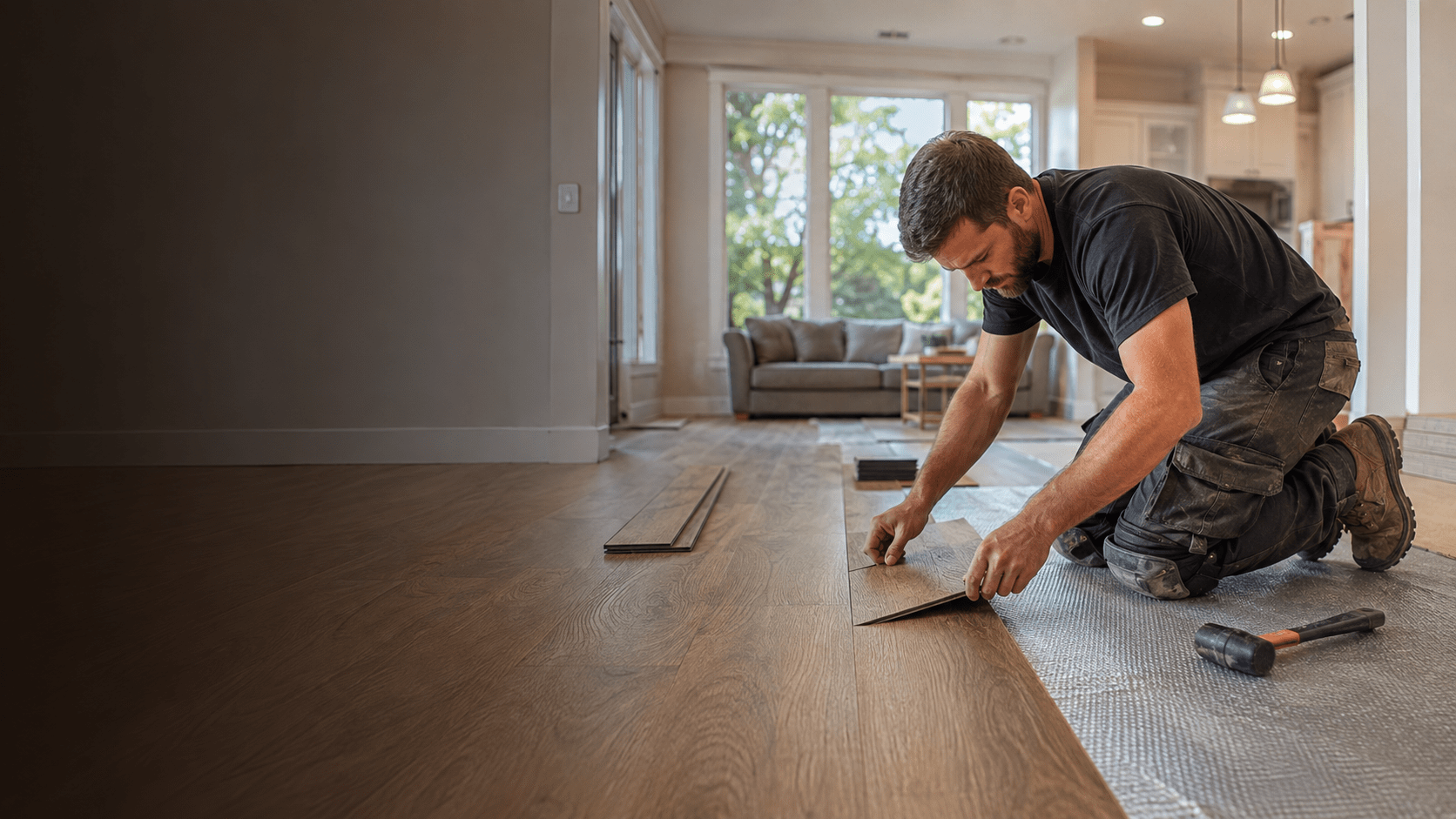
Vinyl Flooring Denton TX homeowners can live with comfortably starts with the right product, a ready slab or subfloor, and an installation method that fits the property. JBN Flooring brings samples to your home, explains the differences without product hype, and provides a written scope for preparation, installation, transitions, and cleanup.
Serving North Texas Since 1996
Free In-Home Estimates
Homes & Businesses
A Division of The JBN Group
The short answer
Is Luxury Vinyl Plank a Good Choice for Denton Homes?
Quality LVP can be a practical choice for Denton kitchens, living rooms, entries, bedrooms, laundry areas, rentals, and commercial spaces because it combines realistic wood visuals with simple routine care and strong resistance to surface spills. It still needs a flat, clean, suitable base. Waterproof planks do not make the entire room waterproof, and no vinyl floor is scratch-proof, dent-proof, or immune to heat and direct sunlight.
Look past the sample color
Vinyl Flooring Denton TX: Seven Checks Before You Buy
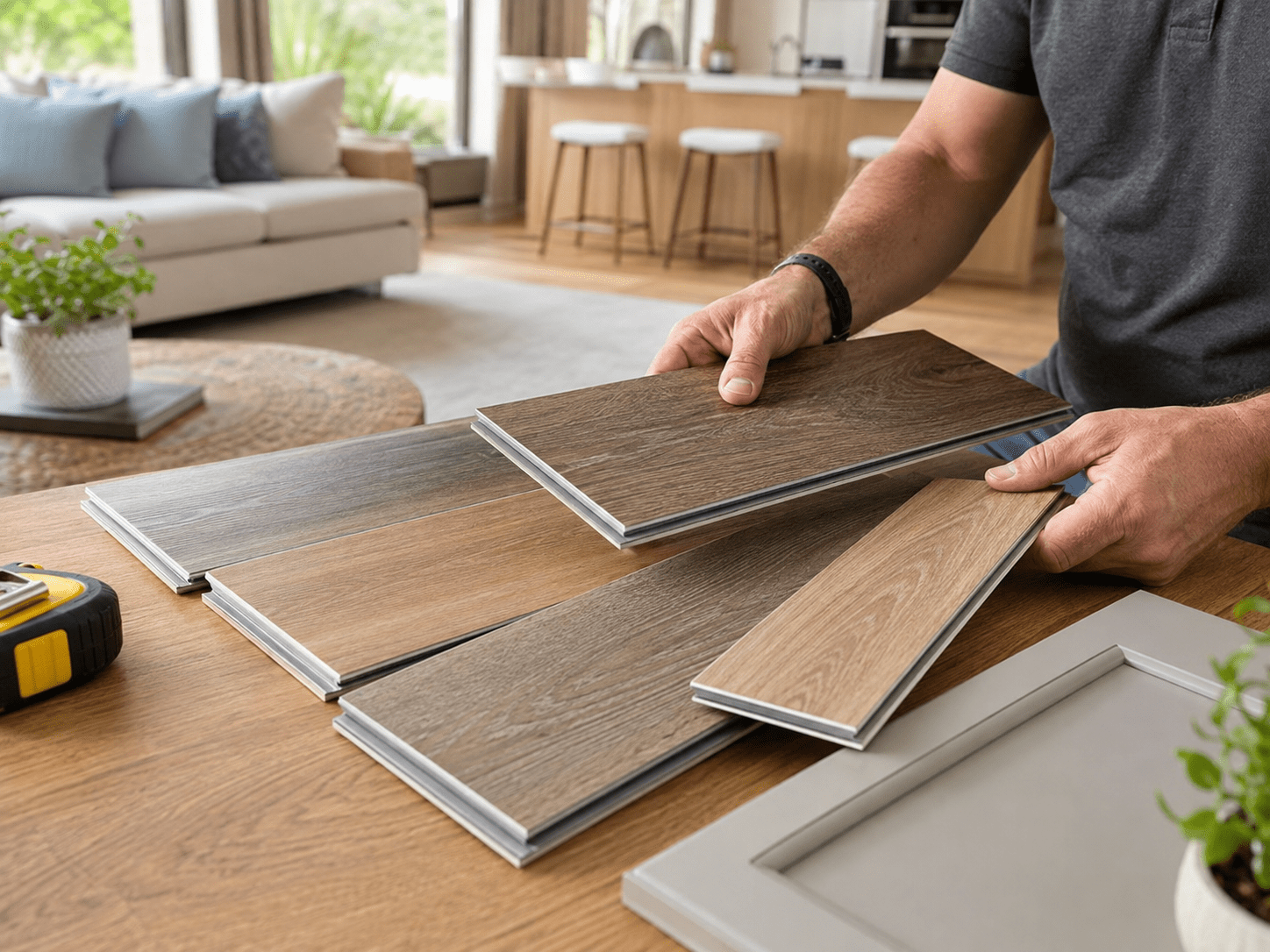
A sample can tell you whether a brown works with the cabinets. It cannot tell you the whole story. Two planks with similar oak visuals may differ in core, wear layer, locking profile, surface texture, edge treatment, pad, installation limits, and warranty exclusions.
We bring appropriate samples to the property because lighting changes them. A pale oak can look washed out beside a bright patio door and warmer in a shaded hall. Put the sample flat on the floor, not upright against a wall, and view it in daylight and evening light.
- Confirm the wear-layer specification and finish—not only total plank thickness.
- Read the water, sunlight, temperature, and rolling-load limitations.
- Check whether an attached pad is included and whether extra pad is permitted.
- Compare repeated patterns across several planks, not one small sample.
- Ask whether the core is rigid SPC, WPC, or another construction.
- Confirm approved rooms, substrate types, and installation method.
- Read the written care instructions before choosing a cleaner.
Four specifications people often mix up
Thickness Alone Does Not Tell You Whether LVP Is Good
The strongest choice is the product whose complete construction and instructions fit your rooms. These terms answer different questions.
The clear protective layer above the printed visual helps resist ordinary surface wear. Its rating is separate from overall thickness.
Rigid cores affect stability, feel, weight, and installation requirements. Product quality varies within every core category.
Joint design matters. It must remain supported by a flat substrate and be installed without damaged edges or forced connections.
No showroom guesswork
Compare LVP in the Rooms Where It Will Be Installed
JBN Flooring comes to your Denton property with samples and measures the actual space. Call 469-340-0837 or request a free in-home estimate.
The floor underneath decides how the new one feels
A Rigid Plank Still Needs a Flat Concrete Slab
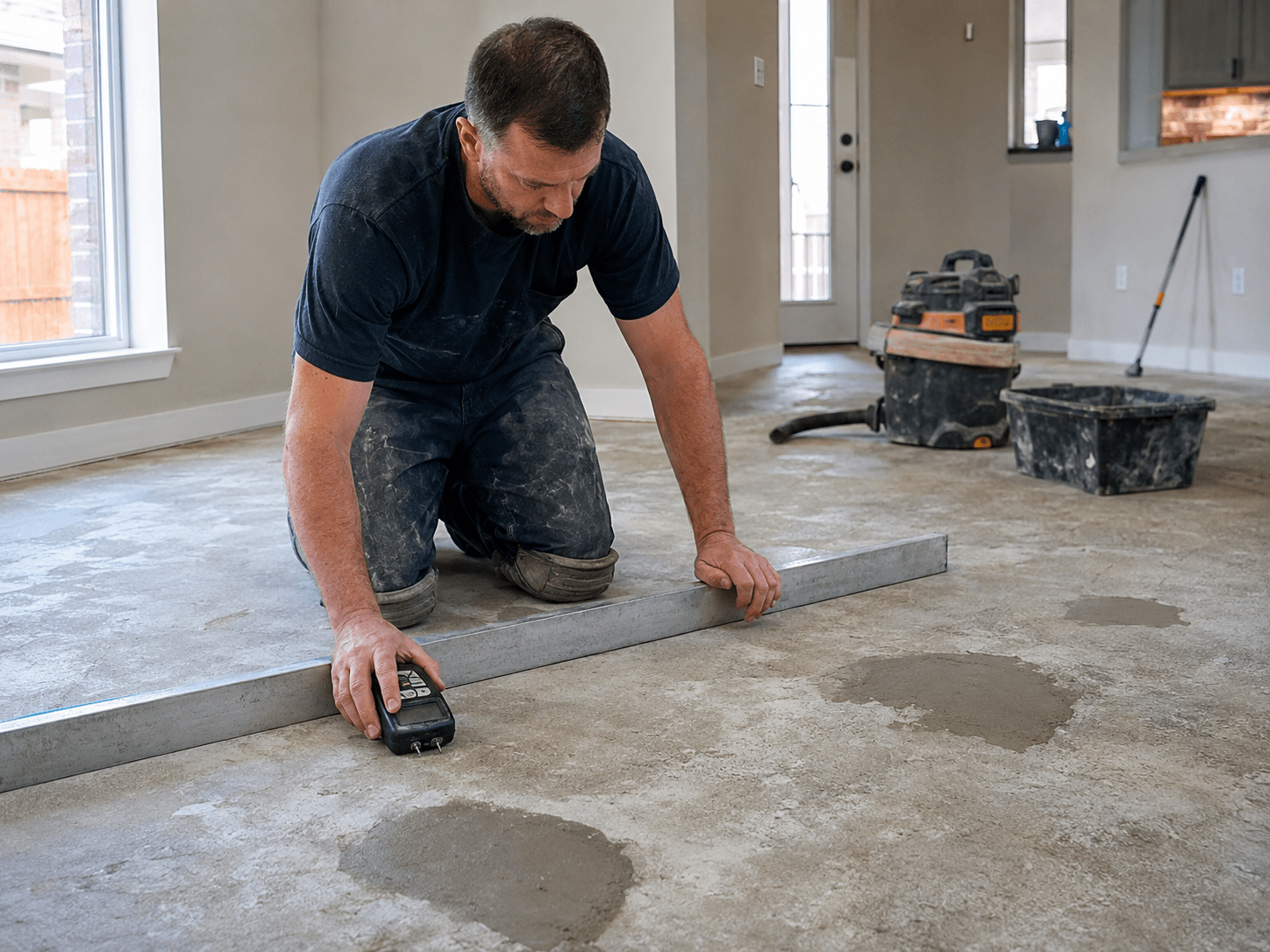
Many Denton properties are built on concrete slabs. Rigid-core LVP can bridge minor texture, but it is not a leveling material. A low area can allow vertical movement. A high spot can stress a locking joint. Old glue, paint, drywall compound, loose patching, and grit can also interfere with a clean installation.
The active ASTM F710 practice for concrete floors receiving resilient flooring addresses cleanliness, smoothness, dryness, structural soundness, irregularities, and moisture testing. The selected flooring and adhesive manufacturer’s instructions still control the specific project limits.
A flooring estimate should separate visible preparation from concealed conditions. Carpet or an old floating floor can hide cracks, dips, damaged patching, or adhesive until removal. If additional work is needed, it should be explained before it is added to the scope.
Level and flat are not the same
A room can slope and still meet a product’s flatness requirement. The goal is not to promise a perfectly level foundation. It is to identify abrupt high and low areas that fall outside the flooring manufacturer’s tolerance.
Choose the system, not a buzzword
SPC, WPC, Floating, and Glue-Down Vinyl Compared
These labels describe different parts of a floor. SPC and WPC refer to common rigid-core constructions. Floating and glue-down describe installation methods. A product can be well-made or poorly suited to a room regardless of the category printed on the box.
| Option | What homeowners may notice | Questions to ask |
|---|---|---|
| SPC rigid core | Often feels firm and dense. It is commonly selected for busy areas and slab installations. | What pad is approved? What flatness, temperature, sunlight, and run-length limits apply? |
| WPC rigid core | May feel slightly warmer or more forgiving underfoot, depending on the product construction. | How does it handle furniture loads, dents, rolling traffic, and the intended room? |
| Floating click LVP | Planks connect to one another rather than being bonded across the entire floor. | Where are expansion gaps and transitions required? Can cabinets or fixed objects pin the floor? |
| Glue-down vinyl | Often chosen for commercial traffic, rolling loads, repairs, or spaces where lower finished height helps. | What slab preparation, moisture limits, adhesive, rolling, and cure time are required? |
We recommend the installation method after considering the product, substrate, room layout, fixed cabinets, doors, transitions, traffic, and manufacturer requirements—not because one method is universally “best.”
Waterproof does not mean worry-free
LVP Works Well for Pets When Expectations Stay Realistic
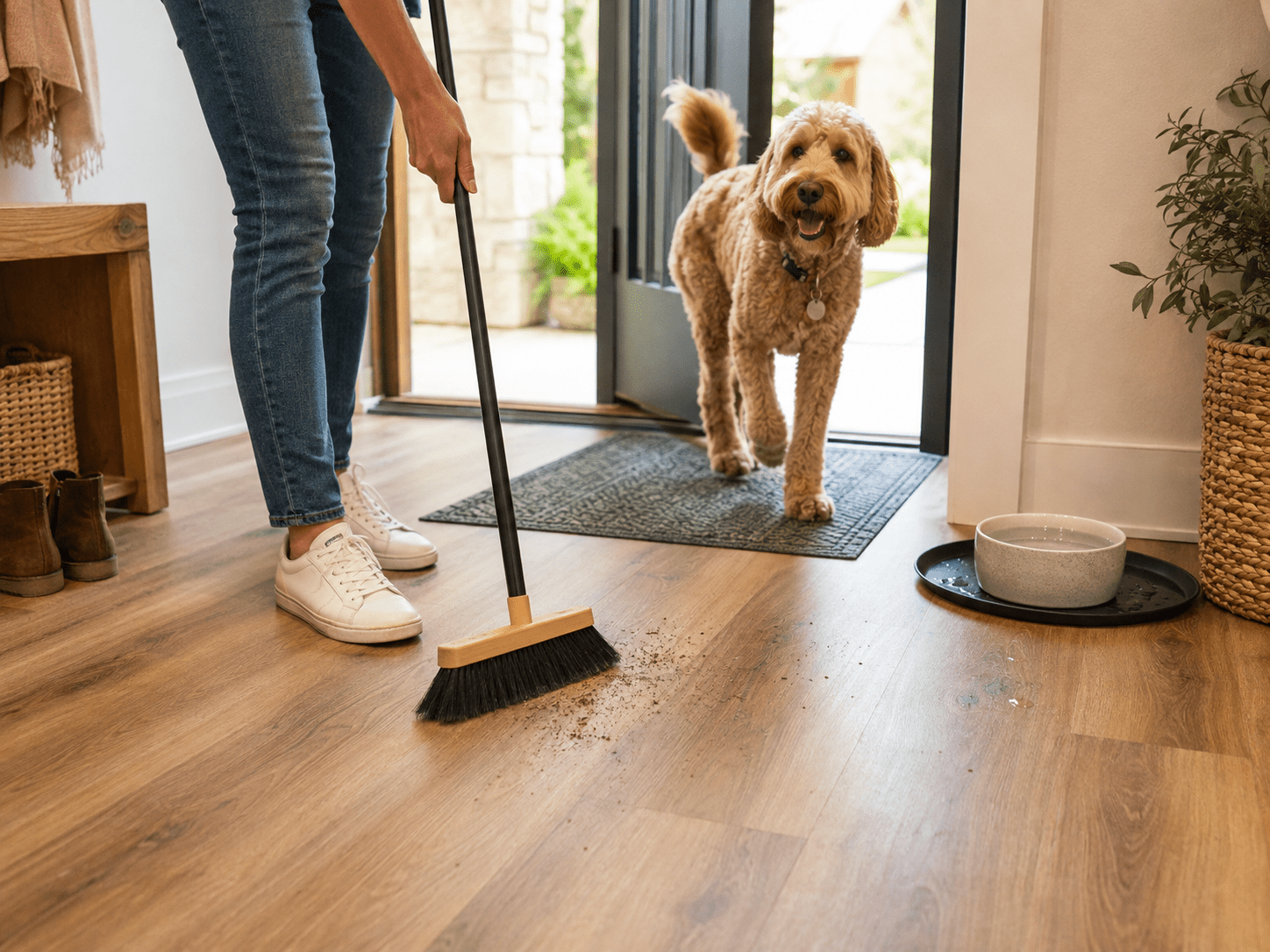
Vinyl flooring can make daily cleanup easier around wet paws, water bowls, pet accidents, and the route from the backyard. Place bowls on a waterproof tray, wipe moisture promptly, and sweep tracked-in grit before it gets dragged through the house.
A waterproof plank does not seal the room like a bathtub. Water can still travel at walls, under trim, through doorways, or beneath a floating floor. A dishwasher leak, overflowing appliance, plumbing problem, or flood needs immediate attention even when the visible floor covering is labeled waterproof.
Scratch resistance also varies. Trim pet nails, use entry mats, add felt protectors to furniture, and avoid dragging heavy objects. Dark, glossy floors tend to show dust, hair, and surface marks more readily than varied, matte visuals.
If moisture tolerance is the main goal, also review our waterproof LVP installation service and waterproof flooring guide.
Sunlight, heat, and cleaning matter after installation
Protect Vinyl Flooring From the Problems Marketing Photos Leave Out
Large North Texas windows can create bright, hot areas near glass. Product limits differ, so review direct-sunlight and temperature requirements before installing a particular LVP beside patio doors or in sunrooms. Window coverings may help reduce heat and uneven exposure, but they do not change the written product limits.
For cleaning, remove grit first with a soft broom or hard-floor vacuum setting. Use a lightly damp microfiber mop and a cleaner approved by the flooring manufacturer. Avoid steam cleaners, abrasive pads, paste wax, unapproved polishes, and soaking the floor. Protective pads under furniture are inexpensive and easier than repairing a damaged plank later.
Rolling office chairs and heavy appliances deserve special attention. Use approved chair mats or wide-load protection where recommended, and never roll a refrigerator or range directly across a finished floating floor without a protected moving path.
A scope you can follow
How JBN Flooring Plans an LVP Installation
We start in your rooms
We measure the property, look at visible substrate conditions, identify connected spaces, and discuss traffic, water, pets, sunlight, furniture, and cleaning habits.
We narrow down suitable products
You compare samples under your own lighting. We review the construction, installation instructions, finish, edge, care, and limitations that affect the job.
The proposal defines the work
The written scope identifies removal, known preparation, installation method, underlayment or adhesive, transitions, trim, furniture responsibilities, cleanup, and important exclusions.
The exposed substrate gets reviewed
After removal, the installer confirms whether the slab or subfloor is ready. Concealed issues outside the approved scope are discussed before additional work proceeds.
Layout comes before speed
Plank direction, starting width, long sight lines, doorways, perimeter space, cabinets, and transitions are planned before the installation moves across the home.
The result should make the rooms feel connected
Whole-Home Vinyl Needs One Layout Plan
Running the same visual through a living room, kitchen, and hallway can make a home feel calmer and more open. It also makes layout decisions more important. Long runs, narrow halls, islands, doorways, fixed cabinetry, and rooms that keep another floor all affect direction and transition placement.
JBN Flooring handles one-room installations, connected living areas, whole homes, rentals, offices, and other commercial spaces. If you are also replacing other materials, our Denton flooring installation page explains the larger project scope. Compare laminate flooring or engineered hardwood when those materials may fit part of the home better.
For practical help with Vinyl Flooring Denton TX projects, call 469-340-0837. We come to your property; JBN Flooring does not operate a retail showroom.

Straight answers before you choose
Vinyl Flooring Questions From Denton Homeowners
How much does vinyl flooring installation cost in Denton?
The price depends on product, square footage, removal, slab or subfloor preparation, installation method, stairs, trim, transitions, furniture, and room layout. An in-home measurement produces a more useful number than a square-foot price that excludes necessary work.
Is luxury vinyl plank completely waterproof?
The plank may be rated waterproof, but the installed room is not a sealed waterproof system. Water can move under flooring and into walls, trim, cabinets, or adjacent rooms. Clean spills quickly and address leaks immediately.
Can LVP be installed directly over a concrete slab?
Often, yes, when the slab meets the exact flooring system’s requirements for flatness, cleanliness, dryness, soundness, moisture, and preparation. Existing coatings, adhesive, cracks, high spots, and low areas may need attention first.
Is SPC always better than WPC vinyl?
No. They have different constructions and can feel different underfoot, but quality and suitability vary by product. Compare the complete specifications, room conditions, and installation instructions instead of choosing from the core name alone.
Is a 20-mil wear layer always necessary?
Not for every room. Wear-layer needs depend on traffic, household use, finish quality, care, and the product’s complete construction. A higher number cannot correct a weak locking system, unsuitable product, poor preparation, or improper installation.
Can vinyl flooring go under kitchen cabinets?
It depends on the product and installation method. Many floating floors cannot be pinned beneath fixed cabinets, while approved glue-down systems may follow different rules. The flooring manufacturer’s instructions should decide the layout.
Does JBN Flooring bring samples to my home?
Yes. We offer free in-home estimates and bring suitable flooring samples so you can compare them beside your cabinets, walls, trim, and natural light. Call 469-340-0837 to schedule.
How long does LVP installation take?
The schedule depends on the measured area, removal, preparation, layout, installation method, trim, stairs, furniture, and product requirements. We provide expectations based on the written scope rather than promising the same timeline for every property.
Bring the decision home
Request a Free Vinyl Flooring Estimate in Denton, TX
JBN Flooring is a division of The JBN Group, Inc., serving North Texas since 1996. Call 469-340-0837 or email sales@jbnflooring.com to discuss your rooms.
Related project information
Plan the Rest of Your Flooring Project
Waterproof LVP installationWaterproof flooringDenton flooring installationFloor repairLaminate flooringEngineered hardwoodContact JBN Flooring
Verify the company through independent profiles including the Better Business Bureau, Dallas Builders Association, NARI Dallas, and Lake Cities Chamber of Commerce.