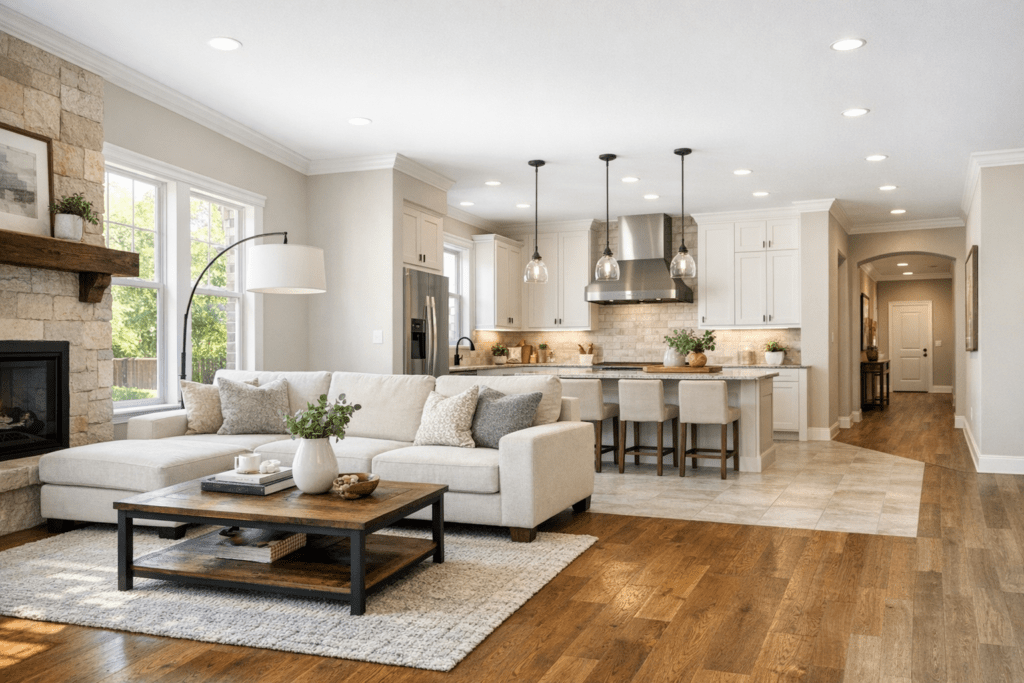
Flooring in Colleyville, TX: A Homeowner’s Guide to Choosing the Right Floors
Compare popular flooring types, where each works best, and what Colleyville homeowners should know about durability, maintenance, and installation.
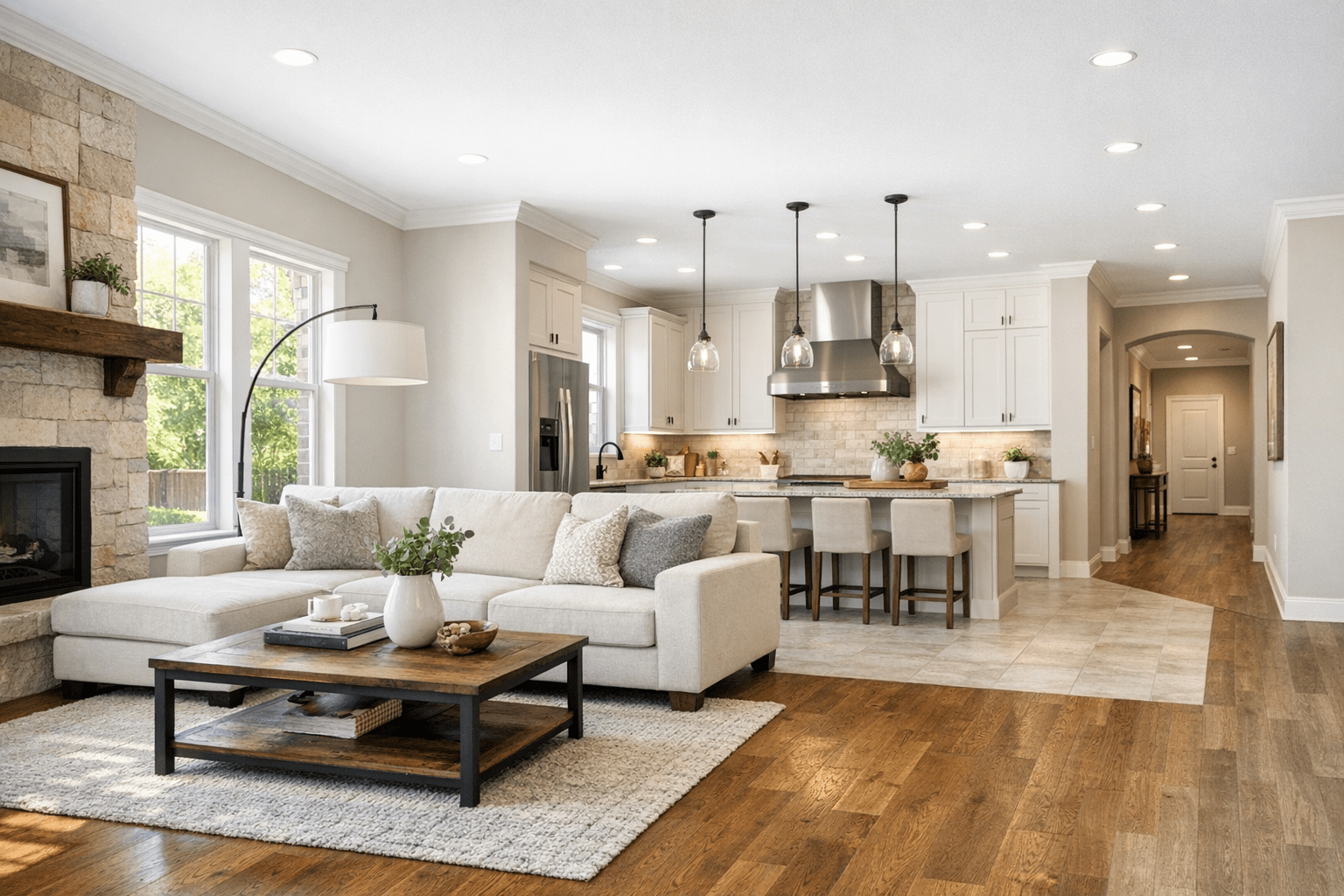
Colleyville’s open layouts often need flooring that looks cohesive across rooms while handling heat, sun, and busy daily traffic.
Quick answer: what flooring works best in Colleyville?
For most homeowners shopping for flooring in Colleyville, TX, the “best” choice is usually a mix: engineered hardwood in main living areas for warmth and resale, porcelain tile in wet zones for heat and moisture, and quality LVP where you want maximum scratch resistance with low maintenance. The right pick depends on your home’s sunlight, slab conditions, and how you actually live day-to-day (pets, kids, entertaining, shoes-on traffic).
If you want the shortest path to a confident decision, start with two questions: (1) will this room ever see standing water or frequent spills, and (2) how much direct sun hits the floor each afternoon? Those answers eliminate the wrong materials fast—and keep you from paying for “pretty” that won’t hold up.
Local contractor note (North Texas reality check)
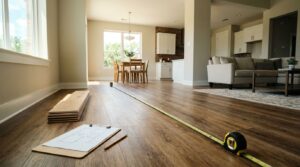
In Colleyville, a lot of flooring failures aren’t about the product—they’re about prep. Slab moisture testing, flatness tolerances, and acclimation are what separate a floor that stays tight for years from one that starts gapping, tenting, or clicking after the first season change.
What Colleyville homes need from flooring (climate, lifestyle, and resale)
Colleyville homes tend to have bright interiors, open floor plans, and strong resale expectations. That combination puts pressure on the floor: it has to look consistent across sightlines, handle sun and heat, and still be easy to clean after real life happens.
UV and temperature swings can fade finishes and stress certain installs.
Wear patterns show faster when one continuous floor runs across living zones.
Timeless, neutral choices and clean transitions typically win.
1) Heat, sunlight, and movement
North Texas heat and strong sun exposure can make materials expand, fade, or dry out. What that means in plain English: even a great product can look rough if it’s installed without the right expansion gaps, or if it’s chosen for the wrong window situation. In rooms with big south- or west-facing windows, look for UV-stable finishes and avoid anything known to be sensitive to heat buildup.
2) Busy households and visible wear
If you’ve got pets, kids, or you entertain a lot, prioritize scratch resistance and easy cleaning—especially in open-plan layouts. Grit is the silent killer. It’s basically sandpaper under shoes, and it’ll dull any surface over time. The “right” floor is one you’ll actually maintain without feeling like it’s a second job.
3) Humidity shifts and subfloor prep
Seasonal humidity shifts matter here. Wood products can cup or gap when they’re installed too quickly or when the job skips basic steps like acclimation and moisture checks. On slab foundations, we pay close attention to slab moisture testing (often a calcium chloride test or in-situ RH probes depending on the spec) and flatness—because a floor can’t perform if it’s fighting the substrate.
4) Resale expectations in Colleyville
Resale in Colleyville often favors timeless, neutral finishes and consistent transitions that look intentional. Too many random floor changes can make a home feel chopped up. A cohesive plan—same tone family, sensible room breaks, clean reducers where needed—usually photographs better and feels more “custom.”
Watch out for this common mismatch
Choosing the floor purely by how it looks on a sample board. Bring samples home, lay them where the sun hits, and look at them morning and late afternoon. That’s when you see whether the undertone fights your cabinets, counters, or wall color.
Best flooring options for Colleyville, TX homes
Here’s how the most common materials stack up in real Colleyville living—heat, traffic, cleaning, and the little details that determine whether the floor still looks sharp after a couple of years.
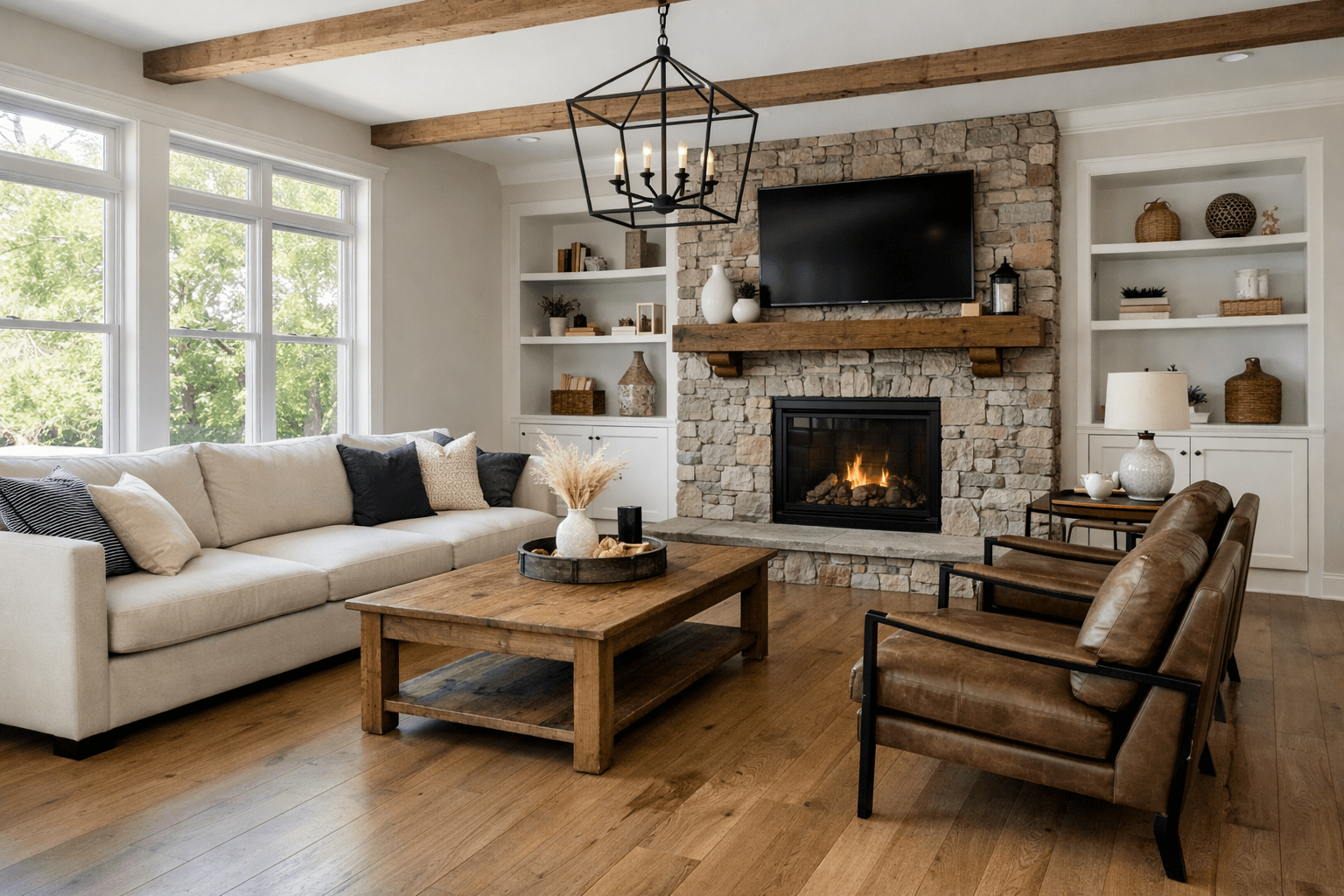
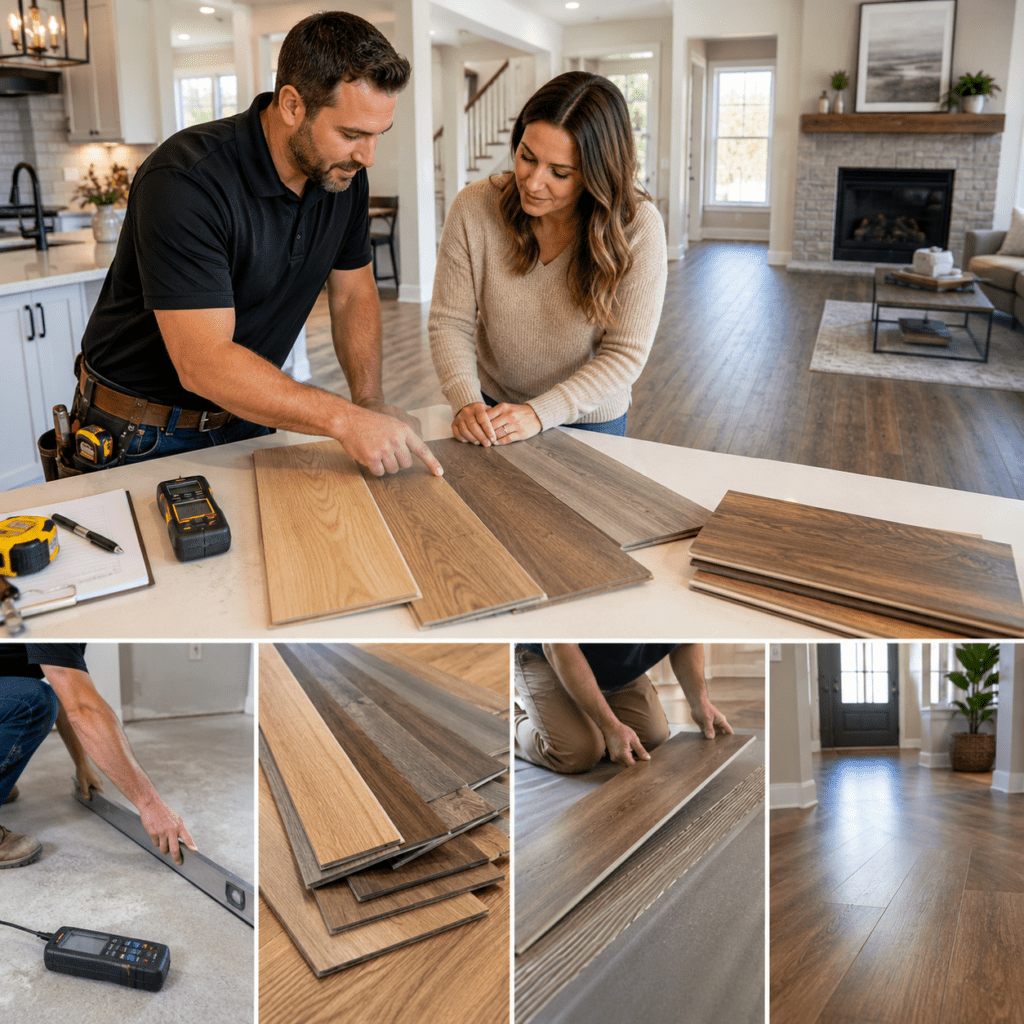
Seeing materials side-by-side makes trade-offs obvious—especially color undertones and surface texture.
| Floor type | Why homeowners choose it | Where it shines | Watch outs |
|---|---|---|---|
| Engineered hardwood | Real wood look with improved dimensional stability vs. solid hardwood. | Main living areas, dining rooms, home offices where warmth and resale matter. | Needs good acclimation; can scratch; moisture events still matter. Veneer thickness affects refinishing options. |
| Luxury vinyl plank (LVP) | Great scratch and moisture resistance at a value-friendly price point. | Open-concept spaces, hallways, kid/pet homes, rentals, and busy households. | Heat + sun can stress floating installs; product quality varies. Look at wear layer, core stability, and locking system. |
| Porcelain/ceramic tile | Handles heat and moisture exceptionally well; long service life. | Kitchens, bathrooms, laundry rooms, entries; anywhere spills happen. | Cold/hard underfoot; grout maintenance; flatness is critical to reduce lippage on large-format tile. |
| Laminate | Budget path to a wood look with decent dent resistance. | Low-moisture areas where you want value and a clean look. | Water exposure needs to be managed; swelling at seams is a common failure when spills sit. |
Engineered hardwood (real wood look, better stability)
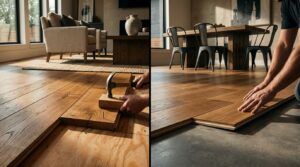
Engineered hardwood is a go-to in Colleyville because it delivers a true wood surface with layers that help reduce movement compared to solid planks. It still needs proper acclimation and the correct installation method (glue, nail, or float) for the subfloor and room conditions. If you like the authentic character of wood and care about resale, engineered is usually the “safe luxury” choice.
- What to look for: a quality veneer, stable core, and a finish that matches your sheen preference (matte hides wear better than high gloss).
- Installer skill check: clean plank alignment, consistent spacing, and tidy transitions at fireplaces and entries.
Learn more about your options on our engineered hardwood flooring page, or compare traditional wood looks on our hardwood flooring overview.
Luxury vinyl plank (LVP): the durability/value workhorse
LVP is popular for active households because it’s forgiving: it resists scratches, doesn’t panic over splashes, and it’s easy to keep clean. The difference between a floor that feels solid and one that feels “hollow” is often underlayment choice, subfloor flatness, and the locking system. If you’re considering hardwood vs LVP in Colleyville, TX, LVP often wins for everyday toughness, while engineered hardwood wins for natural warmth and resale vibe.
- What to look for: thicker wear layer, rigid core (if needed), and realistic embossing that doesn’t look plastic in sunlight.
- Installer skill check: tight end joints, no peaking, and clean cuts around jambs (undercut jambs beat sloppy caulk lines).
See styles and install considerations on our vinyl flooring page, and if you’re prioritizing spill zones, review waterproof flooring options.
Tile for kitchens and bathrooms (heat + moisture champion)
Porcelain and ceramic tile are hard to beat in kitchens, bathrooms, laundry rooms, and entryways. They handle heat, mopping, and wet shoes without drama. The two things that make or break tile are (1) flatness and layout planning (especially large format) and (2) the right setting materials. For many homes, adding an uncoupling membrane is a smart way to reduce the risk of cracks telegraphing up from the slab.
Tile quality tells on the installer
Look closely at grout lines, corners, and thresholds. Consistent grout spacing, minimal lippage, and clean transitions are where experienced crews separate themselves fast.
Benefits summary (what you get when you choose right)
Looks that match Colleyville resale expectations
- Neutral, timeless tones
- Cohesive transitions across open areas
- Better listing photos and first impressions
Less maintenance stress
- Materials chosen for real traffic, not a showroom
- Cleanable surfaces for pets and guests
- Fewer “special rules” to keep it looking good
Room-by-room recommendations (what works best where)
If you want a home that feels upgraded (not patchworked), plan flooring by function first, then make the colors and textures flow. Here’s a practical room-by-room guide that works well for Colleyville layouts.
Kitchens
Choose tile or waterproof-rated LVP to handle spills and frequent cleaning while keeping a seamless look into adjacent living spaces. If you’re doing an island-heavy kitchen, plan transitions so you’re not landing a seam in the most visible walkway.
Bathrooms
Prioritize porcelain tile or water-resistant LVP, and plan for proper waterproofing at transitions, toilets, and tub/shower surrounds. The little details matter here: clean cuts at the flange, tidy caulk lines, and correct slope where required.
Living rooms and dining rooms
Engineered hardwood or high-quality LVP balances style with everyday durability. If you’ve got big windows, bring home samples and check them in direct sun—some surfaces look perfect in-store and completely different at 5 p.m.
Bedrooms
Bedrooms often come down to comfort and cleaning preferences. Some homeowners prefer softer, quieter underfoot surfaces; others want continuous hard-surface flooring for allergy reasons and use area rugs. There isn’t one “right” answer—just match your priorities.
Entryways and mudrooms
Tile or durable LVP usually wins because grit and moisture are constant. Put a real doormat system in place (outside + inside). It’s cheap insurance for any floor.
Common mistakes we see (and how to avoid them)
- Skipping moisture testing on slab: Make sure your installer documents slab moisture testing and uses the right adhesive/underlayment for the readings.
- Not leveling enough for click-lock floors: LVP and laminate need flatness. “Good enough” can lead to movement, noise, and broken locking tabs.
- Choosing finishes that show everything: High gloss and very dark tones can highlight dust, paw prints, and micro-scratches in bright Texas light.
- Ignoring transitions: Reducers, nosings, and door jamb cuts should look intentional—not like a last-minute fix.
If you’re planning a full project, our floor repair page is helpful for understanding what can be fixed versus what should be replaced during a remodel.
Cost factors in Colleyville flooring projects (materials + installation)
Flooring budgets in Colleyville swing widely based on product tier and, more importantly, the hidden labor: demo, disposal, leveling, transitions, and stairs. The cleanest way to compare quotes is to insist on an itemized scope.
What drives material pricing
Material price ranges depend on the “guts” of the product, not just the color:
- LVP: wear layer thickness, core type, and locking system quality.
- Engineered hardwood: wood species, veneer thickness, and finish system.
- Tile: size, thickness, rectified edges, and surface finish (polished vs. textured).
- Laminate: water resistance features, edge sealing, and overall density.
What drives installation pricing
Installation costs change based on subfloor condition, demolition and disposal, and complexity. A “straight lay” in a square room is one thing. A diagonal pattern with multiple transitions, floor-height changes, and stair work is another.
| Line item to confirm | Why it matters | What to ask your installer |
|---|---|---|
| Subfloor leveling | Prevents hollow spots, movement, and locking failures. | “How flat will the floor be when you’re done, and what’s included to get there?” |
| Moisture testing | Protects warranty and long-term performance on slab. | “Which test method do you use, and will the results be documented?” |
| Transitions + trim | Controls height changes and prevents edge damage. | “Which reducers/nosings are included, and what happens at each doorway?” |
| Demo + disposal | Old flooring removal can be a major labor cost. | “What exactly is being removed, and where is it disposed?” |
Matching existing floors (budget for the hard part)
If you’re trying to match existing floors, expect added time and sometimes a material premium. Getting plank width, color tone, and sheen to blend across a home is a detail job—especially when sunlight has already aged the existing floor.
Cost clarity tip
When comparing bids, make sure each quote includes the same prep level. One proposal might look cheaper because it assumes the slab is “fine” and skips leveling—until the floor starts clicking or separating.
For product-specific planning, you can review our laminate flooring and vinyl flooring pages to understand what features actually change price and performance.
How to choose a flooring installer in Colleyville, TX
A quality installer will talk more about prep and scope than “deals.” In North Texas, correct subfloor prep and moisture management are the difference between a long-lasting floor and a callback.
Ask about subfloor prep (and listen for specifics)
Ask which subfloor prep steps are included. You want to hear about leveling, patching, crack isolation where needed, and slab moisture testing. Vague answers usually mean vague outcomes.
Request a written, itemized scope
Request a written scope that specifies product details, underlayment, transitions, moving furniture expectations, and how door jambs and baseboards will be handled. A real scope protects you and the installer—no surprises, no “I thought you meant…” at the end.
Verify warranty terms (product + labor)
Confirm warranty coverage and what voids it. Common issues: moisture conditions outside spec, wrong cleaners, or installs that skip manufacturer requirements. A good company won’t dodge this conversation.
Check local proof and professional affiliations
Look for consistent finish quality in real projects—seams, corners, thresholds—and check third-party profiles for legitimacy. Here are several places you can review JBN Group’s presence and memberships:
- Better Business Bureau (BBB) profile
- Dallas Builders Association listing
- NARI (National Association of the Remodeling Industry) listing
- NKBA profile
- The Good Contractors List profile
- Lake Cities Chamber of Commerce profile
- Google business profile
- Facebook page
“If an installer doesn’t measure moisture or check flatness, they’re guessing. And guesses get expensive after the furniture’s back in.”
— Veteran flooring installer perspective from North Texas field experience
Step-by-step: how to hire with confidence
- Pick 2–3 materials that fit the room’s moisture and traffic reality.
- Get itemized quotes that list prep, transitions, and disposal separately.
- Compare warranty terms and confirm who handles manufacturer claims.
- Confirm schedule, furniture movement expectations, and protection plan.
- Approve a final layout plan (direction, seam placement, transition locations).
If you’d like to learn more about who we are and how we run projects, visit About JBN Flooring.
Maintenance tips for long-lasting floors in North Texas
Most floors don’t wear out all at once—they get slowly damaged by grit, wrong cleaners, and tiny moisture issues that go unnoticed. A simple routine keeps your floors looking “new” much longer.
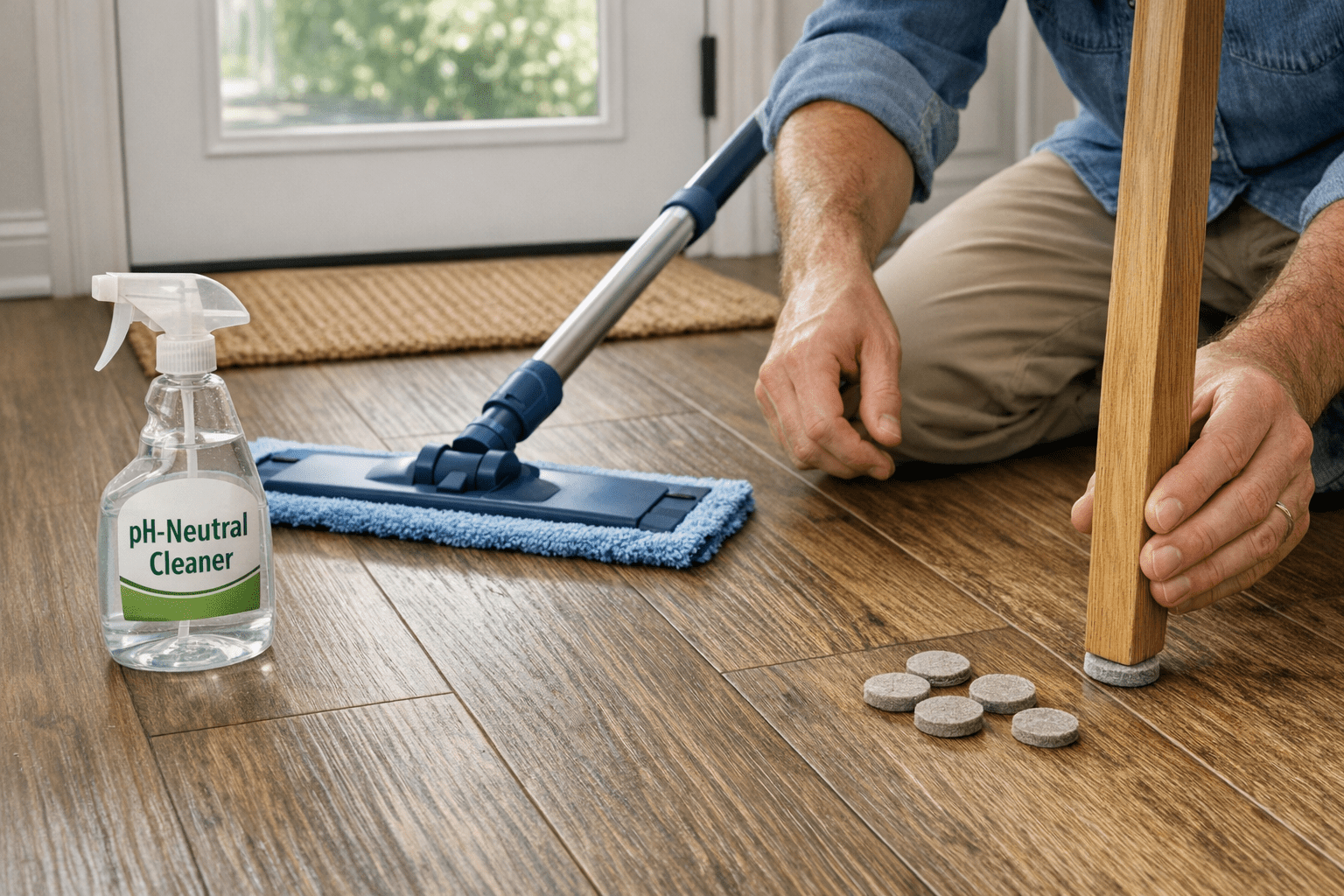
A microfiber mop, pH-neutral cleaner, mats, and felt pads prevent most everyday wear.
Simple habits that prevent the most damage
- Mats at exterior doors: Use an outdoor mat plus an indoor mat. This cuts grit dramatically.
- Felt pads under furniture: Replace them when they get dirty—grit trapped in a pad can scratch like sandpaper.
- Manufacturer-approved cleaners: Harsh chemicals can dull wood finishes, damage protective layers on LVP, and leave tile residue that attracts dirt.
- Humidity control for wood: Stable indoor humidity helps reduce seasonal gapping/cupping.
- Fast leak response: Address plumbing leaks quickly to avoid subfloor damage, regardless of surface type.
Periodic checks (catch small issues early)
Every few months, take a slow walk through and look at grout lines, transitions, and caulked edges—especially at tubs, toilets, and exterior doors. If you see cracking caulk, loose transitions, or grout deterioration, it’s cheaper to fix now than after water gets underneath.
| Category | Pros | Cons |
|---|---|---|
| Engineered hardwood | Authentic look, strong resale appeal, warmer underfoot than tile. | Can scratch; moisture events are serious; requires correct acclimation. |
| LVP | Scratch/moisture resistant, easy cleaning, great value. | Quality varies; heat/sun can stress installs; not a “real wood” surface. |
| Tile | Best for heat + wet zones, long lifespan, easy to sanitize. | Hard/cold; grout upkeep; requires precise flatness to avoid lippage. |
| Laminate | Budget-friendly, good look for the price, decent dent resistance. | Water exposure can swell seams; not ideal for spill-prone rooms. |
Best for / who should avoid (quick fit check)
Best for
- Open-concept homes that need a cohesive, upscale look
- Busy households that want easy cleaning and durability
- Homeowners planning to sell within 3–7 years and want broad appeal
Who should avoid certain materials
- A lot of direct sun + minimal window covering: avoid products known for heat sensitivity without a plan.
- Wet zones with frequent standing water: avoid materials that swell at seams.
- “Zero maintenance” expectations: even the toughest floors need grit control and correct cleaners.
Frequently asked questions
These are the questions we hear most from Colleyville homeowners comparing flooring types, timelines, and installation details.
What’s the most popular flooring in Colleyville right now?
Engineered hardwood remains a favorite for main living spaces because it looks upscale and feels warm, while LVP is extremely popular for households that want maximum durability and easy maintenance. Many homes use tile in wet zones and either engineered hardwood or LVP in the rest.
Hardwood vs. LVP: which is better for Texas heat and sun?
Both can work, but the decision is usually about the specific room’s sun exposure and the installation method. LVP is typically easier to live with day-to-day, while engineered hardwood offers a true wood surface. In heavy sun rooms, sample testing in your actual light and ensuring correct expansion/flatness are key.
Do I really need slab moisture testing in North Texas?
Yes, especially on concrete slab foundations. Moisture testing helps confirm which underlayment or adhesive system is appropriate and helps protect manufacturer warranty requirements. It’s one of the most important “invisible” steps for long-term performance.
How long does a typical flooring installation take?
It depends on square footage and prep. Straightforward installs can take a few days, while projects with demo, leveling, stairs, and multiple rooms can take a week or longer. The schedule should include acclimation time when required, not just installation days.
What should be included in a flooring quote?
A strong quote spells out product details, subfloor prep, underlayment, transitions, demo/disposal, trim/baseboard handling, furniture responsibilities, and warranty terms (product and labor). If those aren’t listed, you can’t compare bids accurately.
Is waterproof flooring the same as “won’t be damaged by water”?
Not always. “Waterproof” often refers to the surface material and core, but standing water can still cause issues at seams, edges, and below the floor if it reaches the subfloor. Fast cleanup and correct installation details still matter.
How do I keep my floors from scratching with pets?
Trim nails regularly, use mats in high-traffic entry points, and keep grit under control with vacuuming and microfiber mopping. For the best scratch resistance, choose a durable wear layer (for LVP) and avoid very glossy finishes that show every mark.
Can you match new flooring to existing flooring?
Often, yes—but it takes planning. Matching means aligning plank width, color tone, and sheen, and sometimes working around sun-aged material. Expect some extra time and possibly a premium to get the blend right.
What’s the biggest sign of a poor installation?
For floating floors, look for uneven seams, movement/clicking, or gaps at edges. For tile, look for lippage, inconsistent grout lines, and sloppy cuts. For wood, look for uneven spacing, squeaks, and rough transitions.
What’s the best next step if I’m still unsure?
Narrow it down to two materials for your main living area, then confirm subfloor conditions and sunlight exposure. From there, an itemized consultation helps you compare the real installed system—prep, transitions, and warranty—not just the product itself.
Conclusion: choosing the right floors in Colleyville comes down to prep + fit
The best flooring in Colleyville, TX isn’t a single material—it’s the right material in the right room, installed on a properly tested and prepped subfloor. Engineered hardwood is a strong “resale and warmth” play for living spaces, tile is the no-drama option for wet zones, and LVP is hard to beat for durability in busy homes.
If you want a smooth project, focus on the scope details that protect you: moisture testing, leveling, transitions, and written warranty terms. That’s where long-term performance is decided.
Ready to upgrade your flooring in Colleyville, TX?
Make a short list of your must-haves (waterproof, scratch resistance, real-wood look, budget), then get itemized quotes so you can compare materials and installation apples-to-apples.