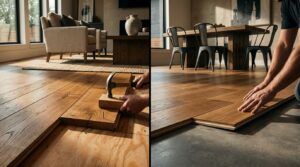
Flooring can change how your home feels, sounds, and functions every day. If you’re searching for flooring installation The Colony TX, you need more than attractive samples. You need a floor that fits your slab, traffic, pets, sunlight, and maintenance habits.
The Colony homes deal with hot summers, humidity swings, tracked-in moisture, and concrete slab conditions. The right material matters, but careful preparation often decides whether your new floor stays quiet, level, and attractive. Here’s how to plan your project with fewer surprises.
What Makes Flooring Installation The Colony TX Different?
The Colony sits in a busy North Texas service area near Frisco, Little Elm, Lewisville, and Plano. Homes in neighborhoods such as Austin Waters, Stewart Peninsula, The Tribute, and The Legends can have different layouts, traffic patterns, ages, and subfloor conditions. Your flooring plan should account for those details.
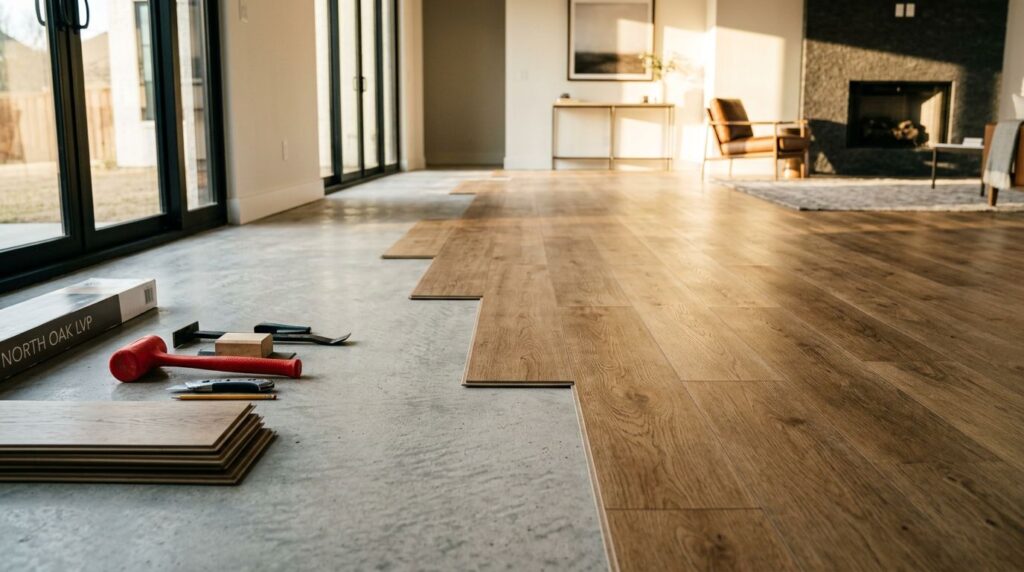
Concrete slabs are common in this region. Before installation, your flooring contractor should check the slab for low areas, cracks, uneven transitions, and moisture. A slab can look dry while still holding enough moisture to affect wood, laminate, adhesives, or floor finishes.
Moisture testing is especially important before hardwood flooring goes down. The Protimeter hardwood moisture guide explains why installers need readings before, during, and after installation. For concrete, testing should identify both high and low readings instead of relying on one spot.
A new floor cannot correct a damp or uneven slab. Preparation must happen before the first plank is installed.
North Texas sunlight also deserves attention. Large windows can heat flooring throughout the afternoon, while entryways and back doors collect grit and moisture. You may need a finish, color, or product with better resistance to daily wear in those areas.
Flooring Installation The Colony TX: Choosing the Right Material
Your best flooring choice depends on how you use each room. A busy kitchen may need different performance than a quiet guest bedroom. You should also consider whether you want a floating floor, a glued installation, or a nail-down system.
Luxury vinyl plank for busy rooms
Luxury vinyl plank is a practical choice for kitchens, living areas, hallways, and homes with pets. Modern LVP flooring can resemble oak, maple, or other wood species while providing a surface that handles routine spills and heavy foot traffic.
Many products are sold as waterproof flooring. However, the planks themselves are only part of the system. Water can still reach the subfloor through seams, wall gaps, damaged transitions, or standing water left in place. You still need prompt cleanup and sound installation.
Vinyl flooring also works well when you want easier maintenance than real wood. Regular sweeping and damp mopping usually handle daily dirt. Avoid soaking the floor or using cleaners that leave a waxy film.
Hardwood and engineered hardwood
Hardwood flooring gives you a natural surface that can last for many years with proper care. It fits formal dining rooms, offices, bedrooms, and open living spaces where you want a traditional appearance.
Solid wood reacts to moisture and temperature changes. That makes acclimation, moisture testing, expansion space, and installation method important in a Texas home. Your installer should also review sun exposure and humidity conditions before recommending a product.
Engineered hardwood uses a real wood wear layer over a layered core. That construction can make it a better fit for some slab-based homes, especially when you want real wood but need a product designed for changing indoor conditions. It still requires proper moisture control and installation.
Laminate for style and value
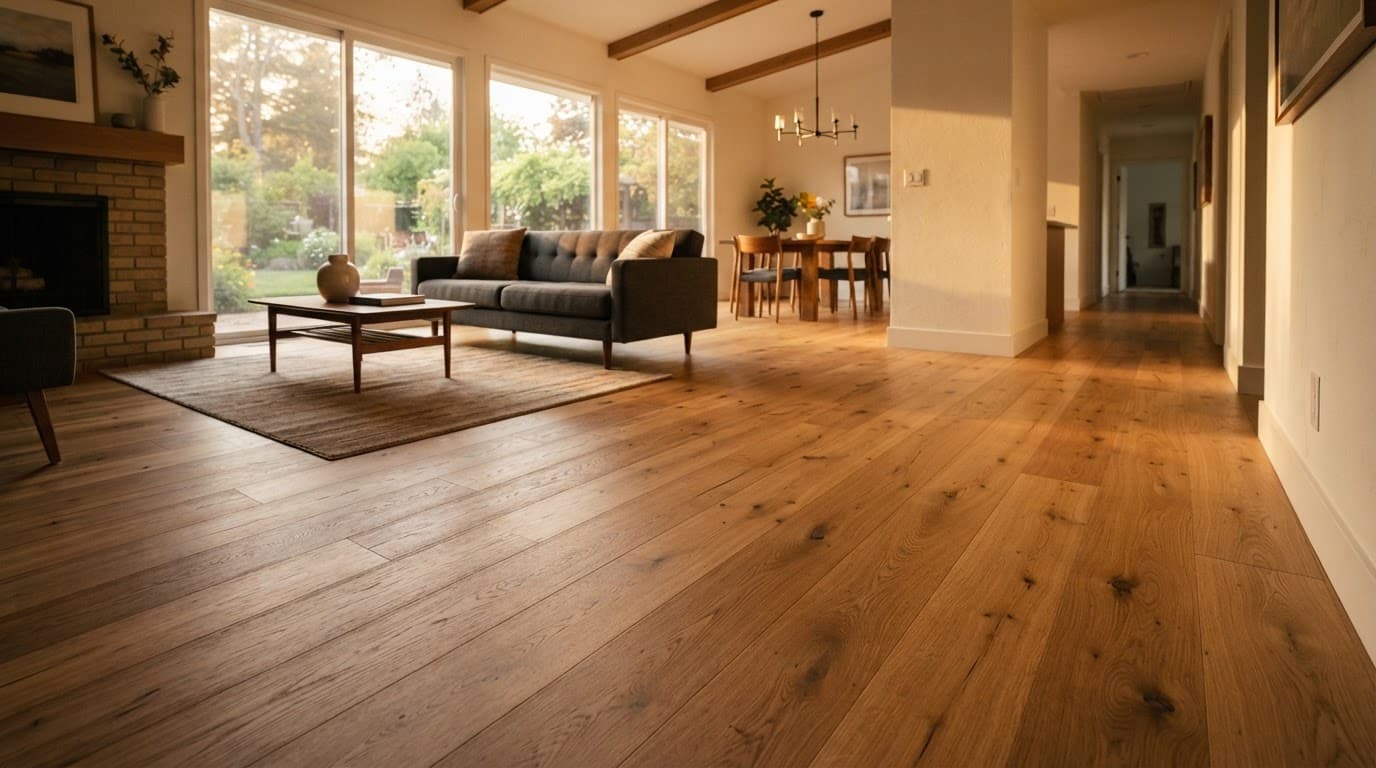
Laminate flooring can give you the appearance of wood or stone at a lower material cost than many hardwood products. It works well in bedrooms, offices, and other areas without frequent standing water.
Water-resistant laminate has improved, but you should check the manufacturer’s requirements before using it in kitchens, laundry rooms, or bathrooms. A spill that sits along an edge can cause damage even when the top surface handles light moisture.
Your installer should help you compare the actual product warranty, wear layer, locking system, underlayment, and moisture limits. Those details matter more than a sample’s appearance.
What Professional Floor Installation Should Include
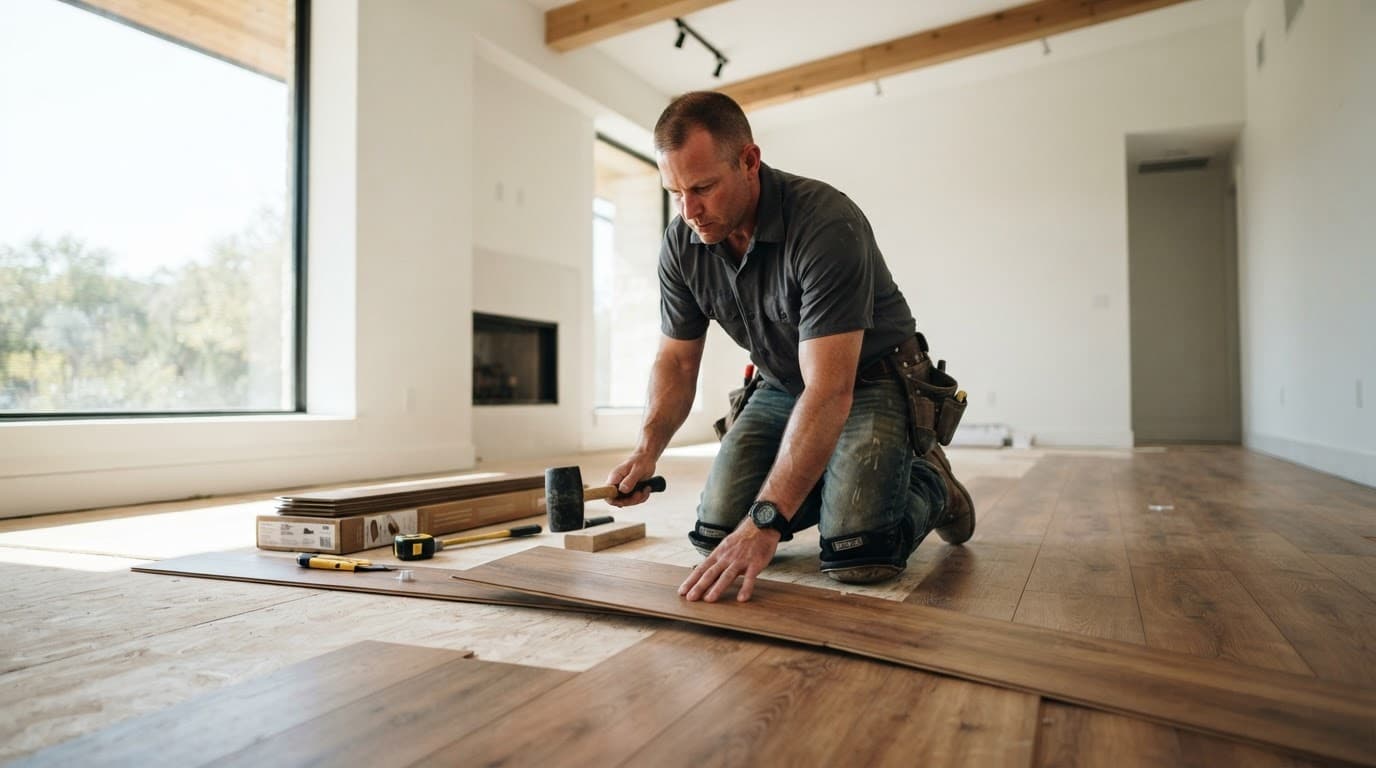
Professional flooring installation starts before materials arrive. A reliable installer should inspect the room, discuss the product requirements, and explain what must happen before installation day.
A typical project includes these steps:
- The crew removes furniture, baseboards, old flooring, or damaged materials as agreed in the estimate.
- The installer checks the subfloor for moisture, movement, soft areas, cracks, and uneven spots.
- Low areas may need leveling, while high spots may require grinding or other correction.
- The crew plans plank direction, room transitions, door clearances, stair details, and expansion space.
- The flooring goes down according to the product requirements, followed by trim, transitions, cleanup, and a final inspection.
Subfloor preparation can add time, but skipping it often creates noise, movement, open joints, or premature damage. A good floor installation process in Denton follows the material requirements instead of treating every room the same.
Concrete moisture problems can affect more than wood. The Tramex flooring moisture guidance outlines common installation mistakes connected to concrete and moisture. Ask what testing method your installer will use and how the results affect product selection.
You should also clarify who handles appliance movement, old flooring disposal, baseboard removal, furniture placement, and unexpected slab repairs. A detailed estimate makes the scope easier to understand.
For a local project, consider JBN Flooring’s information on professional flooring installation in Denton. The same preparation concerns apply across The Colony and nearby communities.
Repair or Full Floor Replacement?
Some flooring problems need repair rather than a full remodel. A damaged plank near a refrigerator, a small area with pet damage, or a loose transition may be repairable if matching material is available.
You may need floor replacement when damage covers a large area, the product has discontinued, moisture keeps returning, or the subfloor has lost stability. Replacing only the visible surface won’t solve an active leak or damp slab.
Common warning signs include:
- Soft or bouncy areas underfoot
- Cupped wood or separating boards
- Repeatedly lifting plank edges
- Persistent musty odors
- Cracked grout or loose transitions
- New squeaks after installation
A proper floor repair evaluation should identify the cause before anyone replaces a plank. If the issue comes from moisture, movement, or poor leveling, the repair must address that source.
How to Choose a Flooring Contractor in The Colony
A search for flooring installation The Colony TX should lead you to a company that talks about preparation, not only product style. Ask how the installer handles slab moisture, floor leveling, transitions, trim, and cleanup.
You should also ask for a written estimate that identifies the product, installation method, preparation work, removal fees, and warranty information. Avoid choosing a bid based only on the lowest total. A low quote may exclude leveling, disposal, furniture movement, or necessary moisture treatment.
Experience with North Texas flooring is useful because local homes often share slab and climate concerns. A Denton flooring professional should be comfortable working with LVP, laminate, solid wood, engineered hardwood, and repair projects.
JBN Flooring works with homeowners and property owners across The Colony, Denton County, and surrounding communities. If you want a recommendation based on your rooms and slab conditions, Get Your Free Flooring Estimate.
Caring for Your New Floor
Daily care should match the material. Sweep or vacuum frequently, place mats at exterior doors, and use felt pads under furniture. Clean spills quickly, especially near sinks, patios, and pet bowls.
Keep window coverings in mind when strong afternoon sun reaches wood or vinyl. Use manufacturer-approved cleaners and avoid steam or excess water unless the product specifically allows it.
Give your installer a chance to review care instructions before the crew leaves. Small habits, such as removing grit and keeping water from sitting near edges, can help your floor maintain its appearance.
Conclusion
The best flooring installation The Colony TX project begins with the room, slab, and household routine, not a product sample alone. LVP may suit a busy family area, while engineered hardwood or solid wood may fit a quieter space. Laminate can offer practical style where standing water isn’t a regular concern.
Choose a flooring contractor who tests the subfloor, explains preparation, and provides a clear scope of work. When you’re ready to discuss your home, Call 469-340-0837 for help planning a floor that fits North Texas living.
Frequently Asked Questions
How long does floor installation take in The Colony?
The timeline depends on the material, room size, furniture, demolition, and subfloor repairs. A straightforward LVP or laminate project may move faster than hardwood installation or a job that needs slab leveling. Your written estimate should include the expected schedule.
What flooring works best for pets and children?
Luxury vinyl plank is often a practical choice because it handles routine spills, scratches, and active traffic well. Product quality still matters, and you should select the wear layer and installation method for your home’s use. Quick cleanup remains important, even with products marketed as waterproof.
Can you install flooring over a concrete slab?
Yes, many flooring types can go over concrete when the slab meets the product requirements. The installer should test moisture, check flatness, address cracks or uneven areas, and use the correct underlayment or adhesive. Wood products require careful planning because moisture can damage the material.
Should you repair or replace damaged flooring?
Repair may make sense when the damage is limited and matching material is available. A full floor replacement is more practical when damage is widespread, the product is discontinued, or moisture has affected the subfloor. Find the cause before choosing either option.
How do you prepare for a flooring installation?
Remove small personal items, clear closets if included in the work area, and secure fragile belongings. Confirm who handles large furniture, appliances, old flooring, and baseboards. Keep pets away from the work area until the installation and cleanup are complete.