Kitchen Flooring Guide
Why Kitchen Vinyl Flooring Is a Top Choice for Homeowners: Durability, Style, and Value
From waterproof performance to on-trend looks, vinyl flooring helps kitchens stay beautiful, comfortable, and easy to maintain—without blowing the budget.
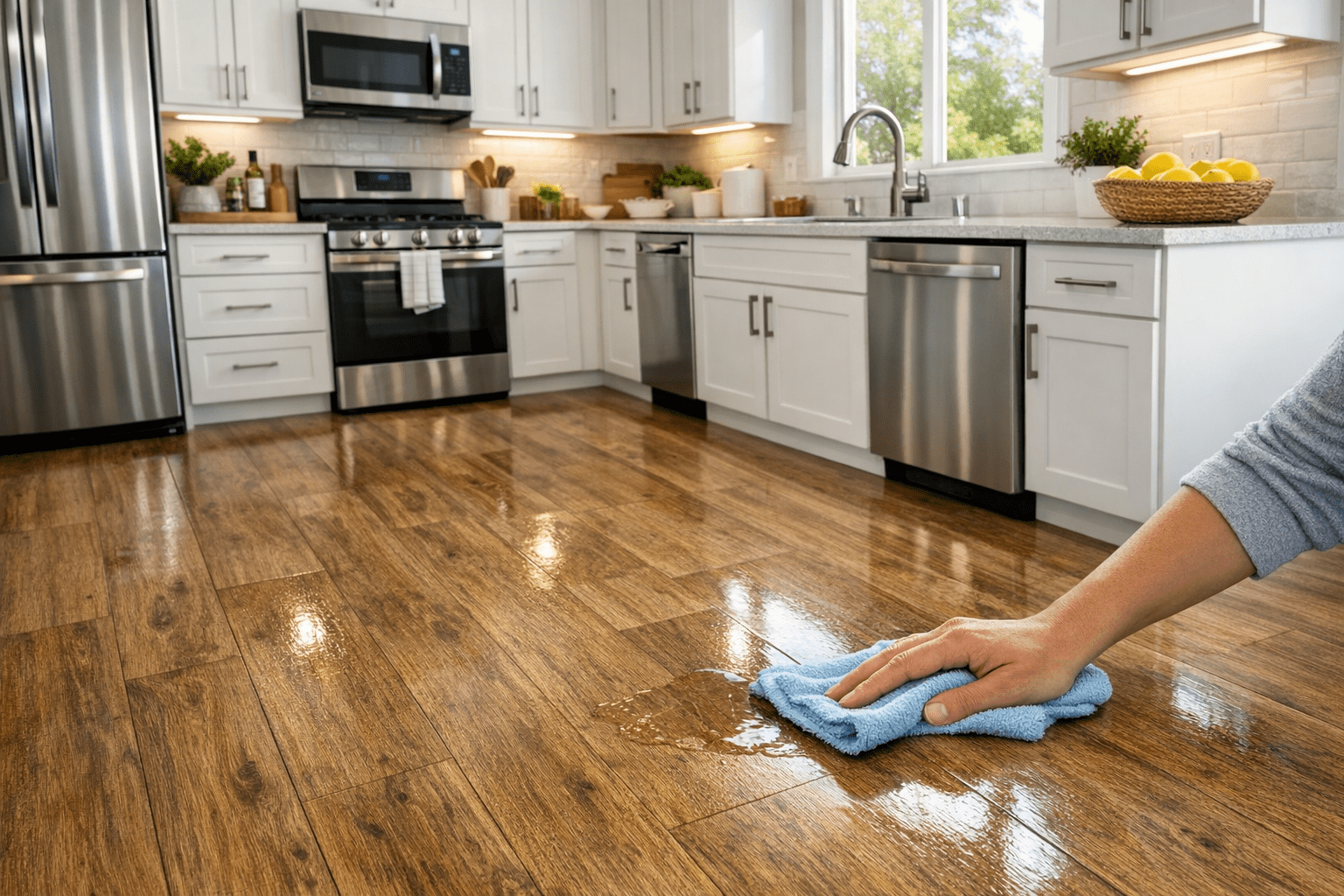
Kitchens are the hardest-working rooms in most homes. They’re where people gather, where spills happen, where chairs scoot across the floor a dozen times a day, and where your flooring needs to look good even when life gets messy. That combination of traffic + moisture + constant cleaning is exactly why so many homeowners land on vinyl as the “sweet spot” for performance and style.
Today’s vinyl is not the sheet vinyl of decades past (though that category has improved too). Modern luxury vinyl plank (LVP) and luxury vinyl tile (LVT) have become go-to choices because they can look surprisingly close to hardwood or stone while offering a more kitchen-friendly set of features—especially when you prioritize water resistance, scratch resistance, and simple maintenance.
If you want a kitchen floor that’s built for real life—spills, pets, kids, cooking, entertaining—vinyl often delivers the best blend of durability, style flexibility, and overall value.
What Makes Kitchens Hard on Flooring (and Why Vinyl Fits)
Before comparing materials, it helps to name what your kitchen actually demands from a floor. A kitchen isn’t just another room—it’s a work zone. The right flooring choice is less about a showroom photo and more about how that surface behaves at 7 a.m. during breakfast chaos or when a pot of pasta water splashes onto the floor.
- Constant foot traffic and movement: Between daily walking routes, chairs shifting at islands, and kids running through, kitchens experience concentrated wear. Vinyl’s protective wear layers are designed to resist everyday scuffs and surface abrasion.
- Moisture is unavoidable: Sinks, dishwashers, refrigerator ice makers, wet shoes, and cooking spills all add up. Vinyl’s water resistance (and in many products, waterproof construction) is a major advantage over materials that can swell or stain.
- Cleaning is frequent: Food prep requires regular sweeping and mopping. Vinyl is built to tolerate routine cleaning without needing sealing, special soaps, or re-finishing schedules.
- Temperature swings and sunlight: Open-concept homes often bring direct sun exposure and fluctuating indoor temps. Stable, well-constructed vinyl—especially rigid core products—can hold its shape and look better over time when installed properly.
- Comfort matters: Kitchens are “standing rooms.” A slightly resilient surface can be easier on feet, knees, and backs compared to hard tile—especially if you cook often.
Real-world rule: If your kitchen floor can handle repeated moisture + frequent cleaning + high traffic without you tiptoeing around it, you’ll enjoy your kitchen more. Vinyl is designed for exactly that kind of daily stress.
A quick note on “waterproof” vs. “water-resistant”
Not all vinyl is identical. Many LVP/LVT lines are marketed as waterproof, but performance depends on the product’s construction and the installation details (especially around edges, transitions, and the subfloor). In practical terms, vinyl is often forgiving of spills and quick cleanups—just don’t treat any floor as a substitute for fixing an ongoing leak.
Key Benefits of Kitchen Vinyl Flooring
Vinyl’s popularity isn’t just a trend—it’s a response to what homeowners want today: a surface that looks elevated but doesn’t require high-maintenance habits. Here are the benefits that matter most in kitchens.
1) Waterproof performance where it counts
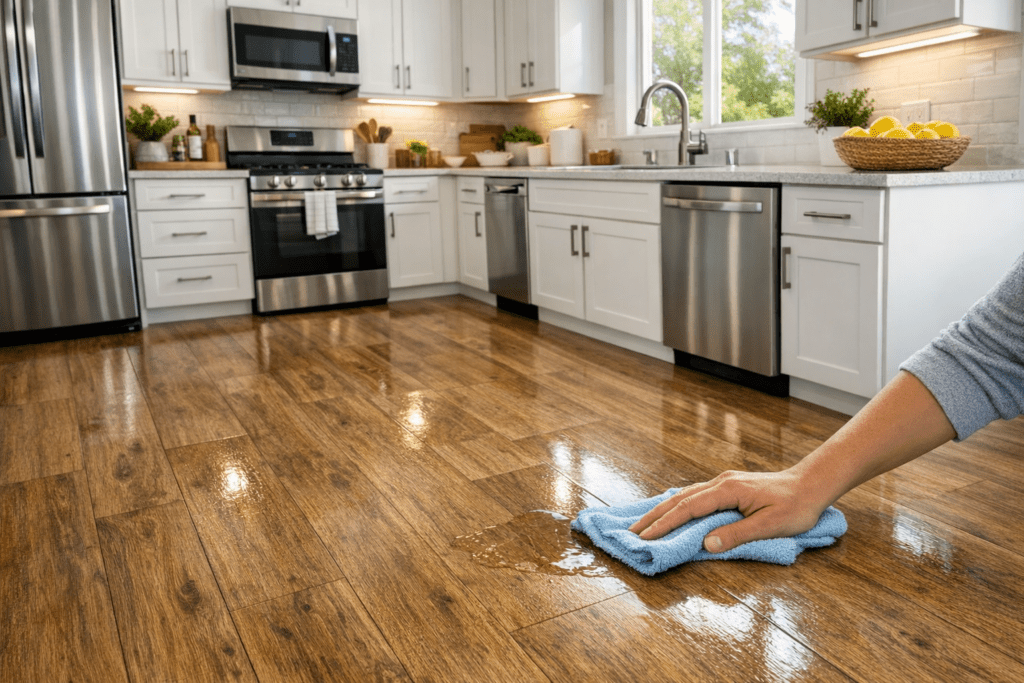
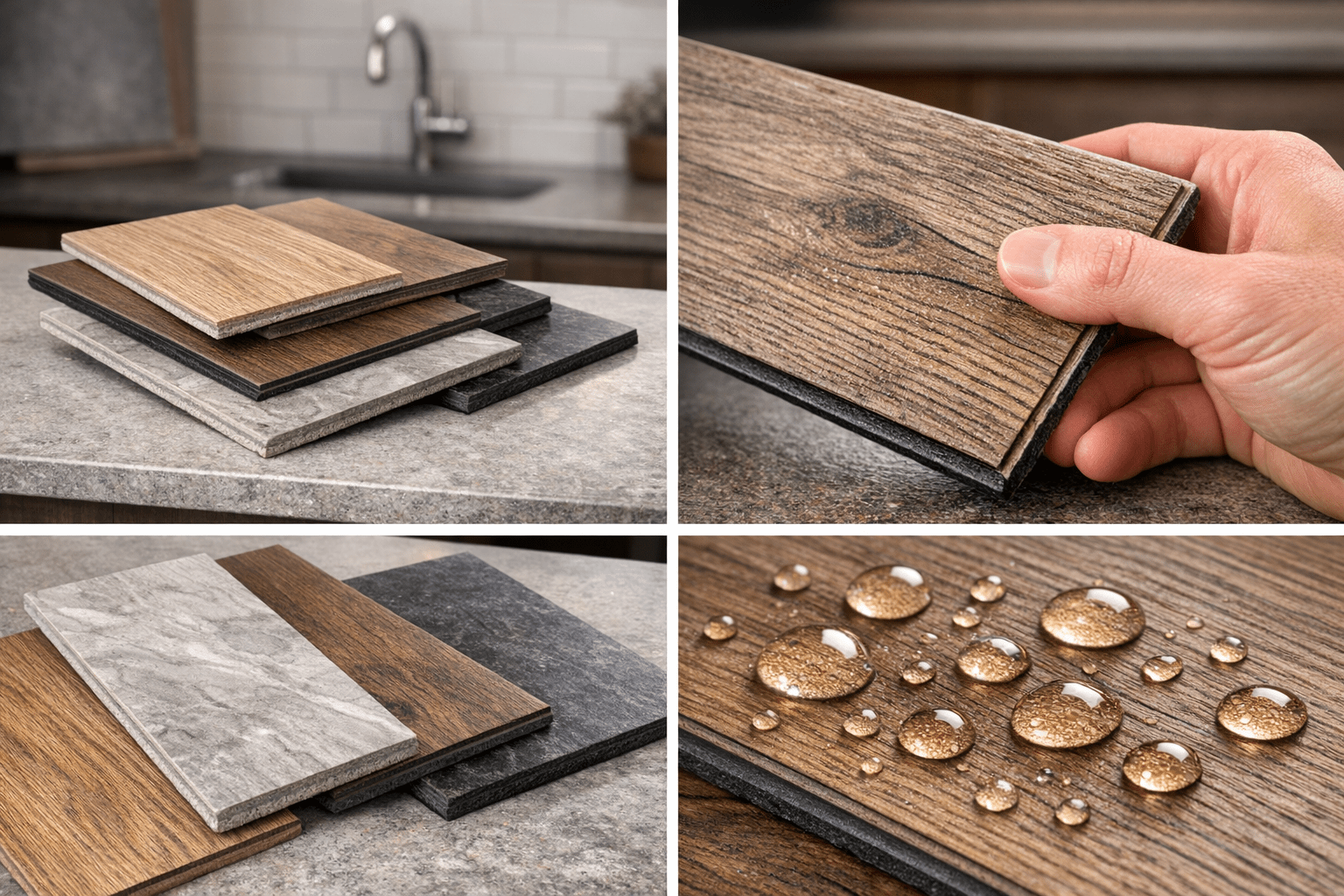
Kitchens don’t just get “a little wet.” They get splashes around the sink, drips from dishwashers, melted ice, pet water bowl spills, and the occasional dropped drink. Many vinyl options are built to handle this reality without swelling or warping the way moisture-sensitive materials can.
For homeowners searching for the best vinyl flooring for kitchen waterproof performance, look for products that pair a waterproof core (common in rigid core lines) with tight locking systems and a properly detailed installation. Waterproof doesn’t mean “ignore water,” but it does mean day-to-day spills are far less stressful.
2) Scratch and stain resistance for busy homes
Modern vinyl typically includes a protective wear layer designed to resist surface scratches and stains. That matters when you have:
- Pets that track in grit or have active claws
- Kids who drop utensils, drag stools, and spill snacks
- High-frequency cooking where mess is just part of the process
If you’re prioritizing durable scratch resistant kitchen vinyl flooring, focus on the thickness and quality of the wear layer and the product’s intended use rating (residential vs. light commercial). A stronger wear layer won’t make a floor indestructible, but it will significantly improve how it holds up over time.
3) Softer, warmer comfort underfoot
Tile is beautiful, but it’s hard. Standing at the sink for 20 minutes or cooking for an hour can feel very different depending on what’s under your feet. Vinyl is generally more forgiving and can feel warmer than tile, especially in winter. In open layouts, that comfort difference is often what homeowners notice first after installation.
4) High-end looks without high-maintenance habits
One of the biggest kitchen luxury vinyl plank flooring benefits is design flexibility. LVP and LVT can convincingly mimic:
- Natural oak and walnut looks (including wire-brushed textures)
- Modern stone visuals like slate, travertine, and marble-inspired patterns
- Concrete styles for clean, contemporary spaces
And unlike many natural surfaces, vinyl doesn’t require sealing, special pH-balanced cleaners for stone, or periodic refinishing like hardwood.
5) A strong cost-to-performance ratio
Most homeowners want a floor that looks great now and still looks great years later. Vinyl tends to deliver one of the best “performance per dollar” outcomes because it balances material cost with durability and lower maintenance needs.
Lower upfront material costs than many hardwood/stone options, plus fewer specialty maintenance products and less worry about water-related repairs.
Easy cleanup, consistent appearance, and a forgiving surface that’s comfortable in the room where you spend the most time standing.
Vinyl vs. Common Kitchen Flooring Options (Tile, Hardwood, Laminate)
There’s no single “best” floor for every kitchen—there’s the best floor for your cooking habits, household traffic, and maintenance preferences. Here’s how vinyl compares to the usual alternatives.
Vinyl vs. tile
Tile is a classic kitchen flooring choice for good reason: it’s durable and handles water well. But it comes with trade-offs that drive many homeowners toward vinyl.
- Comfort: Vinyl is typically softer and warmer underfoot than tile, which can be a major quality-of-life upgrade.
- Grout maintenance: Tile itself is easy to wipe, but grout lines can stain and require periodic deep cleaning and sealing. Vinyl can deliver a “tile look” with less maintenance.
- Cracking: Tile can crack from impacts or subfloor movement. Vinyl is more flexible and may be more forgiving in certain conditions when paired with proper prep.
For homeowners searching vinyl flooring vs tile for kitchen cost, vinyl often comes out ahead when you consider not only materials, but also installation complexity and long-term grout upkeep.
Vinyl vs. hardwood
Hardwood is timeless, but kitchens challenge wood in ways living rooms don’t.
- Moisture tolerance: Vinyl is far more forgiving of spills. Hardwood can cup, stain, or develop gaps if moisture becomes routine.
- Maintenance: Hardwood may need refinishing down the road. Vinyl generally focuses on keeping the wear layer clean and intact.
- Consistency: Vinyl can maintain a more uniform look in high-traffic lanes (like sink-to-fridge paths) compared to some natural wood finishes.
If you love the warmth of wood but don’t want to “babysit” your kitchen floor, wood-look vinyl can be a practical compromise—especially in homes with pets, kids, or frequent entertaining.
Vinyl vs. laminate
Laminate has improved significantly, but in kitchens the difference often comes down to water behavior.
- Water performance: Many vinyl lines provide better protection against spills and moisture than traditional laminate constructions.
- Seams and edges: With laminate, standing water can be more likely to cause edge swelling if it seeps into seams. Vinyl is typically more resistant.
- Feel: Both can be comfortable, but rigid vinyl products often combine a stable core with a resilient top layer that’s well suited to kitchen traffic.
If you want worry-free cleanup in a kitchen, vinyl is frequently the safer bet—especially for households that don’t want to stress about every spill.
Choose tile if you want a classic hard surface and don’t mind grout upkeep. Choose hardwood if you prioritize natural material character and accept moisture risks. Choose laminate for budget-friendly style in lower-spill homes. Choose vinyl if you want a balanced, kitchen-optimized option that handles water and wear with minimal fuss.
Design & Style: Getting the Look You Want
Vinyl’s design range is one of the biggest reasons it continues to dominate kitchen remodel conversations. But the best-looking results come from choosing the right visual and matching it to the room’s fixed finishes—cabinets, countertops, backsplash, wall color, and lighting.
Wood-look vinyl: warm, inviting, and versatile
Wood-look vinyl planks can create that “soft landing” feeling in kitchens—especially with white cabinets, warm metals, natural textiles, and open-concept layouts. If you want the kitchen to flow into adjacent living spaces, planks are often the easiest way to create continuity without sacrificing kitchen performance.
Stone- and concrete-look vinyl: modern style with easier care
Love the look of stone but not the maintenance? Vinyl can replicate stone patterns and concrete visuals while avoiding concerns about porous materials, sealing cycles, and harsher cleaning limitations. This is a common choice for modern, industrial, and minimalist kitchens.
Dial in realism: width, variation, and sheen
Small style choices can make a big difference in how authentic vinyl looks:
- Plank width: Wider planks can feel more contemporary; narrower can feel more traditional.
- Pattern variation: A bit of variation tends to look more natural and helps hide daily crumbs and dust.
- Sheen level: A lower sheen often reads as more realistic and is more forgiving of smudges.
Practical color advice for real kitchens
Ultra-dark floors can show dust and footprints; ultra-light solids can reveal crumbs and scuffs. Many homeowners find mid-tone colors with visible grain variation are the easiest to live with day-to-day—especially for families and pet owners.
Finish details matter: transitions and trim
In open layouts, your eye catches transitions between rooms. Matching (or intentionally contrasting) transition strips, stair noses, and trim pieces helps the entire space feel finished rather than “patched together.” It’s a small detail that upgrades the overall look immediately.
Installation Considerations for Long-Lasting Results
Even the best vinyl product can underperform if installation fundamentals are ignored. Kitchens are full of obstacles—cabinets, islands, appliances, doorways—so planning matters as much as the plank you choose.
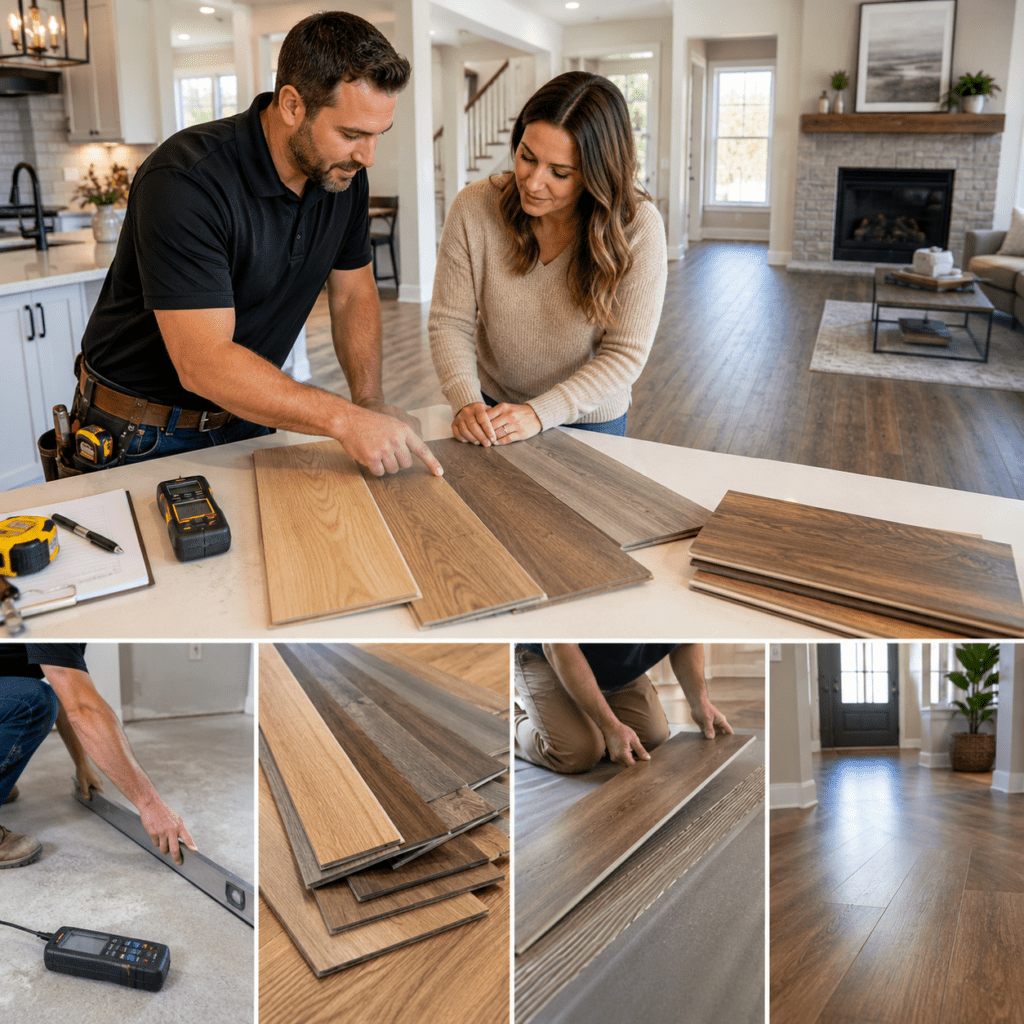
1) Subfloor prep: the make-or-break step
Vinyl can “telegraph” bumps, dips, and seams underneath. In a kitchen, that can show up as visible lines in certain lighting or an uneven feel underfoot. A smooth, properly prepared subfloor helps your finished floor look cleaner and last longer.
2) Choose the right construction for the space
Vinyl isn’t one material—there are different build types that behave differently in kitchens:
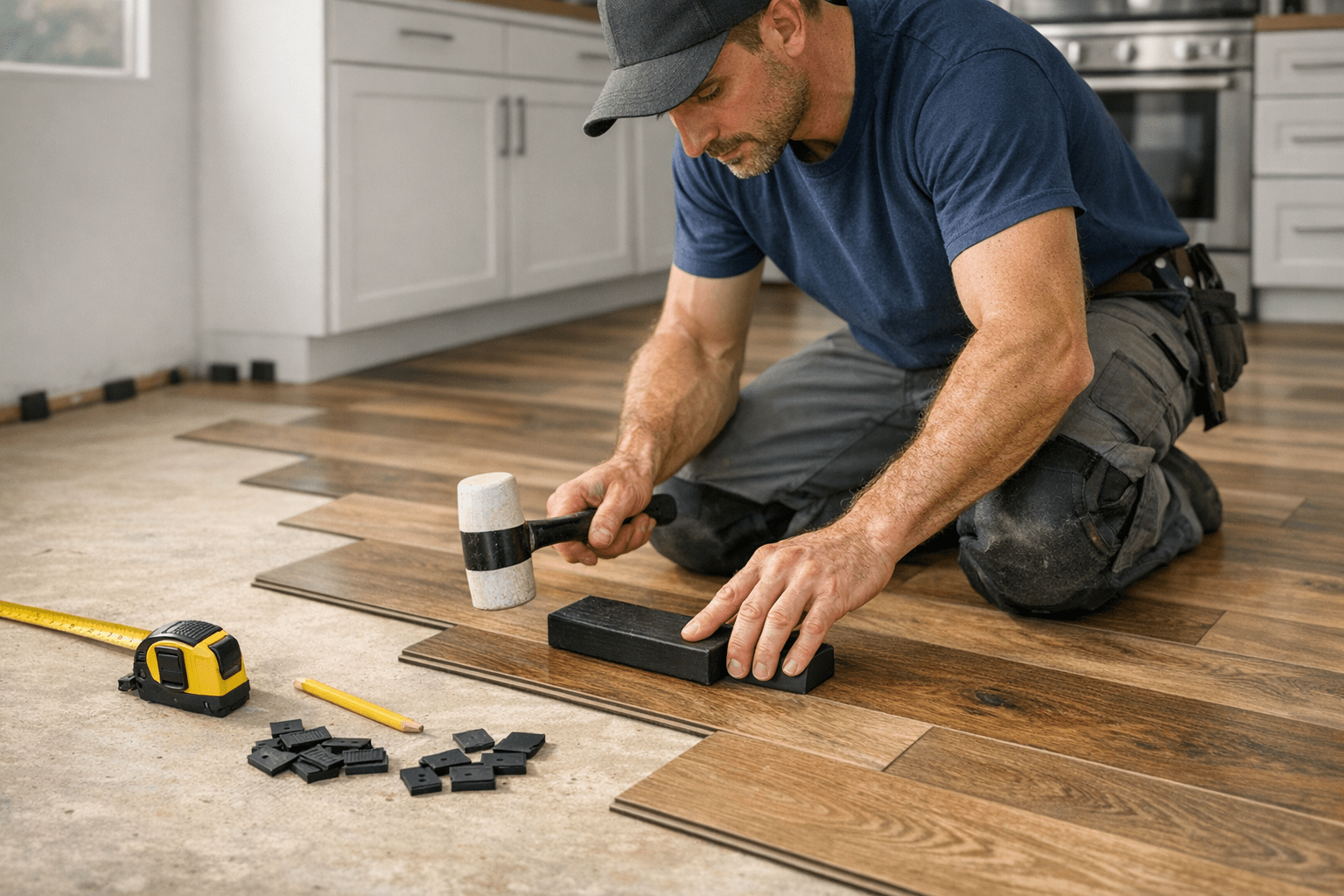
- Click-lock floating: Popular for faster installs; great for many homes when the subfloor is flat and transitions are planned well.
- Glue-down: Often chosen for high-traffic areas and for a more “anchored” feel; can reduce movement and help in certain layouts.
- Rigid core: Adds dimensional stability and can be more forgiving over minor subfloor imperfections (though prep still matters).
3) Moisture testing isn’t optional
Especially in slab-on-grade homes, moisture can migrate through concrete. Moisture testing and proper underlayment/adhesive choices (when applicable) help prevent future issues. This is also where professional guidance can protect your investment.
4) Layout planning makes the room look larger
Plank direction and seam placement affect the visual flow of the space. In many kitchens, running planks along the longest dimension can elongate the room. Avoiding awkward slivers at edges and planning around islands and thresholds can dramatically improve the finished look.
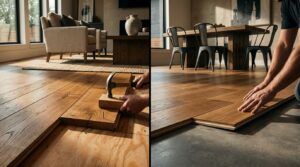
5) Professional installation helps nail the details
Expansion gaps, tight seams, clean cuts around toe-kicks, neat transitions at doorways, and a polished finish around appliances are where experience shows. A professional install can reduce disruption and help ensure your warranty requirements are met.
Vinyl performs best when the subfloor is properly prepped and the installation method matches your kitchen’s traffic, moisture exposure, and layout. The product matters—but the prep and details are what make it last.
Care & Maintenance: Keeping Vinyl Looking New
Vinyl is popular partly because it’s low-maintenance, not no-maintenance. The goal is simple: keep gritty debris off the floor, clean spills quickly, and avoid harsh products that can dull or damage the wear layer.
Daily/weekly habits that make the biggest difference
- Sweep or vacuum frequently: Grit acts like sandpaper over time. Use a vacuum setting without a beater bar.
- Wipe spills quickly: Even waterproof floors are safer and cleaner when water and oils don’t sit on the surface.
- Damp mop as needed: Use manufacturer-approved cleaners and avoid abrasive scrubbers.
Protect high-use zones
Two small add-ons can extend the “new floor” look:
- Mats/runners: Place them near sinks and exterior doors to catch water and grit before it spreads.
- Felt pads: Add them under stools and chairs to reduce scratching during daily movement.
Periodic checks: seams and transitions
Every few months, take a quick look at transition strips and high-traffic edges. Catching a small gap or loose piece early can prevent bigger issues later—especially near doorways and appliance areas.
When homeowners ask for easy to clean kitchen vinyl flooring options, the best answer is usually: choose a quality wear layer and commit to simple, consistent cleaning—no harsh chemicals, no waxes, and no over-wetting.
Is Kitchen Vinyl Flooring Right for You? A Simple Checklist
If you’re still deciding, use this quick checklist. The more boxes you check, the more likely vinyl is the right fit for your kitchen.
- You want spill-friendly performance: You’d rather wipe up messes quickly than worry about swelling, staining, or special care routines.
- You want style flexibility: You love the look of wood or stone but prefer a surface that’s easier to maintain and more budget-conscious.
- You have an open layout: You want the kitchen to flow into living/dining spaces with a cohesive visual that still holds up to kitchen demands.
- You care about noise and comfort: You’d prefer a quieter step and a floor that’s easier on joints than hard tile.
- Your layout is complex: Islands, cabinets, and multiple doorways mean installation planning matters—and the right vinyl construction can simplify the solution.
Conclusion: Durable, Stylish, and Built for Everyday Kitchen Life
Kitchen vinyl flooring has become a top choice because it aligns with what homeowners actually need: a floor that stands up to moisture, resists everyday wear, cleans up easily, and still looks modern and intentional. With today’s LVP and LVT options, you can get the warm character of wood or the crisp look of stone while keeping maintenance simple and costs reasonable.
If you’re comparing options, focus on the details that impact long-term satisfaction: waterproof construction where needed, a wear layer suited to your household, the right installation method, and a style that complements your cabinets and countertops—not just what looks good on a sample board.
Ready to Upgrade Your Kitchen Floors?
Call us today at 469-340-0837 or request your no-cost consultation to explore kitchen vinyl flooring options that fit your home and budget.