Denton, Texas Flooring Guide
Wood Laminate Flooring Denton TX: Styles, Costs, Installation Tips & Local Pros
If you love the character of hardwood but want something more budget-friendly and resilient for everyday life, wood-look laminate can be a smart fit—especially in Denton homes where pets, guests, and busy schedules are the norm. In this guide, we’ll break down what actually matters when choosing laminate (wear layers, water resistance, AC ratings), what impacts pricing in Denton, and how to plan a clean, long-lasting installation.
When you’re ready to talk through samples, timelines, and the realities of your subfloor (slab, pier-and-beam, or a mixed layout), JBN Flooring can help you make the decision with confidence. You can Call Us Today 469-340-0837 or Get Your No Cost Consultation.
Why Denton Homeowners Choose Wood-Look Laminate
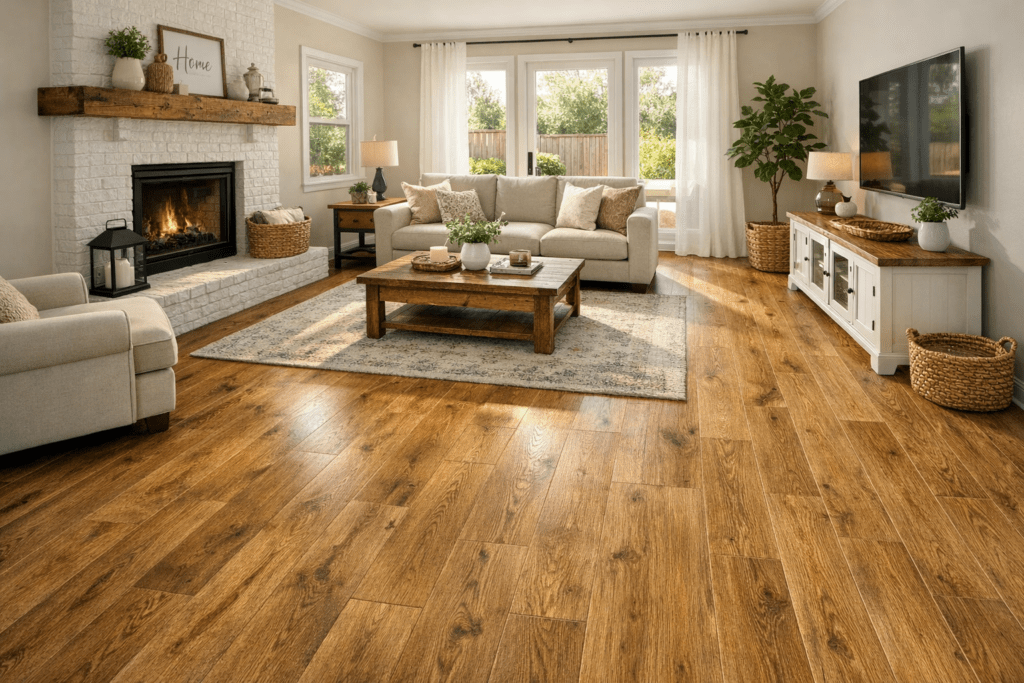
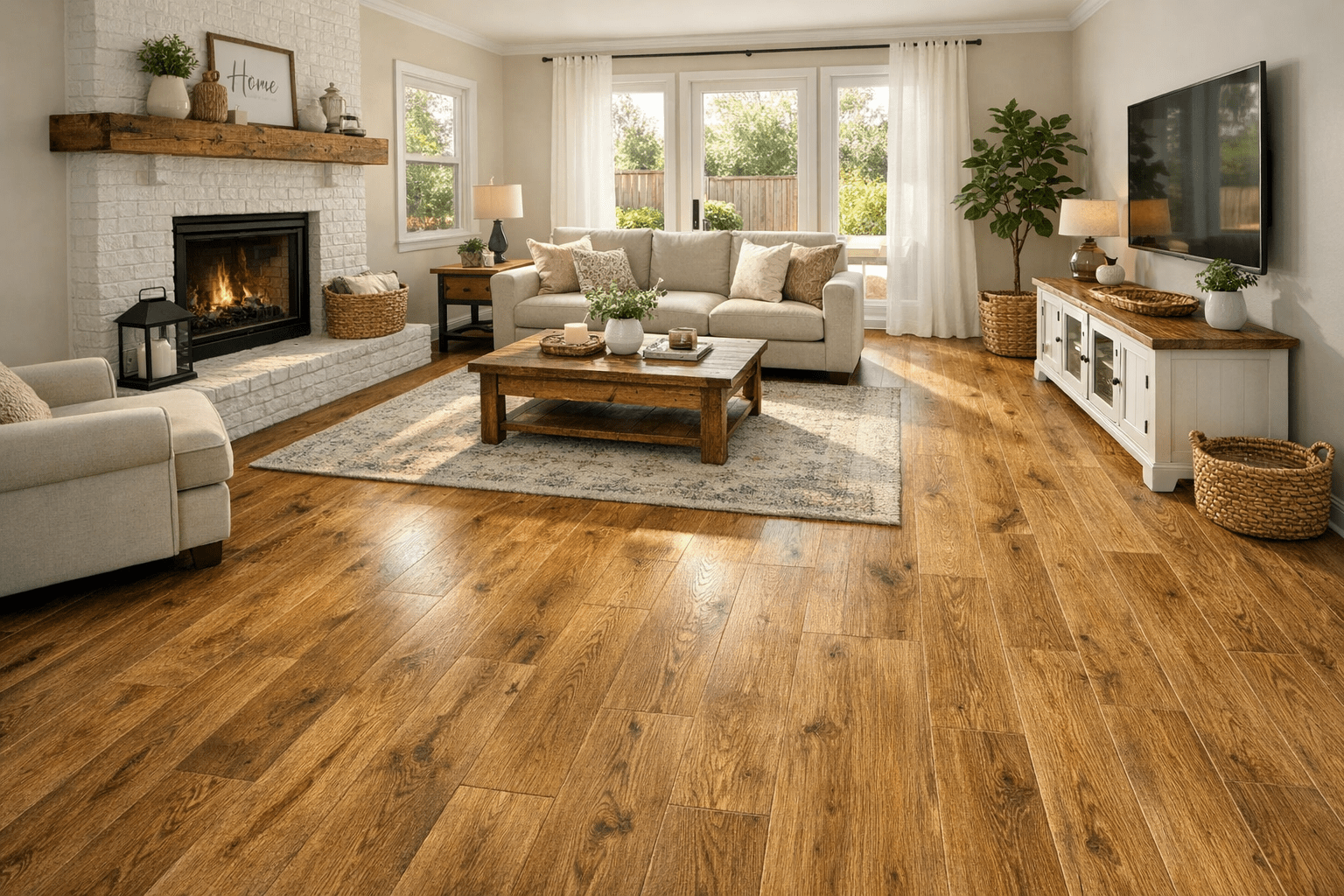
Laminate has come a long way from the “flat,” plastic-looking products many people remember. Today’s collections can mimic oak, hickory, maple, and even more rustic reclaimed styles with convincing grain patterning, deeper embossing, and wider plank formats. The result is a floor that reads as wood at a glance, holds up well to day-to-day living, and typically costs less than solid hardwood.
- Hardwood visuals at a realistic budget: Wood-look laminate delivers grain variation, knots, and plank patterns at a price that fits many Denton remodel budgets.
- Practical durability: Many laminate options resist scratches and everyday wear, making them a practical pick for busy households with kids, pets, and frequent guests.
- Faster, cleaner installs: Modern locking systems allow for faster installations than some traditional options, often minimizing disruption in occupied homes.
- Design flexibility: Laminate is available in a wide range of colors and plank sizes, so you can match classic Texas style, modern interiors, or rustic aesthetics.
- Balanced comfort & maintenance: For many rooms, laminate offers a strong blend of durability, comfort underfoot, and easy cleaning compared to softer surfaces.
Key takeaway
If you want a wood-forward look but don’t want to worry about frequent refinishing, laminate can be a “set it and live on it” choice—provided you select the right specs for your household and install it on a properly prepared subfloor.
In Denton specifically, laminate shines in living areas, bedrooms, hallways, and offices—places where you want warmth and style without the upkeep demands of a natural wood surface. The biggest “make-or-break” factor is matching the product to the room conditions (traffic, moisture risk, and subfloor type).
Choosing the Right Laminate: Wear Layer, Water Resistance, and AC Ratings
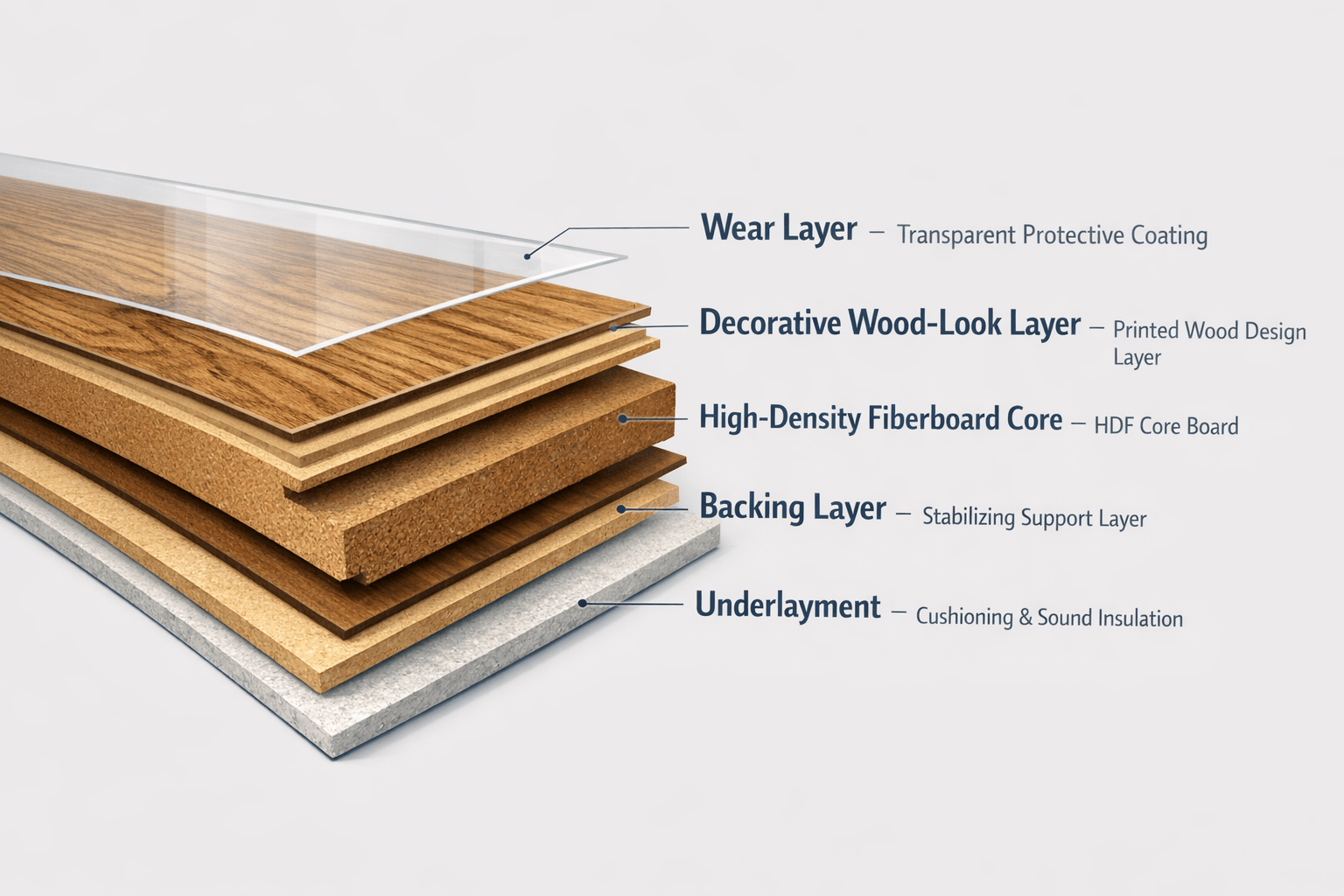
Laminate is a layered product. That’s not a drawback—it’s how laminate delivers durability and design at scale. But it does mean you’ll want to compare specifications rather than choosing purely by color. Two floors that look similar in the showroom can perform very differently once you put them in a real Denton home with pets, parties, and everyday mess.
1) Understand the layers (and why the “top” matters most)
Most laminate planks include a protective top surface, a decorative image layer (the “wood look”), a high-density core, and a stabilizing back layer. The protective surface is your first line of defense against abrasion and micro-scratches from grit tracked in at the door. If you expect heavy use, prioritize a thicker, higher-quality wear layer because it helps protect the print layer and preserves the finish longer.
2) Water-resistant vs. waterproof: what to look for in Denton homes
A common misconception is that “water-resistant” means you can treat laminate like tile. In reality, laminate performance around moisture depends on the locking system, the core material, and the seam treatment. For kitchens, entryways, and areas prone to spills, look for water-resistant or waterproof laminate systems designed to reduce swelling at seams.
Ask your installer how the product handles typical real-life scenarios: a melted ice cube by the fridge, a dog water bowl splash, or wet shoes at the door. In practical terms, the best systems buy you time—minutes to hours—so you can wipe up before water migrates into seams and causes edge swelling.
In many Denton homes, the “moisture risk” isn’t floods—it’s everyday water exposure: entryways, kitchen cooking spills, pet bowls, and seasonal humidity swings. Choosing a water-resistant or waterproof-rated laminate can reduce stress, but good installation and fast cleanup still matter.
3) AC ratings: your quick durability shorthand
AC ratings (Abrasion Criteria) are a standardized way to estimate how well a laminate surface tolerates wear. Higher ratings generally mean the surface is built to withstand more abrasion. While the best rating depends on the product line, it’s a useful “sanity check” when you’re choosing between options.
- Moderate household traffic: Many families do fine with mid-range ratings for bedrooms and living rooms.
- Busy homes: If you have kids, pets, or frequent gatherings, step up to a higher AC rating for hallways, living areas, and open-plan layouts.
- Home offices: Rolling chairs and desk movement can be hard on floors—consider chair mats and higher durability surfaces.
A helpful rule of thumb: if you’re unsure, choose the more durable option for the highest-traffic rooms. Upgrading the rating in those spaces can extend the “looks new” stage by years.
4) Match the underlayment to your subfloor (slab vs. raised foundation)
Underlayment affects both performance and comfort. On concrete slabs (common in North Texas), the right underlayment and moisture protection can reduce noise, improve feel underfoot, and help manage vapor transmission. Coordinate underlayment and moisture protection with your subfloor type so your laminate stays stable and quiet over time.
Pro tip
If you’re installing over concrete, don’t treat moisture protection as optional. A small investment in the correct barrier system can prevent issues like seam swelling, soft spots, or premature plank failure—problems that are far more expensive to fix after the fact.
Laminate vs. Hardwood vs. Vinyl: Which Fits Your Space?
Homeowners often compare three “wood look” paths: laminate, hardwood, and luxury vinyl. Each can be the best choice depending on the room. The goal is to match expectations (appearance, feel, maintenance) with the realities of your space (moisture, traffic, subfloor condition).
How they compare at a glance
| Flooring type | Where it shines | Watch-outs |
|---|---|---|
| Laminate | Living rooms, bedrooms, hallways, offices; wood realism and scratch resistance at a value. | Not all products are moisture-tolerant; seam protection and installation quality matter. |
| Hardwood | Timeless look, can be refinished, adds natural character; great for long-term ownership. | More sensitive to moisture and denting; maintenance and refinishing costs over time. |
| Luxury vinyl | Kitchens, bathrooms, mudrooms; strong water protection; easy maintenance. | Can feel softer; some looks are less “wood authentic” depending on the collection. |
- Laminate is often chosen when you want a wood appearance with strong dent and scratch resistance at a lower cost than solid hardwood.
- Hardwood can be refinished and offers timeless value, but it typically requires more maintenance attention and can be more sensitive to moisture and denting.
- Luxury vinyl can excel in wet areas and offers strong water protection, while laminate often provides a more rigid, wood-like feel and visual realism in many collections.
- Your best choice depends on where the flooring will go, how much moisture the room sees, and how you want the floor to feel underfoot day to day.
- A local Denton flooring pro can help you compare samples in your lighting and confirm the right product for your subfloor and traffic level.
One detail many shoppers overlook: feel underfoot. Laminate typically has a more rigid, “board-like” feel compared to vinyl. If that matters to you—especially in open living areas—laminate can be a strong middle ground between hardwood’s structure and vinyl’s softness.
If you’re torn, consider mixing materials by room: vinyl in wet zones (like bathrooms) and laminate in living areas for a wood-forward look and a sturdier feel. A consistent color family can keep the home cohesive.
What Laminate Flooring Costs in Denton, TX (And What Impacts the Price)
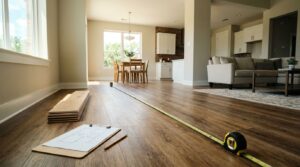
Laminate pricing isn’t just about the plank you pick—it’s the total system: subfloor prep, underlayment, trims, transitions, and labor details that create a finished, durable result. In Denton, two homes with the same square footage can have very different install totals based on layout complexity and subfloor condition.
The biggest cost drivers (and how to control them)
- Product quality & thickness: Plank thickness and water-resistant construction can move laminate pricing up or down. Better cores and locking systems often cost more but help prevent issues.
- Room layout & obstacles: Installation costs vary based on room shape, islands, built-ins, furniture moving, stairs, and trimming around doorways and cabinets.
- Subfloor prep: Leveling and repairs can affect the total—especially if there are dips, high spots, squeaks, or moisture concerns that must be addressed first.
- Accessories: Underlayment, transitions, reducers, stair noses, and new baseboards or quarter round can influence the final investment as much as the planks themselves.
- Scope clarity: A no-cost consultation helps avoid surprise add-ons by confirming measurements, conditions, and your preferred finish level.
Budget reality check
The “best deal” is rarely the cheapest plank. In many projects, spending a bit more on a stronger core, better locking system, and the correct moisture protection helps you avoid the most common laminate problems: swollen seams, shifting planks, and hollow-sounding floors.
What you can do before getting a quote
- List the rooms you want to include and note any transitions (tile-to-laminate, carpet-to-laminate).
- Identify moisture-prone areas (entry, kitchen, laundry) so your product selection is appropriate.
- Decide your trim plan: reuse baseboards vs. new baseboards vs. quarter round.
- Consider schedule constraints: if you need fast turnaround, mention it early—labor planning affects cost and availability.
- Think about furniture moving and whether you want the crew to handle it.
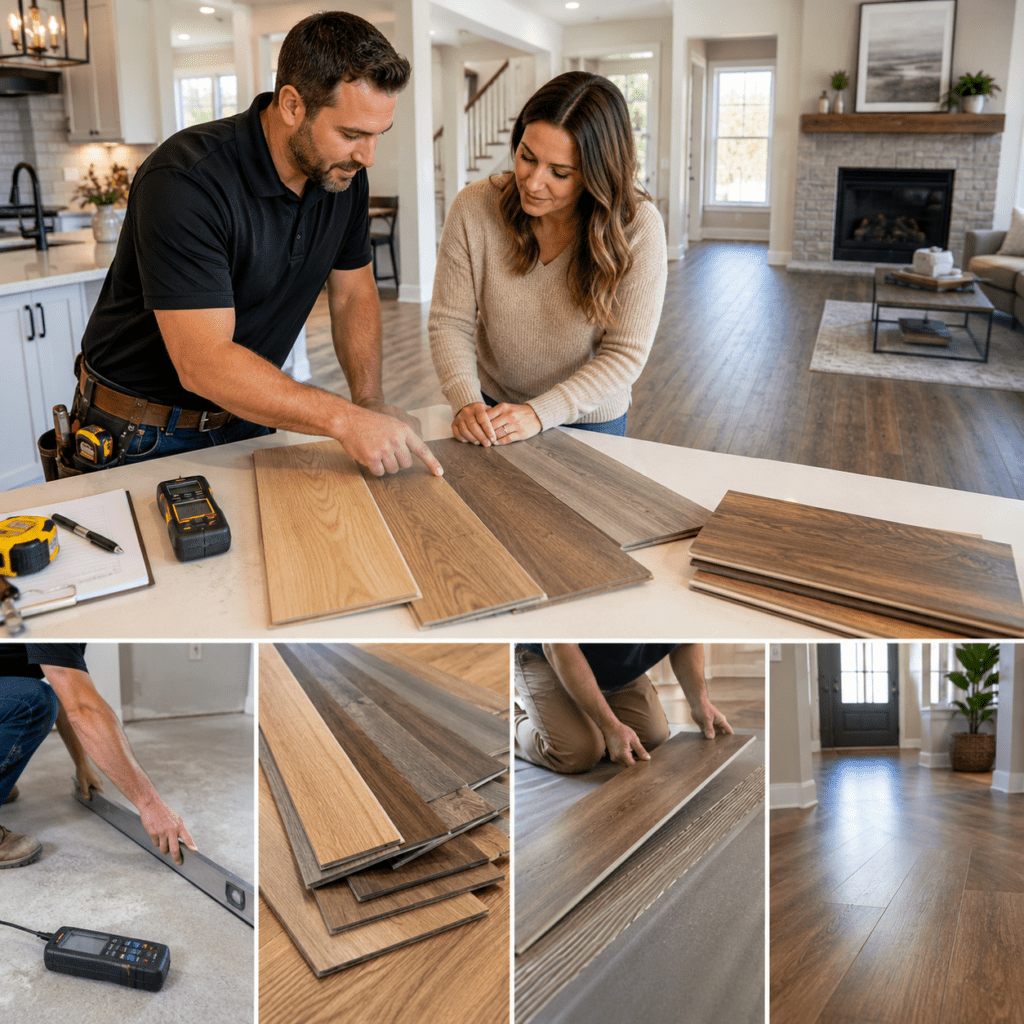
If you’d like help scoping your project accurately, JBN Flooring can walk the space, evaluate the subfloor, and provide a clear plan. Use Get Your No Cost Consultation to start.
Installation Checklist: Prep, Acclimation, Underlayment, and Finishing Details
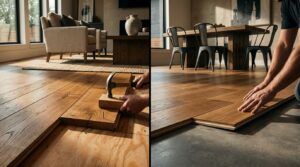
Laminate’s reputation lives and dies by installation quality. Even an excellent product can fail early if it’s installed over an uneven surface, without the proper expansion gaps, or without moisture protection where needed. The checklist below reflects what experienced installers focus on to deliver a floor that stays tight, quiet, and attractive.
Step 1: Confirm the subfloor is clean, dry, and level
The most common sources of problems—clicking, movement, gaps, and premature wear—often start below the planks. Confirm the subfloor is clean, dry, and level before installation, because unevenness can create flex that stresses the locking system over time.
- Clean: remove debris and old adhesive residue so planks sit flat.
- Dry: confirm moisture conditions are within manufacturer requirements.
- Level: correct dips/high spots; floating floors don’t “self-level.”
Step 2: Follow acclimation and storage guidance
Follow manufacturer guidance on acclimation and storage so the planks remain stable and perform as intended once installed. Acclimation needs vary by product; the point is to keep materials in appropriate conditions before installation so they aren’t shocked by temperature or humidity swings.
Step 3: Choose the correct underlayment and moisture system
Choose the correct underlayment for sound reduction and moisture control, especially on concrete slabs common in North Texas homes. Some laminates include an attached pad; others require a separate underlayment. The right choice depends on the plank specification and your subfloor.
Step 4: Plan expansion gaps and transitions
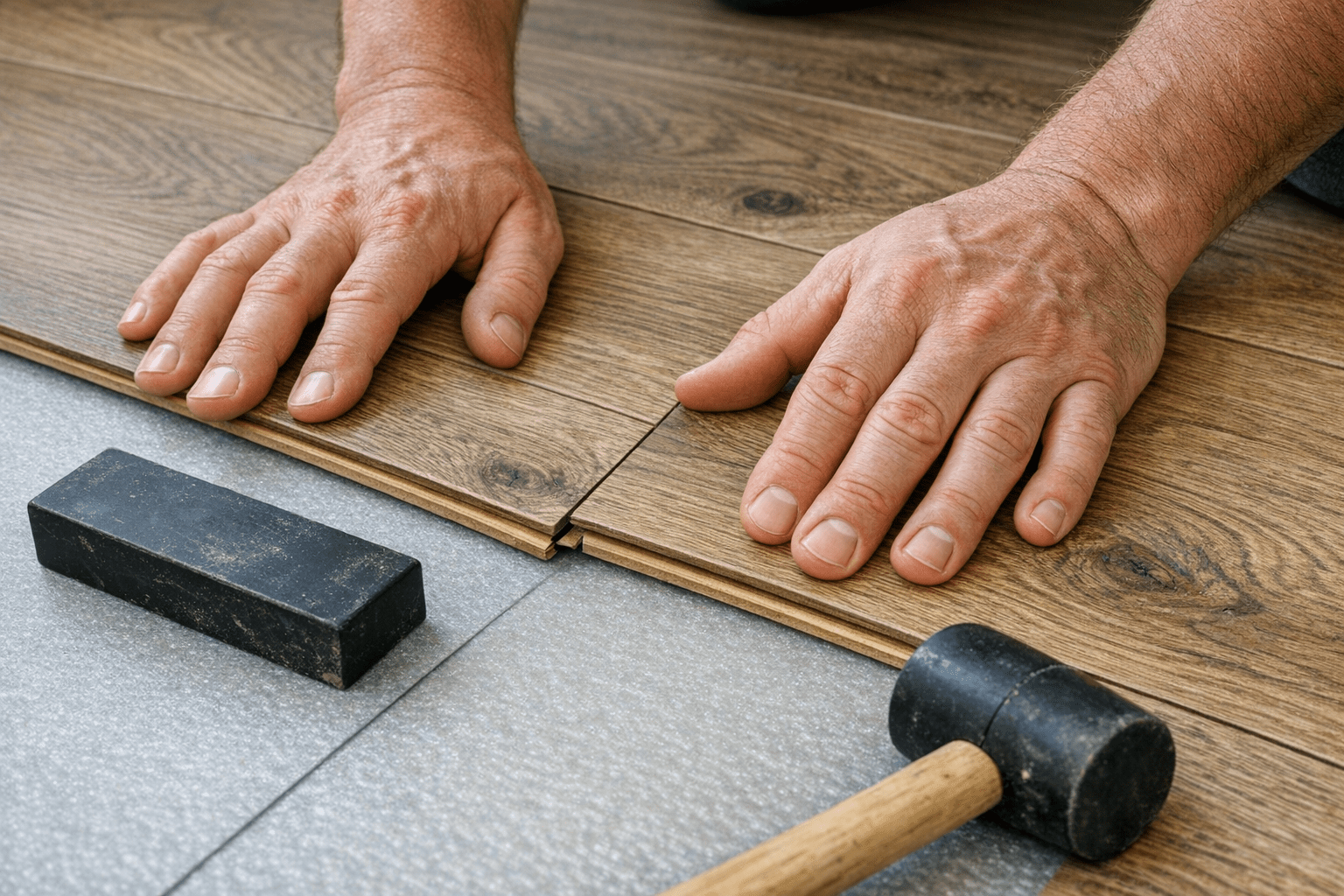
Laminate is a floating floor system and needs room to expand and contract. Plan expansion gaps and transitions carefully to prevent buckling and to create a polished look at doorways and adjoining rooms.
- Expansion gaps: required around perimeter walls, cabinets (where applicable), and fixed vertical surfaces.
- Doorways: transitions should be selected and placed cleanly for both function and aesthetics.
- Large continuous runs: some manufacturers require breaks/transition points after certain distances—confirm specs.
Step 5: Finish with trims that protect edges and look intentional
Finish with properly sized trims and clean transitions that protect edges and make the floor look seamless. The finishing details are what separate “installed” from “professionally finished.” Door jamb undercuts, straight quarter round lines, and clean reducer placement make a noticeable difference.
Installation standard to aim for
A great laminate install feels quiet and solid. If you walk across the floor and it sounds hollow, clicks, or flexes, that’s a sign something below (flatness, underlayment, locking engagement) needs attention.
Care and Maintenance: Keep Your Laminate Looking New
One reason laminate is popular is that it doesn’t demand complicated maintenance. The trade-off is that it’s best cared for with consistent, gentle habits—especially keeping grit and moisture under control. Think of it like maintaining a car’s paint: small preventative steps preserve the finish.
Daily and weekly habits that actually matter
- Protect furniture contact points: Use felt pads on furniture and consider rugs in high-traffic zones to reduce surface scuffs and protect the finish.
- Remove grit frequently: Sweep or vacuum regularly to remove particles that can act like sandpaper over time.
- Use the right cleaner: Clean with manufacturer-approved laminate cleaners and avoid over-wetting the floor to protect seams and core stability.
- Handle spills immediately: Wipe spills promptly and use entry mats to reduce moisture and debris tracked in from outdoors.
- Support seasonal stability: Maintain indoor humidity at comfortable levels when possible to help the floor stay consistent across seasonal changes.
Common mistakes to avoid
Most laminate issues aren’t caused by “bad products”—they’re caused by incompatible habits. Avoid steam mops unless your specific manufacturer explicitly approves them. Don’t flood-mop. And don’t use abrasive scrubbers that can dull the surface over time.
If you have pets: keep nails trimmed and place a washable mat under water bowls. This is one of the simplest ways to reduce micro-scratches and prevent repeated moisture exposure at seams.
Conclusion: A Smart Path to a Wood Look in Denton
Wood-look laminate can be an excellent choice for Denton homeowners who want the warmth of wood visuals without hardwood’s price tag or refinishing cycle. The best results come from focusing on the specs that affect real performance: a durable surface, a reliable locking system, appropriate water resistance for the room, and the correct underlayment and moisture protection for your subfloor.
If you remember just a few points, remember these:
- Choose laminate based on traffic level and moisture risk, not just color.
- Confirm the right AC rating and a quality build for busy households.
- Prioritize subfloor prep and proper expansion gaps for long-term stability.
- Maintain it with dry cleaning habits, fast spill cleanup, and manufacturer-approved products.
Ready to Upgrade Your Floors in Denton, TX?
JBN Flooring can help you select the right wood-look laminate and install it with precision. Call today at 469-340-0837 or request your no-cost consultation online.
Want the fastest next step? Gather a few photos of the rooms and any transitions (tile edges, stairs, doorways), then reach out—those details help your consultation go from “rough idea” to an accurate, tailored plan.