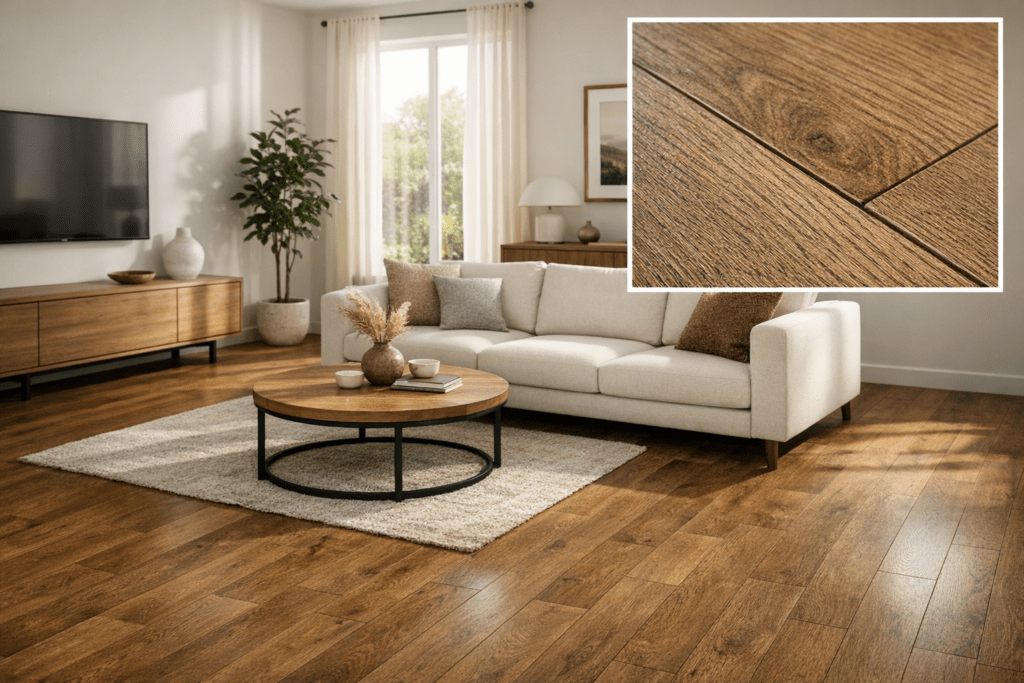
Wood Laminate Flooring: A Complete Guide to Styles, Costs, Pros & Installation
From realistic wood visuals to durability ratings and installation methods, this guide breaks down what matters so you can buy laminate with confidence.
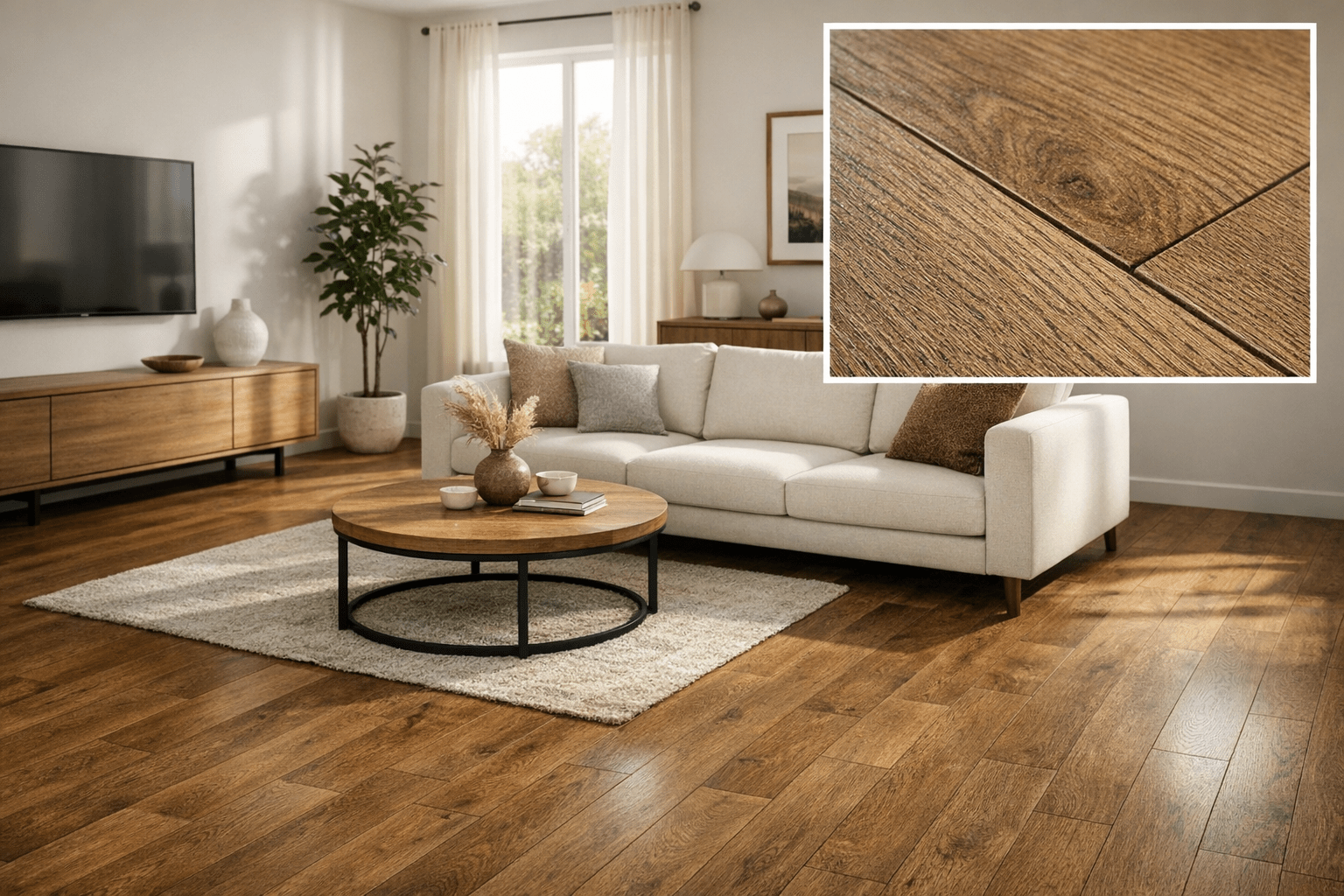
Introduction: Choosing wood laminate flooring
Wood laminate flooring is a budget-friendly way to get a hardwood-like look with strong scratch resistance and a fast, click-lock installation. If you pick the right AC rating, thickness, and water resistance level—and install it on a properly prepared subfloor—laminate can perform beautifully in living rooms, hallways, bedrooms, and many kitchens.
In this wood laminate flooring guide, you’ll learn how laminate is constructed, what “AC3–AC5” really means, what drives laminate flooring cost per square foot installed, and how to avoid the handful of installation details that cause most failures (especially on concrete). If you’re comparing options, you can also explore JBN’s product-focused pages for laminate flooring, hardwood flooring, and vinyl flooring to see how they stack up for your home.
Quick takeaway:
If you want the best laminate flooring that looks like hardwood, prioritize realistic visuals (EIR texture + low pattern repetition) and durability (AC4/AC5) over chasing the lowest price tag.
What Wood Laminate Flooring Is (and How It Differs From Hardwood and Vinyl)
Wood laminate flooring is a multi-layer plank that uses a high-resolution “wood image” layer protected by a durable wear layer, bonded over a dense core. It’s designed to mimic real wood visuals at a lower cost while offering dependable everyday durability.
How laminate is built (in plain English)
Most laminate planks include:
- Wear layer: The tough, transparent top that resists abrasion and many stains.
- Decor layer: The printed wood visual (oak, hickory, walnut looks, etc.).
- Core: A dense fiberboard (often HDF) that provides stability and click-lock strength.
- Backing layer: Helps balance the plank and reduce moisture movement from below.
Laminate vs hardwood vs vinyl (quick comparison)
Each category shines in different situations. Here’s the clearest way to compare them if you’re making a decision quickly.
| Feature | Laminate (wood-look) | Hardwood | Luxury Vinyl Plank (LVP) |
|---|---|---|---|
| Visual realism | Excellent when EIR + good print; very wood-like | Unmatched (it’s real wood) | Very good; can look slightly “softer” than laminate |
| Refinishing | No (can’t be sanded like wood) | Yes (solid; engineered depends on veneer) | No |
| Water performance | Water-resistant options exist; standing water is still risky | Moisture-sensitive | Often best for waterproof needs |
| Feel underfoot | Stiffer, more “board-like” | Warm and natural | Slightly softer; depends on underlayment |
| Typical install | Click-lock floating | Nail/glue/float (depends) | Click-lock floating or glue-down |
Planning a project?
If you’re weighing scope, timelines, and subfloor prep, JBN’s floor installation services page lays out what a professional install typically includes, and the floor repair page covers options when you’re dealing with damaged areas or uneven subfloors.
Styles and Visual Details That Make Laminate Look Like Real Wood
The “tell” with laminate isn’t that it’s laminate—it’s usually the pattern repetition, shine level, or edges that look too perfect. The best wood-look laminate choices focus on natural variation, realistic texture, and board proportions that resemble real hardwood planks.
What to look for in the best laminate flooring that looks like hardwood
Prioritize these realism drivers when you’re comparing samples:
- Longer/wider planks: Fewer seams can make rooms feel more like premium hardwood installs.
- Low-repeat prints: More unique boards per box reduces “copy/paste” patterns.
- Edge profile: Micro-bevels often look more authentic than perfectly square edges.
- Matte or low-sheen finishes: Hide dust and light scratching better than glossy surfaces.
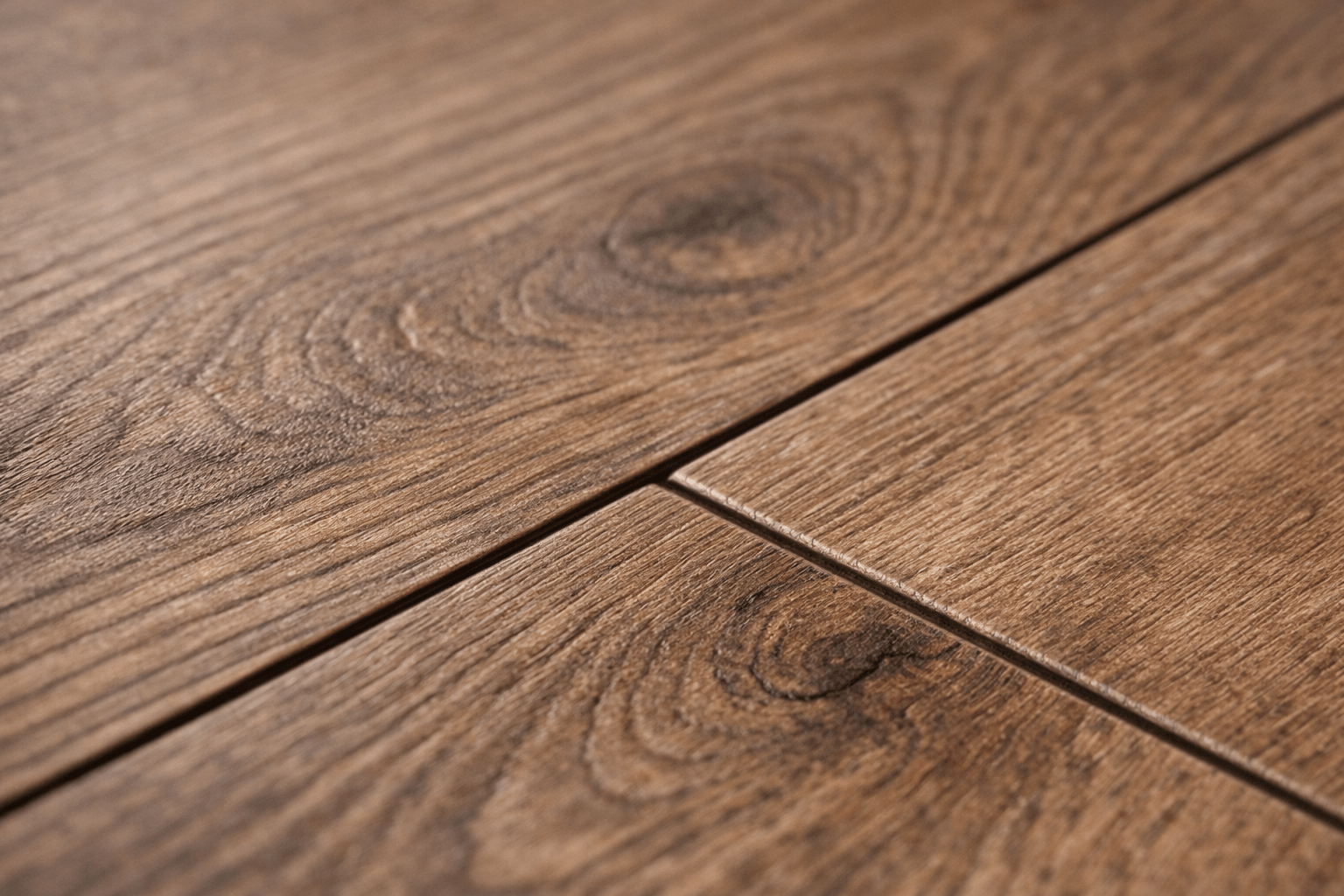
Embossed-in-register (EIR): why it matters
EIR means the raised texture aligns with the printed grain pattern. When sunlight hits the floor, the grain “catches” the light in the same places your eye expects—one of the biggest upgrades you can buy for realism.
Color tone and undertone: avoid surprise shifts
Laminate can swing warmer or cooler depending on lighting temperature (daylight vs warm LEDs). Bring samples home and check them:
- Next to cabinets and paint (undertones clash more than people expect)
- In morning and evening light
- With lights on and off
“Most ‘wrong floor’ regrets are color regrets—not performance regrets. Always sample in your actual lighting.”
— Flooring installer best practice, based on real-world site checks
Considering other wood visuals?
If you love authentic grain but want better stability than solid wood, compare engineered hardwood flooring alongside laminate. If water is the top concern, look at waterproof flooring options for wet-prone homes.
Performance Specs to Know: AC Rating, Thickness, Wear Layer, and Core
Laminate performance comes down to abrasion testing, core density, and how well the locking system stays tight over time. The specs below help you separate “looks good in the store” from “still looks good after years of living.”
AC rating laminate flooring meaning (AC1–AC5)
AC stands for Abrasion Criteria, a standardized way to classify wear resistance and durability testing. While brands may vary in how they present it, AC ratings are a dependable shorthand when you’re deciding for your traffic level.
| AC Rating | Typical use | Good fit for |
|---|---|---|
| AC3 | Residential heavy | Most homes with normal wear; bedrooms, living rooms |
| AC4 | Commercial moderate / Residential extra heavy | Busy households, pets, kids, open layouts |
| AC5 | Commercial heavy | Maximum durability needs; light retail, high-traffic areas |
Rule of thumb:
If you have dogs, a large family, or a lot of daily foot traffic, start your shortlist at AC4. It’s often the sweet spot between price and long-term appearance.
Thickness: what it affects (and what it doesn’t)
Laminate thickness is commonly 7–12 mm. Thicker planks can feel more solid and help with minor subfloor imperfections, but thickness doesn’t automatically equal “better” if the floor isn’t flat or the lock system is weak.
- Helps: stiffness, sound, underfoot feel, some tolerance to tiny variations
- Doesn’t fix: poor leveling, moisture issues, missing expansion gaps
Core density and locking system: the quiet deal-breakers
A denser core typically holds click-lock edges more securely and reduces the chance of edge damage. In real homes, seams fail more often from subfloor flatness issues and moisture than from “wear layer” problems.
Certifications and indoor air quality
For bedrooms, nurseries, and tightly sealed homes, look for low-VOC/indoor air quality certifications disclosed by the manufacturer. It’s a practical health and comfort consideration—not just a marketing badge.
Common “busy home” target rating
Often chosen for a more premium feel
Most important predictor of seam performance
Water Resistance and Where Laminate Works Best
Water-resistant laminate has improved a lot, but it still performs best when you treat water as an “incident,” not a normal condition. Fast cleanup, stable humidity, and smart entryway protection are what make laminate last.
Water-resistant vs waterproof (why the words matter)
Water-resistant laminate is designed to slow moisture from getting into seams and edges. It’s not the same as “waterproof for unlimited time.” If water sits, it can migrate into joints and swell edges—especially if the slab or underlayment isn’t properly managed.
Best rooms for laminate
Laminate is a strong fit for:
- Living rooms, bedrooms, offices
- Hallways and stairs (with the right nosing and transitions)
- Dining rooms and many kitchens (with mats near sinks and quick spill cleanup)
Higher-risk rooms (use caution)
Bathrooms and laundry rooms are higher-risk unless the product is explicitly rated for wet areas and installed exactly to the manufacturer’s requirements. When in doubt, compare against waterproof flooring choices designed for frequent moisture exposure.
Basements and concrete slabs
Basements can work well with laminate if you manage moisture correctly. The critical pieces are a vapor strategy, appropriate underlayment, and verifying the slab is dry enough for the product warranty.
Cost Breakdown: Materials, Installation, and Long-Term Value
Laminate flooring cost per square foot installed varies based on the product quality and what your subfloor needs. In practice, leveling, transitions, stairs, and trim details are where budgets change fast.
What drives material price
Material cost commonly increases with:
- More realistic visuals (EIR texture, better print variety)
- Higher durability classifications (AC4–AC5)
- Water-resistant locking systems and edge treatments
- Thicker, denser cores and better warranties
What drives installation price
Installation costs depend on jobsite realities more than the plank itself:
- Subfloor prep: leveling, patching, repairing squeaks, moisture mitigation steps
- Trim work: base shoe, door jamb undercuts, toe-kicks
- Complexity: multiple rooms, tight hallways, angled walls, islands, closets
- Stairs: stair parts, nosings, and labor add up quickly
Budget tip:
Plan for “extras” from the start: underlayment, moisture barrier, transitions, and 1 extra box for attic storage. Those items are common surprise add-ons when homeowners shop by material price alone.
Long-term value: where laminate shines
Laminate can deliver excellent value when you want a hardwood look with strong day-to-day scratch resistance—especially in active households or rental properties where replacing a plank system later is preferable to refinishing wood.
Need help choosing the right system?
Review JBN’s professional floor installation approach and compare materials on the JBN Flooring home page to narrow your shortlist before a consultation.
Installation Basics: Floating Floors, Underlayment, and Common Mistakes
Most laminate installs as a floating click-lock floor. That means the planks aren’t fastened to the subfloor—they expand and contract as a single surface. A clean, flat subfloor and correct expansion gaps are non-negotiable.
Floating click-lock basics
A correct laminate install typically includes:
- Flatness checks and prep (patch/level as needed)
- Correct underlayment (and vapor layer on concrete when required)
- Perimeter expansion gaps at walls, columns, and fixed objects
- Transitions or breaks in large runs per manufacturer guidance
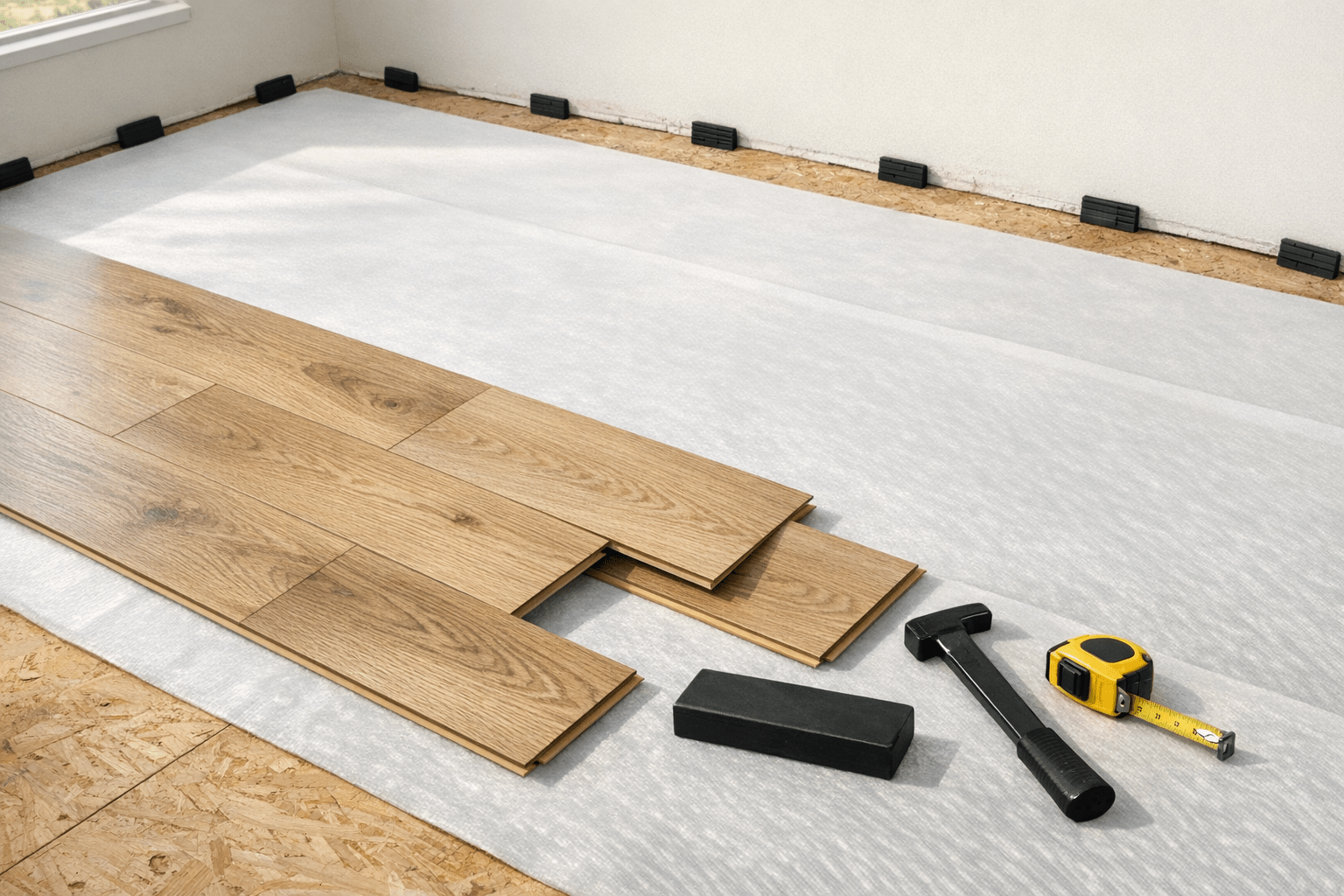
Underlayment: comfort, sound, and moisture control
Underlayment isn’t one-size-fits-all. Concrete generally needs a vapor strategy; wood subfloors often focus on acoustics and minor cushioning. Always match underlayment to the product’s warranty requirements.
Common mistakes that cause gapping, buckling, or noisy floors
Most failures come from a handful of preventable errors:
- Skipping leveling: high/low spots stress the click-lock edges.
- Pinching the floor: heavy cabinetry or tight trim removes expansion space.
- No expansion breaks: large continuous runs can buckle in humidity swings.
- Wrong moisture approach on slabs: leads to edge swelling and seam issues.
Installer mindset:
Great laminate installs are “boring” because the prep is meticulous. The floor’s beauty comes from the details you don’t see.
Care, Cleaning, and Scratch Prevention
Laminate is easy to live with when you keep grit off the surface and moisture out of the seams. Your goal is to protect the wear layer and prevent water from lingering where boards lock together.
Weekly routine that works
Do this consistently and your floor will stay newer-looking longer:
- Dry dusting/vacuuming: use a hard-floor setting to remove grit (the #1 scratch culprit).
- Damp microfiber mop: lightly damp, not wet; use a laminate-approved cleaner.
- Spot cleanup: wipe spills promptly, especially near pet bowls and sinks.
What to avoid
These are common causes of haze, seam stress, and swelling:
- Steam mops (heat + moisture can stress seams)
- Soaking water or “bucket mopping”
- Wax, polish, or oil soap products not approved for laminate
Scratch prevention in real homes
Small habits make a big difference:
- Felt pads on furniture and refreshed periodically
- Entry mats to trap grit
- Trim pet nails to reduce micro-scratches
- Keep spare boards for quick, matching repairs later
Benefits of Wood Laminate Flooring
Laminate is popular because it balances aesthetics, durability, and installation speed. In the right rooms, it offers a high-end look without the higher material and refinishing costs of wood.
- Convincing wood visuals: especially with EIR texture and modern print tech
- Scratch and scuff resistance: strong choice for busy households
- Faster installation: click-lock floating systems reduce labor time
- Cost-effective upgrades: ideal for refresh projects and rentals
- Comfortable underfoot: with the right underlayment and thickness
Common Mistakes to Avoid
If you avoid these, you’ll avoid most laminate “horror stories.”
- Buying by color only: check AC rating, core quality, and water resistance too.
- Ignoring lighting tests: undertones can shift dramatically in your home.
- Installing over an uneven subfloor: click systems don’t like movement.
- Skipping a vapor strategy on concrete: moisture issues can show up months later.
- Forgetting expansion gaps: “tight to the wall” can lead to buckling.
- Using the wrong cleaner: leaves residue or stresses seams.
Not sure what you have now?
If you’re replacing an older floor and want help diagnosing issues like swelling, hollow spots, or shifting, review options on the floor repair page before you choose your next material.
Cost Considerations (Quick Estimator for Planning)
The easiest way to estimate a laminate project is to break it into materials, labor, and prep. Exact pricing varies by region, product, and home layout, but the structure below helps you plan realistically.
Project line items to include
- Laminate planks: buy enough for the square footage plus waste (often 7–12% depending on layout)
- Underlayment: chosen for acoustics and/or moisture requirements
- Moisture barrier: commonly required on slabs or below-grade spaces
- Transitions & nosings: doorways, room changes, stairs
- Trim: base shoe/quarter round, new thresholds if needed
- Subfloor prep: leveling compound, patching, repairs
Value comparison: laminate vs other popular choices
If you’re still deciding, this quick table helps align expectations.
| Goal | Usually best choice | Why |
|---|---|---|
| Hardwood look on a budget | Laminate | High realism for lower cost; great scratch resistance |
| True natural wood + refinish potential | Hardwood | Authentic material; can be refinished (depending on type) |
| Frequent moisture exposure | Vinyl / Waterproof flooring | Better wet-area tolerance for spills and standing water |
Step-by-Step: How to Install Wood Laminate Flooring Over Concrete
If your search is specifically how to install wood laminate flooring over concrete, the key is moisture management and flatness. Concrete slabs can look dry and still transmit moisture, so follow manufacturer requirements and verify conditions before you lock in planks.
1) Verify the slab is suitable
Confirm you’re within manufacturer tolerances for:
- Moisture: follow the product’s test method and limits
- Flatness: check with a long straightedge
- Cleanliness: remove debris that can telegraph through or create movement
2) Choose the right vapor strategy
Many laminate systems require a vapor barrier over concrete, even for “water-resistant” planks. Use the underlayment/barrier type specified by the manufacturer so you don’t void the warranty.
3) Prep the floor for flatness
Patch low spots and address high spots. This step protects the click-lock joints from deflection and helps prevent seam separation and noise.
4) Plan layout and expansion gaps
Dry lay or plan your first rows to avoid thin slivers at walls. Maintain expansion gaps around the perimeter and fixed vertical objects.
5) Install planks and protect transitions
Lock boards according to the system (angle/angle or fold-down). Use transitions at doorways or large runs where required.
6) Finish trim without pinching the floor
Base shoe should cover the expansion gap without fastening into the laminate. The floor needs room to move seasonally.
Want a pro to handle slab prep and warranty-critical details?
Start with JBN’s contact page to request a no-cost consultation and get guidance tailored to your home’s conditions.
Pros and Cons of Wood Laminate Flooring
Laminate is an excellent choice for many homes, but it’s not the best fit for every room or lifestyle. Here’s the clear tradeoff list.
Pros
- Great hardwood-style visuals at a lower cost
- Strong abrasion and scratch resistance (especially AC4/AC5)
- Fast installation with click-lock floating systems
- Easy day-to-day maintenance
Cons
- Not designed to be sanded/refinished like hardwood
- Standing water can damage seams/edges
- Subfloor flatness is critical; prep can add cost
- Very low-quality laminates can sound hollow and show repetition
Best For: Who Wood Laminate Flooring Is Ideal For
Laminate is a smart pick when you want a clean, updated wood look and need the floor to stand up to daily life without demanding high-maintenance upkeep.
- Busy households: kids, pets, frequent entertaining
- Open layouts: where consistent wood visuals unify multiple rooms
- Budget-conscious remodels: you want a premium look without premium wood cost
- Rental properties: durable surface, practical replacement options
- DIY-friendly projects: when subfloor conditions and details are manageable
Who Should Avoid It (or Choose a Different Product)
You may be happier with another flooring type if your space regularly sees standing water or if you want the ability to refinish down the road.
- Wet-room households: bathrooms, laundry rooms, or entryways with frequent soaking events
- Flood-risk areas: where water events are likely or recurring
- Refinish-focused buyers: if “sand and restain later” is a must-have, look at wood
- Severely uneven substrates: where prep would be extensive—sometimes another system is more forgiving
Alternative path:
If moisture is your deciding factor, compare laminate to luxury vinyl plank and waterproof flooring to match your risk level.
Expert Recommendations (What We’d Do in a Real Home)
If you want laminate that looks great now and stays tight at the seams, focus on performance specs and installation fundamentals—not marketing buzzwords.
Recommended buying checklist
Before you buy, confirm:
- AC rating: AC4 for most busy homes; AC5 for maximum wear demands
- Visual realism: EIR texture + low-repeat visuals + matte finish
- Core quality: dense core and reliable locking system
- Room suitability: realistic expectations for water exposure
- Warranty compliance: underlayment and moisture steps match requirements
Installation guidance that prevents 80% of issues
Based on common field outcomes, the best “insurance” is:
- Don’t skip leveling—flatness matters more than thickness
- Use the correct vapor strategy on concrete
- Respect expansion gaps and transition requirements
- Keep indoor humidity stable when possible
Trust & credentials you can verify:
When choosing a contractor, it’s smart to review third-party profiles and memberships. Here are reputable sources for The JBN Group:
Frequently Asked Questions
These are the most common questions homeowners ask when comparing laminate, hardwood visuals, and installation requirements.
What is wood laminate flooring made of?
It’s a layered plank with a durable wear layer on top, a high-resolution printed wood image (decor layer), a dense fiberboard core for stability and click-lock strength, and a backing layer to balance the board.
What does the AC rating mean on laminate flooring?
The AC rating (Abrasion Criteria) is a standardized durability classification based on wear and performance testing. For many homes, AC3 works; for busy homes with pets/kids, AC4 is a safer target; AC5 is for heavy-use conditions.
What thickness of laminate flooring is best?
Many homeowners prefer 10–12 mm for a more solid feel and improved acoustics, but thickness doesn’t compensate for an uneven subfloor. A well-prepped, flat surface matters most.
Is laminate flooring waterproof?
Some laminates are water-resistant, meaning they slow moisture intrusion, but most aren’t “waterproof for unlimited standing water.” If your room regularly sees water, compare against waterproof flooring.
Can laminate be installed over concrete?
Yes—if the slab meets moisture and flatness requirements and you use the correct vapor barrier/underlayment specified by the manufacturer. This is central to how to install wood laminate flooring over concrete successfully.
Can you install laminate in a kitchen?
Often yes. Kitchens can be a good laminate room when spills are cleaned quickly and mats are used near sinks/dishwashers. Avoid standing water and follow the product’s room suitability guidance.
How long does laminate flooring last?
Lifespan depends on AC rating, installation quality, and household wear. High-quality AC4/AC5 laminate in appropriate rooms can stay attractive for many years when seams are protected from moisture and grit is managed.
Can laminate flooring be repaired if a plank is damaged?
Yes. Floating click-lock systems can sometimes allow plank replacement, though it depends on where the damaged board sits. Keeping spare boards from the same run makes a big difference for a seamless match.
What’s the easiest way to get an accurate installed cost?
Measure the space, note transitions/stairs, and assess subfloor needs. The most accurate number comes from an on-site evaluation because leveling and trim scope vary widely. If you want help, request a consult through the JBN Flooring contact page.
Should I choose laminate or engineered hardwood?
Choose laminate for cost-effective realism and scratch resistance. Choose engineered hardwood when you want real wood character and are comfortable with wood’s moisture sensitivity. You can compare the two by reviewing engineered hardwood flooring.
Conclusion: Choose laminate by specs, not hype
Wood laminate flooring is a practical, attractive option when you want a hardwood-style look with strong day-to-day durability and a faster installation. The best results come from matching the right AC rating and product build to your household traffic, selecting a realistic visual (EIR + matte finish), and installing it over a properly prepared subfloor—especially on concrete where moisture strategy matters.
Next steps:
- Pick 2–3 finalists with the right AC rating and water resistance level.
- Test samples in your lighting (day/night) next to cabinets and paint.
- Confirm subfloor flatness and moisture requirements before purchasing.
Ready to Pick the Right Wood Laminate Flooring?
Make a short checklist (AC rating, thickness, water resistance, and sample color in your lighting), then compare 2–3 finalists side by side before you buy. If you want professional guidance, reach out and we’ll help you choose a laminate that fits your home and budget.
Want to learn more about the team first? Visit About JBN Flooring.