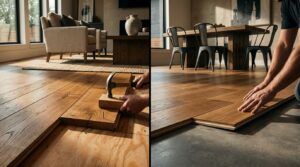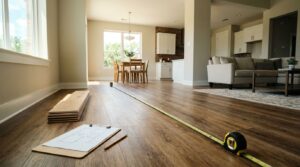
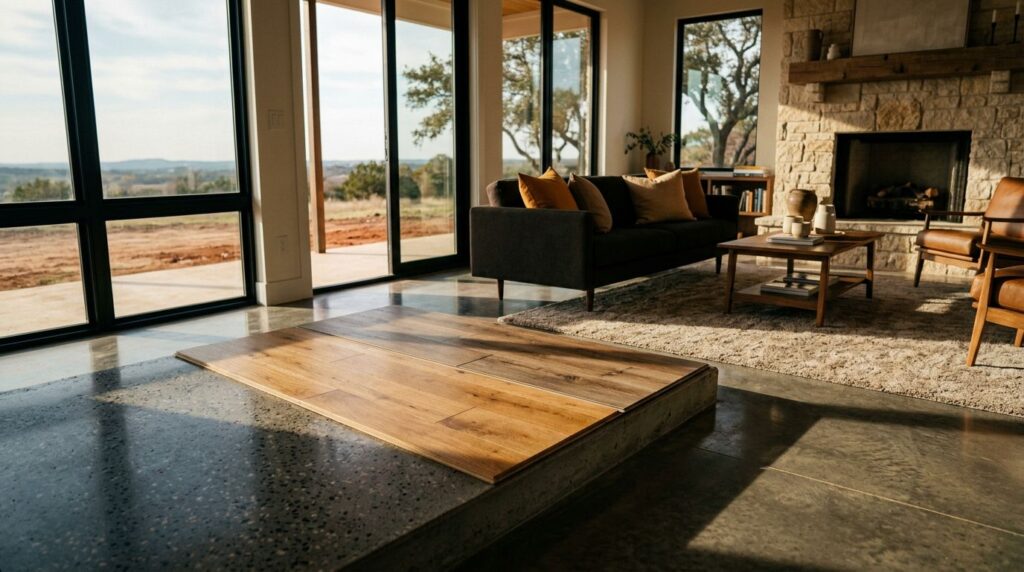
A concrete slab can look solid and problem-free while moisture and minor movement work underneath your floors. In Denton, Argyle, Flower Mound, and nearby North Texas communities, the local Texas climate, including intense heat, humidity, and the persistent challenge of expansive clay soil, makes this reality critical to consider.
Selecting the right Texas slab foundation flooring requires more than just an attractive finish. Because your home is built on a slab-on-grade foundation, your choice must account for your specific household needs, the moisture conditions of the site, and the professional preparation your concrete slab requires. Always start by evaluating the condition of the surface before deciding on your final material.
Key Takeaways
- Always test concrete moisture before selecting glue-down products or hardwood flooring to prevent future damage.
- Options like luxury vinyl plank and engineered hardwood often perform best when installed on properly prepared Texas slabs.
- Achieving proper floor flatness is just as critical as managing moisture, especially when you are installing long planks or floating floors.
- Manufacturer warranties are only valid when your flooring contractor strictly follows all specified installation requirements.
- Professional flooring installation is essential to protect your investment and helps prevent common issues like gaps, cupping, or loose planks over time.
Start With the Concrete, Not the Floor Sample
A concrete slab foundation is durable, but it is rarely static. In this region, North Texas clay soils expand when wet and contract during dry periods. This foundation movement can create small cracks, changes in elevation, and stress points beneath rigid flooring. While many local homes utilize a post-tensioned slab or structural slab design to manage these shifts, it is important to remember that these surfaces behave differently than a pier and beam foundation, which typically offers more airflow and protection against rising ground moisture.
Before any floor installation begins, you must perform a thorough assessment of the slab. Inspect the concrete for visible cracks, old adhesive, paint, uneven patches, and signs of water intrusion. While hairline cracks are common and often harmless, wide cracks, vertical displacement, or recurring dampness deserve professional attention before you invest in new residential flooring. Proper substrate preparation is the foundation of a successful project, ensuring your investment remains stable for years to come.
Moisture testing is also non-negotiable. A slab may feel dry to the touch while still releasing significant ground moisture underneath a finished floor. Installers should conduct testing for relative humidity using ASTM F2170 standards or perform calcium chloride testing per ASTM F1869, depending on the floor manufacturer requirements. These tests are essential to quantify concrete moisture levels before proceeding.
Your floor should be selected after moisture testing, not before. A beautiful material can fail if the slab is not properly prepared for it.
A qualified flooring contractor should also evaluate floor flatness. Most floating floors and engineered wood products require a specific level of flatness, even if the room appears even to the naked eye. Low areas may require professional patching, while high spots often need grinding to meet industry standards.
If you are planning a floor replacement in Denton County, ask for a professional slab evaluation before committing to a product. You can Get Your Free Flooring Estimate to discuss essential moisture testing, necessary substrate preparation, and the most suitable materials for your home.
Flooring Options That Work Well Over Texas Slabs
The best choice depends on moisture exposure, family traffic, style preferences, and how much maintenance you want. This quick comparison helps you navigate the selection process for high-quality Texas slab foundation flooring.
| Flooring type | Fit for slab foundations | Best use |
|---|---|---|
| Luxury vinyl plank | Excellent with proper prep | Active households, pets, kitchens |
| Engineered hardwood | Strong choice when moisture is controlled | Living areas and bedrooms |
| Laminate flooring | Good with a proper vapor barrier | Budget-focused dry areas |
| Porcelain tile | Excellent, but rigid | Entries, baths, kitchens |
| Solid hardwood | Limited on slabs | Usually requires a raised wood subfloor |
Luxury vinyl plank is one of the most practical choices for homes built on concrete. Quality luxury vinyl plank is dimensionally stable, comfortable underfoot, and available in convincing wood and stone visuals. Many products qualify as waterproof flooring, which makes them useful for kitchens, laundry rooms, mudrooms, and homes with pets.
Still, waterproof flooring does not mean water can sit on the surface forever. Moisture can travel through seams, around baseboards, and under cabinets. You should wipe up spills and address plumbing leaks quickly to maintain the integrity of the subfloor.
Engineered hardwood gives you the warmth of real wood with a layered construction that usually handles slab installation better than solid hardwood flooring. It can be glued directly to a properly prepared slab or installed as a floating floor when the product allows it. Regardless of the installation method, you must control indoor humidity and strictly follow the manufacturer’s moisture limits.
Laminate flooring remains a sensible option for bedrooms, offices, and living areas when you want the look of wood at a lower cost. Modern laminate can resist daily spills, but its core may swell if water reaches the seams or edges. To protect your investment, always choose a water-resistant product and use the vapor barrier the manufacturer specifies for your concrete slab.
Match the Material to How You Live
A material that performs well in a quiet guest room may frustrate you in a busy kitchen. Your flooring should match your daily routine rather than just a display sample.
Choose Luxury Vinyl Plank for Busy, Spill-Prone Rooms
Luxury vinyl plank handles routine traffic well and does not require refinishing. It works especially well in homes with children, dogs, or frequent outdoor traffic from yards and patios. In communities such as Lantana, Northlake, and Little Elm, it is a popular choice for open-concept homes because you can run it through several connected spaces. Luxury vinyl plank remains one of the most reliable solutions for high-traffic areas due to its durability and ease of maintenance.
Look for a product with a durable wear layer, a stable locking system, and an attached pad only if it fits the installation plan. A thicker plank can feel more substantial, but thickness alone does not guarantee quality. The wear layer, core construction, and slab preparation matter more.
For rooms exposed to splashes, consider waterproof LVP flooring installation rather than assuming every vinyl product performs the same way.
Choose Engineered Hardwood for a Real-Wood Finish
Hardwood flooring adds warmth that vinyl and laminate imitate but cannot fully duplicate. On a slab, engineered wood is usually the more practical route because its cross-layered core offers greater stability than solid wood.
Before installation, you must allow for a proper acclimation period. This allows the hardwood flooring to adjust to the specific environment of your home. It is equally important that your HVAC system is fully operational and running to maintain a consistent relative humidity. This helps minimize seasonal movement. Small changes in plank spacing can occur as indoor humidity shifts between Texas summers and heated winter months. Keep your home’s humidity as stable as possible, use felt pads under furniture, and clean with products approved for your floor’s finish.
Avoid installing engineered hardwood over an untested slab or in a room with an unresolved moisture issue. Glue failure, cupping, and discoloration are not merely cosmetic problems, and floor repair can become more expensive than proper preparation.
Use Laminate Where Moisture Is Controlled
Laminate flooring can be a good value in a dry bedroom, upstairs office, or living room. It resists scratches well, which helps with everyday foot traffic. However, it is not the first choice for bathrooms, laundry rooms, or areas with repeated water exposure.
If you select laminate, ask about expansion gaps, moisture barriers, and transitions at doorways. Because laminate is a floating floor, it requires sufficient expansion gaps around the perimeter to prevent buckling as the material reacts to temperature changes. Heavy built-ins, islands, or improper trim can pin it in place and lead to unwanted movement.
Preparation Determines How Long the Floor Lasts
Flooring failures often begin before the first plank goes down. Skipping essential subfloor preparation to save time can leave you with hollow spots, cracked grout, loose adhesive, or visible seams later. Because Texas homes are often built with hot weather concrete, the porosity and surface conditions of your foundation can vary significantly, making proper inspection vital.
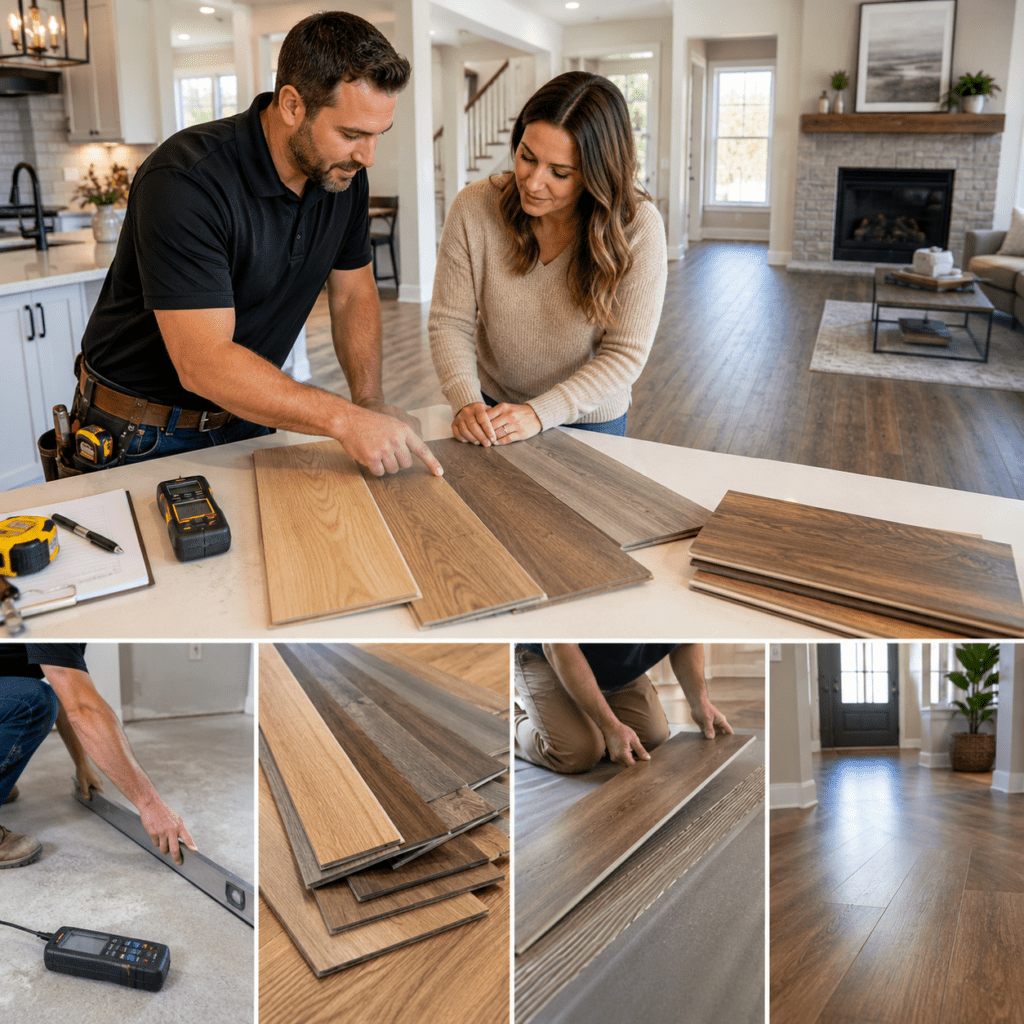
A careful floor installation on a Texas slab usually includes these steps:
- Remove existing flooring, adhesive, tack strips, and debris.
- Inspect the slab for cracks, concrete moisture levels, and uneven areas.
- Grind high spots and patch low spots with compatible leveling materials.
- Apply an epoxy moisture barrier or a vapor retarder when testing or product requirements call for one.
- Install the flooring with the correct adhesive, underlayment, expansion space, and transitions.
Do not assume an old floor proves the slab is ready for a new one. Carpet can hide uneven concrete, and older vinyl flooring may conceal moisture stains or adhesive residue. Even a previous vinyl flooring installation may have used materials that are not compatible with your new product.
Professional flooring installation also includes details that protect the finished work. Baseboards, shoe molding, door jambs, stair transitions, appliance clearances, and expansion joints all need attention. Those details separate a floor that merely looks finished from one that performs well over time.
For dependable Denton flooring work, choose a flooring company that explains the slab condition in plain language and gives you a clear preparation plan. If you see soft spots, lifting planks, or moisture damage in your current floor, ask about floor repair services in Denton before covering the problem.
Care for Slab-Installed Flooring After Installation
Once your new floor is in place, keep dirt and water from doing gradual damage. Use walk-off mats at exterior doors, especially during wet weather. Avoid rubber-backed mats unless the flooring manufacturer approves them, since some backings can discolor vinyl or trap moisture.
Sweep or vacuum often with a hard-floor setting. Then clean with a manufacturer-approved product and a damp microfiber mop. Excess water is hard on laminate, engineered wood, and the edges of luxury vinyl plank flooring. Because Texas experiences significant shifts in outdoor conditions, managing your home’s relative humidity is essential. Keeping your HVAC system running consistently helps stabilize the indoor environment, which protects your hardwood flooring and luxury vinyl plank from warping or cupping due to rapid moisture changes.
Watch for new cracks in tile grout, changes in floor height, or repeated gaps near the same wall. Those signs can point to foundation movement or significant moisture changes beneath your slab. Early evaluation by a professional may limit the scope of a future floor replacement.
For questions about North Texas flooring materials, slab prep, or a planned renovation in Corinth, Highland Village, Frisco, Plano, Southlake, Keller, or Grapevine, Call 469-340-0837 and discuss your home’s needs with a local flooring professional.
Choose for the Slab You Have
The strongest choice for a concrete slab starts with honest information about moisture levels, surface flatness, and foundation movement. Whether your home sits on a traditional structural slab or relies on a grade beam system, luxury vinyl plank, engineered wood, laminate, and tile can all perform beautifully when the material choice fits the room and the foundation is properly prepared.
A successful floor installation protects your long-term investment because it addresses the conditions beneath the surface, rather than just the aesthetic finish. By selecting materials and installation methods that respect the unique requirements of Texas slab foundation flooring, you ensure that your floors remain durable and stable throughout the life of your home. Always prioritize the specific needs of your foundation to get the best results from your project.
Frequently Asked Questions
Can you install solid hardwood flooring over a concrete slab?
Solid hardwood flooring generally requires a wood subfloor system installed above the slab to prevent movement and damage. Because solid wood reacts significantly to changes in environmental conditions, engineered hardwood is usually a better choice for direct slab installations. Its layered construction offers superior stability, but you should always have your flooring contractor confirm the product’s approved installation method before ordering materials.
Is luxury vinyl plank good for Texas homes with slab foundations?
Yes. Luxury vinyl plank is often an excellent option for slab foundations because it provides high durability against daily traffic and common household spills. While these floors are highly resilient, they still require a clean, flat surface and proper moisture testing as mandated by the manufacturer to ensure long-term performance.
Do slab cracks mean you need to replace your flooring?
Not always. Small, stable hairline cracks can often be addressed during the initial preparation phase. However, if a crack shows significant height differences, continues to widen, or appears alongside sticking doors and wall cracks, have the foundation evaluated by a professional before installing new flooring.
What flooring is best for pets on a slab foundation?
Waterproof luxury vinyl plank is often the most practical choice for pet owners living on a slab. It resists routine scratches from claws and is much easier to clean after accidents compared to natural hardwood or laminate. Choosing a product with a textured finish can also provide better traction for your pets as they move across the floor.
How long should you wait after a slab moisture test?
The waiting period depends on the test result, the type of flooring, the adhesive used, and any required moisture-control system. Testing for concrete moisture is essential because high levels of relative humidity can cause adhesives to fail or flooring to buckle. A professional installer should compare the specific test results against the manufacturer’s published limits before scheduling your installation to ensure the slab is sufficiently dry.