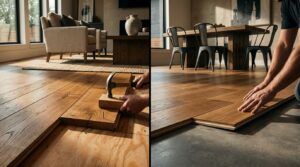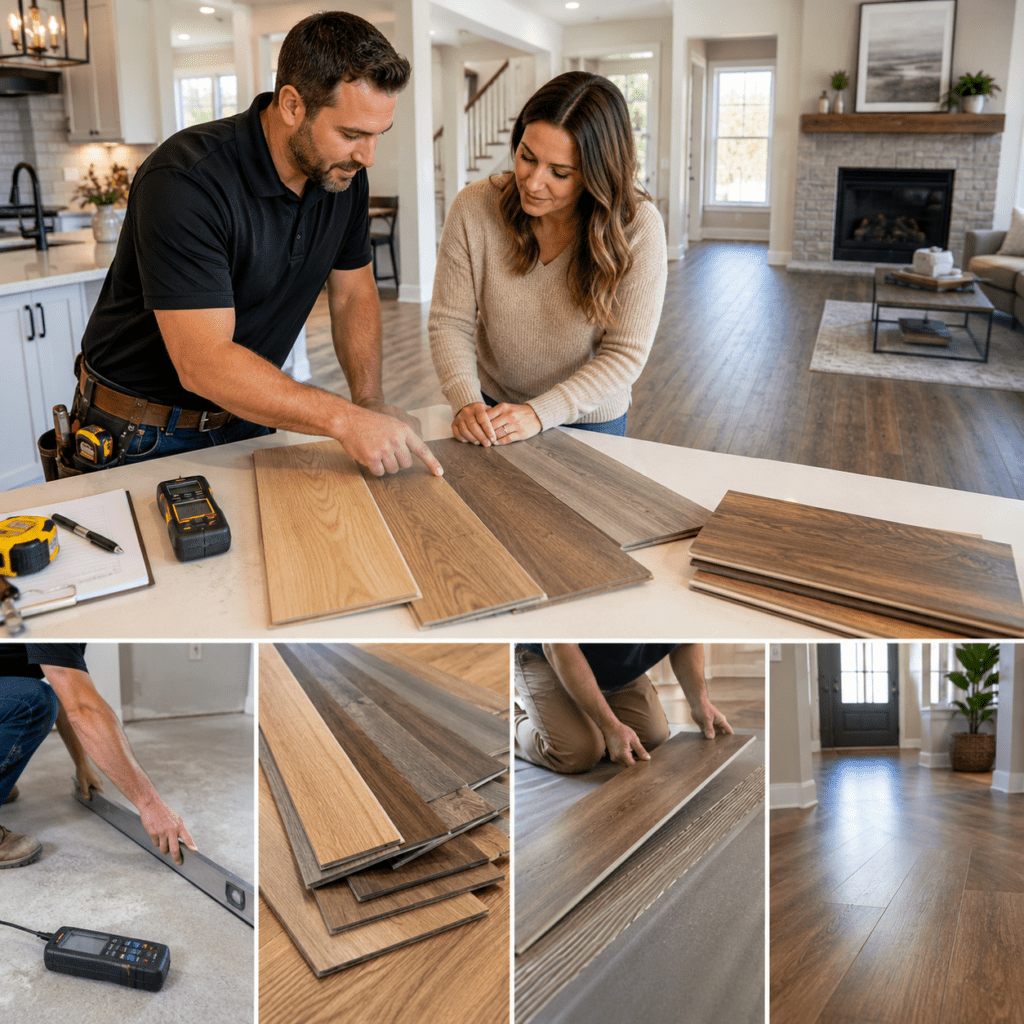
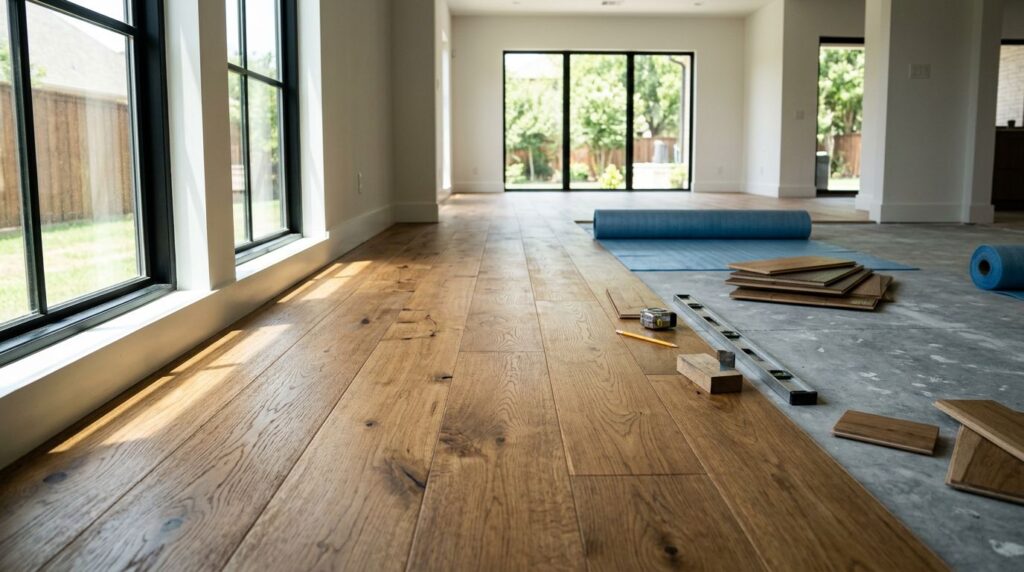
When you search for flooring installation Plano TX, you may be comparing samples while also worrying about the concrete beneath your feet. The material matters, but careful preparation often determines whether your new floor stays quiet, level, and secure.
Plano homes deal with intense summer heat, shifting humidity, tracked-in grit, pets, and spills. A sound plan accounts for room use, sunlight, slab condition, and budget before any product is ordered. Here is how to approach your project and when to bring in JBN Flooring.
How Flooring Installation Plano TX Projects Should Begin
A successful flooring installation Plano TX project starts with your home, not a product brochure. Your installer should look at the rooms, existing flooring, subfloor, transitions, stairs, doors, and furniture layout before recommending materials.
Homes near Willow Bend, Deerfield, Legacy, and older central Plano neighborhoods can have different construction details. Many properties sit on concrete slabs, and even a small low spot or moisture issue can affect the finished floor. Local Denton flooring work often involves the same slab conditions found across North Texas.
Check the existing floor and slab
Before installation, a flooring contractor should check whether the subfloor is clean, dry, flat, and structurally sound. Concrete may need moisture testing, crack evaluation, patching, or leveling. Wood subfloors may need loose panels secured and damaged areas replaced.
Skipping this stage can lead to hollow sounds, movement, separated seams, or visible gaps. Those problems usually begin below the flooring, where you can’t see them after the room is finished.
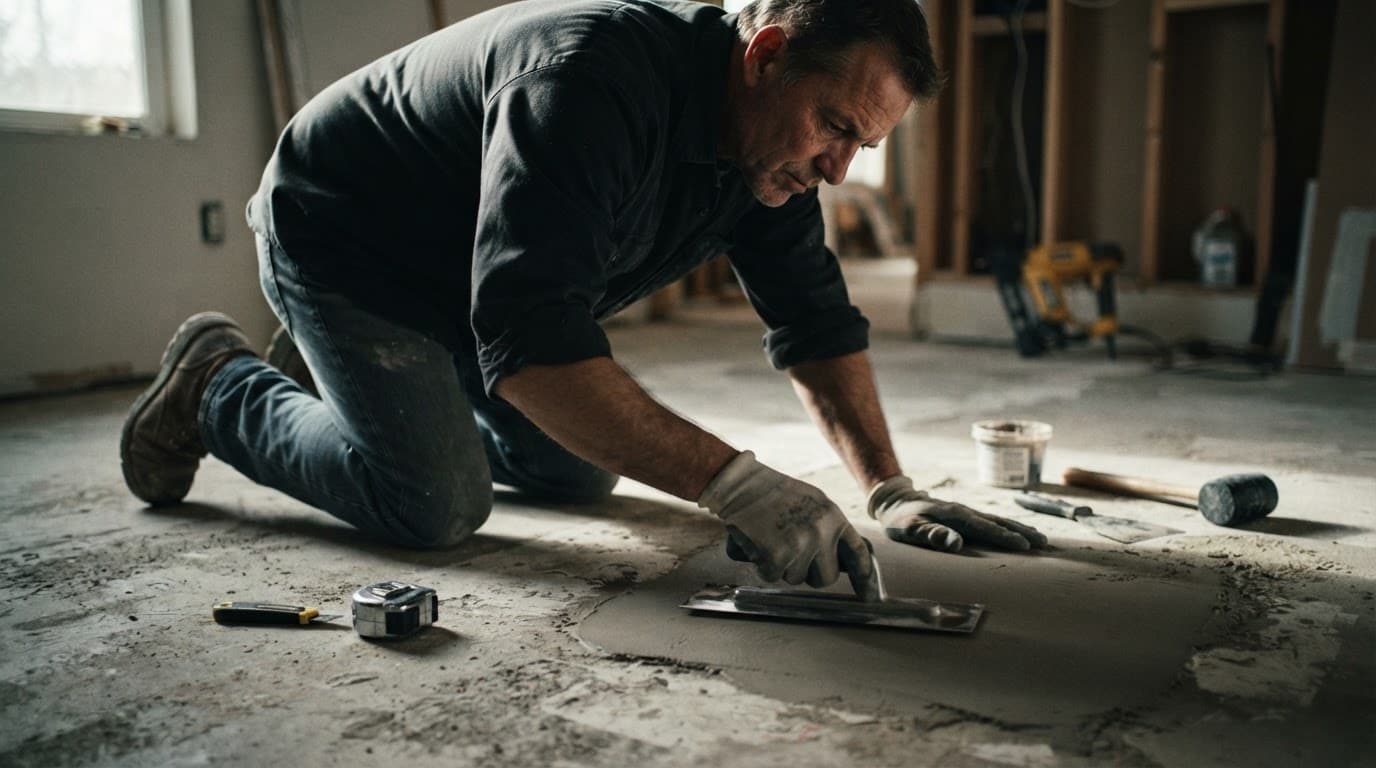
For a closer look at the local preparation process, review JBN Flooring’s floor installation in Denton TX. The same attention to moisture, flatness, and transitions applies to a Plano home.
Request an itemized estimate
A dependable flooring company should explain what your estimate includes. Ask whether the price covers furniture movement, old-floor removal, disposal, subfloor repairs, baseboards, transitions, stair work, and final cleanup.
Material cost is only one part of a floor installation. A simple rectangular room with a sound subfloor is different from a whole-home project with multiple flooring types and uneven slab areas. You can Get Your Free Flooring Estimate to discuss your rooms, goals, and budget before making a decision.
Choose the Right Flooring for Your Plano Home
Every North Texas flooring plan should match the way you use each room. A busy kitchen needs different performance than a formal study. Pets, children, direct sunlight, wet entryways, and future resale plans should all influence your choice.
A recent Texas remodeling trends overview also places durable flooring among the upgrades homeowners continue to consider. The best product is the one that fits your home’s conditions, not the one that looks best in a small sample.

Luxury vinyl plank handles busy rooms well
Luxury vinyl plank is popular for open living areas, kitchens, hallways, and bathrooms because it offers a wood-inspired appearance with practical daily maintenance. Good products have a protective wear layer, stable construction, and textures that hide minor dust and paw marks.
Many homeowners refer to this category as LVP flooring. It can be a strong choice when you want comfortable, resilient flooring that handles spills better than traditional wood. However, product quality and installation method still matter. Waterproof flooring can resist surface water, but water may still reach the subfloor through open edges, damaged seams, or a plumbing leak.
Hardwood adds warmth and long-term character
Hardwood flooring brings natural variation and can work well in living rooms, offices, dining rooms, and bedrooms. Solid wood can be refinished, but it has more moisture sensitivity and installation restrictions over concrete slabs.
Engineered hardwood often fits North Texas slab homes more easily because its layered construction is designed for greater dimensional stability. Your installer still needs to follow the product requirements for moisture levels, adhesive, acclimation, expansion space, and room conditions.
Laminate offers style at a practical price
Laminate flooring has a tough wear surface and comes in many wood and stone appearances. It can suit bedrooms, offices, and living spaces where you want a finished look without the maintenance requirements of natural wood.
Standard laminate isn’t automatically waterproof. If you are considering it near a kitchen, laundry room, or entry, ask whether the specific product has water-resistant or waterproof construction. A guide comparing LVP and laminate for North Texas can help you compare general material characteristics, but your subfloor and household routine should guide the final decision.
What Professional Flooring Installation Includes
Professional flooring installation is more than placing planks in a row. The crew must plan the layout, account for walls that aren’t perfectly square, protect nearby surfaces, and create clean transitions between rooms.
A typical project follows these steps:
- The crew confirms measurements, product details, layout direction, and areas that need protection.
- Existing flooring is removed when necessary, and the subfloor is cleaned and inspected.
- Low spots, cracks, loose panels, or damaged sections are addressed before the new material goes down.
- Installers place the flooring according to the product specifications, leaving the required expansion space.
- Baseboards, quarter-round, reducers, thresholds, vents, and other finish details are installed before cleanup and inspection.
Room access can be limited during removal, cutting, adhesive work, or curing. You should plan a clear path for the crew and remove fragile items from nearby surfaces. Large projects may require furniture to move room by room rather than all at once.
Wood products need extra planning. Temperature and humidity conditions can affect acclimation, adhesive performance, and board movement. JBN Flooring’s wood floor installation process explains why subfloor preparation and finish details deserve attention before the first board is installed.
Cost, Timing, and Maintenance Expectations
The cost of floor replacement depends on the material, room size, layout, removal needs, subfloor condition, trim, stairs, and labor. Two homes with the same square footage can have very different project totals if one has several transitions or requires slab repairs.
Your estimate should identify allowances and possible variables. Ask how the contractor handles unexpected damage discovered after removal. Clear answers help you compare bids based on the complete job instead of a low starting number.
Timing also depends on the product and preparation. A small room with a ready subfloor may move quickly, while a whole-home installation takes longer because of furniture, transitions, removal, and curing requirements. Hardwood finishing can add time before you return furniture to the room.
Protect your investment with simple habits:
- Wipe spills promptly, especially around sinks, exterior doors, and pet bowls.
- Use manufacturer-approved cleaners instead of soaking the floor with water.
- Place walk-off mats at exterior doors, but avoid rubber backings that can discolor some finishes.
- Add felt protectors under furniture and lift heavy pieces instead of dragging them.
- Keep indoor conditions within the flooring manufacturer’s recommended range.
Direct sunlight can change the appearance of some wood and resilient products over time. Window coverings can reduce exposure in rooms with strong afternoon sun, including many west-facing Plano spaces.
When Floor Repair Makes More Sense Than Replacement
A damaged floor doesn’t always need a full replacement. Localized scratches, a few broken planks, loose transitions, and small areas of water damage may be repairable when matching material is available.
A proper floor repair should address the cause as well as the visible damage. For example, replacing planks over a damp slab without correcting the moisture problem can lead to another failure. Plumbing leaks, pet damage, poor subfloor support, and movement around transitions each require a different solution.
Replacement usually makes more sense when damage covers a large area, the original product is discontinued, seams continue to fail, or the existing floor no longer matches the home’s needs. JBN Flooring can help you compare repair and replacement options rather than recommending more work than your home requires.
Frequently Asked Questions About Plano Flooring Projects
What flooring works best over a concrete slab?
LVP flooring, tile, and engineered hardwood can work well over concrete when the slab is properly tested and prepared. Laminate may also be suitable when the product and underlayment allow slab installation. Moisture, flatness, room use, and manufacturer requirements should guide the decision.
Can you install new flooring over existing flooring?
Sometimes. The existing surface must be stable, clean, dry, and flat enough for the new product. Removing the old floor may be necessary when it is damaged, soft, uneven, contaminated, or likely to affect doors and transitions.
How long does flooring installation take?
A single room may take less time than a whole-home project, but there isn’t one dependable timeline for every property. Removal, repairs, stairs, adhesive cure time, product acclimation, and furniture movement all affect the schedule. Your installer should explain the expected sequence before work begins.
Should you repair or replace damaged flooring?
Repair may be practical when damage is limited and matching material is available. Replacement is often better when the floor has widespread moisture damage, repeated seam failure, or a subfloor problem that affects multiple areas. A site inspection gives you a more reliable answer than photographs alone.
Make Your Plano Flooring Plan With Confidence
The strongest flooring project starts with an honest assessment of your home. Choose materials based on moisture exposure, traffic, pets, sunlight, maintenance, and the condition of the subfloor. Good preparation helps your new floor perform as expected through North Texas heat and humidity changes.
If you need help selecting residential flooring in Plano, Frisco, Lewisville, or nearby communities, JBN Flooring can provide practical recommendations and a free estimate. When you’re ready to discuss your project, Call 469-340-0837. After the right material is selected, careful preparation is what turns new flooring into a lasting improvement.