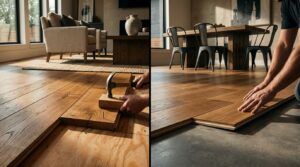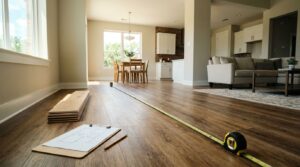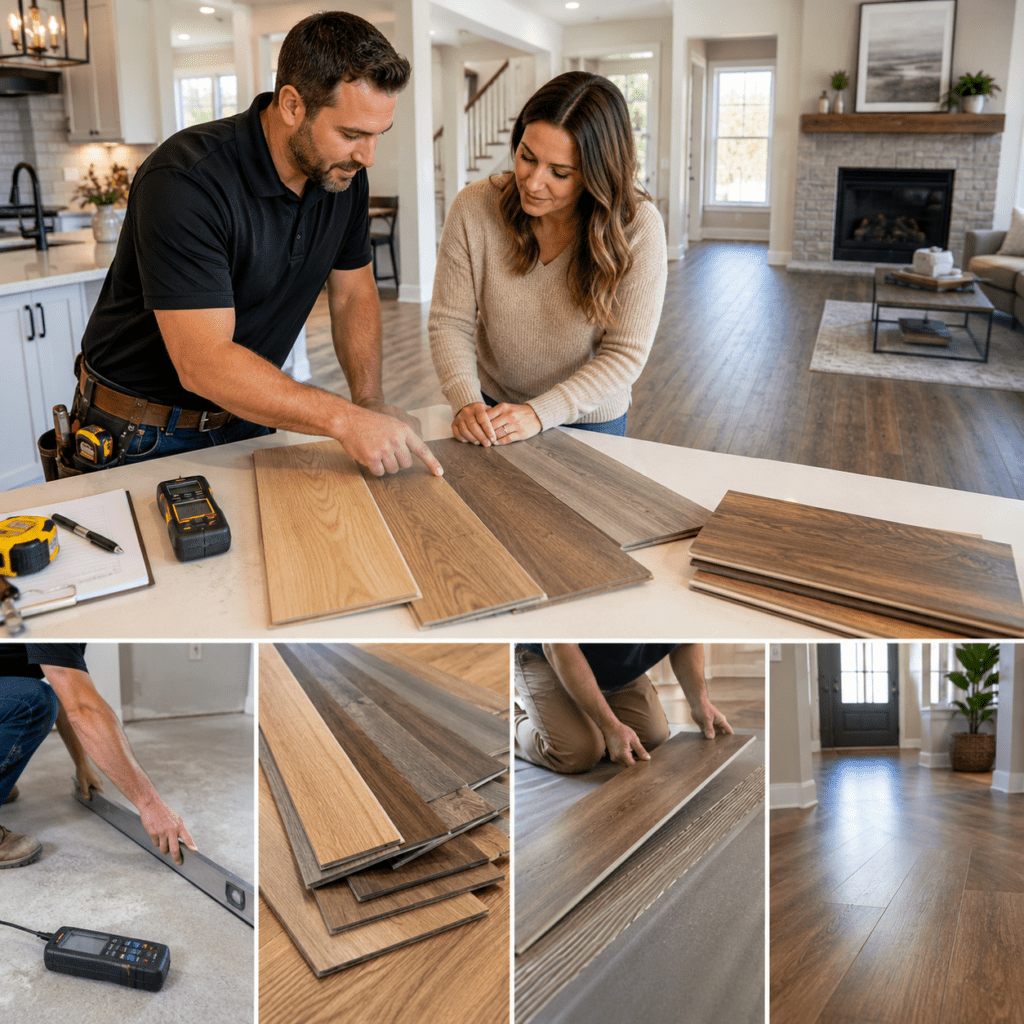
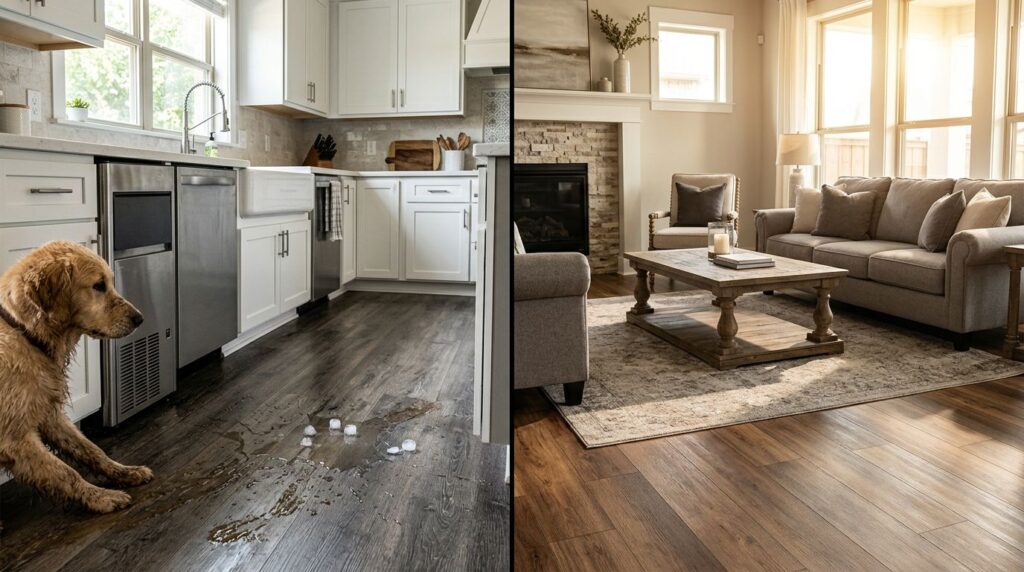
A wet dog, a leaking ice maker, or a wavy concrete slab can expose a poor flooring choice in one afternoon. Your new floor has to handle Texas heat, busy routines, and the occasional surprise without becoming a maintenance project.
The LVP vs laminate decision comes down to more than a wood-look color. You need to consider moisture, traffic, your foundation, and how each room is used. That matters in Denton, Argyle, Flower Mound, Lantana, and throughout North Texas.
Start with the room’s real conditions, then choose the product that fits them.
LVP vs laminate: the fast answer for your home
Luxury vinyl plank is usually the safer choice for rooms with regular spills, pets, wet shoes, or active kids. Laminate is often a strong fit for dry living spaces when you want a crisp wood look and a firm, scratch-resistant surface.
Both can look convincing. Both can be installed as floating floors. However, their cores react to moisture very differently.
Choose LVP for spill-prone rooms
Many LVP flooring products have a vinyl surface and waterproof core. That makes luxury vinyl plank a practical option for kitchens, laundry rooms, entries, bathrooms, and rental properties.
Waterproof vinyl flooring still needs sensible care. Water can travel around room edges, through an open transition, or below planks after a major leak. You should wipe spills up and fix plumbing problems quickly.
For a household where muddy paws and dropped water bowls are routine, waterproof LVP flooring installation gives you a durable, low-stress surface.
Choose laminate for dry areas and a firmer feel
Laminate flooring uses a high-density fiberboard core beneath a printed decorative layer and tough wear surface. Quality products can feel firmer underfoot than vinyl, and many resist everyday scuffs well.
Still, laminate’s core can swell when water gets through joints or sits along the perimeter. Water-resistant lines can buy you cleanup time, but they don’t make every laminate floor suitable for a bathroom or a known leak area.
Laminate often works well in bedrooms, offices, and dry family rooms. You should choose a reputable product with a warranty that matches how you use the room.
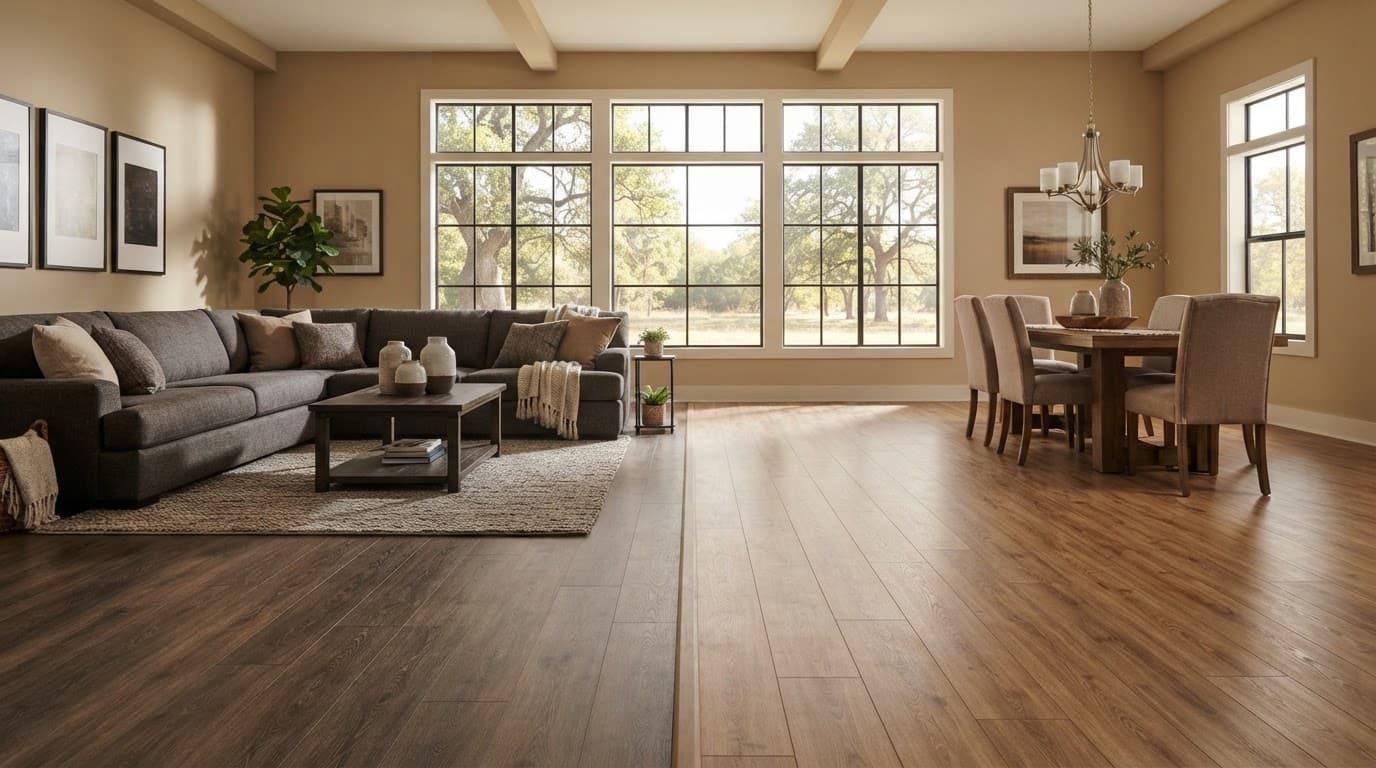
Water resistance and durability are different questions
Water protection matters in North Texas flooring, but it isn’t the only performance issue. A floor also has to handle chair legs, dog claws, sunlight, and furniture weight.
“Waterproof” has practical limits
A waterproof flooring label usually describes the plank itself, not the entire room. A floating LVP floor may survive a surface spill while water remains trapped beneath it after an appliance failure.
A floating floor can keep its face intact while water remains underneath. Find and stop the leak before replacing planks.
Product details vary by collection. For example, MSI’s Everlife luxury vinyl information describes waterproof, click-lock vinyl options, yet your installer should still follow the selected product’s site conditions and installation instructions.
If a floor has a recurring moisture problem, neither LVP nor laminate is the fix. Repair the leak, check the slab, and address drainage or humidity concerns before new material goes down.
Compare wear layers, texture, and dent resistance
Don’t assume all vinyl flooring performs the same, or that every laminate resists scratches equally. Look at the actual product line, wear warranty, surface texture, and recommended room use.
Laminate often handles light surface scratching well because of its hard top layer. On the other hand, LVP can be more vulnerable to dents from narrow furniture feet, rolling loads, or dropped heavy objects.
Use felt pads under furniture, place mats at exterior doors, and add protective pads beneath office chairs. Those small habits protect either surface better than a marketing label.
Installation decides how the floor looks and feels
The product box gets attention, but preparation is where a floor installation succeeds or fails. This is especially true for slab-on-grade homes in Denton, Corinth, Lewisville, and Frisco.
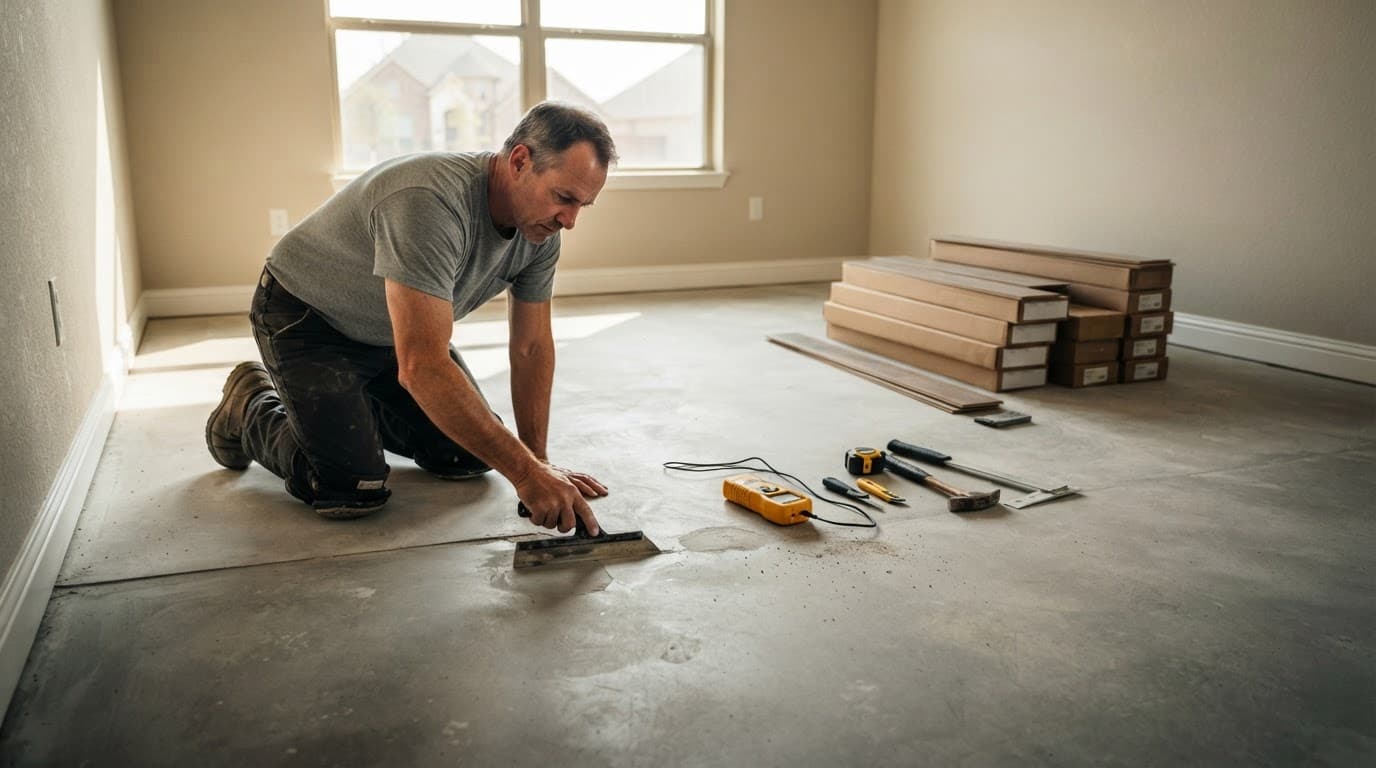
Test moisture and correct subfloor problems first
A qualified flooring contractor starts by checking the concrete, existing floor, and room conditions. Moisture testing should follow the material manufacturer’s requirements. Then, low spots, high spots, cracks, and loose areas need attention before planks are installed.
LVP can telegraph uneven slab areas, while laminate can flex and separate when the subfloor isn’t flat enough. Both need correct expansion space at walls and proper transitions at doorways.
Professional flooring installation also accounts for baseboards, appliances, floor height, and door clearance. North Texas heat can increase indoor temperature swings, so those details matter.
Decide whether repair makes more sense than replacement
A full floor replacement isn’t always necessary. If you have limited damage and matching planks are available, targeted floor repair can save part of the existing surface.
However, widespread swelling, a failed locking system, soft subfloor areas, or water damage below the planks usually point toward replacement. You should get a clear explanation of what caused the damage before committing to new material.
For a room-by-room assessment and floor installation in Denton, TX, Call 469-340-0837 before ordering flooring online.
Match the material to the room and your budget
The right LVP vs laminate choice changes from one room to the next. A kitchen, upstairs bedroom, and entryway don’t face the same risks.
| Your main concern | Usually the better first choice | What you should verify |
|---|---|---|
| Spills, pets, wet shoes, or laundry traffic | LVP | Product water rating, flatness, and edge details |
| Dry bedrooms, offices, and low-moisture rooms | Laminate | Water-resistance warranty and scratch rating |
| A genuine wood surface | Engineered hardwood | Slab conditions, finish, and moisture plan |
LVP commonly makes sense when you want easy cleanup across much of the home. Laminate can stretch a residential flooring budget in dry rooms without looking like a compromise.
Consider engineered hardwood when real wood matters
If the visual depth and feel of real wood are priorities, engineered hardwood deserves a separate comparison. It has a real wood veneer over layered construction, so it is different from both laminate and luxury vinyl plank.
Engineered hardwood is still wood and requires careful moisture management. The NWFA technical guidelines outline industry standards for wood flooring conditions and installation practices. For many local slab homes, engineered hardwood installation options can be a better fit than solid hardwood flooring.
Read the whole estimate, not only the plank price
A reliable Denton flooring estimate separates material, demolition, haul-off, subfloor work, trim, transitions, and installation. Lower material pricing can disappear quickly if the slab needs leveling or the old floor takes extra labor to remove.
A trustworthy flooring company will explain those costs before work starts. If you’re considering LVP, laminate, or engineered wood, Get Your Free Flooring Estimate and compare the full scope, not only the price per square foot.
Keep either floor looking good with simple habits
Sweep or vacuum regularly with a hard-floor setting, then clean with a lightly damp microfiber mop. Don’t flood the floor, and avoid abrasive pads or harsh cleaners.
For LVP, Shaw’s vinyl care guidance warns against abrasive, ammonia-based, vinegar-based, and harsh chemical cleaners. Laminate also needs minimal water, especially near seams and walls.
Use entry mats that don’t trap moisture underneath, wipe up spills promptly, and keep furniture pads in place. Those basics help your floor stay clean and reduce avoidable repair calls.
Choose for the way you live
Your daily routine should make the final decision. LVP is usually the more forgiving option for moisture-prone, high-traffic spaces, while laminate can be an attractive, durable choice for dry rooms.
The best floor isn’t always the one with the lowest price or the longest list of features. It is the one that fits your slab, your household, and the care you are willing to give it.
A properly prepared surface and professional flooring installation give either material the best chance to perform for years.
Frequently Asked Questions
Is laminate flooring waterproof?
Most laminate is water-resistant, not fully waterproof. Some products offer stronger joint protection and longer spill warranties, but standing water can still damage the fiberboard core. You should use LVP in rooms with frequent moisture.
Does LVP dent easily?
LVP can dent under heavy furniture, narrow legs, rolling equipment, or dropped objects. A thicker, well-made product and furniture pads reduce that risk. Surface texture and color also affect how visible dents become.
Can you install LVP or laminate over tile?
You can sometimes install over tile if it is firmly bonded, flat, dry, and free of major cracks. Your installer must also account for added height at doors, appliances, transitions, and adjoining rooms.