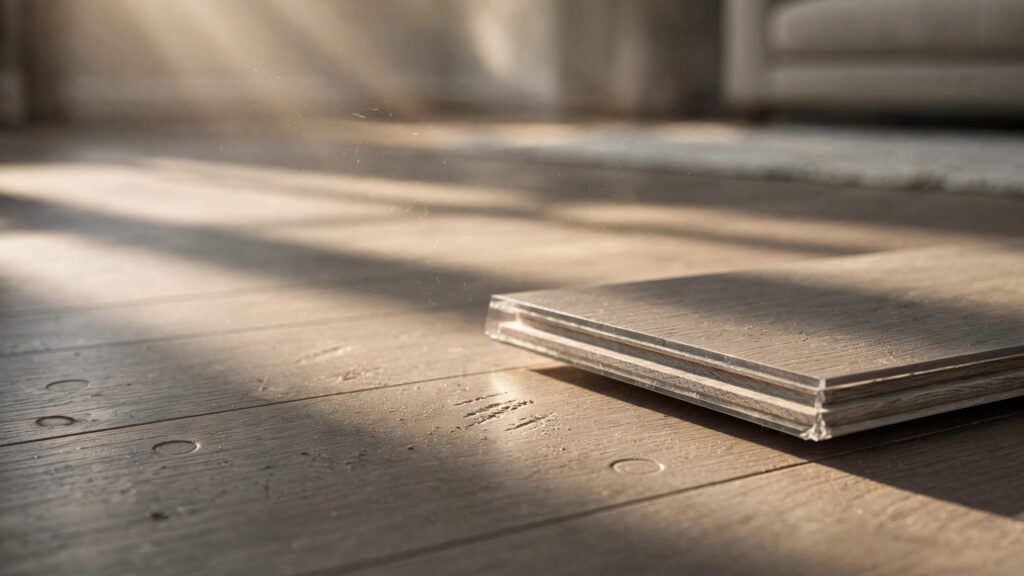
A beautiful floor can look tired before the planks wear out. In a busy Denton County home, sandy soil, dog nails, chair legs, and heavy traffic all test the luxury vinyl plank wear layer every day.
This clear protective top coat receives abrasion from grit, pets, children, shoes, and furniture. The wear layer helps protect the printed design, but it isn’t scratch-proof or waterproof. Core construction, finish, overall thickness, intense North Texas sun, seasonal temperature swings, and daily moisture also affect performance.
Before choosing a color or plank width, consider the slab condition, subfloor, and room use. A preferred finish, such as a matte finish, also affects the look and maintenance needs. Proper preparation matters as much as the product, especially in North Texas homes.
Key Takeaways
- The wear layer protects the printed design from everyday scuffs, stains, and abrasion, but it is not scratch-proof or a substitute for a stable, properly prepared subfloor.
- For many North Texas homes, 12 mil suits moderate traffic, while 20 mil is a practical choice for kitchens, hallways, pets, children, and busy entries.
- Overall plank thickness and wear-layer thickness are separate specifications; compare both along with the core, coating system, locking profile, and warranty.
- A matte finish can make dust, paw marks, and light scuffs less noticeable, but grit control, furniture protection, regular cleaning, and moisture preparation still matter.
- A quality 20 mil product with proper slab testing, flatness preparation, installation, and maintenance often offers a strong balance of cost and long-term durability.
What the Wear Layer Actually Protects
The wear layer is the transparent protective top coat on luxury vinyl plank flooring. It sits above the printed image layer that gives LVP its oak, hickory, maple, or stone appearance.
A quality wear layer helps protect vinyl flooring from everyday scuffs, stains, and abrasion. It improves surface durability, but ordinary scratch resistance isn’t the same as being scratch-proof. Dragging a loaded refrigerator, dropping a cast-iron skillet, or grinding gravel under a chair can still damage the floor.
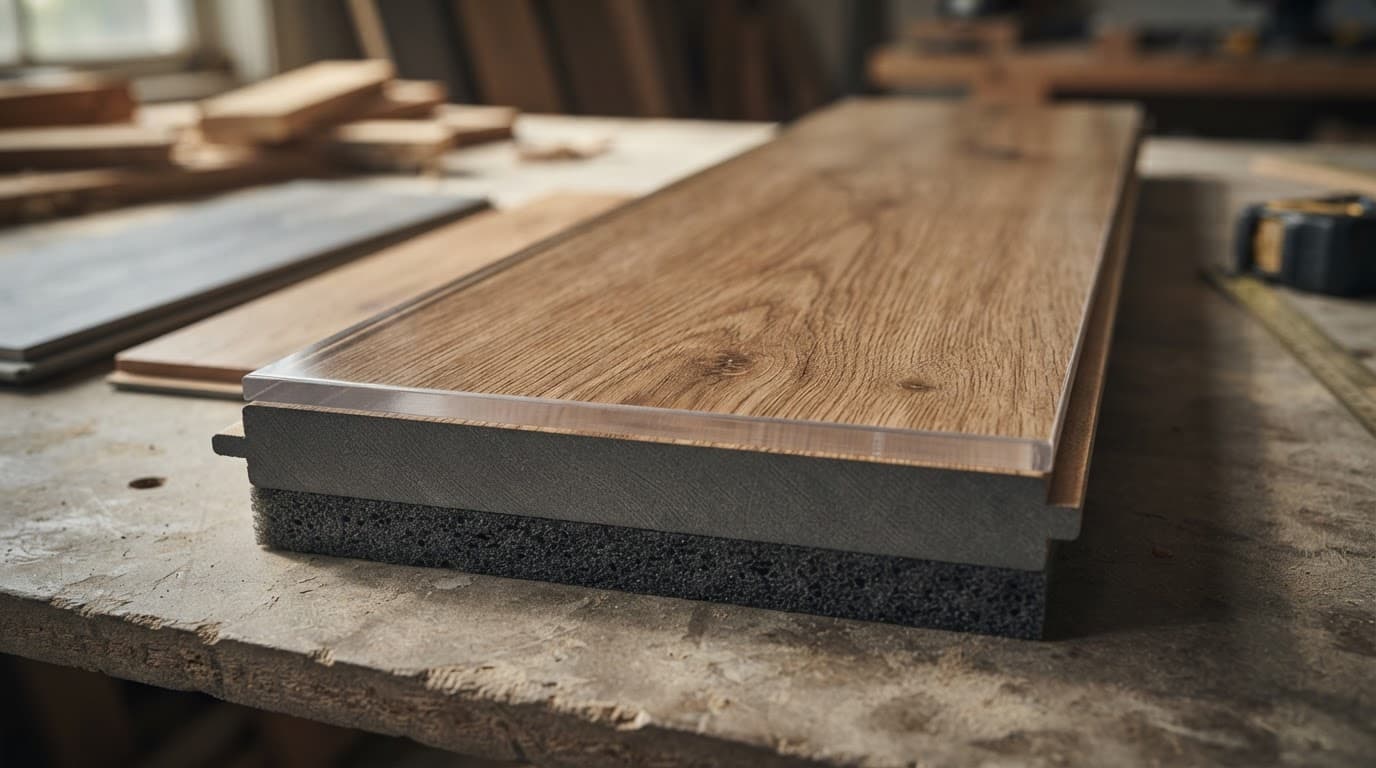
The four layers you should ask about
Most rigid-core LVP flooring includes several functional layers:
- The wear layer takes direct contact from shoes, pets, furniture, and cleaning.
- The printed image layer, sometimes called the decorative layer, creates the wood or stone visual.
- The core gives the plank its thickness, stability, and water resistance.
- The backing or attached pad adds comfort and can help with sound control.
The wear layer’s thickness is measured in mils. One mil equals 0.001 inch, not 1 mm, so read the exact mil thickness separately from millimeter measurements. MSI’s wear-layer thickness guide lists 20 mil as 0.50 mm, which shows how different those measurements are.
Thickness and protection are separate specs
A plank’s overall thickness describes the complete product. It can affect feel, acoustics, rigidity, and tolerance for minor subfloor texture, but it doesn’t tell you how thick the surface protection is.
A 6 mm plank with a 20 mil wear layer may offer better surface protection than an 8 mm plank with a 6 mil wear layer. The thicker plank may feel more solid and hide minor subfloor texture better.
When comparing vinyl flooring options, ask for both measurements. The wear layer shows surface protection, while the core affects feel, sound, and installation tolerance.
Luxury Vinyl Plank Wear Layer Thickness in Mils
For most North Texas homes, 12 mil and 20 mil products are practical starting points. This mil thickness range covers most residential use without paying for unnecessary surface protection. Your household habits should determine which wear layer makes financial sense.
| Wear layer | Best fit | What to expect |
|---|---|---|
| 6 to 8 mil | Guest rooms, low-use offices | Lower-cost residential option with limited abrasion resistance |
| 12 mil | Bedrooms, living areas, moderate family traffic | A solid choice when you use mats and furniture pads |
| 20 mil | Kitchens, hallways, entries, homes with pets | Strong option for active households and many rental properties |
| 28 to 30 mil plus | Busy commercial settings, heavy-turnover rentals | Often marketed as commercial grade, with more surface protection than most owner-occupied homes need |
These figures are general shopping guidance, not a universal performance scale. The right choice isn’t always the thickest option. A quiet household in Double Oak or Lantana may get excellent service from a well-made 12 mil product. A family with two large dogs, school-age kids, and a busy back entry in Denton should usually spend more for 20 mil.
A 20 mil wear layer buys more abrasion resistance. It can’t correct a poor locking system, an uneven slab, bad installation, or heavy impact.
Why 20 mil is popular for active homes
Twenty mil has become a common target for high-traffic residential flooring because it offers a useful margin against repeated abrasion. Hallways, kitchens, pantry paths, and exterior doors take far more foot traffic than a spare bedroom. Repeated abrasion can eventually expose the image layer.
It also makes sense for rental properties in Lewisville, Frisco, and Plano, where you want a durable surface between tenants. A thicker wear layer can support durability and longevity, but it can’t fix every flooring problem. Still, read the warranty for the exact collection and its wear layer. A commercial grade label doesn’t automatically guarantee superior installation, scratch performance, or warranty coverage.
Match Your Wear Layer to Daily Traffic
Start with how people and pets move through your home. Foot traffic creates patterns, not even wear, so choose the luxury vinyl plank wear layer for fit, not lifespan.
Bedrooms and low-traffic spaces
A 12 mil wear layer works well in many bedrooms, upstairs spaces, and formal rooms. It can be a smart value if you don’t have large dogs or frequent outdoor traffic.
Use walk-off mats near outside doors, even when the room is not a main entry. North Texas wind carries fine dirt and grit indoors, and that grit works like sandpaper under shoes.
Kitchens, hallways, and pet households
Choose 20 mil for high-traffic areas, including kitchens, central hallways, mudroom-style entries, and open living spaces. These rooms see the most household activity. It is often a better fit when children use rolling chairs or dogs repeatedly turn corners.
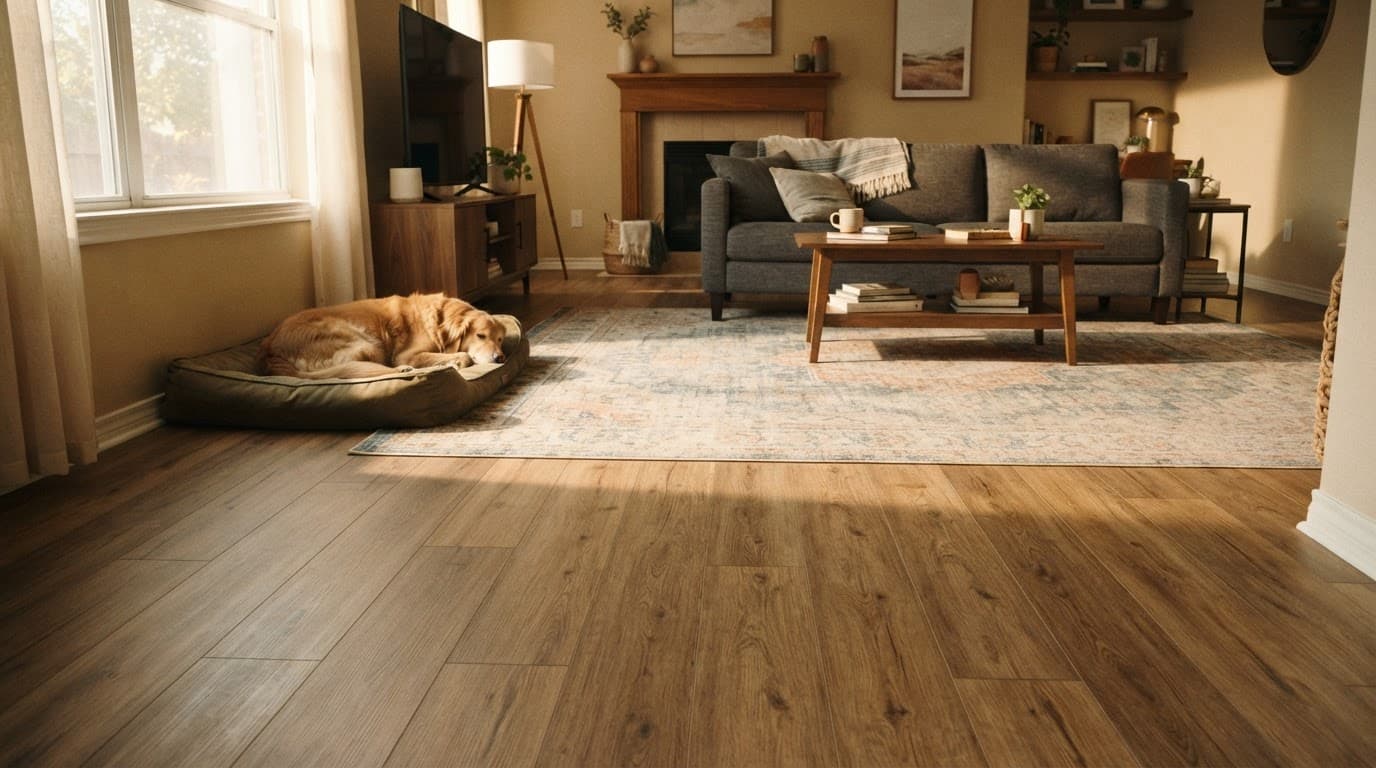
Pet damage often comes from repeated grit, worn floor pads, water near bowls, or dragged objects, not normal nail contact. Daily wear and tear can gradually dull the finish or abrade the image layer. A matte finish can make light paw marks and dust less conspicuous, but it does not prevent damage. Keep nails trimmed, place a waterproof mat under pet stations, and sweep often.
For help comparing products with your home’s traffic and slab conditions, Get Your Free Flooring Estimate. A local flooring contractor can look past a product label and recommend the right scope.
Coatings Matter as Much as the Mil Rating
The mil number measures wear layer thickness, but it doesn’t fully describe the finish. A polyurethane coating, ceramic bead additives, or mineral additives describe parts of the surface system, not thickness.
Manufacturers may claim these features improve surface durability, but they aren’t standardized grades or guarantees. A protective top coat may improve scratch resistance against fine abrasion. It does not make the surface immune to scratches, gouges, or impacts.
Provenza, for example, lists a 20 mil clear wear layer in its published commercial flooring specifications. Some Provenza collections also pair the top surface with mineral additives and other surface technologies.
What ceramic bead additives mean
Aluminum oxide is a hard mineral used in some protective finishes. Ceramic bead additives may increase resistance to fine surface abrasion, but their effect depends on the complete product construction.
Ask to see a full specification sheet, not only a display-board badge. Compare the stated wear layer, coating system, core type, locking profile, image layer, and warranty exclusions. Check the collection-specific specification sheet and warranty for ceramic bead technology claims and aluminum oxide details. A reputable flooring company should explain why specifications control when product categories use luxury vinyl tile and LVP terms interchangeably.
Choose sheen with maintenance in mind
A matte finish usually hides dust, paw marks, and light scuffs better than a glossy or shiny finish. That matte finish is useful in sunny homes around Southlake, Grapevine, and Flower Mound, where large windows can reveal every mark across a reflective floor.
Texture can improve visual realism, while a matte finish keeps reflections low and disguises small signs of use. Deeply embossed texture may slow kitchen cleanup, so balance visual appeal with maintenance needs.
Waterproof Flooring Still Needs Proper Preparation
Waterproof flooring describes the vinyl material’s resistance under stated conditions. It doesn’t guarantee that water can’t reach walls, trim, seams, transitions, the subfloor, or the concrete slab.
Standing water, an open perimeter, or a failed transition can reach the subfloor, affect trim, create odor concerns, or cause indoor-environment problems. Excessive moisture in a concrete slab can also exceed manufacturer limits, even when the surface appears dry.
North Texas slabs need moisture and flatness checks
Many homes in Denton, Corinth, Argyle, and Little Elm sit on concrete slabs. Seasonal heat, humidity changes, temperature swings, slab cracks, old adhesive, and low spots all affect subfloor preparation.
A professional vinyl flooring installation should include a clear plan for slab condition, flatness, and moisture testing. Depending on the product, installers may use ASTM F2170 relative-humidity testing or ASTM F1869 calcium chloride testing. The product’s written installation instructions control the acceptable result.
Overall thickness is not a substitute for flatness or moisture compliance. Luxury vinyl plank may use a floating system or a glue-down installation. Installation methods and moisture requirements vary by product.
Flatness matters, too. LVP is not a self-leveling product. A floating click-lock vinyl floor laid over dips or ridges can flex, click, and eventually separate at the joints. Review floor installation with moisture checks before you commit to a material.
Don’t let a thick wear layer distract you
A premium 20 mil wear layer cannot compensate for a moving, uneven, or improperly acclimated base. If a plank rocks, its locking edges take the stress. The wear layer won’t correct that movement, and the warranty may not help if installation requirements aren’t met.
This is why a proper floor replacement involves removal, preparation, layout, transitions, and a final inspection. These steps support durability and longevity, because the wear layer is only one part of a durable floor.
Wear Layers, Warranties, and Realistic Expectations
A thicker wear layer in luxury vinyl plank helps resist gradual abrasion and improves scratch resistance. It doesn’t make the surface immune to scratches, dents, gouges, crushed edges, or impact. Deep damage can eventually dull the finish and expose the image layer.
Warranty coverage varies by collection, so don’t judge a wear layer by its mil rating alone. Your floor warranty depends on installation compliance, exclusions, documentation, and manufacturer language.
Keep receipts, photographs of the product labels, and installation paperwork. If your product offers registration, complete it promptly, such as through COREtec’s warranty registration page.
Care that protects your investment
A matte finish can make dust and light marks less visually obvious, but finish and texture still affect cleaning. For vinyl flooring, use a manufacturer-approved cleaner suited to a matte finish or a lightly damp microfiber mop. Avoid steam mops unless clearly permitted by the flooring manufacturer, because heat and excess moisture can stress joints and leave residue.
Also place felt pads under furniture and wider protective cups under heavy pieces. Lift furniture when possible rather than dragging it. A wear layer can handle normal use, but grit under a sharp chair leg, pet nails, water bowls, and dragged objects can still cause pet damage.
If you have a damaged plank, targeted LVP floor repair in Denton may be possible. Replacing a single plank is often more practical than living with a deep gouge.
When another floor type fits better
LVP flooring is one type of resilient flooring, suited to pets, accidental spills, concrete slabs, and low-maintenance living. It isn’t the only choice, and even waterproof flooring doesn’t eliminate perimeter, seam, or subfloor concerns.
Hardwood flooring has real wood character and can often be refinished. That supports durability and longevity, but it needs more care around water and humidity. Engineered hardwood offers genuine wood on top with more dimensional stability than solid wood, though its wear layer is wood veneer and limits future refinishing.
Laminate flooring can be a budget-friendly option with strong resistance to surface scratches. However, its core may swell if water reaches the seams. Your choice should follow your lifestyle, not a trend.
For straightforward Denton flooring guidance and a written installation scope, Call 469-340-0837.
FAQ About LVP Wear Layers
How long does a 12 mil wear layer last?
There’s no universal year count for a 12 mil product. Manufacturers assess wear layer performance based on the collection, installation quality, maintenance, grit, pets, and foot traffic. Proper cleaning, mats, and furniture protection can support its appearance. A floor warranty defines coverage, not a guaranteed appearance lifespan.
Can heavy furniture damage a 20 mil LVP floor?
Yes. The wear layer resists surface abrasion, but furniture legs can dent the core or leave impressions. Use wide furniture cups and avoid dragging large items.
Is 30 mil better than 20 mil for a home?
Additional mil thickness provides more surface material, but it isn’t automatically the best value. It may be worthwhile for unusually demanding homes or rental situations. Many owner-occupied North Texas homes can balance cost and durability with a quality 20 mil product and proper installation.
Does a waterproof wear layer prevent moisture problems?
No. Vinyl flooring resists water at the surface, but moisture can still affect perimeters, joints, trim, and the slab. Confirm the manufacturer’s moisture limits and prepare the base before installation.
Choose the Wear Layer for Your Actual Home
Your luxury vinyl plank wear layer decision should reflect busy rooms, children, pets, entry foot traffic, and the floor beneath it. Coating, core, installation, maintenance, and slab preparation shape surface durability, helping the image layer stay attractive without eliminating damage risk. For many North Texas households, 20 mil with a quality finish is a practical middle ground between price and long-term durability.
A low-reflection matte finish may make dust and light marks less noticeable in sunny homes, but it isn’t automatically more durable. Proper preparation and realistic product selection protect your floor better than choosing the largest number on a sample board.