
New flooring changes how your home feels, but the first quote can be hard to decode. These 2026 Denton County planning ranges aren’t guaranteed quotes. Your project budget depends on the product, installer’s work, removal, subfloor preparation, trim, stairs, furniture, and the floor plan.
For most North Texas homes, start with a square foot installed price for the flooring materials, then add allowances for prep and finish details. This method helps prevent a low headline price from becoming an expensive surprise later.
Key Takeaways
- Most 2026 Denton County flooring projects range from about $3 to $20+ per square foot installed, depending on the material and product quality.
- The base installed rate often excludes removal, disposal, slab or subfloor preparation, moisture mitigation, trim, transitions, furniture handling, and stairs.
- LVP suits active households and pet owners, engineered hardwood works well over properly prepared concrete slabs, carpet remains comfortable for bedrooms, and laminate fits dry areas with tighter budgets.
- Compare written quotes by product, labor, preparation, demolition, finish details, and total project cost rather than comparing only the headline square-foot rate.
- A room-by-room assessment of the slab or subfloor helps identify moisture, leveling, cracks, and other conditions before installation begins.
Flooring Cost Denton County: Quick Installed Prices
Most residential flooring projects in Denton, Argyle, Corinth, Flower Mound, Lewisville, and other Denton County communities fall within the ranges below. These local planning figures combine flooring materials with standard professional installation only. They reflect the North Texas market and show typical costs per square foot installed for residential work. They aren’t a national average or a firm quote. The scope excludes tear-out and hauling, major slab work, subfloor fixes, leveling, moisture mitigation, trim, transitions, furniture or appliance handling, and custom stair work.
| Flooring type | Typical price per square foot installed | Best fit |
|---|---|---|
| luxury vinyl plank | $4 to $11 | Busy homes, pets, kitchens, whole-home updates |
| laminate flooring | $3 to $8 | Dry rooms and budget-conscious updates |
| Carpet | $3 to $9 | Bedrooms, media rooms, comfortable living spaces |
| engineered hardwood | $7 to $15 | Main living areas where real wood matters |
| solid hardwood flooring | $8 to $20 | Dry spaces with the right subfloor and long-term plans |
| ceramic tile | $7 to $15 | Bathrooms, entries, and moderate-moisture areas |
| porcelain tile | $8 to $17+ | High-traffic areas and moisture-prone rooms |
The table is a starting point for flooring installation cost, with each range representing a typical price per square foot installed. The carpet installation cost range assumes standard padding and straightforward room access.
For example, replacing 1,000 square feet with mid-range LVP may cost $5,000 to $8,000. That equals $5 to $8 per square foot installed under normal site conditions. In general, vinyl flooring costs often stay below hardwood flooring costs when layouts are simple and prep is limited.
That same footprint with engineered wood may land closer to $9,000 to $14,000. The final price can reach $9 to $14 per square foot installed, depending on the product, layout, and concrete-slab preparation.
An in-home, room-by-room quote from Denton flooring installation services is more useful than a broad online average. A room-by-room review lets flooring contractors in Denton assess each room’s floor height, transitions, moisture conditions, and access.
Choose the Material That Fits Your Daily Life
The right floor isn’t always the least expensive product per square foot. You need a surface that works with your household, cleaning habits, pets, and the way each room gets used.
LVP for active homes
Luxury vinyl plank suits many Denton homes, handling daily traffic with a wood-look surface and fewer maintenance demands than real wood. Compare LVP products by their wear layer, stable core, and locking system, which perform best when the floor is prepared correctly.
For homes with dogs, children, muddy shoes, or occasional spills, waterproof LVP flooring installation often makes practical sense because it handles routine spills and is water resistant. However, waterproof flooring doesn’t fix a leak, a damp slab, or water trapped beneath the planks.
Use felt pads under furniture, sweep grit often, and wipe spills before they work into seams. For pet homes, compare scratch resistant flooring claims with the wear layer. Vinyl flooring can still scratch under dragged appliances or heavy furniture, so protection matters.
Hardwood, engineered wood, and laminate
Solid hardwood flooring brings real character and can be refinished when the product and installation allow it. However, solid wood needs stable conditions and the proper installation method. It often costs more because materials, labor, and moisture requirements are higher.
Engineered hardwood has a real wood top layer over a layered core, which can suit slab-on-grade homes in Denton County. Highland Village and Lantana are local examples, while Frisco and Plano are nearby North Texas communities. The National Wood Flooring Association’s technical guidelines explain why the national wood flooring association stresses moisture checks and site conditions before wood goes down.
Laminate flooring offers a durable, wood-look option at a lower starting price. Choose it for dry bedrooms, offices, or living areas with moderate traffic. If wet shoes, pet bowls, or kitchen spills are routine, LVP is usually the safer option.
Concrete Slabs and Prep Can Change the Price
Many Denton County homes sit on concrete slabs. In these homes, the slab is the substrate beneath the floor. It may have hairline cracks, old adhesive, uneven spots, or moisture readings that affect the flooring system you can use.
North Texas heat, humidity swings, and seasonal rain make moisture testing sensible before installing wood, laminate, or vinyl flooring. Product-specific moisture limits control the work. Preparation requirements for flooring materials matter too, as Shaw’s vinyl installation guidance explains. That guidance isn’t a universal warranty or local code requirement. The national wood flooring association also offers moisture measurement guidance for wood products.
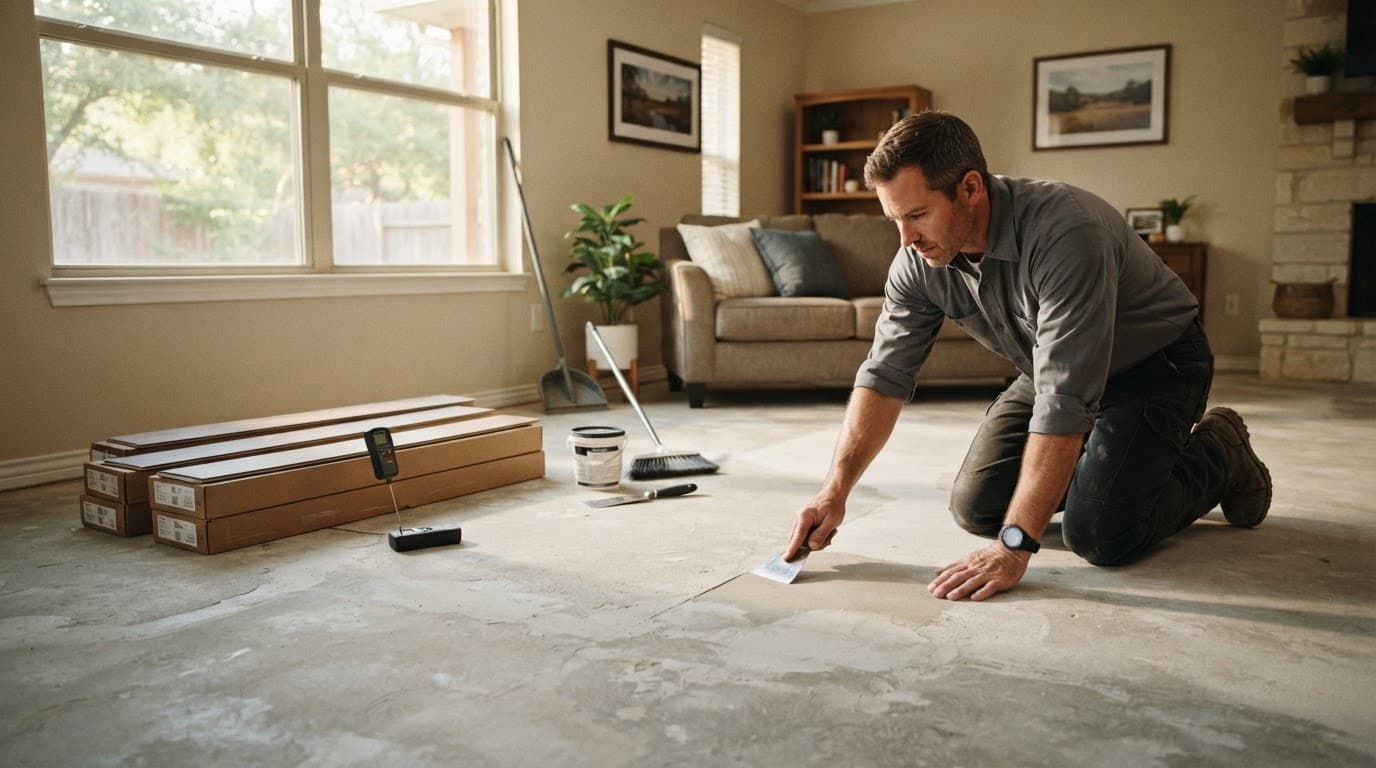
A sound slab doesn’t need major work. Still, preparation may sit outside the base installed rate, often shown per square foot installed. Patching, grinding, crack filling, adhesive removal, leveling, and moisture protection can add cost. Request a written range or allowance for this work, listed independently from material, installation, trim, removal, and disposal.
A floating floor can bridge small imperfections, but it cannot correct a slab that is out of tolerance. The problem often shows up later as clicking joints, movement, or uneven wear.
If your old floor has soft spots, staining, cupping, or movement, ask for an assessment before committing to floor replacement. In many Denton County homes, the concrete slab is the substrate, so the scope may involve slab preparation rather than traditional wood-subfloor work. The assessment should clarify whether subfloor repair is needed as a separate project cost. Sometimes targeted floor repair in Denton makes the new installation more reliable.
Plan for Removal, Stairs, and Finish Details
A clear estimate separates base installation from work that depends on your home. Demolition and prep are separate from the base rate, often quoted by square foot installed, unless the quote says otherwise. Those line items aren’t hidden fees when they’re spelled out early. For tile and stone, demolition, substrate work, and setting labor can materially affect the total and finished appearance.
Costs that often sit outside the square-foot rate
Old carpet removal is usually simpler than tearing out glued-down vinyl or tile. Tile demolition creates more labor, dust control, and disposal weight. Existing hardwood may also require careful removal to avoid damage to nearby baseboards and walls.
Other common additions include:
- The selected flooring material, including any waste allowance.
- Base installation labor, with added labor for patterns, layouts, or difficult access.
- Demolition, removal and disposal of old flooring, which aren’t included in standard installed ranges unless the quote says otherwise.
- Underlayment, vapor barriers, floor leveling, and crack repair.
- Baseboard removal, replacement, quarter-round, and shoe molding.
- Reducers, thresholds, and transitions where floor heights change.
- Door trimming when the new floor raises the finished height.
- Furniture moving, appliance disconnection, resetting, and other project handling.
Stair installation also needs its own allowance. For broad 2026 Denton County planning ranges, basic carpet installation cost is about $50 to $100 per tread. LVP or hardwood stairs often run $100 to $300 per tread, but configurations vary. Confirm whether each allowance includes tread and riser material, nosings, installation labor, removal, staining or painting, and trim.
Tile can cost more than its material suggests. A tile price quoted per square foot installed doesn’t equal the total project price. Demolition, substrate preparation, setting labor, and professional installation can add to that total. Slab cracks may require a crack-isolation membrane before tile goes down. Products such as Crack Buster Pro underlayment are designed to isolate tile from substrate cracks within their stated limits.
How to Compare Flooring Quotes Fairly
When comparing flooring cost Denton County estimates, remember that Denton flooring companies may format bids differently. Compare the written scope, not only the total at the bottom.
Ask flooring contractors in Denton to price the same scope. Request the product name, measured square footage, and installation method. Confirm who performs the professional installation and who checks the concrete slab before materials arrive.
Use this checklist for every written estimate:
- Flooring materials: Verify the product, quantity, waste allowance, and expected delivery.
- Labor: Show the flooring installation cost separately from product pricing.
- Unit rate: Compare the price per square foot installed. Note any room-specific minimums.
- Demolition and removal: Request a separate allowance for existing flooring removal.
- Removal and disposal: List haul-away and disposal fees as their own quote line item.
- Surface preparation: Include separate amounts for subfloor condition, leveling, and moisture treatment.
- Finish details: Price trim, transitions, and stairs separately.
- Handling: Confirm furniture and appliance moving fees.
Some estimates show a lower square foot installed rate but larger preparation allowances. Compare the second square foot installed figure only after reviewing those allowances and the total project cost.
A lower bid can be legitimate when the room is simple and the product is basic. It may also leave out preparation or finish work you still need. A low total isn’t automatically a problem, but costs can rise when installers uncover uneven concrete in Denton County homes.
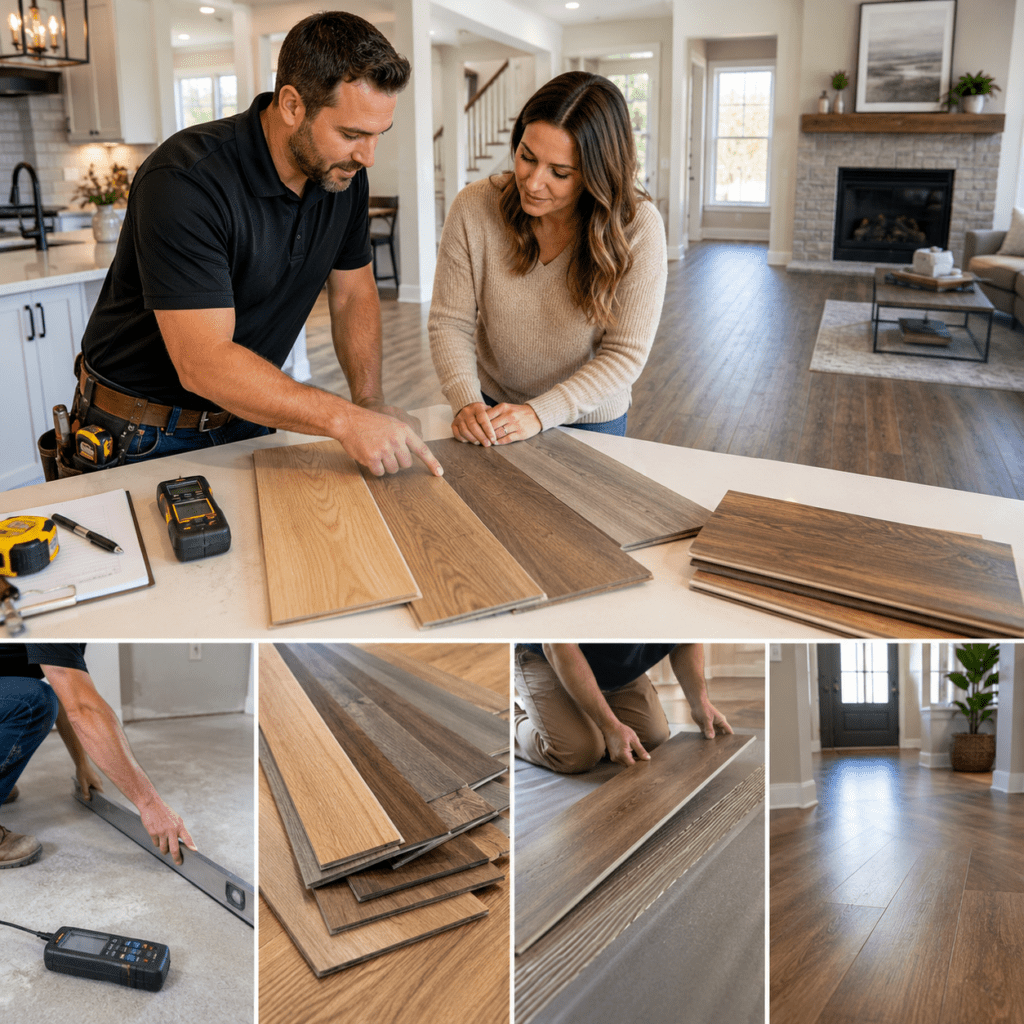
For a useful in-home number, measure each room and identify connected spaces. Share photos of stairs, transitions, damaged areas, and floor vents. Request a free estimate with a written scope through Get Your Free Flooring Estimate instead of relying on a generic price range.

Photo by ClickerHappy
Protect Your Flooring Investment After Installation
Good maintenance extends the life of any residential flooring surface. Sweep or vacuum grit often, since sand and small stones act like sandpaper under shoes and furniture. For vinyl flooring, LVP, and laminate, follow manufacturer-approved cleaning methods. Finishes vary, and excessive water or steam can damage seams or edges.
Keep direct sun in mind. South- and west-facing rooms in Southlake, Grapevine, Keller, and Double Oak can get intense afternoon light in North Texas. Use blinds or UV-filtering window treatments to reduce fading and heat buildup, which can shorten an installation’s life.
For wood, keep indoor conditions reasonably consistent and clean spills quickly. For plank floors, replace damaged boards early if you have extras from the original installation. Save at least one unopened carton after the job, since color lots can change.
A Better Way to Budget a New Floor
The total Denton County project cost reflects the room’s traffic, moisture exposure, slab condition, and finish details, not just the box price. A square foot installed rate is only a starting point. Prep, removal, trim, stairs, and other allowances determine the final range.
Luxury vinyl plank offers active households strong value, while engineered hardwood suits homeowners seeking real wood over a slab. Carpet remains comfortable in bedrooms, and laminate works well in dry areas for budget-conscious homeowners.
For a property-specific recommendation and clear scope of work, Call 469-340-0837 to speak with flooring contractors in Denton. A careful written scope gives you a dependable number before the old floor comes out.
Frequently Asked Questions
How much does new flooring cost for a typical Denton County home?
For 2026 planning, most projects fall between $4 and $12 per square foot installed for carpet, laminate, or LVP. Wood floors often run $7 to $20 per square foot. Tile may cost more because preparation and labor are more intensive.
These figures are estimates, not fixed bids. Your total can rise with removal, repairs beneath the floor, moisture work, stairs, trim, or other project costs.
Is LVP good for homes with pets?
Yes, LVP is a practical option for many pet owners. It handles routine spills and muddy paws better than wood or standard laminate. Compare product quality and choose a durable wear layer, but don’t expect any floor to be scratch-proof.
Use floor protectors under furniture and clean abrasive dirt often. Vinyl flooring can handle routine spills, but you should address pet accidents or leaks quickly. Water can still reach walls, subfloors, and cabinetry.
Should you repair the subfloor before installing new flooring?
Yes. New flooring follows the condition of the surface beneath it. A weak, uneven, damp, or damaged subfloor can cause movement, gaps, noise, and premature wear.
Ask your installer to inspect the slab or subfloor after removal and before installation. Approve needed subfloor repair, slab leveling, moisture mitigation, or surface preparation at that stage. That’s the right time to address problems, rather than after the new floor is in place.