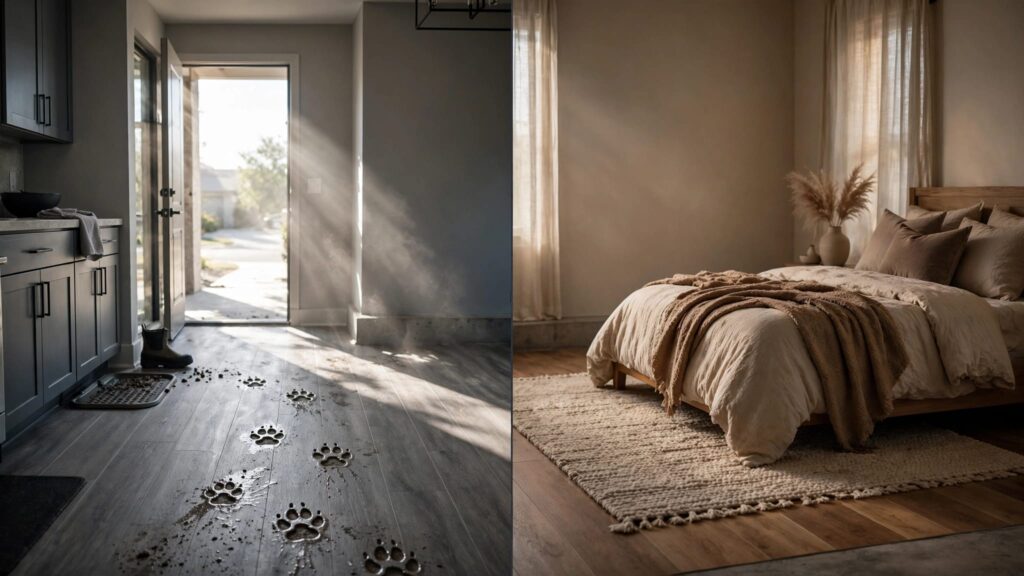
A new floor has to handle more than daily foot traffic in Denton County. It has to live with hot summer sun, active pets, muddy shoes, and concrete slabs that may not be perfectly flat.
When comparing SPC vs WPC flooring, the better choice depends on how your rooms feel, how your slab tests, and what you expect from the floor over time. Both are rigid-core forms of luxury vinyl plank, but they don’t behave exactly the same underfoot.
The right material starts with an honest look at your home, not a quick pick from a sample board.
Key Takeaways
- SPC is a denser, firmer rigid-core vinyl option that often suits busy entryways, kitchens, and homes with active dogs.
- WPC has a foamed core, so it can feel softer and quieter underfoot in bedrooms, living rooms, and upstairs spaces.
- Neither core type fixes a bad substrate. A proper floor installation includes moisture checks, flatness checks, and slab preparation.
- Product construction, wear layer, warranty terms, and installation requirements matter as much as the SPC or WPC label.
- A local flooring contractor can help you compare samples in your own lighting and match the material to your home’s conditions.
SPC vs WPC Flooring: Understanding the Core Differences
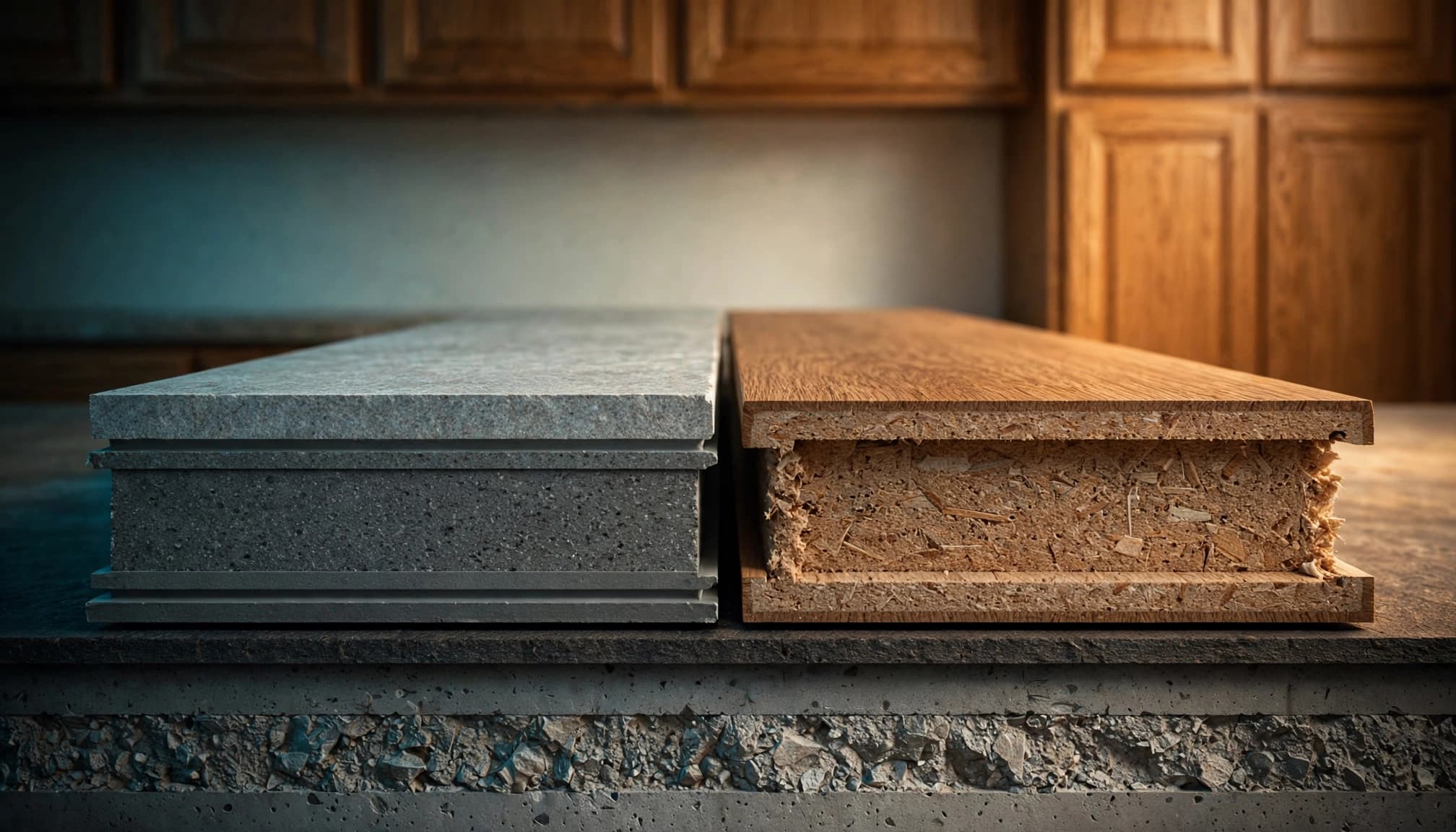
SPC and WPC are both types of rigid-core vinyl flooring. They usually install as floating click-lock planks, although each manufacturer sets its own requirements for underlayment, room size, transitions, and subfloor preparation.
The decorative surface can look similar. The difference sits inside the plank.
SPC has a dense, rigid core
SPC stands for stone plastic composite. Its core commonly contains limestone powder, PVC, and stabilizers, which creates a dense, hard material, as explained in this overview of SPC vinyl core construction.
That density gives SPC a firmer feel. It can be a practical choice for kitchens, hallways, entryways, and homes in Argyle, Corinth, or Frisco where pets and family traffic put floors to work every day.
However, a hard core doesn’t make a plank immune to damage. Heavy dropped objects can still dent or chip the surface, especially if the product has a thin wear layer or a weak locking system.
WPC has a softer foamed core
WPC refers to wood plastic composite, though product formulas vary by manufacturer. Shaw describes WPC as vinyl plank with a foamed core, which often gives the floor more cushion than a typical SPC plank.
You may notice that difference most in a bedroom, upstairs hallway, or living room where you spend long stretches standing or walking barefoot. Some WPC products also soften the sound of footsteps.
A softer WPC plank can feel better underfoot, but it still needs a flat, stable base. Cushion does not hide a wavy slab or loose subfloor.
What North Texas Homes Need From Rigid-Core Flooring
North Texas flooring has to deal with sharp temperature shifts, direct sunlight, seasonal humidity, and slab-on-grade construction. Those conditions don’t automatically rule out either core type. They do make material selection and preparation more important.
Start with the concrete slab
Many homes in Denton, Lewisville, Little Elm, and Flower Mound sit on concrete slabs. Before you schedule floor replacement, the installer should check for moisture concerns, cracks, soft spots, and flatness problems.
Rigid-core planks can telegraph dips and humps below them. Over time, uneven areas may create clicking, stressed joints, or movement in long runs. JBN Flooring evaluates the surface before waterproof LVP flooring installation in Denton so the floor has a stable base.
SPC’s stiffness makes slab preparation especially important. WPC may feel more forgiving underfoot, yet it also needs proper support.
Plan for sun, spills, and pets
Many homeowners choose luxury vinyl plank because it fits real life. It can be a sensible choice near exterior doors, dog bowls, kitchens, laundry rooms, and busy family spaces.
Still, waterproof flooring means the product itself resists water under its intended use. It doesn’t mean water can sit indefinitely at walls, under cabinets, or beneath the planks without risk. Wipe up spills, address plumbing leaks quickly, and follow the manufacturer’s care rules.
For residential flooring with large west-facing windows, use blinds or shades during intense afternoon exposure. Check the specific product’s sunlight guidance before installation.
Which Rooms Favor SPC or WPC?
There isn’t one winner for every house. Your daily use should guide the decision more than a broad claim about which material is “best.”
| Home condition | Often worth considering | Why |
|---|---|---|
| Busy kitchen, entry, or hallway | SPC | The firmer core may suit high-traffic areas. |
| Bedroom or upstairs living area | WPC | Its foamed core can feel softer underfoot. |
| Slab with low spots or ridges | Either, after preparation | Correct the surface before installing either plank. |
| Home with spills and pets | Either waterproof-rated product | Review the full product specifications and warranty. |
The practical takeaway is simple: room use and surface condition should lead the decision.
Choose SPC when firmness fits your lifestyle
SPC can make sense when you want a solid-feeling LVP flooring option in hardworking rooms. In homes with kids, large dogs, or frequent visitors, its dense core is often appealing.
Ask to see full-size samples in your home before deciding. A plank can look warm and natural online but feel too hard or too textured once you walk on it in your own kitchen.
Choose WPC when comfort matters most
WPC can be a strong fit for a quieter primary bedroom, a media room, or an upstairs area. COREtec describes its Original WPC construction as softer, warmer, and quieter, though that is a brand-specific WPC product claim, not a promise for every WPC floor.
If you prefer the feel of a softer plank, compare installed samples where possible. Underlayment, slab flatness, and the product’s total construction can change the final feel.
Professional Flooring Installation Changes the Outcome
A good product can develop problems when someone rushes the prep work. Careful professional flooring installation protects the locking edges, transitions, and finished appearance you paid for.
Preparation comes before planks
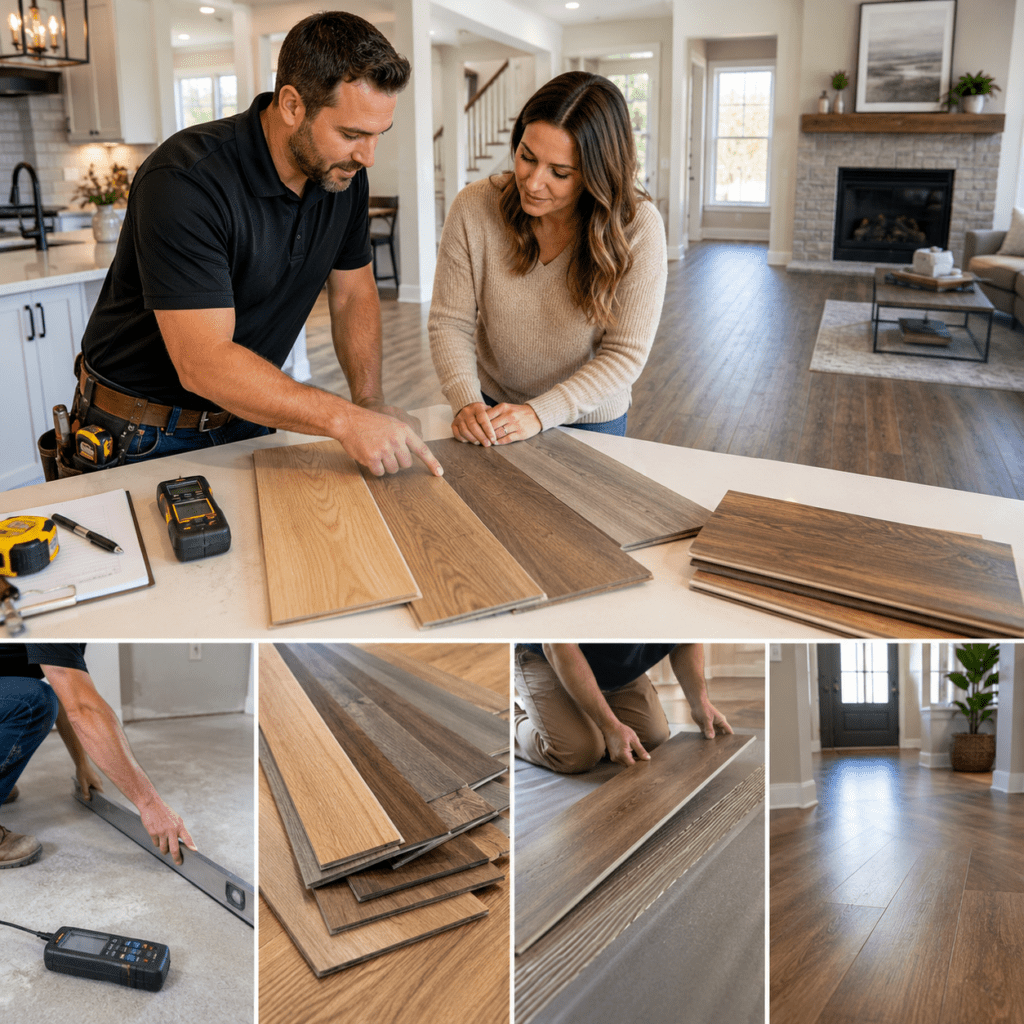
A flooring company should measure the rooms, inspect transitions, test the surface, and identify the existing floor system before giving a final scope. That process matters whether you choose vinyl flooring, laminate flooring, engineered hardwood, or solid hardwood flooring.
For a floating floor, installers may need to remove old material, patch or level areas, correct loose surfaces, and plan expansion space at walls and fixed objects. Each product has its own written requirements.
JBN Flooring handles floor installation in Denton with attention to slab preparation, trim, transitions, cleanup, and the final walkthrough. That makes a visible difference at doorways, fireplaces, and connections to tile.
Don’t install over an unknown problem
Existing flooring isn’t always a suitable base. Loose tile, soft laminate, water-damaged subfloors, and uneven concrete can all create movement beneath a click-lock floor.

If you hear hollow spots, feel soft areas, or see cracked tile before your project begins, raise it during the estimate. A qualified Denton flooring installer should explain whether repair, leveling, or removal is needed before new planks go down.
Maintenance, Repairs, and Other Flooring Options
Both SPC and WPC are low-maintenance compared with many traditional materials. They still need regular care and realistic expectations.
Keep rigid-core floors clean and protected
Sweep or vacuum with a hard-floor setting to remove grit. Use a damp microfiber mop and a cleaner approved for your exact product. Avoid soaking the floor, steam mops, abrasive pads, and wax products unless the manufacturer permits them.
Place mats at exterior doors and use felt pads under furniture legs. Lift heavy furniture instead of dragging it. These steps help prevent scratches and surface wear on any luxury vinyl plank floor.
For damage, replacement may be more practical than repair. Individual plank replacement depends on the locking system, where the damaged board sits, and how the floor was installed. JBN’s floor repair services in Denton can identify what is possible before anyone starts pulling planks apart.
Compare vinyl with wood and laminate honestly
SPC and WPC are not substitutes for every homeowner’s goals. If you want natural grain, refinishing potential, and a traditional material, hardwood flooring may be worth the added moisture management and upkeep.
Engineered hardwood can be a more practical wood option for many slab-on-grade homes, depending on the product and installation method. Meanwhile, laminate flooring can offer convincing visuals and scratch resistance, but it has different moisture limitations than waterproof-rated vinyl products.
A floor replacement should match your lifestyle, not chase a single trend. If you want help comparing the options in your home, Get Your Free Flooring Estimate with JBN Flooring.
Get a Clear Recommendation for Your Home
Bring a few details to your estimate: the rooms you want to update, the current floor type, pet and household traffic, any past leaks, and whether you notice uneven areas.
A North Texas flooring professional can then recommend SPC, WPC, laminate, engineered wood, or another option based on the actual site conditions. You should receive a written scope that explains preparation, material, transitions, and what happens to existing flooring.
For homes in Denton, Lantana, Double Oak, Bartonville, Copper Canyon, Southlake, Keller, Grapevine, and nearby communities, Call 469-340-0837 to discuss your project and schedule a free in-home estimate.
Frequently Asked Questions
Is SPC or WPC better for a kitchen?
Either can work in a kitchen when you select a quality product rated for the space and install it correctly. SPC often appeals to homeowners who want a firmer floor in a high-traffic area. WPC may appeal if comfort underfoot is your priority. In both cases, clean spills promptly and protect the perimeter from long-term water exposure.
Can SPC or WPC go over tile?
Sometimes, but only when the tile is secure, the floor is flat enough, and the finished height works at doors and transitions. Loose tiles, wide grout joints, or uneven areas can create problems under a floating floor. An installer should inspect the tile before recommending an overlay.
Is SPC flooring better than engineered hardwood on a slab?
The better choice depends on your priorities. SPC may suit a household that wants waterproof vinyl performance and low routine maintenance. Engineered hardwood may suit you if real wood is more important and the slab, moisture conditions, and installation method support it. The material should fit the room and the home’s condition.
Choose the Floor That Fits Your Actual Home
The SPC vs WPC flooring decision comes down to comfort, traffic, slab condition, and the product’s written specifications. SPC often feels firmer, while WPC often feels softer, but neither core can make up for poor preparation.
When you choose a floor with the right core and back it with careful installation, you get a surface that looks right and works for the way you live.