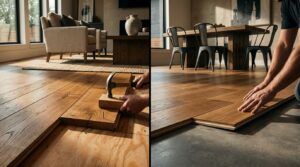
New floors can make your home feel brand-new, but install day can feel uncertain until you know the steps. A professional hardwood floor installation should feel planned, not rushed.
In Denton, DFW, and the rest of North Texas, heat, humidity, pets, and slab movement all matter. When you know what happens before, during, and after the job, it’s easier to spot good work and avoid costly surprises. Start with the prep stage, because that is where long-term performance begins.
What happens before hardwood floor installation starts?
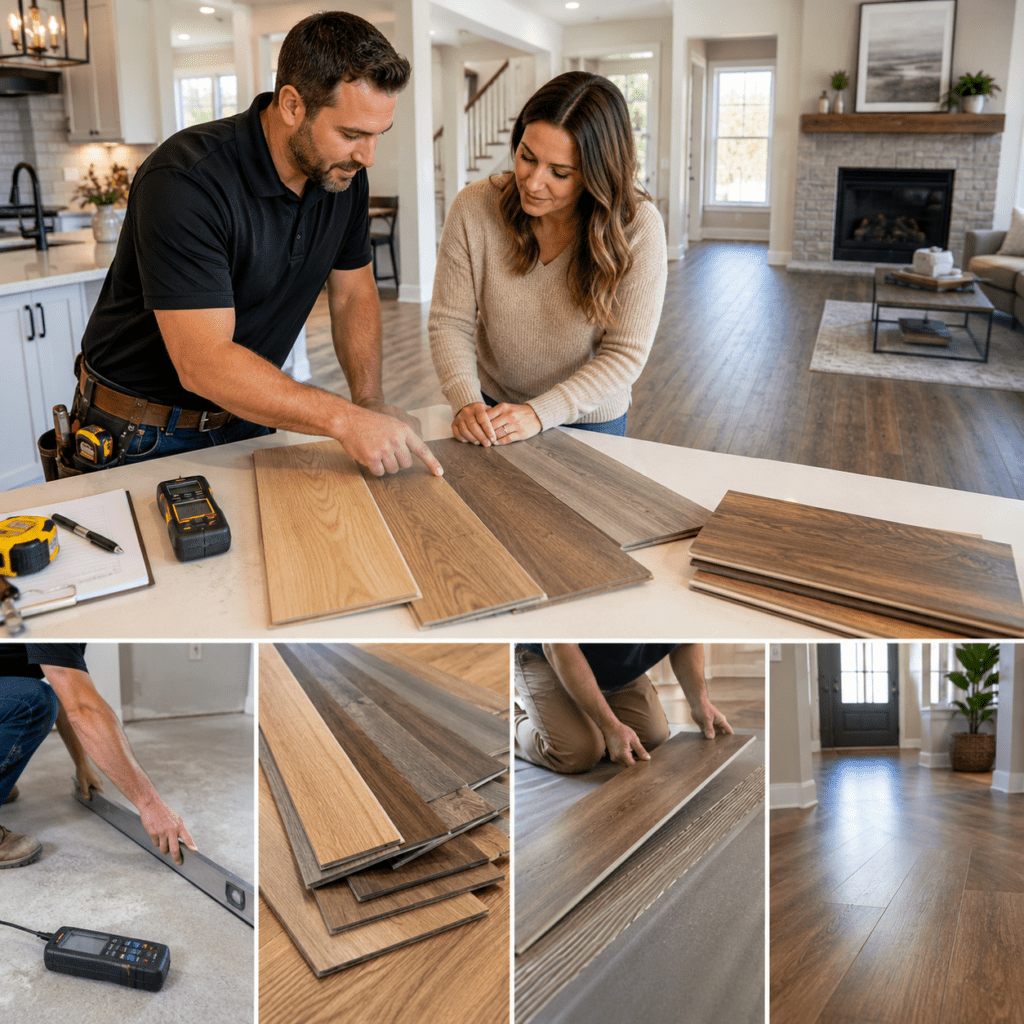
Most problems with hardwood flooring start before installation day, not after. A good crew measures the space, checks door clearances, and tests the subfloor for flatness and moisture.
If your project starts with flooring replacement, expect removal of the old material first. The crew may also pull baseboards, undercut door jambs, and mark transition points between rooms. You should also plan to move small items, breakables, and pet supplies out of the work area.
This stage matters even more in North Texas. Texas humidity, concrete slabs, and small foundation movement can stress wood over time, so a flooring contractor Denton TX homeowners trust should talk about moisture readings and expansion gaps, not only plank color.
Wood also needs time to adjust to indoor conditions. Solid planks may need more acclimation, while engineered hardwood flooring often handles humidity swings better. If you want real wood with better stability, compare engineered hardwood flooring for Texas homes.
If your installer skips moisture testing in North Texas, the job is moving too fast.
For flooring installation Denton TX homes, careful prep is what keeps boards flat, tight, and quiet. It also gives you a clearer timeline before the first board goes down.
What will installation day look like in your home?
A professional install day is busy, but it should not feel chaotic. The crew should protect nearby surfaces, set up a cutting area, and keep you updated as the room changes.
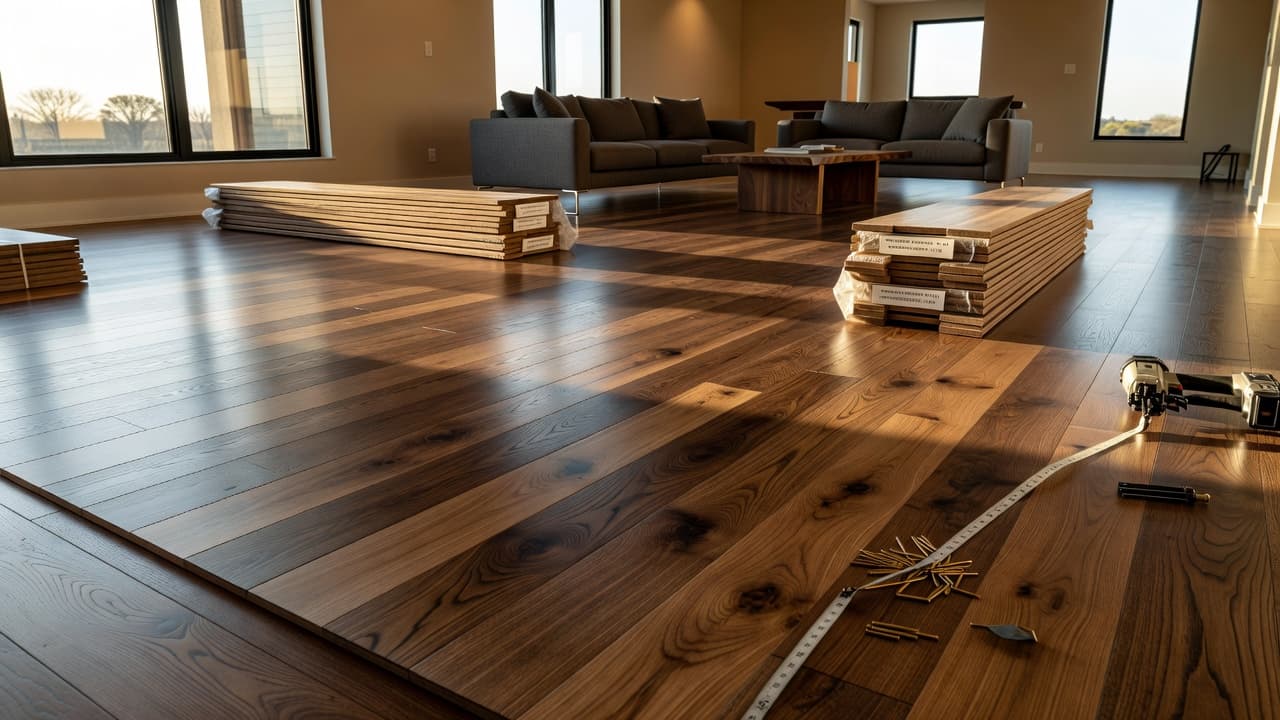
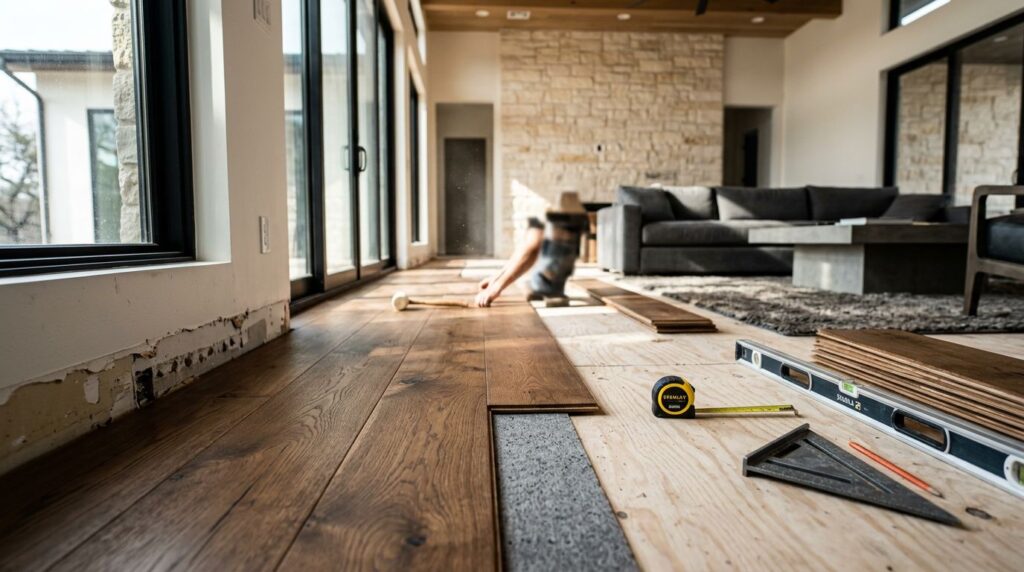
Most hardwood floor installation jobs follow a clear order. First, installers clean and level the subfloor. Next, they dry-fit or “rack” boards to mix color and grain. Then they fasten each row, check lines often, and cut clean edges around walls, vents, and doorways.
The layout step matters more than many homeowners expect. A skilled installer avoids obvious repeating seams, balances plank lengths across the room, and plans transitions so the floor looks natural. Those details are easy to miss at first, but they affect how the whole room feels.
The fastening method depends on the product and subfloor. Solid hardwood flooring often gets nailed or stapled to wood subfloors. Engineered products may be glued, floated, or fastened, especially over concrete slabs that are common in Denton and other North Texas homes.
You should expect noise, sawdust, and limited room access. That matters if you work from home or have children and pets. Keep dogs, cats, and small kids out of the work zone, because tools, sharp offcuts, and open adhesives are not safe.
A careful crew also watches the small details. Straight starter rows, tight board joints, and clean vent cuts tell you a lot about the quality of the job.
How long does hardwood floor installation take?
Most single-room installs take a day or two, while larger homes can take several days. The exact schedule depends on prep, product type, and how much detail work your layout needs.
A flat, dry subfloor moves faster. Repairs, squeaks, low spots, stairs, and custom borders add time. Site-finished floors also take longer because sanding, stain, and finish coats need drying time between steps.
Weather can affect the pace as well. In Denton and across DFW, humid days can change acclimation needs, and slab moisture can delay the start. Homes with heavy foot traffic often reveal hidden wear under the old floor, so some delays are smart quality control.
If the project covers several rooms, your installer may phase the work so you can still use part of the home. If you want a clear room-by-room timeline before work begins, Schedule Your Free Flooring Estimate and ask what could change the schedule.
What happens after the last plank goes down?
When the last plank is down, the job is not over yet. Final details are what separate a neat install from one that looks unfinished a month later.
Expect the crew to add transitions, reinstall baseboards or quarter-round, fill small nail holes when needed, and clean the space. Then they should walk you through the floor and point out any cure times, humidity targets, and furniture rules.

Photo by Bidvine
Do not rush the room back into service. Some prefinished hardwood flooring can handle light foot traffic sooner, while glued or site-finished floors need more time. Your installer should tell you when to move furniture, when to place rugs, and when regular cleaning can start.
The first few weeks matter. Use felt pads under chairs and tables, keep pet nails trimmed, and avoid excess water when cleaning. In North Texas, stable indoor humidity also helps new wood settle the way it should, especially in homes that see seasonal dryness and summer moisture swings.
Is hardwood the best fit for every room?
Real wood looks rich and lasts a long time, but it is not the best answer for every room. In busy North Texas homes, the right floor depends on moisture, maintenance, pets, and daily traffic.
This quick comparison can help:
| Flooring type | Best fit in your home | Main tradeoff |
|---|---|---|
| Hardwood flooring | Living rooms, bedrooms, dining areas | More sensitive to spills and humidity |
| Engineered hardwood flooring | Homes with slab foundations and mild moisture swings | Still not ideal for wet rooms |
| Luxury vinyl plank flooring | Kitchens, entryways, pet zones, whole-home traffic | Does not have the same solid-wood feel |
| Laminate flooring | Dry rooms with a tighter budget | Less forgiving around standing water |
If you love wood looks but want less worry, modern luxury vinyl flooring is often the smarter call. Today’s Waterproof Flooring Options give you wood visuals with easier care, and many lines are true pet-friendly flooring for families with spills, claws, and muddy paws.
That matters in mudrooms, kitchens, laundry areas, and homes with heavy foot traffic. Many homeowners also choose professional waterproof LVP installation because it pairs waterproof flooring with scratch-resistant flooring and fits modern flooring styles. For many families in Denton County, it is the most durable flooring for Texas homes.
Hardwood still shines in the right spaces. If you want natural texture, refinish potential, and a classic feel underfoot, wood is hard to beat. However, if your home has active pets, frequent spills, or rooms that stay damp, LVP often wins on upkeep and peace of mind.
Conclusion
A good install feels calm because the hard work happens before the first board goes down. When the crew checks moisture, preps the subfloor, and explains the finish details, your floor has a much better chance of lasting.
Your best protection is moisture control and clear communication. In North Texas, those two things matter as much as the wood you choose.
FAQ: Hardwood Floor Installation
Can you stay home during the installation?
Yes, in many cases you can stay home during hardwood floor installation. Still, expect noise, dust, blocked rooms, and limited access for pets and kids. If the job includes strong adhesives or site-finishing, you may be more comfortable staying elsewhere for part of the day.
Should you choose solid or engineered hardwood flooring in North Texas?
Engineered hardwood flooring is often the safer pick over concrete slabs because it handles humidity swings better. Solid wood can still work well, but it needs the right room, the right subfloor, and careful moisture control. Ask which option fits your home’s foundation, floor plan, and daily use.
How soon can you walk on the new floor?
That depends on the product and the install method. Prefinished boards may allow light foot traffic the same day or next day. Glued or site-finished floors usually need more wait time. Follow the installer’s instructions, because early traffic can mark the surface or shift boards before they settle.
Will installers remove furniture and the old floor?
Some crews include furniture moving and old floor removal, while others treat that as a separate service. Ask before the project starts so there are no surprises on install day. If your job includes full flooring replacement, confirm who handles haul-away, trim removal, and appliance moves.
When is LVP a better choice than hardwood?
If you need waterproof flooring for pets, kids, wet shoes, or frequent spills, LVP is often the better fit. It gives you a wood look with easier care, and many products are built as scratch-resistant flooring for active homes. Luxury vinyl plank flooring is a strong choice for kitchens, entryways, and high-use family spaces.