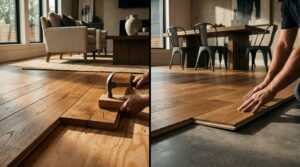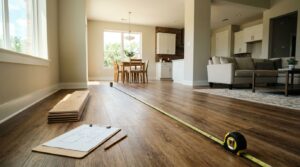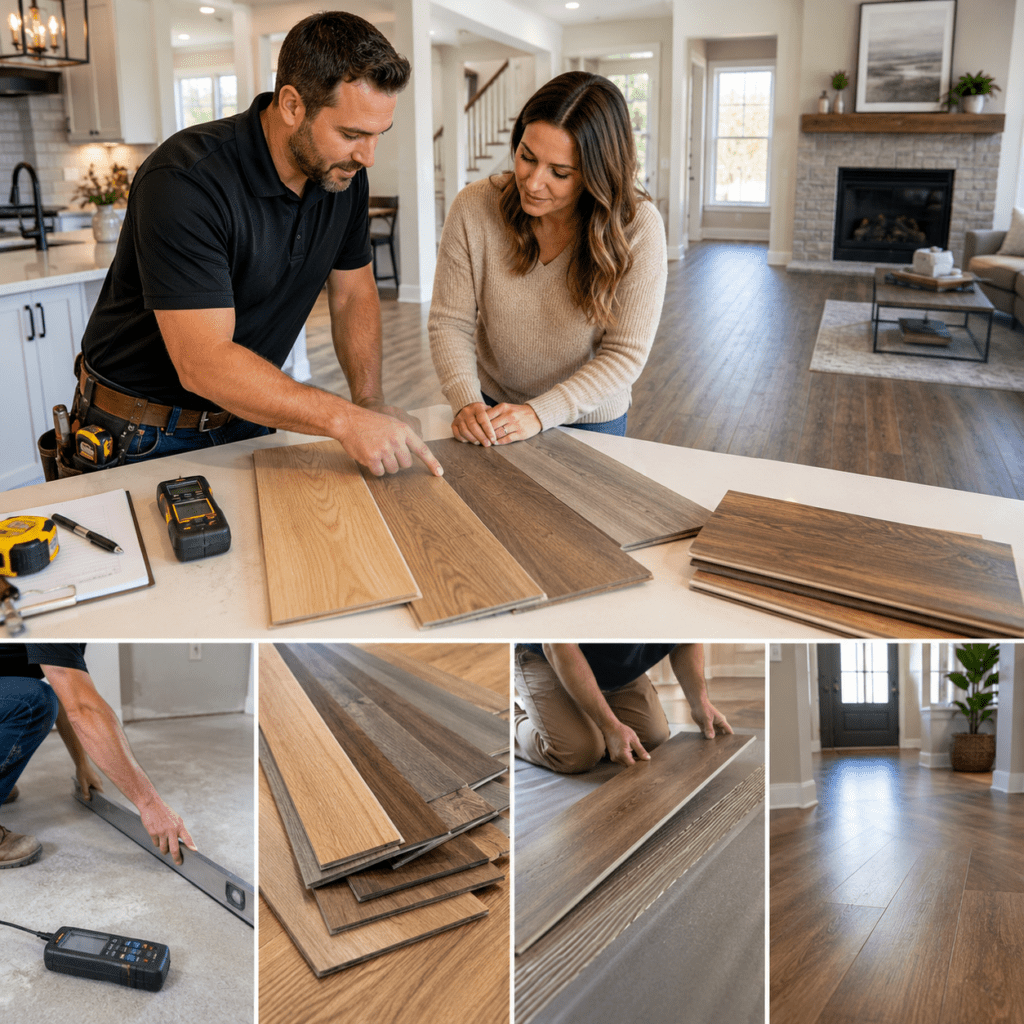
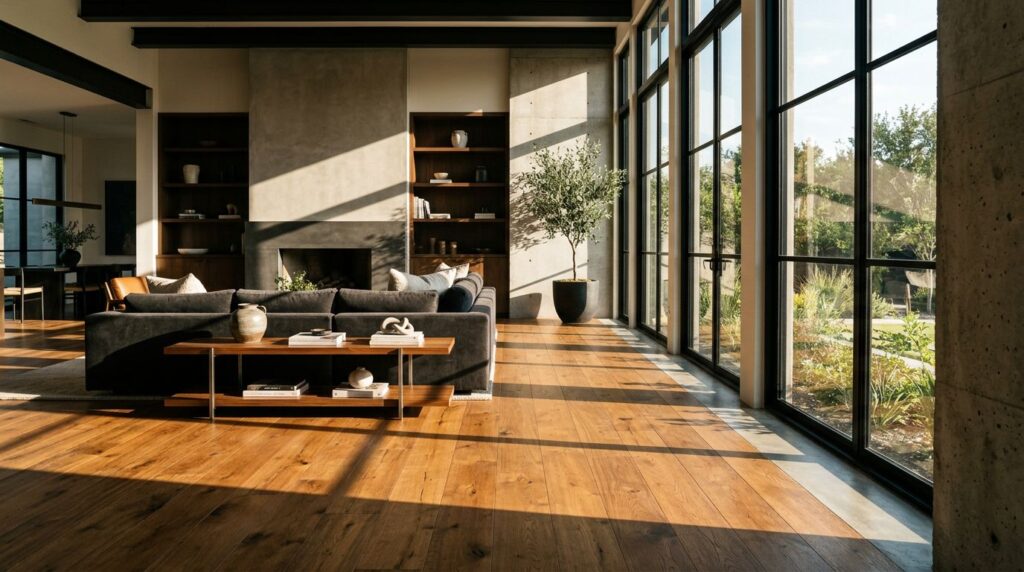
A North Texas summer can expose flooring problems that stayed hidden all spring. Texas heat hardwood flooring concerns usually start with gaps, cupped boards, faded areas near windows, or floors that feel different underfoot.
If you live in Denton, Argyle, Flower Mound, Frisco, or nearby, your home deals with more than hot weather. North Texas homes, along with homes in the Brazos Valley, face humidity swings, strong sun, HVAC cycles, concrete slabs, and clay soil. Foundation movement can add another challenge, so the right choice starts with knowing what your home is asking of the floor.
Key Takeaways
- Engineered hardwood is often more forgiving than solid hardwood in North Texas because its layered construction handles seasonal moisture changes with greater dimensional stability.
- Concrete slabs require moisture testing, flatness checks, crack treatment, and product-approved preparation before hardwood installation.
- Texas heat is only part of the concern; humidity swings, direct sunlight, HVAC cycles, clay soil, and foundation movement can all affect flooring performance.
- Use room-appropriate materials, such as LVP or porcelain tile in wet areas, and protect wood floors with stable indoor humidity, window coverings, prompt spill cleanup, and approved cleaning products.
- Have persistent gaps, cupping, squeaks, cracks, or transition changes evaluated before refinishing or replacing the floor so the underlying cause can be addressed.
Can hardwood flooring handle North Texas conditions?
Yes, solid hardwood can work in North Texas, but engineered hardwood is often more forgiving. Species, construction, moisture conditions, and installation method matter as much as the color you pick.
A stable indoor environment helps any wood floor, and consistent HVAC operation supports that stability. Homes across North Texas and the Brazos Valley must handle climate variation, Texas humidity, and temperature swings. Concrete slabs may also hold moisture through seasonal changes.
Heat is only part of the story
Wood responds more to moisture changes than to air temperature alone. Engineered hardwood uses layered construction, which is often more forgiving when local homes experience seasonal movement.
When indoor humidity rises, boards take on moisture and expand. As humidity drops, they release moisture and shrink.
That movement can create gaps during dry periods. It can also lead to cupping when one side of a board gains more moisture than the other. A qualified flooring contractor should check house conditions before recommending a wood product.
Direct sun fades finishes and warms boards
South-facing rooms in Lantana, Southlake, and Highland Village can receive strong direct sunlight. Ultraviolet light gradually changes the color of natural wood, even under a factory-applied finish.
Use blinds, curtains, or UV-filtering window film where sunlight hits the same floor area daily. Move rugs occasionally, too, so the exposed and covered sections age more evenly.
What happens to solid hardwood during humidity swings
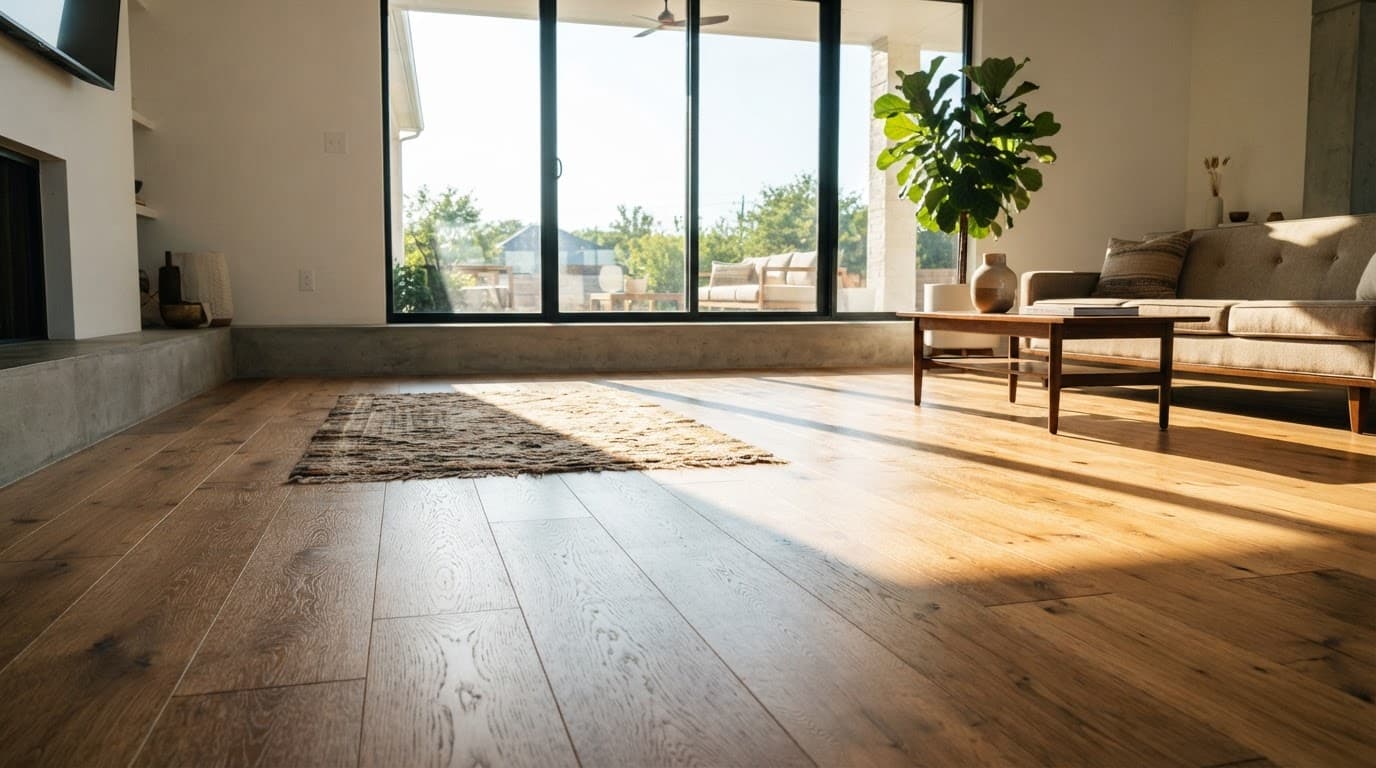
Solid hardwood is one piece of wood through its full thickness. That construction gives you a classic floor with real refinishing potential. Yet it also means the boards expand and contract across their width as moisture changes.
In an older home with a raised wood subfloor, solid hardwood may be a good fit when indoor conditions stay controlled. Texas humidity affects indoor relative humidity, which differs from outdoor air temperature. Many Denton County homes are slab-on-grade, and compared with engineered hardwood, solid boards require more careful moisture control over a concrete slab. Moisture moving through the slab, along with soil conditions in the Brazos Valley, can create problems beneath wood.
Cupping, crowning, and seasonal gaps
Cupping happens when board edges rise above the center. It often points to excess moisture below the floor or a sudden humidity change. Crowning is the opposite condition, where the middle rises above the edges, sometimes after a cupped floor gets sanded before it has fully dried.
Small seasonal gaps are common with solid wood. Wide, recurring gaps, lifted boards, or boards that rub against each other deserve investigation before sanding or cosmetic repair. Check for leaks, moisture imbalance, or foundation movement first. These symptoms show why solid hardwood needs stable moisture conditions.
Sanding a cupped hardwood floor before moisture levels stabilize can turn a temporary moisture problem into permanent crowning.
Review NWFA’s technical guidelines when comparing wood-floor care standards and installation requirements. They reinforce an important point: wood performs best when moisture is measured, not guessed.
Why engineered hardwood handles Texas homes better
Engineered hardwood has a real wood wear layer over a multi-layer plywood core. Each layer runs in a different direction, reducing the expansion and contraction common with solid hardwood.
That construction gives engineered hardwood greater dimensional stability for many North Texas homes. Engineered wood flooring offers natural wood grain, real wood texture, and varied plank widths. Its plywood core often makes it suitable for installation over prepared concrete slabs, including in the Brazos Valley.
The wear layer still matters
A thicker wear layer can allow future refinishing, although the product’s specifications and the floor’s condition decide what is possible. Thin veneers shouldn’t be treated like a solid plank.
Select a finish that fits your household. Matte and low-sheen finishes often hide small scratches and dust better than glossy surfaces. In sunny rooms, ask about finish warranties and color-change expectations before you commit.
For North Texas conditions, this construction balances wood character with practical stability. Explore engineered wood flooring installation if you want to compare slab-ready products and installation options.
Engineered hardwood still needs controlled conditions
Engineered construction reduces movement. It doesn’t make wood waterproof or immune to Texas humidity, wet areas, or a wet slab.
Keep indoor humidity within the flooring manufacturer’s recommended range. Run your HVAC system consistently, repair leaks quickly, and avoid wet-mopping any wood floor.
Concrete slabs need moisture testing, not assumptions
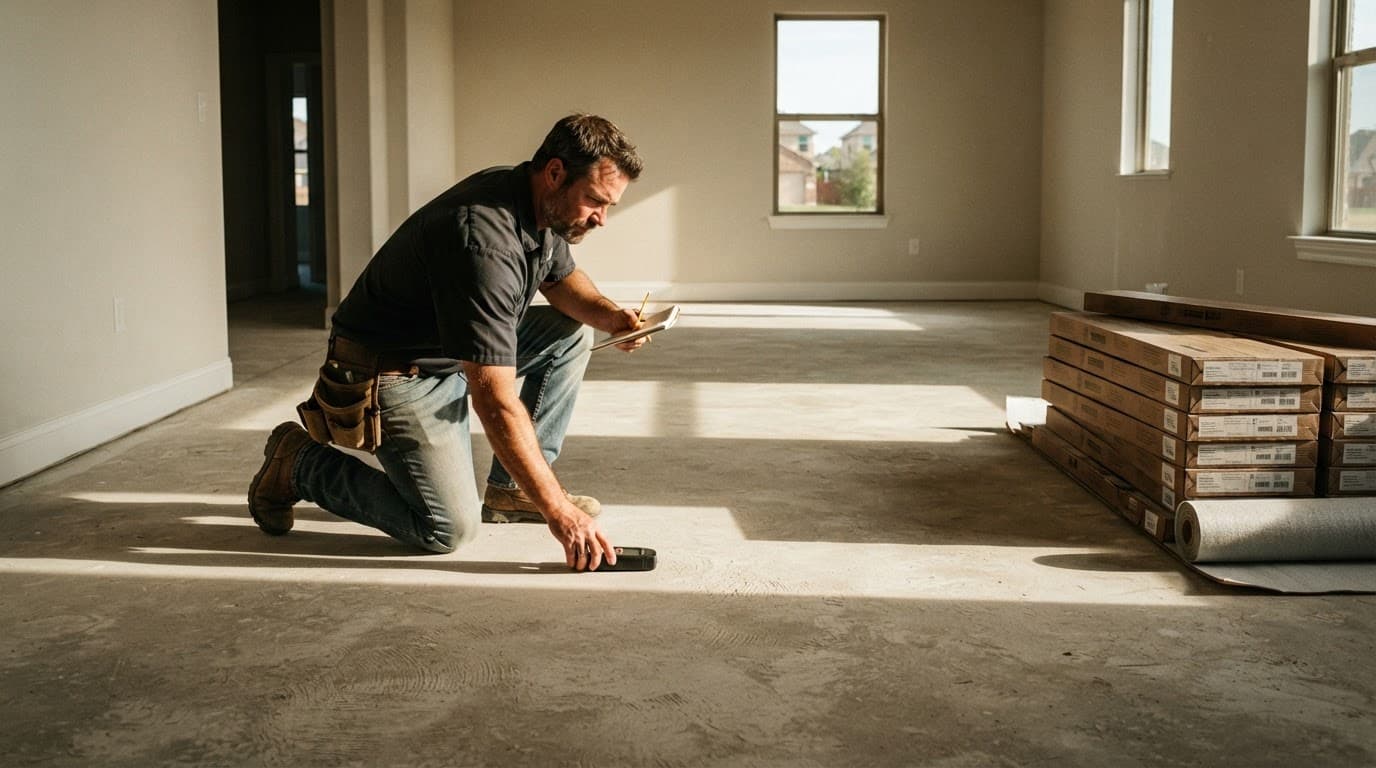
Concrete may look dry while it releases moisture vapor. That is why proper floor installation begins with subfloor preparation, including moisture testing, flatness checks, crack treatment, and surface-readiness review. The selected product’s requirements guide that work.
In Brazos Valley homes, concrete slabs can show cracks, low spots, high spots, old adhesive, or excess moisture. A crack doesn’t always stop an installation or indicate moisture, since it may reflect foundation movement, shrinkage, or another cause. Proper preparation before wood goes down helps prevent hollow sounds, adhesive failure, board movement, and expensive floor replacement.
Test the slab before ordering materials
In-situ relative humidity testing under ASTM F2170 is one common method for evaluating slab moisture. Acceptable results depend on the flooring, adhesive, moisture-control system, product construction, and manufacturer specifications. A plywood core may have different moisture limits.
The NWFA installation guidelines identify moisture testing as part of slab-on-grade installation planning. Likewise, this wood-floor moisture testing overview explains why readings must match the product system, not a generic number found online.
Match installation methods to the product
Some engineered hardwood systems are approved for glue-down installation over a properly prepared slab. Others use a floating system over approved underlayment. Your installer may need a manufacturer-approved moisture-control product before either method can proceed.
Professional flooring installation includes this planning, not only laying planks, and local installers in the Brazos Valley can apply the same standards. For a project-specific slab assessment, see JBN Flooring’s flooring installation in Denton, TX.
Choose materials room by room, not house by house
Wood isn’t always the best surface for every room. You may prefer engineered hardwood in bedrooms, living spaces, and dining rooms, then choose a more water-tolerant material for kitchens, laundry rooms, or baths.
This comparison keeps common floor replacement decisions practical.
| Room or condition | Usually a strong fit | Why it works |
|---|---|---|
| Living room or bedroom | Engineered hardwood | Real wood appearance with better slab stability |
| Kitchen with frequent spills | Luxury vinyl plank | Water-resistant surface and easy daily cleaning |
| Bathroom or laundry room | Waterproof flooring or porcelain tile | Better protection against standing water |
| Budget-conscious dry room | Laminate flooring | Durable look with lower material cost |
Luxury vinyl plank, often called LVP flooring, gives you a wood-look surface without hardwood’s moisture sensitivity. Quality vinyl flooring also works well for pet-friendly homes, rental properties, and busy entryways. LVP and other waterproof products still need product-specific installation. Consider waterproof LVP flooring installation if daily spills or wet shoes are part of your routine.
Laminate flooring can be a good option in dry spaces, especially when budget drives the project. Compare total cost per square foot installed, rather than material price alone, when considering durability and resale value. It needs prompt cleanup after spills and is less forgiving of standing water than waterproof LVP in kitchens and baths.
Acclimation protects your investment before installation
Acclimation means bringing flooring materials into the home’s normal living conditions before installation. It lets the boards adjust to the temperature and relative humidity they will experience after the job is complete.
Don’t rely on a blanket 48-hour rule. Some products need more time, and manufacturers may set different acclimation instructions for delivery, storage, and conditioning. North Texas weather can shift fast, so those instructions control the schedule, especially at a Brazos Valley jobsite. Keep the home’s HVAC operating as it normally will after installation, including during periods of Texas humidity.
A practical pre-installation checklist
Before a new wood floor goes in, confirm these conditions:
- Keep the home enclosed, climate-controlled, and at normal occupied conditions for the selected engineered hardwood product.
- Store cartons flat and off the slab, following the product instructions.
- Test the slab or wood subfloor for moisture and flatness, then evaluate the home for foundation movement.
- Complete painting, drywall work, plumbing repairs, and other wet trades first.
- Remove heavy furniture and plan furniture pads before installation day.
The NWFA jobsite conditioning training highlights why jobsite conditions and wood moisture content belong in the same conversation.
For a North Texas wood-floor project, this preparation often matters more than choosing between two similar-looking plank colors.
Maintain hardwood through heat, sun, and soil movement
Clean wood floors with a dry microfiber mop or a cleaner approved for the finish. Wipe up spills right away, use breathable mats at exterior doors, and keep felt pads under furniture legs. Avoid steam mops, soaking wet mops, and oil soaps that can leave residue.
Watch for signs that deserve a site visit
A new gap near a transition, a squeak, or a small crack may be minor. However, changes that keep spreading can point to a larger issue. A floor repair should begin by finding the cause, not covering the symptom.
Foundation movement can affect floors in areas with expansive clay soil, including parts of Denton County and the Brazos Valley. It may crack tile or grout, separate baseboards, and open gaps around flooring edges. Wood floors can show slab movement, too, although their flexibility may hide some changes.
Not every gap or squeak comes from structural movement. Moisture, plumbing leaks, and installation problems can cause similar signs. Persistent changes deserve a site visit, especially in the Brazos Valley.
If existing wood needs attention, hardwood installation and refinishing can help identify the cause before you refinish existing hardwood, repair it, or replace it. A dependable Denton flooring company should give you a clear scope that addresses both the floor and the surface beneath it.
Choose a floor built for your actual home
Texas summers don’t rule out hardwood. They do require a careful match between material, sunlight, indoor humidity, subfloor, room use, and budget. Engineered hardwood often suits North Texas slab homes, while LVP or tile may work better in wet areas. Solid hardwood can still fit the right structure and moisture conditions.
Before ordering materials, have a local professional evaluate the slab and rooms for moisture and foundation movement. Ask about engineered wood flooring options suited to your home. Get Your Free Flooring Estimate from JBN Flooring, or Call 469-340-0837 to discuss your home in Denton County, the Brazos Valley, or surrounding areas.
Frequently asked questions
Is engineered wood flooring a good choice for intense Texas heat?
Yes, engineered hardwood is often a good choice because its layered core limits seasonal movement better than solid planks. Proper slab testing, approved installation materials, and stable indoor humidity still matter for reliable performance.
Can engineered hardwood go directly over a concrete slab?
Some products can, but only when the manufacturer allows it and the slab meets moisture and flatness requirements. A plywood core may support approved glue-down installation, while other products use a floating method with the correct underlayment or moisture-control system.
Will clay soil foundation movement crack tile or cause flooring gaps?
It can. Tile and grout are brittle, so slab movement may cause cracks. Wood and floating floors may show gaps, transition issues, or separation near walls. In the Brazos Valley, have persistent slab or flooring changes evaluated before scheduling cosmetic repairs.