New floors can look perfect on day one and still fail early if the surface underneath is weak, damp, or uneven. The most expensive material in the room can’t hide a bad foundation for long.
Knowing the subfloor repair signs before demolition helps you avoid loose planks, hollow spots, cracked joints, and surprise change orders. This matters in Denton, Argyle, Flower Mound, and across North Texas, where humidity swings, plumbing leaks, and slab movement can affect the floor system.
A careful inspection before new flooring gives you a clear scope, a sound surface, and a better chance of years of trouble-free use.
Subfloor Repair Signs You Shouldn’t Ignore
Your existing floor often gives you the first warning. Pay attention to what changes underfoot, especially near bathrooms, exterior doors, kitchens, and high-traffic hallways.
Soft, bouncy, or sagging areas
A floor that feels soft or dips when you walk across it may have water-damaged plywood, weakened particleboard, or a structural issue below. You may notice it first beside a refrigerator line, dishwasher, toilet, or pet water bowl.
A soft spot rarely fixes itself. New planks installed over it will flex with every step, which can pull apart locking joints or create visible low areas.
Squeaks, movement, and uneven seams
Squeaks don’t always mean major damage, but they do deserve attention before a floor replacement. A loose wood panel can rub against a joist or another panel. In other cases, fasteners have backed out or seams have lifted.
Run your hand across the floor after old carpet or vinyl comes up. Raised panel edges, loose nails, and ridges can show through a finished floor. These subfloor repair signs are easier and less costly to address before material covers them.
A floating floor can bridge only minor surface variation. It cannot correct a moving or deteriorated subfloor.
Moisture Damage Often Starts Below the Surface
Water doesn’t need to flood a room to damage a subfloor. A slow dishwasher leak, recurring toilet seal failure, wet shoes at a back door, or high humidity in a pier-and-beam crawl space can cause gradual deterioration.
Stains, swelling, and a musty odor
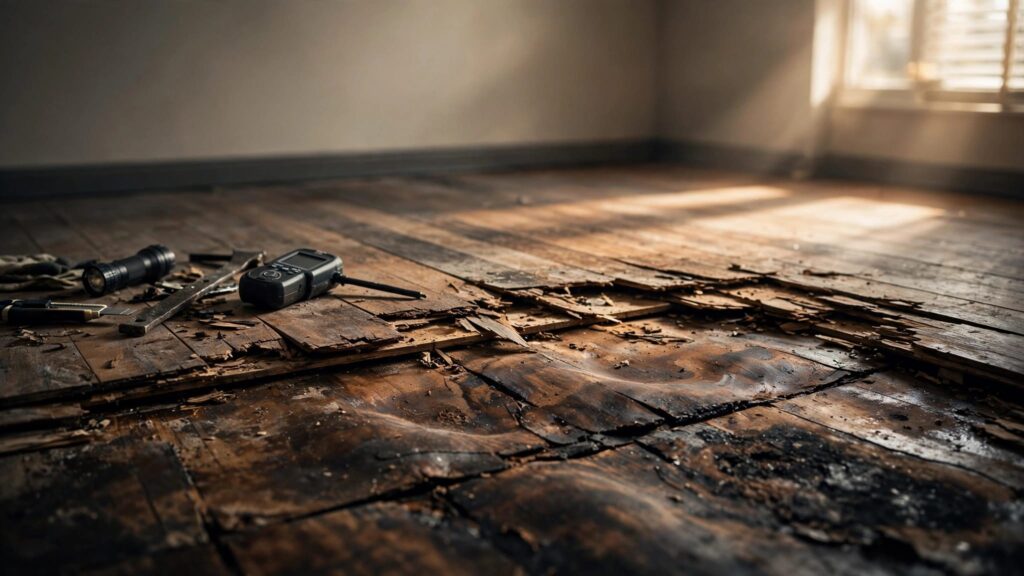
Look for dark rings, water stains, swollen edges, crumbling material, or black discoloration after the old flooring comes out. Plywood can delaminate after repeated wetting. Particleboard often swells and loses strength, even after it feels dry.
A musty smell can point to a past or active moisture source. Before you cover it, find the cause. Repairing the damaged section without fixing the leak only delays the next failure.
Why moisture testing matters in North Texas
Denton County homes face hot summers, heavy rain events, and fast humidity changes. Those conditions can affect both wood framing and concrete slabs. A flooring contractor should test when the material and installation method call for it, rather than relying on how dry a room looks.
The National Wood Flooring Association technical guidelines address moisture, wood flooring, and regional climate conditions. For solid wood products, manufacturers also require documented jobsite and subfloor conditions. Review Somerset’s solid hardwood installation guidance before selecting a product for your home.
If you see staining, swelling, or a persistent odor, schedule an evaluation before ordering material. JBN Flooring can identify whether you need surface preparation, targeted floor repair, or a broader investigation.
Concrete Slab Problems That Affect New Flooring
Many homes in Frisco, Plano, Lewisville, Southlake, and Denton sit on concrete slabs. Concrete is durable, but it isn’t automatically flat, dry, or ready for every flooring product.
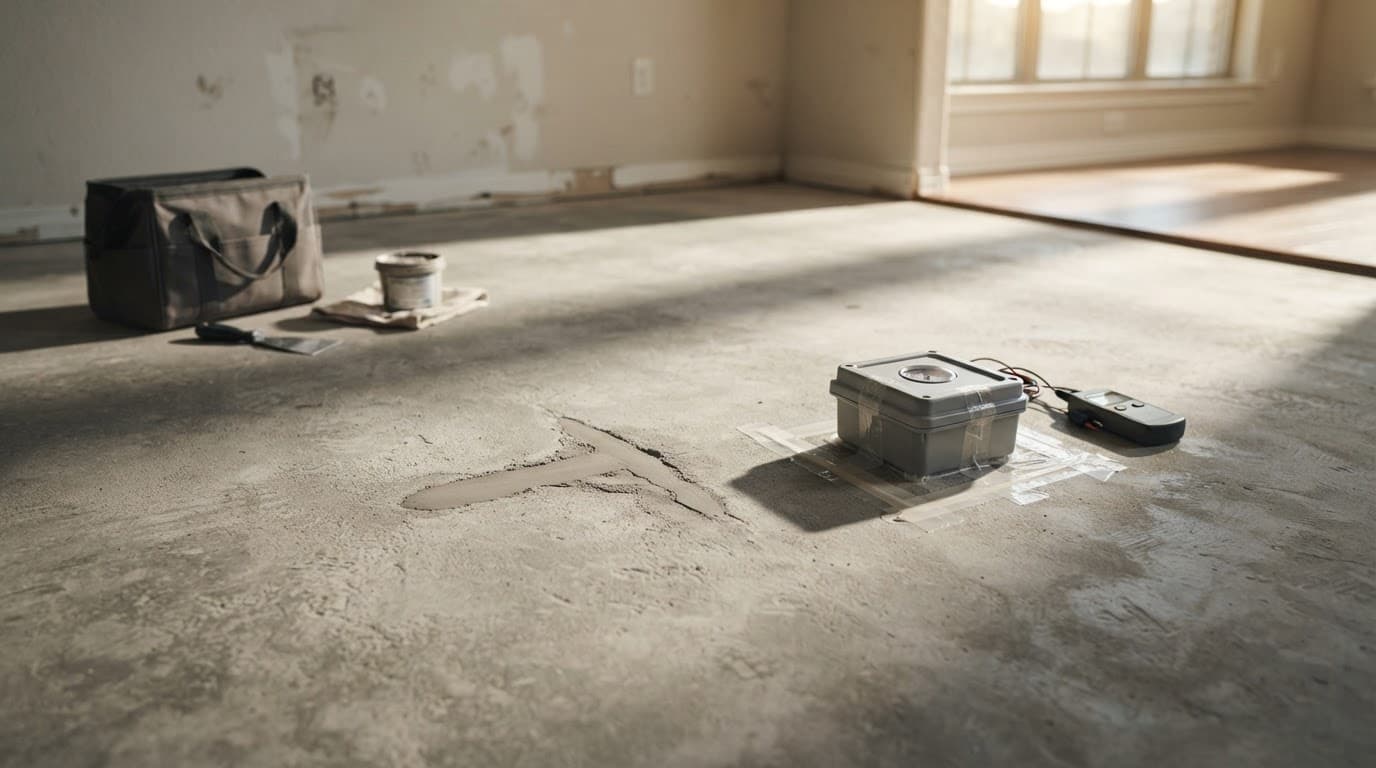
Cracks, low spots, and slab movement
Hairline cracks are common, but their condition matters. A crack with vertical displacement, crumbling edges, or ongoing movement needs closer review. Low spots can also create problems with floating floors because the planks flex under weight.
A straightedge helps reveal dips, humps, and old adhesive buildup. The acceptable flatness depends on the flooring manufacturer, so your installer should check the product requirements before selecting a patching or leveling method.
Moisture vapor and adhesive failure
Concrete can release moisture vapor even when its surface appears dry. That moisture can weaken adhesives, cup wood, or contribute to mold beneath flooring systems. For wood installed over a slab, the American Hardwood Information Center’s concrete-slab guidance stresses that concrete and surrounding materials must be dry.
Don’t assume waterproof flooring makes slab moisture irrelevant. A waterproof top layer protects against spills from above. It doesn’t repair a wet slab or stop moisture migration below the floor.
Why Your Flooring Choice Changes the Prep Work
Each material responds differently to small imperfections. The right product starts with an honest look at your subfloor, lifestyle, and room conditions.
| Flooring type | What the subfloor needs | Best fit for many homes |
|---|---|---|
| Luxury vinyl plank | Flat, smooth, and stable surface | Busy rooms, pets, spills, and concrete slabs |
| Laminate flooring | Dry, level base with sound edges | Bedrooms and lower-moisture living areas |
| Engineered hardwood | Controlled moisture and stable substrate | Living rooms and homes wanting real wood |
| Solid hardwood flooring | Dry, structurally sound wood subfloor | Well-conditioned rooms with proper framing |
The takeaway is simple: the floor beneath your flooring is part of the finished system.
LVP flooring can telegraph imperfections
Luxury vinyl plank is a practical choice for many North Texas flooring projects, but it isn’t a cure for unevenness. Thin LVP flooring may show a ridge, screw head, seam, or slab wave through the face of the plank. It can also separate at the joints when the surface moves.
With good prep, waterproof LVP flooring installation works well in kitchens, entries, laundry rooms, and homes with pets. Choose a product for its wear layer, locking system, and fit for the room, not only its color.
Wood and laminate need stable conditions
Hardwood flooring adds warmth and can last for decades, but wood reacts to changing moisture. Engineered hardwood offers a real wood surface with added dimensional stability. It is often a sensible choice over properly prepared concrete or in homes where humidity control is consistent.
Laminate flooring can be a budget-conscious choice for dry rooms. However, its core can swell when water reaches the seams. No flooring selection removes the need to repair soft material, loose panels, or moisture damage first.
What a Professional Subfloor Inspection Includes
Before professional flooring installation begins, the old surface should come up far enough to reveal what is actually underneath. A good inspection looks beyond the visible wear layer.

Photo by RDNE Stock project
Checking flatness, fasteners, and framing
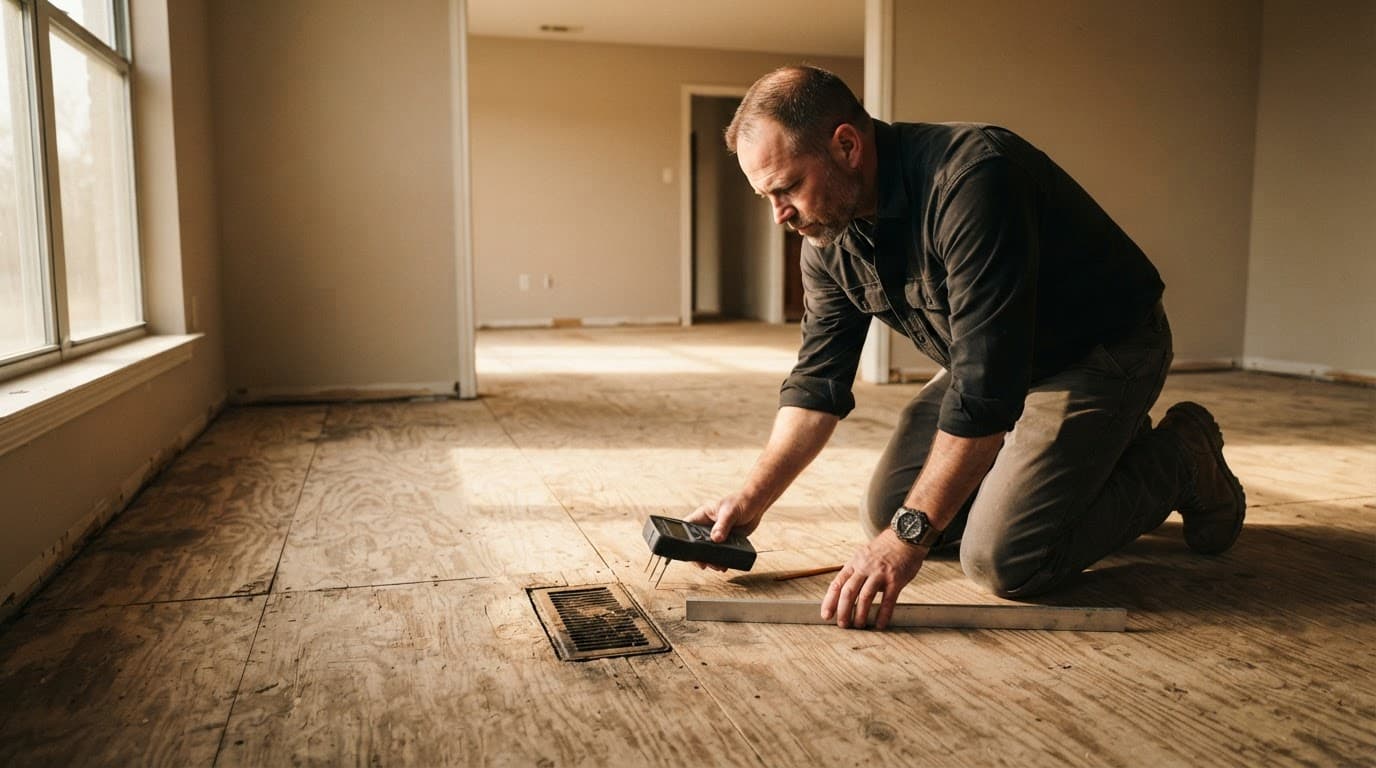
On a wood subfloor, the installer checks for loose sheets, high seams, missing fasteners, damaged areas, and squeaks. On a concrete slab, the focus shifts to surface residue, cracks, flatness, and moisture conditions.
Floor vents, exterior walls, and plumbing locations deserve extra attention. In pier-and-beam homes around Lantana, Double Oak, Bartonville, and Copper Canyon, access below the floor may also reveal insulation problems, plumbing leaks, or sagging framing.
Getting the repair scope in writing
Ask your flooring company to explain what prep is included and what may change after removal. A clear scope can cover demolition, disposal, patching, leveling, damaged panel replacement, moisture barriers, transitions, trim, and cleanup.
You shouldn’t accept a vague promise to “fix the subfloor as needed.” Ask what conditions trigger an added repair and how pricing is handled. For dependable floor installation in Denton, request a written plan that matches the material you chose and the condition found onsite.
Choosing Flooring After Subfloor Repair
Once the surface is dry, flat, and stable, you can select a floor based on how you live. Your household routine matters as much as the room’s square footage.
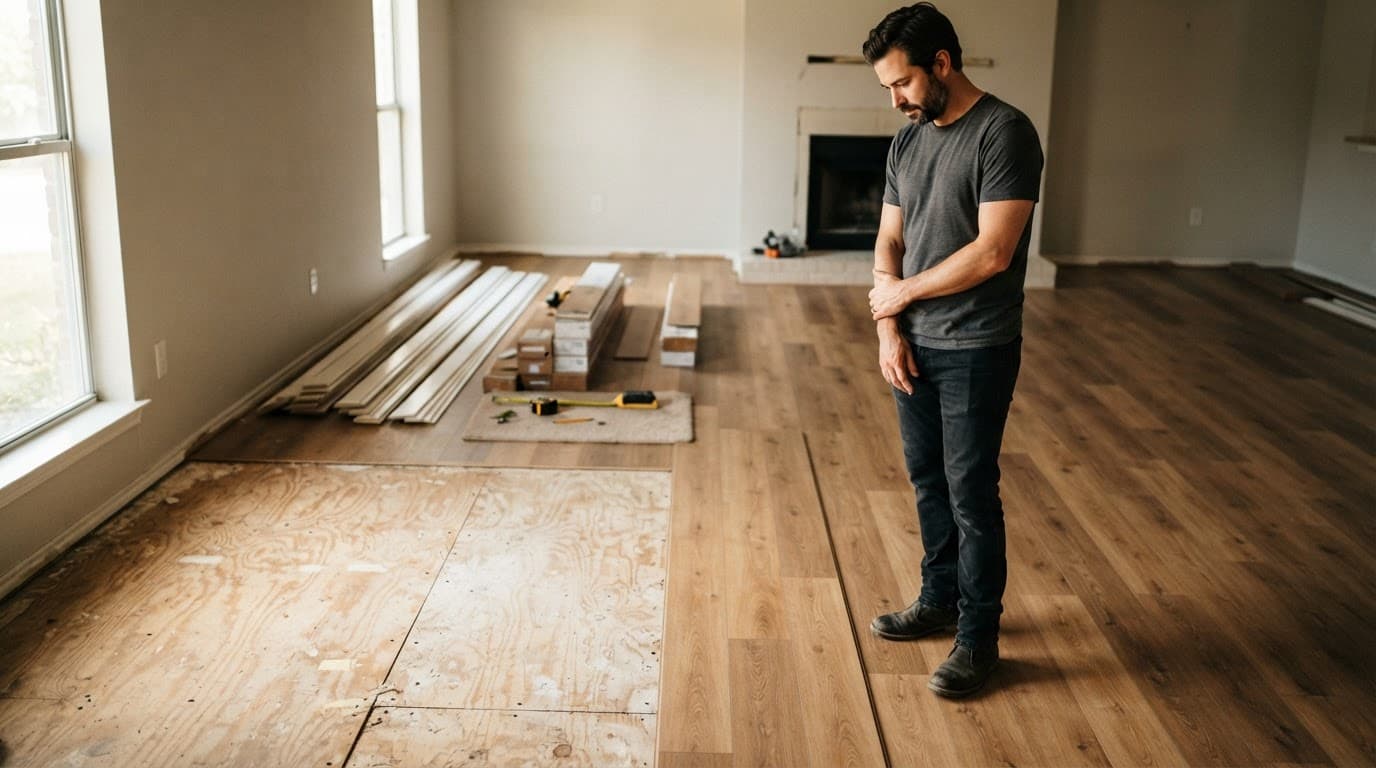
When waterproof vinyl makes sense
For muddy paws, children, rental turnovers, and frequent spills, vinyl flooring is often the lower-stress option. Waterproof flooring handles surface spills well and cleans easily with regular sweeping and a manufacturer-approved cleaner.
Avoid soaking the perimeter with water or using steam cleaners unless the product maker allows it. Wipe spills promptly, use entry mats, and add felt pads under furniture to protect the finish and keep grit from scratching the surface.
When engineered hardwood is the better fit
If you want authentic grain and the feel of real wood, engineered hardwood can be a strong choice after moisture preparation. It is more stable than solid wood in many slab-on-grade homes, though it still needs normal indoor humidity and careful spill cleanup.
For rooms that stay dry and have less traffic, laminate may also deliver the wood-look style you want at a lower material cost. Review engineered wood flooring installation options if real wood is your priority, or compare vinyl flooring in Denton for a more water-tolerant surface.
Don’t Cover Structural Problems With New Materials
Some problems need more than patching compound or a few added screws. If the floor slopes sharply, framing has rot, a slab crack has vertical movement, or water continues to enter the home, pause the floor installation until the underlying cause is corrected.
A local flooring contractor can identify visible flooring-related issues. However, structural movement, active plumbing leaks, and foundation concerns may require the appropriate trade before new materials go down.
If you are planning residential flooring in Denton, Corinth, Highland Village, Roanoke, or nearby communities, get the subfloor checked before ordering. JBN Flooring provides straightforward Denton floor repair services and explains the work your home actually needs.
For an in-home assessment and written estimate, Get Your Free Flooring Estimate or Call 469-340-0837. A proper repair now protects your investment in new flooring later.
A Sound Subfloor Makes the Difference
New flooring should feel solid, sit flat, and stay quiet under normal daily use. Those results begin with correcting moisture, movement, weak material, and uneven surfaces before the first plank goes down.
The clearest subfloor repair signs are soft spots, squeaks, stains, swelling, and visible unevenness. Address them before installation, then choose a flooring material that fits your home, maintenance habits, and North Texas conditions.
Frequently Asked Questions
Can you install new flooring over a damaged subfloor?
You shouldn’t install new flooring over soft, swollen, loose, or actively damp subfloor material. The new surface may hide the damage briefly, but movement and moisture usually return as gaps, broken joints, or visible uneven areas.
Do squeaky floors always need subfloor repair?
Not always. A squeak may come from loose fasteners or rubbing between framing members. Still, it is best to locate the source while the old floor is removed, because access becomes much harder after a new floor installation.
Can luxury vinyl plank go over an uneven floor?
Luxury vinyl plank can tolerate minor variation within the manufacturer’s flatness requirements. It cannot correct deep dips, high ridges, unstable seams, or a moving slab. Prep work helps prevent joint separation and visible telegraphing.
How do you know if a subfloor has water damage?
Look for staining, swelling, soft areas, crumbling edges, mold-like discoloration, or a lingering musty smell. A moisture reading and inspection after removing the old flooring give you a more reliable answer than surface appearance alone.