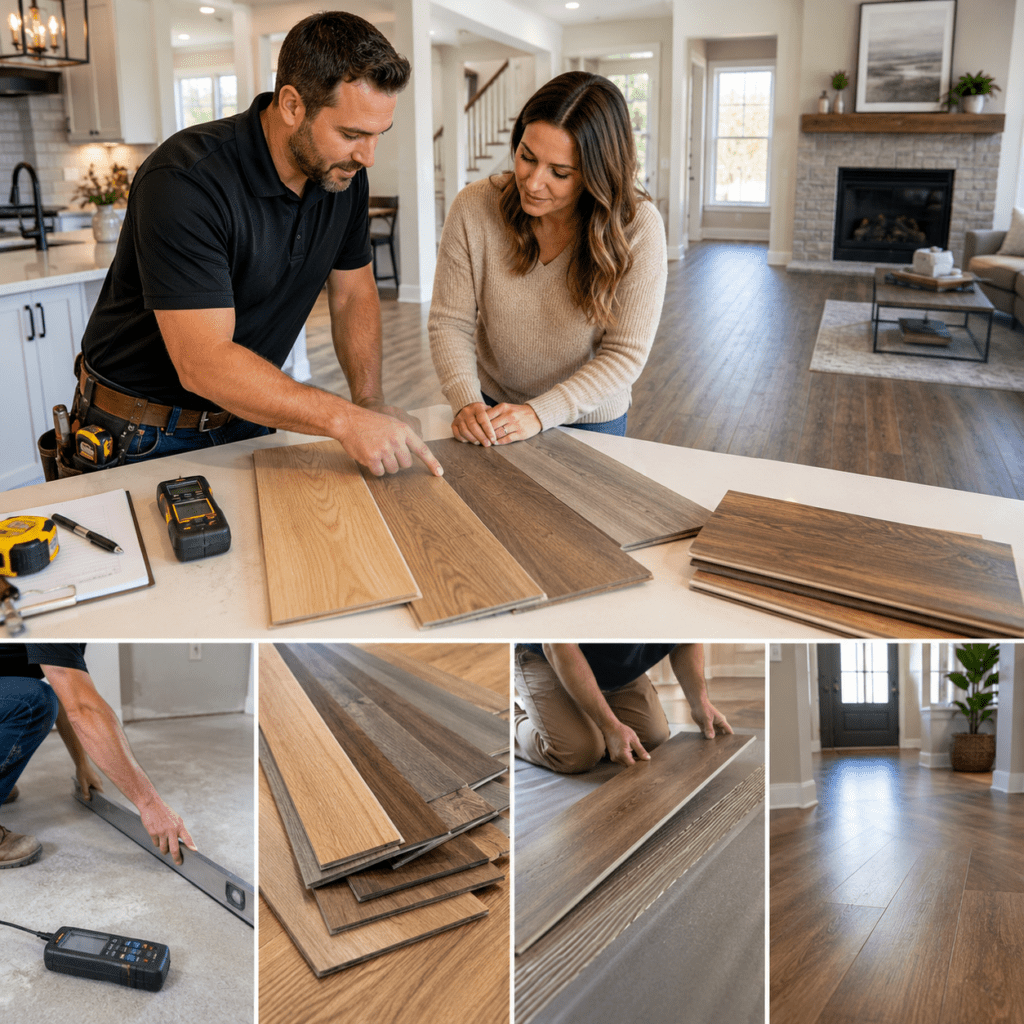
A low total can look attractive until you discover it leaves out removal, moisture work, transitions, or baseboard repairs. A clear flooring installation estimate gives you a written scope of work, so you can compare proposals without guessing what happens after the crew arrives.
For Denton County homeowners, the details matter. North Texas heat, humidity changes, pets, wet shoes, and concrete slabs can all affect your material choice and preparation needs. Use the points below to review any estimate before you approve a floor installation.
What a Flooring Installation Estimate Should Include
A trustworthy flooring installation estimate identifies the product, rooms, labor, preparation, and final details. You should be able to see what you are buying and what the flooring contractor will do to install it.

Name the exact flooring material
“Vinyl” is too broad for a written quote. Your estimate should name the exact material, such as luxury vinyl plank, laminate flooring, engineered hardwood, or solid hardwood flooring. It should also include the brand or product line, color, plank or board dimensions when relevant, and the amount needed for your rooms.
Those details help you compare proposals fairly. One quote may include a thicker LVP flooring product with an attached pad, while another may include a different construction and separate underlayment. They are not equal even if both say “vinyl flooring.”
For homes with children, pets, and frequent spills, waterproof flooring can be a practical choice. However, “waterproof” describes the product’s surface performance, not permission to skip subfloor preparation or ignore leaks.
List every room and measured quantity
The scope should identify the rooms, closets, hallways, stairs, and transitions included. It should also state the estimated square footage and any allowance for cuts or pattern waste.
Ask about areas that often get missed, including pantries, laundry rooms, fireplace hearths, closets, and doorways. A detailed estimate prevents a surprise change order when you assume the new floor continues into an adjacent space.
For clear flooring installation in Denton, TX, JBN Flooring can assess the full layout in your home instead of pricing only the obvious open areas.
Subfloor Preparation Can Change the Whole Job
The surface under your new floor determines how it feels, wears, and stays in place. Preparation deserves its own line items because every home has different slab, subfloor, and removal conditions.

Include moisture testing and leveling allowances
Concrete slabs in Denton, Argyle, Corinth, and Flower Mound homes can have low spots, high spots, cracks, or moisture concerns. Your estimate should say whether the contractor will inspect the slab or subfloor, test moisture when the selected product requires it, and identify any leveling or repair work.
Some issues only appear after old flooring comes up. A good estimate explains how hidden conditions will be documented and priced before extra work begins. That protects you from a vague promise that turns into an open-ended bill.
A floor can look level and still fail a product’s installation requirements. Flatness, moisture, and surface condition are separate checks.
Spell out underlayment and transitions
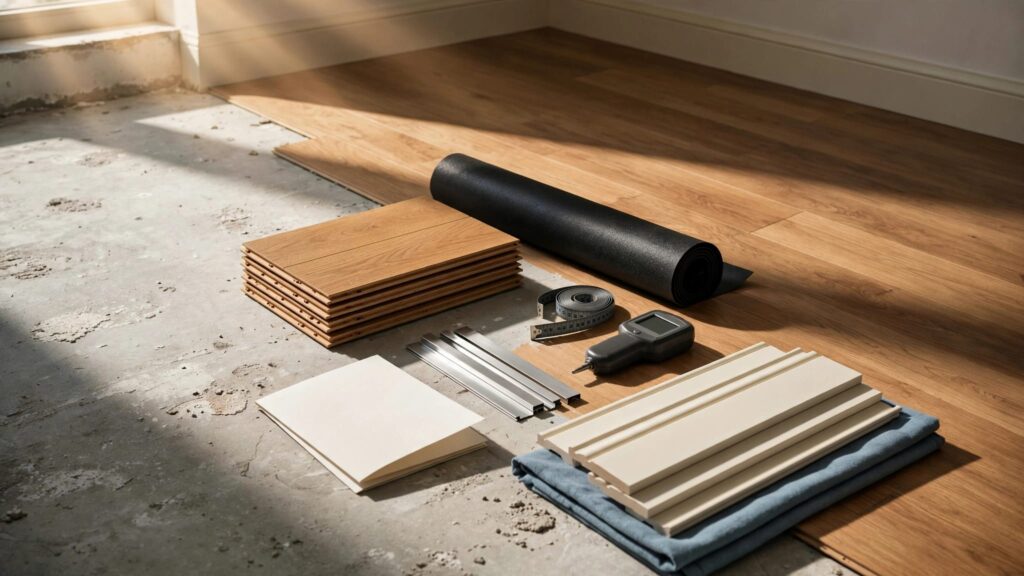
The estimate should identify the underlayment, moisture barrier, adhesive, or fasteners needed for the chosen installation method. It should also include transitions at tile, carpet, exterior doors, and rooms with different floor heights.
Ask whether existing doors may need trimming and whether shoe molding, quarter round, or baseboard work is included. These finishing items affect the appearance of professional flooring installation, yet they are often missing from one-line estimates.
Choose a Material That Fits Your Household
Your estimate should make material recommendations based on how you live, not only the appearance of a sample. Consider water exposure, indoor pets, direct sunlight, traffic, maintenance preferences, and the structure below the floor.
When luxury vinyl and laminate make sense
Luxury vinyl plank is a strong option for busy kitchens, entryways, bathrooms, and homes where wet paws or spilled drinks are routine. It offers a wood-look surface with practical water resistance. LVP flooring still needs a clean, flat base and correctly planned expansion space.
Laminate flooring can work well in dry living areas and bedrooms where you want a durable floating floor at a controlled budget. Its performance depends on the product, seams, and care. Wipe spills promptly, use felt pads under furniture, and avoid soaking the floor during cleaning.
For either category, follow the product instructions. Even vinyl plank installation guidance advises checking the individual manufacturer’s requirements.
Compare engineered and solid wood honestly
Hardwood flooring adds warmth and can suit formal rooms, bedrooms, and well-maintained living spaces. Solid wood and engineered wood do not install the same way, so your estimate should state the product construction and method.
Engineered hardwood is often a sensible choice for North Texas flooring projects on concrete slabs because its layered construction can fit glue-down or floating installations when conditions allow. Solid hardwood may be appropriate where the structure and fastening method support it.
The NWFA technical guidelines provide industry-accepted information on wood-floor conditions and installation practices. You can also review JBN Flooring’s approach to engineered wood flooring installation in Denton before selecting a wood product.
Labor Needs a Clear, Room-by-Room Scope
Labor is more than putting planks on the floor. Your estimate should describe the work sequence and state who handles each part of the job.
Identify the installation method
Your proposal should say whether the floor will be floating, glue-down, or nail-down. Each method has different material requirements, preparation steps, and repair options later.
For example, a glue-down engineered hardwood floor needs an appropriate adhesive and slab condition. A floating laminate or LVP floor needs correct perimeter spacing and transitions. Nail-down wood requires a suitable wood subfloor.
Don’t accept “install flooring” as the full labor description. Ask how the crew will handle openings, closets, stair nosings, angled walls, vents, and difficult thresholds. Those details separate basic placement from careful floor installation.
Include removal, furniture, and cleanup
A complete estimate states whether the crew will remove existing flooring, haul debris away, move furniture, disconnect appliances, or protect nearby surfaces. It should also say whether the price includes final vacuuming, trim installation, and a walkthrough.
Some homeowners prefer to move furniture and clear closets themselves. That can save time on installation day, but confirm it in writing. If your project includes old carpet, damaged vinyl, or an uneven floor, make sure removal and disposal are not left as assumptions.
JBN Flooring has provided local residential flooring work since 1996 through The JBN Group. If you want a property-specific scope, Get Your Free Flooring Estimate before ordering material.
Compare Estimates Line by Line, Not by the Total
Two estimates can show similar totals while including very different work. Put each proposal side by side and compare the scope before focusing on the bottom number.
| Estimate detail | What you should see |
|---|---|
| Flooring product | Exact type, product line, color, and quantity |
| Preparation | Moisture review, leveling, repairs, underlayment, or exclusions |
| Labor | Installation method, removal, trim, transitions, and cleanup |
| Project terms | Payment schedule, timeline, warranty information, and change-order process |
The better estimate is the one that lets you see what is included, what is excluded, and how unexpected conditions will be handled.
Watch for vague allowances and exclusions
An allowance can be useful when a contractor cannot see a covered slab until removal starts. However, the estimate should define the allowance clearly. It should say what type of work may be needed and how the contractor will get your approval.
Ask whether taxes, delivery, stair work, furniture moving, floor leveling, damaged subfloor repair, or disposal are separate. A flooring company should answer these questions directly, not leave them for the final invoice.
Check contractor documentation
Before you sign, verify the business name, contact information, payment terms, warranty language, and insurance documentation. The written estimate should match the person and company working in your home.
If you are comparing Denton flooring bids, use the same rooms and material level for each request. You can also review what to request from an insured flooring contractor in Denton before making a decision.
Know When Floor Repair Beats Replacement
Floor replacement is not always the right first answer. A small area of water damage, loose transition, scratched wood, or separated plank may be repairable when matching materials and the underlying cause are known.
Start with the existing floor system
Repair choices depend on the material and how it was installed. Solid wood, engineered wood, laminate, and vinyl each have different wear layers, locking systems, adhesives, and replacement methods.
A crew needs to determine whether the floor is nail-down, glue-down, or floating before pricing the repair. For example, replacing a damaged locked plank in the middle of a floating floor can require more work than replacing a board near a wall.
Address the cause before the surface
A soft spot, cupped wood, recurring seam gap, or lifted plank may point to moisture, movement, or subfloor trouble. Replacing only the visible piece can leave the problem underneath.
For a targeted evaluation, JBN Flooring offers floor repair in Denton, TX. Bring photos, note when the issue began, and mention any past leak or plumbing repair.
Questions Homeowners Ask About Flooring Estimates
How long is a flooring estimate valid?
The written estimate should state its validity period. Material availability and manufacturer pricing can change, so confirm the date before you approve the work. If you are delaying the project for a remodel, ask whether the chosen product can still be ordered later.
Should I buy flooring before the in-home estimate?
Wait until the installer measures the rooms and reviews the subfloor. Ordering too early can leave you short on material, create return issues, or result in a product that does not fit your slab and room conditions.
Can I get an estimate if I live outside Denton?
Yes. JBN Flooring works across Denton County and nearby communities, including Highland Village, Lantana, Little Elm, Frisco, Plano, Southlake, Keller, Grapevine, Roanoke, Northlake, Bartonville, and Copper Canyon. You can Call 469-340-0837 to discuss your rooms and schedule a free in-home visit.
A Clear Estimate Leads to a Better Floor
Your estimate should read like a plan for the job, not a mystery total. Exact materials, preparation, installation method, finishing work, and exclusions let you choose with confidence.
The right floor depends on your home, your slab or subfloor, and daily life. A detailed flooring installation estimate gives you the facts needed to make a sound decision before work begins.